
Build Situational Awareness for Better Decisions


Table of Contents
- What Are Situational Awareness Skills?
- Why Situational Awareness in the Workplace Matters
- Core Situational Awareness Skills You Need to Build
- How Situational Awareness Connects to Communication
- What Makes Situational Judgment Skills Different from Genera
- How This Helps in Personality Development
- Common Situations Where Situational Awareness Skills Make th
- How PlanetSpark Helps You Build Situational Awareness Skills
- Start Building Skills with PlanetSpark
There is a quality that separates professionals who always seem to know what to do next from those who constantly feel caught off guard. It is not intelligence. It is not experience alone. It is situational awareness.
Whether you are a student presenting in front of a class, a team leader navigating office politics, or a professional managing high-pressure deadlines, situational awareness skills determine how quickly and confidently you read what is happening around you and respond in a way that actually works.
This blog breaks down what situational awareness really means, why it matters in the workplace and beyond, and how you can build it as part of your overall personality development.
What Are Situational Awareness Skills?
Situational awareness skills are the ability to observe your environment, understand what is happening in real time, and anticipate what is likely to happen next. They allow you to respond to situations with clarity and intention rather than reacting impulsively or freezing under pressure.
At their core, these skills involve three layers that work together:
Perceiving what is around you means actively noticing the details in your environment, including what people say, how they say it, what the atmosphere in a room is, and what signals others are sending through their behaviour and body language.
Understanding what those signals mean involves interpreting what you have observed in the context of the situation. This is where awareness skills in communication become critical because words alone rarely tell the full story.
Projecting what comes next means using your understanding of the present to anticipate how the situation will unfold so you can act with purpose rather than simply react.
Situational awareness is not an instinct you either have or do not. It is a trainable set of skills that improves with intention, practice, and the right kind of structured learning.
Why Situational Awareness in the Workplace Matters
Most professionals focus on building technical skills or subject matter expertise. Very few deliberately develop their ability to read the room, pick up on what is unsaid, or adjust their approach when the energy in a conversation shifts. That gap shows up everywhere.
Situational awareness in the workplace directly affects how well you communicate under pressure, how others perceive your confidence and competence, and how effectively you navigate complex professional relationships.
It shapes how colleagues and leaders see you. Professionals with strong situational awareness tend to be seen as calm, composed, and reliable because they do not miss cues that matter. They pick up on tension before it escalates, recognise when a conversation needs a different approach, and notice when their audience has disengaged.
It reduces costly misunderstandings. A large portion of workplace conflict and miscommunication stems not from bad intentions but from missed signals. When you develop awareness skills in communication, you become better at reading context, tone, and subtext rather than responding only to the surface-level content of what is said.
It makes decision making sharper. Decision making awareness skills allow you to factor in the full picture before you act. Rather than making choices based on incomplete or misread information, you develop the habit of pausing to observe, interpret, and then respond.
It gives students a real-world advantage. For students, situational awareness is not just a workplace concept. It applies in group discussions, exams under pressure, presentations, interviews, and navigating social environments. Developing this skill early creates a strong foundation for how you handle every high-stakes situation ahead.
Core Situational Awareness Skills You Need to Build
Building strong situational awareness is not about becoming hypervigilant or overthinking every interaction. It is about developing a set of habits and abilities that make you more perceptive and more effective in any environment.
Active Observation
Most people look but do not see. Active observation means training yourself to notice what is actually happening in your environment rather than filtering it through assumptions. In a workplace setting, this means paying attention to who speaks and who stays silent in meetings, how energy in a room shifts when different topics come up, and what people communicate through posture, tone, and expression.
Awareness Skills in Communication
Communication awareness goes beyond listening to what someone says. It includes picking up on hesitation, noticing when someone's words and body language are misaligned, reading the emotional temperature of a conversation, and adjusting how you communicate based on what the situation needs. Professionals who develop strong awareness skills in communication are consistently more effective in meetings, negotiations, client conversations, and team interactions.
Situational Judgment Skills
Situational judgment skills are the practical application of situational awareness. They allow you to assess a scenario quickly and determine the most appropriate response. This is particularly relevant in professional environments where how you handle a situation matters as much as what you actually do. Strong situational judgment means knowing when to speak and when to listen, when to escalate and when to resolve quietly, and when to hold your ground and when to adapt.
Decision Making Awareness Skills
Every decision you make is shaped by how well you have read the situation before making it. Decision making awareness skills involve understanding the full context of a situation, recognising your own biases or assumptions that might be distorting what you see, and building the habit of checking your reading of a situation before committing to a course of action. These skills are particularly valuable in leadership roles, high-stakes discussions, and any environment where the wrong call has visible consequences.
Emotional Regulation and Composure
Situational awareness breaks down the moment emotions take over. Developing the ability to stay composed and observant under pressure is a foundational part of building reliable situational awareness. When you are reactive, you miss information. When you are calm, you read the room clearly.
Pattern Recognition
With practice, situational awareness starts to operate faster because your brain begins recognising familiar patterns. You learn to spot the early signals of conflict before it escalates, notice when someone needs reassurance rather than information, and detect when a plan is not landing as expected. Pattern recognition is built through experience combined with deliberate reflection on what you observed and what it meant.
How Situational Awareness Connects to Communication
Awareness skills in communication and situational awareness are deeply connected. You cannot communicate well in a complex professional environment without being able to read that environment accurately.
Here is what this looks like in practice:
When you are presenting to a group, situational awareness tells you whether your audience is engaged or lost, whether the pace needs to change, and whether a question is a genuine inquiry or a challenge to your credibility.
In a one-on-one conversation, it helps you notice when someone is uncomfortable with the direction of the discussion, when they need to be heard before they can hear you, and when the right move is to give them space rather than fill the silence.
In high-pressure team situations, it allows you to read group dynamics accurately, which means you know who has influence in the room even if they do not have the loudest voice, and you adjust your approach accordingly.
Building communication awareness is not about becoming a people reader in a manipulative sense. It is about developing genuine sensitivity to context so that your communication lands the way you intend it to.
What Makes Situational Judgment Skills Different from General Intelligence
One of the most common misconceptions about situational judgment skills is that they are simply a byproduct of being smart or experienced. They are not.
General intelligence tells you what to think. Situational judgment skills tell you how to act given the specific realities of the moment in front of you.
You can be highly intelligent and still miss critical social cues, misread a stakeholder's reaction, or choose the wrong tone for a difficult conversation. You can be relatively early in your career and still demonstrate exceptional situational judgment by pausing before responding, reading the room accurately, and adapting with composure.
What builds situational judgment skills is deliberate practice in reading complex real-world scenarios, reflecting on how situations actually unfolded compared to how you anticipated they would, and receiving structured feedback on your observations and responses.
This is exactly why situational judgment is increasingly recognised as one of the most valuable and trainable skills in both leadership development and personality development.

How This Helps in Personality Development
Personality development is not about sounding more confident or learning a few social scripts. It is about building the internal awareness, behavioural consistency, and perceptive capacity that shapes how you show up in every environment.
Situational awareness skills sit at the core of meaningful personality development because they change how you experience and navigate the world around you.
Here is what develops when you build these skills intentionally:
Self-awareness that sharpens your responses allows you to recognise your own patterns, triggers, and blind spots. When you understand how you tend to read situations and where your perception goes wrong, you become far more deliberate and effective in how you respond.
Confidence that comes from clarity rather than performance is fundamentally different from forced confidence. When you can accurately read what is happening around you, you feel genuinely in control, and that composure is visible to everyone around you.
Emotional intelligence that makes you someone others trust grows directly from situational awareness. Reading what others need, adjusting your communication style, and responding with empathy in high-stakes moments are all expressions of awareness that people associate with strong character.
Communication that actually lands improves dramatically when you are aware of how your message is being received in real time and can adjust on the go. This makes you far more effective in presentations, discussions, negotiations, and everyday professional interactions.
Presence under pressure is one of the most admired personality qualities in any environment. Situational awareness builds this by training you to stay observant and intentional even when situations are uncertain, tense, or moving quickly.
The professionals and students who invest in developing situational awareness do not just become better at making decisions. They become more confident, more composed, and more capable in every dimension of their lives.
PlanetSpark's personality development programs are built around exactly this kind of structured, practical skill building. Through live coaching, real-world scenario practice, and personalised feedback, learners develop the awareness and judgment that make a visible difference in how they communicate, lead, and grow.
Book Your Free Trial with PlanetSpark today and start building the situational awareness that sharpens your decisions and strengthens your presence in every environment.
Common Situations Where Situational Awareness Skills Make the Biggest Difference
Understanding where these skills apply in real life makes them easier to build deliberately.
In workplace meetings, professionals with strong situational awareness read who holds influence in the room, notice when the energy shifts, and adjust when they need to before the moment passes.
In job interviews and campus placements, students with sharp situational judgment skills pick up on what the interviewer is really assessing beyond the surface of the question, and they respond to that layer rather than just the literal question asked.
In conflict situations, the ability to read what is actually driving the disagreement rather than just responding to what is being said separates people who resolve tension from those who escalate it unintentionally.
In leadership and team settings, managers and students in group projects who develop strong decision making awareness skills consistently make better calls because they factor in the full context of a situation rather than just the most visible information.
In presentations and public speaking, being able to read your audience in real time and adjust your delivery accordingly is one of the highest-value situational awareness skills a communicator can develop.
How PlanetSpark Helps You Build Situational Awareness Skills
Building situational awareness is not something that happens through reading alone. It requires structured practice, real-time feedback, and a learning environment that simulates the kind of complex, real-world situations where these skills actually matter.
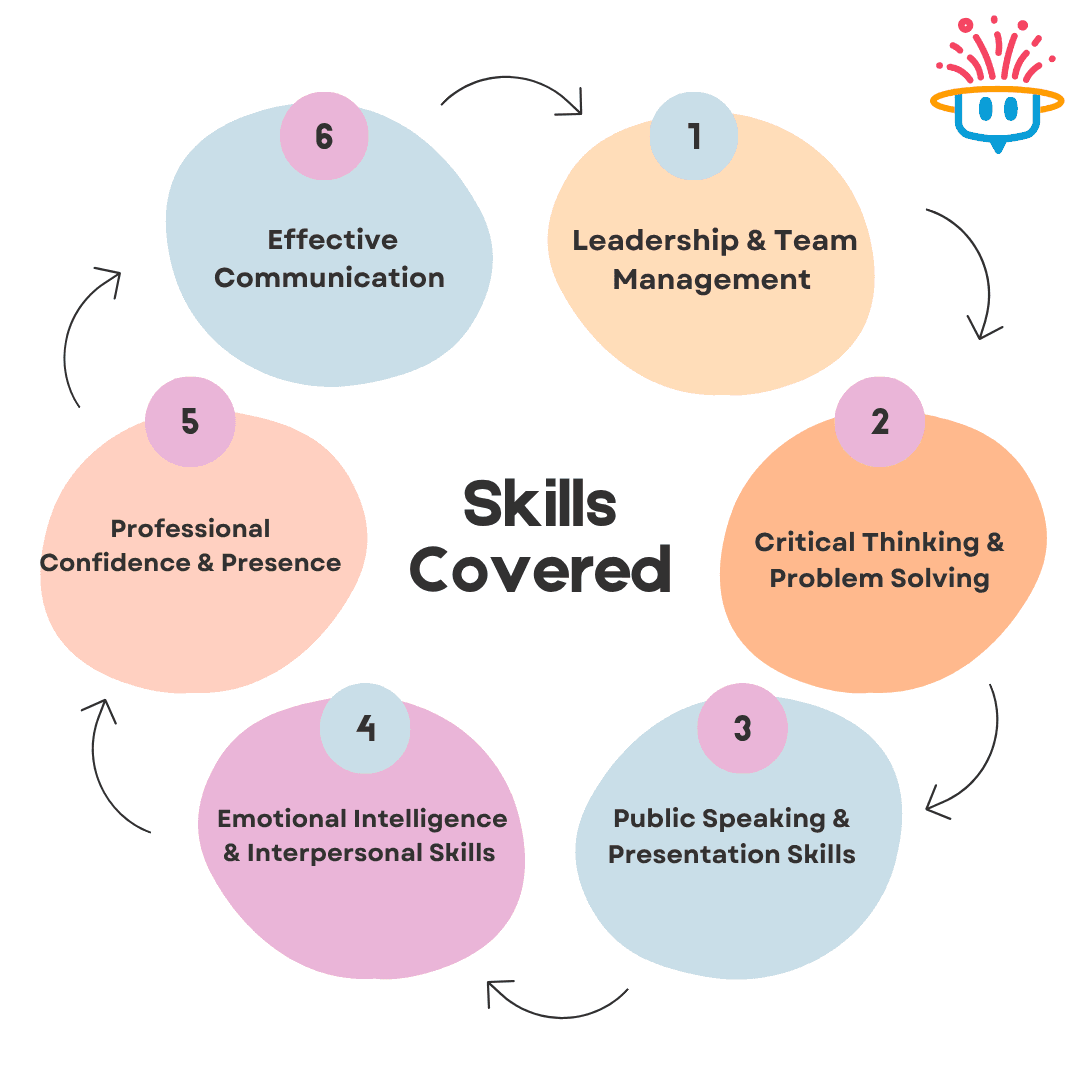
PlanetSpark's personality development programs are designed to develop exactly this.
Live one-on-one coaching sessions give learners the kind of personalised, real-time feedback on how they observe, interpret, and respond to situations that no recorded course can provide. Your coach identifies where your awareness is sharp and where it needs development, and works with you directly on closing those gaps.
Real-world scenario practice puts you into the kinds of situations you actually face: group discussions, high-stakes presentations, conflict moments, and leadership conversations. You practice reading the room and responding with intention rather than reaction.
Personalised development roadmap ensures that every learner starts from an honest assessment of where their situational awareness currently stands and builds a structured path to where it needs to be based on their specific goals, whether professional growth or academic performance.
Feedback on communication awareness gives you direct insight into how well your verbal and non-verbal communication reflects your understanding of the situation, and where the gaps between what you intend and what others receive are creating friction.
AI-powered progress tracking lets you see measurable improvement over time, which builds the kind of genuine confidence that comes from visible, tracked growth rather than just hoping you are getting better.
Whether you are a working professional building the situational judgment skills your role demands or a student preparing for the competitive environments ahead, PlanetSpark's program gives you the structure, coaching, and practice to develop these skills with real results.
Start Building Skills with PlanetSpark
Skills are not a fixed trait. They are a learnable, trainable, and improvable set of abilities that directly impact how you are understood, how you are perceived, and how far your ideas actually travel.
Whether you are a student working toward your first major interview or a professional preparing for a high-stakes presentation, the path forward is the same: structured practice, expert coaching, and consistent feedback.
PlanetSpark's personality development program is built to deliver exactly that.
Frequently Asked Questions
Situational awareness skills are the ability to observe your environment accurately, interpret what is happening in real time, and anticipate what is likely to come next. They allow you to respond to situations with intention and clarity rather than reacting without full understanding. These skills are trainable and improve significantly with structured practice and the right coaching support.
Situational awareness in the workplace helps professionals read team dynamics, navigate conversations more effectively, reduce miscommunication, and make better decisions under pressure. It shapes how colleagues and leaders perceive your composure and judgment, and is increasingly recognised as one of the most valuable skills for career growth at every level.
Awareness skills in communication involve reading beyond the literal content of what someone says. They include interpreting tone, noticing when body language contradicts words, picking up on emotional shifts during a conversation, and adjusting your own communication style based on what the situation and audience actually need. These skills make every professional interaction more effective.
Situational judgment skills are not automatic outcomes of experience. They require deliberate development. You can have years of experience and still miss critical cues in high-stakes situations. Building situational judgment skills involves practising structured observation, reflecting honestly on how situations unfolded compared to how you read them, and receiving specific feedback that sharpens your ability to assess and respond accurately.
Decision making awareness skills are the ability to read the full context of a situation before committing to a course of action. They involve recognising your own assumptions and blind spots, gathering the signals that matter, and checking your interpretation before acting. These skills are especially valuable for professionals in leadership roles and students navigating high-stakes academic and competitive environments.
Students with strong situational awareness perform better in group discussions, presentations, interviews, and competitive environments because they are able to read what is actually being asked of them, adjust their responses in real time, and communicate with the kind of confidence that comes from genuine clarity. These skills also build the emotional intelligence and self-awareness that support personality development throughout their academic and professional lives.