
Skill Mastery: Develop Future-Ready Skills With PlanetSpark's Experts


Table of Contents
- What is Skill Mastery?
- Why Skill Mastery is Important
- Steps to Master a Skill
- Tips to Keep Improving
- Common Challenges in Skill Mastery
- Fun Activities to Practice Skills
- Best Skills to Learn for the Future
- Tools and Resources to Master Skills
- Parent’s Role in Skill Mastery
- How PlanetSpark Helps You Master Skills
- Nirvana Mehta Triumphs as First Prize Winner in Poem Recitat
- Conclusion: Achieve Skill Mastery with PlanetSpark
Skill mastery is more than just learning something new; it is the journey of becoming truly proficient at a task or subject. When a person achieves skill mastery, they not only perform well but also develop confidence, problem-solving abilities, and lifelong learning habits. In today’s fast-changing world, having the ability to learn, adapt, and excel in various areas is essential. PlanetSpark offers expert guidance to help learners achieve skill mastery, making the process engaging, structured, and effective.
Whether it’s improving communication, problem-solving, or creative thinking, mastering a skill ensures long-term success. In this blog, we will explore what skill mastery is, why it is important, and actionable steps to achieve it, along with tools, resources, and strategies that make learning efficient and fun.
What is Skill Mastery?
Skill mastery is the process of gaining deep understanding and proficiency in a particular area. It goes beyond memorization or basic ability. A person who attains skill mastery can perform tasks with accuracy, speed, and creativity.
Key Characteristics of Skill Mastery
Consistency: Regular practice to reinforce learning
Precision: Performing tasks correctly without constant guidance
Adaptability: Applying skills in different scenarios
Problem-Solving: Tackling challenges independently
Levels of Mastery
| Level | Description | Example |
|---|---|---|
| Beginner | Just starting, learning basics | Learning simple arithmetic |
| Intermediate | Can perform tasks with some guidance | Writing essays with minor errors |
| Advanced | Performs tasks independently | Leading a project or competition |
| Expert | Can teach and innovate | Mentoring peers in a subject |
Why Understanding Skill Mastery Matters
Skill mastery ensures that learners can apply their knowledge practically. It builds confidence, encourages independence, and promotes continuous growth. For children and adults alike, understanding what it means to truly master a skill is the first step toward structured and effective learning.
Components of Skill Mastery
Knowledge: Understanding the concepts behind a skill
Practice: Repeated application to reinforce learning
Feedback: Guidance from experts or mentors
Reflection: Evaluating performance to improve
Achieving skill mastery is not instantaneous; it requires a structured approach and consistent effort. With PlanetSpark’s programs, learners receive personalized guidance, making it easier to progress through these stages effectively.
Why Skill Mastery is Important
Enhances Confidence and Motivation
When learners achieve mastery of a skill, they gain a sense of accomplishment. This confidence motivates them to take on new challenges and expand their abilities further. For instance, a child mastering reading skills can explore books independently, fostering curiosity and a love for learning.
Improves Problem-Solving Abilities
Skill mastery equips learners with tools to approach challenges logically and creatively. They can analyze problems, break them into smaller tasks, and develop effective solutions. This ability is essential not just in academics but also in everyday life and future careers.
Supports Academic and Career Growth
Academic Benefits: Students with skill mastery can retain knowledge better, participate actively in class, and perform well in exams and projects.
Career Advantages: Early development of mastery in skills like communication, coding, or critical thinking prepares learners for advanced studies and professional opportunities.
Encourages Lifelong Learning
Mastering a skill teaches learners the value of continuous improvement. They understand that learning is a journey, not a one-time achievement. This mindset fosters adaptability, resilience, and openness to acquiring new skills in the future.
Practical Examples of Importance
A learner mastering time management skills can balance schoolwork and hobbies efficiently.
Mastery in public speaking allows individuals to communicate effectively in group settings.
Learning problem-solving skills helps in coding, puzzles, or real-world projects.
Visual Representation of Benefits
| Benefit | How It Helps |
|---|---|
| Confidence | Encourages trying new challenges |
| Creativity | Enables innovative thinking |
| Independence | Reduces reliance on constant guidance |
| Efficiency | Completes tasks faster with accuracy |
Achieving skill mastery transforms not just the learner’s abilities but also their approach to challenges, making it a cornerstone for personal and academic development. PlanetSpark’s structured guidance ensures that learners build a strong foundation for mastering essential skills, preparing them for future opportunities.
“Unlock your true potential!”
Enroll in PlanetSpark’s Personality Development Course today.
Steps to Master a Skill
1. Set Clear Goals
The first step in achieving skill mastery is to define what you want to achieve. Clear goals provide direction and motivation. For example:
Short-term goal: Learn 10 new words in a day
Long-term goal: Speak confidently in English within 3 months
2. Break the Skill into Small Parts
Mastering a skill becomes easier when it is divided into smaller, manageable tasks. This allows learners to focus on one area at a time.
Example:
| Skill | Steps to Master |
|---|---|
| Storytelling | 1. Learn new words 2. Practice sentence formation 3. Write a short story 4. Present to peers |
| Math problem-solving | 1. Understand the concept 2. Solve sample questions 3. Check mistakes 4. Attempt advanced problems |
3. Practice Regularly
Skill mastery requires consistent and deliberate practice. Even 20–30 minutes daily can lead to significant improvement over time.
Tips for Effective Practice:
Focus on one aspect at a time
Track your progress
Repeat challenging exercises
4. Seek Feedback
Feedback helps learners understand their strengths and areas of improvement. Mentors, teachers, or peers can provide constructive feedback to guide skill development.
5. Reflect and Adjust
After each practice session, reflect on what worked and what didn’t. Adjust your approach accordingly to optimize learning and build mastery of a skill.
6. Celebrate Small Wins
Recognizing progress boosts motivation. Small achievements, like finishing a story or solving a tricky problem, build confidence and encourage learners to keep going.
“Confidence is the key to success!”
Build it with PlanetSpark’s Personality Development Course.
Tips to Keep Improving
Stay Curious
Curiosity drives continuous learning. Ask questions, explore different approaches, and experiment with new ideas. This mindset ensures steady growth in skill mastery.
Diversify Your Practice
Mix different exercises to strengthen various aspects of the skill
Apply your skills in real-life scenarios for better understanding
Example:
| Skill | Ways to Keep Improving |
|---|---|
| Writing | Read diverse stories, practice dialogues, write essays |
| Coding | Solve coding challenges, build mini-projects, review code |
Use Tools and Resources
Learning is easier with the right resources:
Books and Worksheets – Structured practice materials
Online Tutorials – Visual and interactive guidance
Apps and Games – Make practice fun and engaging
Stay Consistent
Improvement comes with regularity. Establish a schedule and stick to it, even when progress feels slow. Consistency is key to true skill mastery.
Learn from Mistakes
Mistakes are part of the journey. Analyze errors, understand why they happened, and correct them. This reflective approach strengthens skills and builds resilience.
Set New Challenges
Once you’ve mastered a level, increase the difficulty. This prevents stagnation and pushes learners to achieve higher proficiency.
Engage with Peers
Learning in groups or with friends provides motivation, fresh perspectives, and opportunities for collaboration. Sharing knowledge also reinforces your own understanding.
Maintain a Growth Mindset
Believe in the ability to improve with effort. Viewing challenges as opportunities rather than obstacles encourages persistence and helps in achieving mastery of a skill over time.
“Step into your best self!”
Join PlanetSpark’s Personality Development Course now.
Common Challenges in Skill Mastery
Understanding the Obstacles
Even with dedication, learners often face challenges on the path to skill mastery. Recognizing these obstacles early helps overcome them efficiently.
1. Lack of Consistency
Many learners struggle to practice regularly, which slows progress. Consistency is crucial for mastering any skill.
2. Fear of Making Mistakes
Some learners hesitate to try new techniques or take risks, fearing failure. However, mistakes are essential for improvement.
3. Distractions and Low Focus
In a world full of distractions, staying focused during practice is difficult. Low focus affects retention and skill development.
4. Limited Resources
Not having access to proper guidance, tools, or learning materials can hinder skill mastery.
5. Impatience
Skill mastery takes time. Learners often expect quick results, which can lead to frustration and giving up too soon.
Strategies to Overcome Challenges
Set a Routine: Allocate specific times for practice to build consistency.
Embrace Mistakes: Treat errors as learning opportunities.
Create a Focused Environment: Reduce distractions during practice.
Use Available Resources: Leverage online tutorials, mentors, and books.
Celebrate Progress: Recognize small achievements to stay motivated.
Visual Representation of Challenges vs. Solutions
| Challenge | Solution |
|---|---|
| Inconsistent Practice | Follow a fixed schedule |
| Fear of Mistakes | Reflect and learn from errors |
| Low Focus | Practice in quiet, distraction-free zones |
| Limited Resources | Use free or guided online tools |
| Impatience | Break goals into small, achievable steps |
Overcoming these challenges ensures steady improvement and helps learners achieve mastery of a skill more effectively.
“Every skill counts!”
Enhance yours with PlanetSpark’s Personality Development Course.
Fun Activities to Practice Skills
Why Fun Activities Matter
Learning becomes easier and more effective when it is enjoyable. Fun activities keep learners engaged and motivated while reinforcing skill mastery.
Examples of Activities by Skill Type
| Skill | Fun Activities |
|---|---|
| Writing & Storytelling | Create comic strips, write short stories, play word games |
| Math & Problem-Solving | Puzzle challenges, brain teasers, online math games |
| Communication | Role-playing, storytelling sessions, mock presentations |
| Creativity | Drawing, DIY projects, designing digital art |
Interactive Learning Methods
Group Activities: Collaborate with peers to solve problems or create stories.
Gamification: Turn learning into a game with points, rewards, and challenges.
Real-Life Practice: Apply skills in everyday scenarios, such as planning a mini event or teaching a younger sibling.
Tips to Maximize Learning Through Fun Activities
Combine Skills: Merge multiple skills in one activity (e.g., storytelling with drawing).
Track Progress: Keep a journal or log to measure improvements.
Seek Feedback: Ask mentors or peers for constructive feedback.
Mix Activities: Avoid repetition by trying different exercises regularly.
Stay Curious: Explore new tools, topics, or challenges to maintain interest.
Example Activity Plan for a Week
| Day | Activity | Skill Practiced |
|---|---|---|
| Monday | Write a short story | Writing & storytelling |
| Tuesday | Solve 5 math puzzles | Math & problem-solving |
| Wednesday | Present a 2-minute talk | Communication |
| Thursday | Draw a scene from the story | Creativity |
| Friday | Group quiz game | Mixed skills |
By incorporating fun and interactive activities, learners enjoy the process while steadily building skill mastery. PlanetSpark’s programs use similar engaging methods to make learning structured yet enjoyable.
“Grow. Learn. Shine.”
Start your journey with PlanetSpark’s Personality Development Course.
Best Skills to Learn for the Future
Why Future-Ready Skills Matter
In today’s fast-changing world, mastering skills that remain relevant over time is essential. Learning these skills early ensures adaptability, confidence, and success in both academics and life.
Key Skills for the Future
| Skill Category | Specific Skills | Benefits |
|---|---|---|
| Communication | Public speaking, storytelling, writing | Express ideas clearly and confidently |
| Critical Thinking | Problem-solving, analytical reasoning | Make informed decisions and solve challenges |
| Digital Literacy | Coding, online research, digital tools | Stay updated with technology and innovation |
| Creativity | Drawing, designing, creative writing | Enhance imagination and innovation |
| Collaboration | Teamwork, leadership, project management | Work effectively with others |
Benefits of Mastering These Skills
Improved Learning: Students grasp new concepts faster and apply them effectively.
Career Readiness: Skills like coding, critical thinking, and communication are highly valued in professional environments.
Confidence & Independence: Mastery of skills builds self-reliance and decision-making abilities.
Tips to Choose Skills
Focus on what interests you to maintain motivation.
Start with foundational skills, then gradually explore advanced ones.
Look for skills that can be applied in multiple areas of life.
Example Path for Skill Mastery
Start Small: Learn basic coding or storytelling techniques.
Practice Regularly: Build daily or weekly routines.
Apply in Real Life: Create mini-projects, presentations, or interactive games.
Advance Gradually: Explore complex problems or storytelling formats.
By focusing on these future-ready skills, learners not only develop proficiency but also gain confidence and adaptability for life challenges. PlanetSpark emphasizes these skills through structured programs and expert guidance.
“Master the art of communication!”
Take PlanetSpark’s Personality Development Course today.
Tools and Resources to Master Skills
The Right Tools Make Learning Easier
Access to proper resources can accelerate skill mastery. Tools provide structured practice, interactive learning, and opportunities for feedback.
Types of Tools and Resources
| Type | Example | Benefit |
|---|---|---|
| Books & Workbooks | Storybooks, skill-specific workbooks | Provide structured learning material |
| Online Platforms | PlanetSpark, educational websites | Interactive and self-paced learning |
| Apps & Games | Brain teasers, educational games | Make practice engaging and fun |
| Mentors & Teachers | Expert guidance, personalized feedback | Ensure correct techniques and motivation |
| Community & Peer Groups | Study groups, online forums | Collaboration, knowledge sharing, and peer learning |
Strategies to Use Tools Effectively
Set a Schedule: Use tools consistently, not randomly.
Mix Resources: Combine apps, books, and expert guidance for a holistic approach.
Track Progress: Monitor improvements and adapt learning strategies.
Reflect & Apply: Apply knowledge gained from tools in real-life situations.
Example Daily Routine Using Tools
Morning: Read a storybook and highlight new words.
Afternoon: Solve math puzzles on an app.
Evening: Participate in a discussion or presentation session with a mentor.
Importance of Expert Guidance
While tools are essential, guidance from experts ensures proper learning and faster skill mastery. PlanetSpark’s experts use a blend of digital tools, interactive content, and personalized mentoring to help learners achieve mastery of a skill effectively.
“Your future, your skills!”
Boost them with PlanetSpark’s Personality Development Course.
Parent’s Role in Skill Mastery
Why Parents Are Important
Parents play a crucial role in supporting learners as they develop mastery of a skill. Their encouragement, guidance, and involvement can make learning more effective and enjoyable.
Ways Parents Can Support Skill Mastery
1. Encourage Consistent Practice
Set aside dedicated time for learning every day.
Create a routine that balances skill practice with fun activities.
2. Provide Resources
Supply books, worksheets, apps, and other learning tools.
Introduce children to online tutorials or educational games.
3. Offer Constructive Feedback
Celebrate achievements to boost confidence.
Guide gently when mistakes occur, turning them into learning opportunities.
4. Motivate and Inspire
Encourage curiosity by exploring new topics together.
Share real-life examples of skill application to make learning meaningful.
5. Create a Positive Environment
Ensure a quiet and distraction-free learning space.
Be patient and supportive during challenging tasks.
Impact of Parental Involvement
| Support Type | Benefit |
|---|---|
| Encouragement | Builds confidence and motivation |
| Feedback | Helps correct mistakes and improve skills |
| Resources | Provides structured learning opportunities |
| Involvement | Fosters curiosity and love for learning |
When parents actively participate, learners are more likely to stay committed, practice regularly, and achieve true skill mastery.

How PlanetSpark Helps You Master Skills
Structured Learning Programs
PlanetSpark offers carefully designed programs that help learners achieve mastery of a skill through structured lessons, guided practice, and expert feedback.
Features of PlanetSpark’s Approach
1. Expert Mentors
Experienced educators guide learners at every stage.
Personalized attention ensures mistakes are corrected quickly.
2. Interactive Sessions
Lessons are engaging with activities, exercises, and discussions.
Learners participate actively, improving retention and understanding.
3. Regular Assessments
Frequent evaluations track progress.
Feedback highlights strengths and areas needing improvement.
4. Practical Application
Skills are applied in real-life scenarios, competitions, or projects.
Hands-on practice reinforces learning and builds confidence.
5. Gamified Learning
Points, challenges, and rewards make learning fun and motivating.
Learners enjoy the process while steadily mastering skills.
Example of Skill Development Path at PlanetSpark
| Stage | Activity | Outcome |
|---|---|---|
| Beginner | Guided exercises | Build foundational understanding |
| Intermediate | Interactive practice | Apply skills with some independence |
| Advanced | Projects & competitions | Achieve proficiency and confidence |
| Expert | Mentoring peers | Reinforce mastery and leadership |
PlanetSpark’s blend of expert guidance, engaging content, and consistent support ensures learners develop skill mastery effectively and enjoy the process. The focus on personalized learning and interactive practice helps every learner progress at their own pace and achieve their goals.
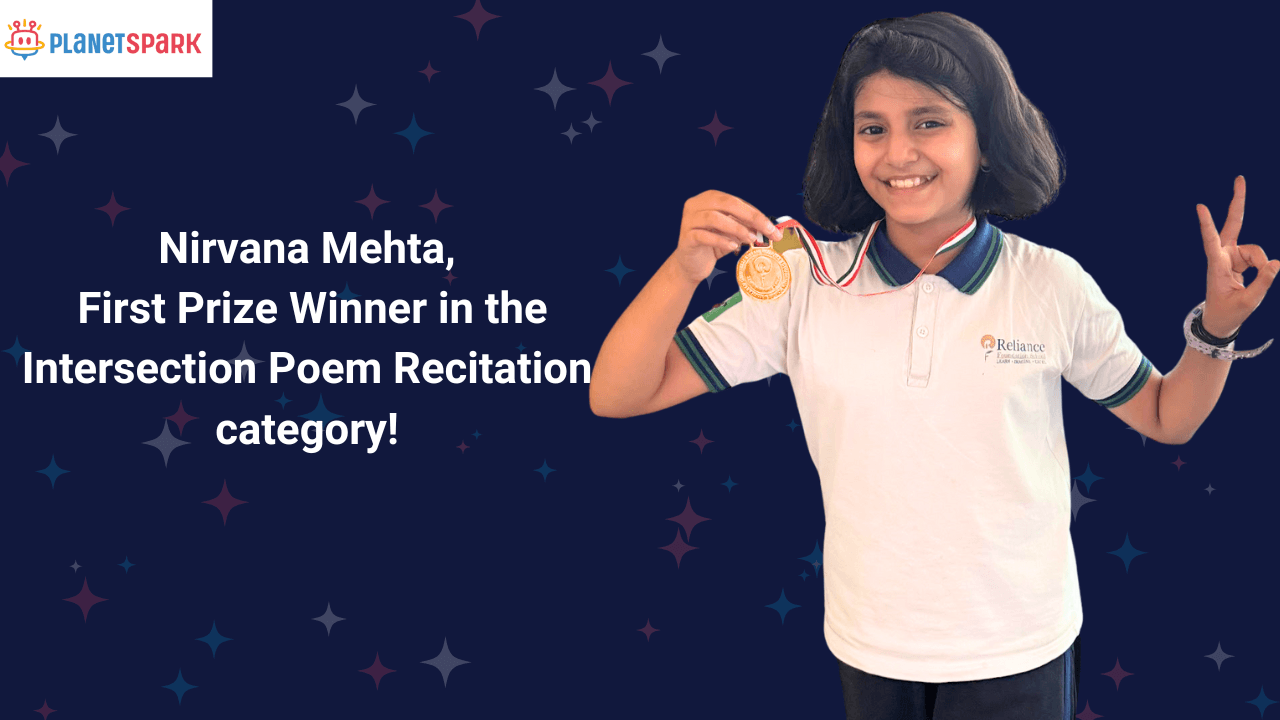
Nirvana Mehta Triumphs as First Prize Winner in Poem Recitation
Nirvana Mehta has emerged as the First Prize Winner in the Intersection Poem Recitation category, impressing everyone with her confidence, expressive delivery, and flawless voice control. Her achievement reflects the impact of consistent practice and expert guidance in developing strong communication and public speaking skills at PlanetSpark. Nirvana’s journey is a shining example of how dedication, mentorship, and structured learning can help young learners master essential skills and shine on stage.
Frequently Asked Questions
Skill mastery is becoming truly proficient at a skill through practice, guidance, and consistent effort.
It builds confidence, independence, and prepares learners for academic and real-life challenges.
The time varies depending on the skill, practice frequency, and learning methods used.
Yes, parents can provide encouragement, resources, feedback, and create a positive learning environment.
Common challenges include inconsistency, fear of mistakes, low focus, and limited resources.
PlanetSpark offers structured programs, expert guidance, interactive lessons, and personalized feedback.