
A Complete Guide To SMART Goals for Students
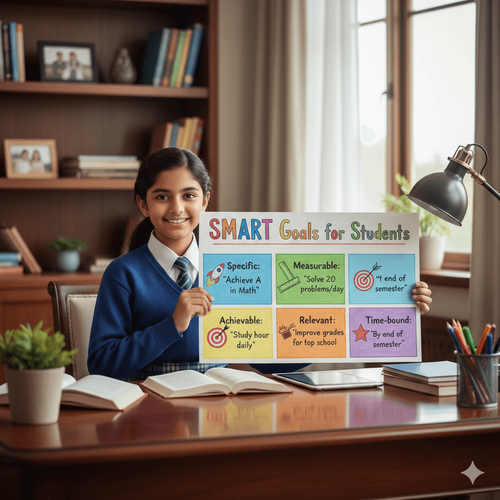

Table of Contents
- What Are SMART Goals for Students?
- Understanding the SMART Framework: Breaking Down Each Compon
- Why SMART Goals Work for School Students?
- 15 SMART Goals Examples for Students
- How to Set SMART Goals: A Step-by-Step Process for Kids
- Tips for Achieving Your SMART Goals Successfully
- Common Mistakes to Avoid When Setting Student Goals
- How PlanetSpark Helps Students Achieve Their Goals?
- Start Your Goal-Setting Journey Today with PlanetSpark
Are you a student struggling to stay focused on your studies? Do you find it hard to complete assignments on time or improve your grades? The secret to academic success lies in setting SMART goals for students.
At PlanetSpark, we believe that every child has the potential to excel academically and personally when equipped with the right goal-setting strategies and communication skills. Let's explore how SMART goals can transform your learning journey and help you achieve your dreams.
What Are SMART Goals for Students?
SMART goals for students are specific objectives that help young learners achieve success in school and beyond. The term SMART is an acronym that stands for Specific, Measurable, Achievable, Relevant, and Time-bound. This powerful framework turns vague wishes like "I want to do better in school" into clear, actionable plans.
When students learn to set SMART goals, they develop critical life skills, including planning, time management, and self-monitoring. These student goals examples provide a roadmap that guides children from where they are now to where they want to be.
Understanding the SMART Framework: Breaking Down Each Component
S - Specific Goals for Students
The first element of SMART goals is being specific. A specific goal clearly answers the who, what, where, when, and why questions. Instead of saying "I want better grades," a specific goal would be "I want to improve my math grade from a C to a B."
When goals are specific, students know exactly what they need to work toward. This clarity eliminates confusion and helps young learners focus their energy on concrete actions rather than vague intentions.
M - Measurable Goals: Tracking Your Progress
Measurable goals allow students to track their progress and know when they've succeeded. For example, if your goal is to read more books, make it measurable by saying "I will read two books every month."
Research shows that monitoring progress can significantly increase the chances of meeting goals. When students can measure their achievements, they stay motivated and celebrate small wins along the way.
A - Achievable Academic Goals
Setting achievable goals means creating objectives that challenge you but remain realistic. An achievable goal considers your current situation, available time, and resources. While ambition is good, goals should not be impossible to reach.
For instance, if you're currently reading at grade level, aiming to read college-level books in one month isn't achievable. Instead, aim to improve reading speed by 10 words per minute over two months. This stretches your abilities without causing frustration.
R - Relevant Student Goals
Relevant goals align with your bigger dreams and interests. A relevant goal matters to your academic journey or personal growth. Before setting a goal, ask yourself: "Why is this important to me? How does this help my future?"
Research demonstrates a strong correlation between goal-setting and improved academic achievement among middle schoolers. When goals connect to what students care about, motivation naturally follows.
T - Time-Bound Goals with Deadlines
Every SMART goal needs a deadline. Time-bound goals create urgency and prevent procrastination. Instead of "I will study more," say "I will study for 30 minutes every day for the next four weeks."
Deadlines help students prioritize tasks and manage their time effectively. When you know exactly when you need to complete something, you're more likely to start working on it immediately.
Unlock Your Communication Potential with PlanetSpark.
Why SMART Goals Work for School Students?
Benefits of Setting Academic Goals
Goal-setting transforms how students approach learning. Here's why SMART goals for students are so effective:
- Improved Focus and Concentration: When you have clear goals, you know exactly what to work on each day. This reduces distractions and helps you concentrate on important tasks.
- Better Time Management Skills: Setting goals teaches students how to prioritize activities and use time wisely. These time management skills benefit students throughout their lives.
- Increased Motivation and Confidence: Studies consistently show that students who set goals perform better academically than those who avoid goal-setting. Each small success builds confidence and motivates continued effort.
- Enhanced Academic Performance: SMART goals provide structure that leads to better grades, improved study habits, and deeper understanding of subjects.
- Development of Life Skills: Learning to set and achieve goals prepares students for future challenges in college, careers, and personal life.
Unlock Your Communication Potential with PlanetSpark.
15 SMART Goals Examples for Students
Academic SMART Goals
1. Improve Math Grades "I will raise my math grade from a C to a B by the end of this semester by attending tutoring sessions twice weekly and completing 10 practice problems daily."
2. Reading Comprehension Goal "I will improve my reading comprehension by reading for 20 minutes every evening and answering three comprehension questions, aiming to increase my test scores by 10% over the next two months."
3. Homework Completion "I will complete all homework assignments on time by creating a daily schedule and working on homework from 4 PM to 5:30 PM every weekday for the entire semester."
4. Science Project Excellence "I will earn an A on my science fair project by researching for 30 minutes daily, completing my experiment by March 15th, and presenting my findings confidently."
5. Study Habits Development "I will develop better study habits by creating a study schedule, studying for one hour every school night, and reviewing notes within 24 hours of each class for the next eight weeks."
Personal Development Goals
6. Public Speaking Skills "I will overcome my fear of public speaking by volunteering to present in class at least twice this semester and joining the debate club by the end of this month." At PlanetSpark, we specialize in helping students build confidence in public speaking and communication through interactive online classes.
7. Time Management Mastery "I will improve my time management by maintaining a daily planner, prioritizing three important tasks each day, and reducing phone usage to 30 minutes on school nights for the next six weeks."
8. Building Friendship Skills "I will make new friends by starting conversations with two new classmates each week and joining one extracurricular activity within the next month."
Long-Term Academic Goals for Middle School and High School Students
9. GPA Improvement "I will increase my overall GPA from 3.0 to 3.5 by the end of the school year by meeting with teachers during office hours once per week and studying two hours daily."
10. College Preparation "I will prepare for college applications by researching five colleges, visiting three campuses, and writing my personal essay by December 31st."
11. Language Learning Achievement "I will learn conversational Spanish by practicing with language apps for 20 minutes daily and having one conversation with my Spanish teacher weekly for the next six months."
12. Athletic Goals "I will make the school basketball team by attending practice three times per week, improving my free-throw percentage to 70%, and conditioning for 30 minutes daily over the next three months."
13. Creative Writing Development "I will develop my creative writing skills by writing one short story per month and submitting at least three stories to the school literary magazine this academic year."
14. Leadership Skills "I will develop leadership skills by running for class representative next month and organizing one school event this semester."
15. Digital Literacy Goals "I will learn to type 60 words per minute by practicing on typing websites for 15 minutes daily over the next two months."
How to Set SMART Goals: A Step-by-Step Process for Kids
Step 1: Identify What You Want to Achieve
Start by thinking about areas where you want to improve. Ask yourself questions like: What subjects are challenging? What skills do I want to develop? What would make me proud of myself?
It's important that goals come from the child rather than a parent or teacher, as choosing their own goals ensures motivation.
Step 2: Make Your Goal Specific
Take your general idea and add specific details. Instead of "get better at reading," specify "read 15 pages of a chapter book every night before bed."
Step 3: Add Measurable Criteria
Decide how you'll track progress. Will you count pages read, points earned, or minutes spent practicing? Make sure you can measure your success clearly.
Step 4: Check If It's Achievable
Be honest about whether your goal is realistic. Consider your schedule, resources, and current abilities. Challenge yourself, but don't set yourself up for failure.
Step 5: Ensure It's Relevant
Connect your goal to your bigger dreams. Understanding why a goal matters increases commitment and motivation.
Step 6: Set a Deadline
Choose a specific end date. Having a deadline creates urgency and helps you stay on track. Break longer goals into smaller milestones with their own deadlines.
Tips for Achieving Your SMART Goals Successfully
Create a Goal-Tracking System
Write your goals in a journal, planner, or goal-tracking app. Visual reminders keep goals top of mind. At PlanetSpark, our courses help students develop organizational skills and accountability practices that support goal achievement.
Break Large Goals into Smaller Steps
Large goals can feel overwhelming. Divide them into manageable daily or weekly tasks. For example, if your goal is to read 12 books in a year, focus on reading one book per month.
Celebrate Small Wins
Acknowledge progress along the way. Reward yourself when you complete milestones. Celebrations boost motivation and make the journey enjoyable.
Ask for Help When Needed
Don't hesitate to seek support from teachers, parents, or tutors. Asking for help shows maturity and increases your chances of success.
Review and Adjust Regularly
Check your progress weekly. If something isn't working, adjust your strategy. Flexibility is important in goal-setting.
Stay Positive and Patient
Progress takes time. Some weeks will be easier than others. Maintain a growth mindset and remember that setbacks are learning opportunities.
Unlock Your Communication Potential with PlanetSpark.
Common Mistakes to Avoid When Setting Student Goals
Setting Too Many Goals at Once
Focus on 2-3 goals at a time. Having too many goals divides your attention and reduces effectiveness.
Making Goals Too Vague
Avoid unclear statements like "do better in school." Always include specific details about what, when, and how.
Setting Unrealistic Expectations
While ambition is admirable, impossible goals lead to frustration and quitting. Start with smaller, achievable objectives.
Forgetting to Track Progress
Goals without measurement systems often fail. Regular check-ins keep you accountable and motivated.
Not Writing Goals Down
Experts say it's much harder to reach goals if they are not written down and expressed clearly. Written goals become commitments.
Unlock Your Communication Potential with PlanetSpark.
How PlanetSpark Helps Students Achieve Their Goals?
At PlanetSpark, we understand that communication skills and confidence are essential for achieving any academic or personal goal. Our online classes help students in grades 1-12 develop:
- Public Speaking and Presentation Skills: Learn to express ideas clearly and confidently in front of audiences
- Creative Writing Abilities: Develop storytelling skills that enhance academic writing and creativity
- Critical Thinking: Build analytical skills that improve problem-solving across all subjects
- Grammar and Language Mastery: Strengthen English language foundation for better academic performance
- Confidence Building: Overcome stage fear and develop self-assurance in all situations
Our expert teachers guide students through personalized learning paths, helping them set and achieve their own SMART goals for communication excellence.

Start Your Goal-Setting Journey Today with PlanetSpark
SMART goals for students provide a clear pathway to academic success and personal growth. By setting Specific, Measurable, Achievable, Relevant, and Time-bound goals, young learners develop essential skills that serve them throughout life.
Whether you're working on improving grades, building new skills, or preparing for your future, the SMART framework transforms dreams into reality. Remember, every successful person started by setting clear goals and taking consistent action toward them.
Start small, stay consistent, and celebrate every achievement along the way. Your future self will thank you for the goals you set and work toward today.
Frequently Asked Questions
SMART goals for students are Specific, Measurable, Achievable, Relevant, and Time-bound objectives that help them stay focused and improve academic performance. This framework transforms vague wishes into clear action plans.
SMART goals improve time management, boost motivation, and help students track progress effectively. They make learning more structured and help students achieve better grades and personal growth.
Students should identify a clear target, make it measurable, ensure it’s realistic, link it to their academic needs, and assign a deadline. Breaking big goals into smaller tasks makes them easier to achieve.
Yes! SMART goals help students improve confidence, communication, leadership, and time management. They support personal growth beyond academics and prepare students for future challenges.
Examples include: improving a grade by a specific percentage, completing homework daily, reading 20 minutes each night, or practicing a skill for a set duration each week.