
Importance of Socio Emotional Development in Learning
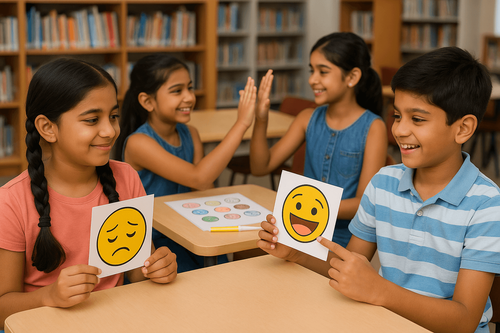

Table of Contents
- What Is Emotional Development and How Does It Connect to Lea
- The Core Skills That Make Up Socio-Emotional Development
- How Socio Emotional Development Changes at Different Ages
- Why Schools and Classrooms Need to Prioritise Socio-Emotiona
- Practical Ways Parents Can Support Emotional Development at
- How PlanetSpark Builds Socio-Emotional Skills Alongside Comm
- Emotional Growth Is the Foundation That Makes All Other Lear
Grades, test scores, and academic achievement often dominate conversations about education. But there is a quieter, equally powerful force shaping how well a child, or even an adult, learns: socio-emotional development. It is the foundation that determines whether a student can focus in class, handle frustration, work well with others, and bounce back from failure.
So what is emotional development, and why does it matter so much for learning? In simple terms, emotional development is the process of learning to understand, express, and manage your emotions. It starts in infancy and continues throughout life. Socio emotional development expands on this by adding the social layer, how we form relationships, show empathy, communicate our needs, and navigate the world around us.
When socio-emotional development is strong, learning becomes easier. Students pay attention better, participate more confidently, and handle setbacks without falling apart. When it is weak, even the brightest learners struggle. They may act out, shut down, avoid challenges, or have trouble making friends.
In this guide, we will explore why socio emotional development is essential for effective learning, what emotional development looks like at different stages, and practical ways parents, educators, and learners can strengthen these skills for better outcomes in school and beyond.
What Is Emotional Development and How Does It Connect to Learning?
Before we can understand socio emotional development, it helps to answer a more basic question: what is emotional development? It is the gradual process through which a person learns to recognise their own emotions, understand what triggers them, and develop healthy ways to respond.
A toddler throwing a tantrum because they cannot have a toy is at the very beginning of this journey. They feel frustrated but do not yet have the tools to manage that feeling. A teenager who takes a deep breath before responding to a harsh comment has developed further along the emotional development spectrum. An adult who calmly navigates a workplace disagreement has refined these skills even more.
Emotional development does not happen in isolation. It is deeply connected to how we learn. Think about what happens when a student feels anxious before a test. If their emotional development is strong, they can recognise the anxiety, use coping strategies, and still perform well. If it is underdeveloped, that same anxiety can shut down their ability to think clearly, recall information, or even sit still.
Research from the Collaborative for Academic, Social, and Emotional Learning (CASEL) consistently shows that students with strong socio-emotional skills perform better academically, have fewer behavioural problems, and report greater well-being. Emotional development is not separate from academic learning. It is the engine that makes academic learning possible.
The Core Skills That Make Up Socio-Emotional Development
Socio-emotional development is not a single skill. It is a collection of abilities that work together to help a person navigate both their inner world and their relationships with others. Understanding these core skills makes it easier to recognise where a child or learner might need support.
Self-awareness. Knowing what you are feeling and why. A child who can say "I am frustrated because this maths problem is hard" has stronger self-awareness than one who simply slams their book shut. Self-awareness is the starting point of all emotional development because you cannot manage an emotion you cannot name.
Self-regulation. The ability to manage your emotions and behaviour, even when things are difficult. Self-regulation is what helps a student stay focused during a boring lesson, resist the urge to interrupt, or calm down after an argument with a friend. It does not mean suppressing emotions. It means responding to them in healthy, appropriate ways.
Social awareness. Understanding and empathising with the feelings of others. Socially aware learners can read the mood of a classroom, show kindness to a struggling classmate, and appreciate perspectives different from their own. It is the foundation of teamwork and collaboration.
Relationship skills. The ability to build and maintain healthy connections. Communicating clearly, listening actively, resolving conflicts, and cooperating with others all fall under this category. Strong relationship skills make group projects, classroom discussions, and even playground interactions smoother and more productive.
Responsible decision-making. Making thoughtful choices about behaviour and interactions. A student who considers how their actions affect others before acting is practising responsible decision-making. It connects directly to academic integrity, peer relationships, and long-term goal setting.
Together, these five areas form the backbone of socio-emotional development. When they are strong, learning environments become more positive, productive, and inclusive for everyone.
How Socio Emotional Development Changes at Different Ages
Emotional development is not a one-time event. It unfolds gradually across childhood, adolescence, and even adulthood. Understanding what healthy emotional development looks like at each stage helps parents and educators provide the right kind of support.
Early childhood (ages 3 to 5). Young children are just beginning to identify and name basic emotions like happy, sad, angry, and scared. They are learning to share, take turns, and understand that other people have feelings too. At this stage, emotional development is heavily shaped by the adults in a child's life. Simple actions like naming emotions, reading stories about feelings, and modelling calm responses to frustration make a huge difference.
Primary school years (ages 6 to 10). Children develop a much wider emotional vocabulary and start understanding more complex feelings like embarrassment, jealousy, and pride. Friendships become more important, and conflicts with peers provide real opportunities to practise socio-emotional skills. This is when self-regulation becomes more visible. Can a child handle losing a game? Can they wait their turn during a group activity? Can they apologise when they are wrong?
Pre-teens and teenagers (ages 11 to 17). Adolescence brings intense emotional experiences, heightened social pressure, and a growing need for independence. Emotional development at this stage involves learning to manage stress, navigate complex social dynamics, develop a sense of identity, and make decisions with long-term consequences. Teens with strong socio-emotional development are better equipped to handle peer pressure, academic stress, and the emotional ups and downs of growing up.
Young adults and beyond. Emotional development does not stop at 18. Adults continue refining their ability to manage emotions, build meaningful relationships, and respond to challenges with resilience. Professionals who understand their own emotional patterns and can empathise with colleagues are consistently more effective leaders and collaborators.
At every stage, the principle is the same. Emotional development provides the internal toolkit that allows a person to engage with learning, relationships, and challenges in a healthy, productive way.
Why Schools and Classrooms Need to Prioritise Socio-Emotional Development
For decades, education systems have focused almost entirely on academic content. Maths, science, reading, and testing have dominated school priorities. Socio emotional development was treated as something that happened naturally at home, not something schools needed to teach.
That thinking is changing, and the research is clear about why. A landmark meta-analysis by CASEL, covering over 200 studies and nearly 300,000 students, found that schools implementing socio-emotional learning (SEL) programs saw an average 11-percentile increase in academic achievement. Students also showed improved behaviour, reduced emotional distress, and better attitudes toward school.
The reason is straightforward. A child who feels safe, understood, and emotionally supported in the classroom is far more likely to take risks, ask questions, and persist through difficult work. A child who feels anxious, excluded, or unable to manage their emotions will struggle to learn, no matter how good the curriculum is.
Socio-emotional development in schools is not about adding another subject to an already packed timetable. It is about weaving emotional skills into the way teaching already happens. Morning check-ins where students share how they are feeling. Group projects that require collaboration and conflict resolution. Teacher responses that validate emotions instead of dismissing them. These small shifts create classrooms where both emotional development and academic learning thrive.
Schools that invest in socio-emotional development are not choosing well-being over academics. They are recognising that wellbeing and academics are inseparable. When students feel emotionally equipped, they learn more, learn faster, and enjoy the process.
Practical Ways Parents Can Support Emotional Development at Home
Parents play the single biggest role in a child's socio-emotional development. The emotional climate at home shapes how children understand feelings, handle conflict, and relate to others. The good news is that supporting emotional development does not require special training. It starts with small, everyday actions.
Name emotions openly. When your child is upset, help them label what they are feeling. "It looks like you are feeling frustrated because your tower fell down." Naming emotions teaches children that feelings are normal and manageable. Over time, they learn to identify their own emotions without help.
Model healthy emotional responses. Children learn more from watching you than from anything you tell them. If you handle stress calmly, talk about your own feelings openly, and apologise when you make a mistake, your child absorbs those patterns. If you yell, shut down, or dismiss emotions, they learn that too.
Create space for conversation. Regular, low-pressure conversations about how your child's day went, what made them happy, what was hard, and how they handled it build emotional awareness naturally. Avoid jumping to solutions. Sometimes children just need to feel heard.
Let them struggle a little. It is tempting to fix every problem for your child, but emotional development grows through experience. When a child works through a disagreement with a friend, handles a disappointing grade, or manages a moment of anger on their own, they build resilience that protects them for years to come.
Praise effort and emotional courage, not just results. Saying "I am really proud of how you stayed calm when that happened" teaches a child that managing emotions is valuable and worth recognising. It reinforces the idea that emotional development matters just as much as getting the right answer.
These everyday habits create a home environment where emotional development is nurtured naturally. Over time, children raised with this kind of support become more self-aware, more empathetic, and more confident learners.
How PlanetSpark Builds Socio-Emotional Skills Alongside Communication and Confidence
Socio-emotional development does not happen through worksheets or lectures. It grows through interaction, practice, and supportive guidance. That is exactly the kind of environment PlanetSpark creates for learners.
PlanetSpark's programs are designed to develop the whole child, not just academic or technical skills. Through live, interactive sessions, children build the communication, confidence, and emotional awareness that support stronger socio-emotional development.
Here is what makes PlanetSpark's approach effective:
1:1 live sessions with expert mentors. Every child receives personalised attention from trained coaches who understand how to nurture emotional development alongside communication skills. Sessions are adapted to each child's personality, pace, and comfort level.
Safe, encouraging learning environment. Children are encouraged to express themselves, share ideas, and take creative risks without fear of judgment. Feeling safe is essential for both emotional development and genuine learning.
Activities that build self-awareness and empathy. Storytelling, role-playing, discussions, and presentations naturally develop socio-emotional skills. Children learn to understand different perspectives, manage nervousness, and communicate their thoughts with clarity and confidence.
Confidence through real practice. Presenting stories, debating ideas, and participating in interactive sessions help children overcome shyness and build the kind of self-belief that supports stronger emotional and social growth.
Flexible programs for different ages and goals. Whether your child needs help with public speaking, creative writing, or overall confidence building, PlanetSpark offers structured pathways that develop both skill and emotional resilience.
When children feel confident in who they are and how they express themselves, their socio-emotional development accelerates. PlanetSpark provides the space and support for that growth to happen.

Emotional Growth Is the Foundation That Makes All Other Learning Possible
We often measure learning by grades, scores, and certificates. But underneath every academic achievement is a foundation of socio-emotional development that made it possible. The ability to focus when things are difficult, to work well with others, to manage frustration, and to believe in yourself, these are the skills that truly determine how far a learner can go.
Understanding what emotional development is and how it shapes learning at every age is the first step. Supporting it, whether as a parent, a teacher, or a learner yourself, is the step that makes the real difference.
Start with small actions. Name emotions at home. Create safe spaces for honest conversations. Encourage effort and resilience, not just results. And if you want structured support to help your child build the communication and confidence skills that strengthen emotional development, PlanetSpark is a great place to begin. The strongest learners are not just the smartest ones. They are the ones who understand themselves and the people around them.
Frequently Asked Questions
PlanetSpark builds socio-emotional skills through live, interactive sessions that develop communication, confidence, empathy, and self-expression. Children practise presenting ideas, working through challenges, and expressing themselves in a safe, supportive environment.
Yes. Research consistently shows that students with strong socio-emotional skills perform better academically, stay more focused, and show greater motivation and resilience in the classroom.
Emotional development begins in infancy, when babies start recognising comfort and distress. It continues developing throughout childhood, adolescence, and adulthood, with each stage bringing new emotional skills and challenges.
Emotional development focuses on understanding and managing your own feelings. Socio emotional development includes that plus the social side, like building relationships, working with others, and understanding different perspectives.
Socio-emotional development is the process of learning to understand your own emotions, manage your behaviour, build healthy relationships, and show empathy for others. It affects how well a person learns, communicates, and handles challenges.