
Stage of Personality Development Explained at PlanetSpark


Personality development is the journey of growing, learning, and shaping who we are as individuals. From the moment a child is born, they begin forming thoughts, emotions, and behaviors that make them unique. Every child experiences different stages of child development, each with its own milestones, challenges, and opportunities. Understanding the stage of personality development helps parents, teachers, and caregivers provide the right guidance, support, and environment for children to grow into confident, expressive, and well-rounded individuals.
At PlanetSpark, we focus on nurturing these stages with fun activities, interactive exercises, and structured learning, ensuring that children experience continuous personality growth. This approach not only helps children improve socially and emotionally but also builds the foundation for long-term success in academics, hobbies, and personal life.
By recognizing each stage of development, parents and educators can track progress, celebrate achievements, and intervene early if a child needs additional support. This proactive approach creates a positive environment where children feel secure, encouraged, and motivated to explore their abilities. Understanding child development stages is key for ensuring that every child reaches their full potential and develops a strong, adaptable personality.
What is Personality Development?
Personality development is the process through which a child learns about themselves, their emotions, and how they interact with the world. It is not limited to social skills or confidence - it also includes emotional awareness, cognitive abilities, behavior management, and the ability to build meaningful relationships.
Components of Personality Development
Emotional Growth: Learning to recognize, understand, and manage feelings such as happiness, sadness, anger, or fear.
Social Skills: Developing the ability to communicate, cooperate, and build friendships.
Cognitive Growth: Improving thinking, reasoning, and problem-solving abilities.
Behavioral Growth: Learning appropriate responses to different situations, including discipline, responsibility, and self-control.
Table: Personality Development Areas
| Area | Description | Example Activity |
|---|---|---|
| Emotional | Understanding and managing feelings | Drawing emotions, storytelling |
| Social | Building relationships and communication skills | Group games, role-play |
| Cognitive | Thinking, reasoning, and learning new concepts | Puzzles, memory games |
| Behavioral | Developing habits and responses to situations | Helping at home, classroom tasks |
Every interaction, playtime activity, or classroom exercise contributes to personality growth in children. Simple daily experiences - like sharing toys, listening to a story, or solving a puzzle - help children develop essential personality traits that last a lifetime.
Why It Matters at a Young Age
Starting personality development early helps children:
Recognize their strengths and weaknesses
Build self-esteem and confidence
Express emotions in healthy ways
Understand others’ perspectives
Adapt to new situations more easily
Why Personality Development Matters?
Personality development is essential because it lays the foundation for a child’s future growth. It shapes not just how a child interacts socially but also how they think, solve problems, and handle emotions. Understanding the stage of child development ensures children get age-appropriate guidance and activities, allowing them to thrive at each milestone.
Key Benefits of Personality Development
Builds Confidence: Children learn to trust themselves, make decisions, and feel proud of their abilities.
Improves Communication: Developing verbal and non-verbal communication skills helps children express thoughts, ask questions, and share ideas.
Supports Academic Growth: Strong personality traits, such as curiosity, focus, and discipline, improve learning outcomes.
Encourages Emotional Intelligence: Children learn to recognize and manage their emotions while understanding others’ feelings.
Strengthens Relationships: Empathy, cooperation, and social skills allow children to form meaningful connections with peers, teachers, and family.
Bullet List: Long-Term Benefits of Early Personality Development
Recognizing personal strengths and weaknesses early
Enhancing critical thinking and problem-solving abilities
Building resilience to face challenges confidently
Developing teamwork and leadership skills
Preparing for a balanced personal and professional life
How Personality Development Happens at Each Stage
Through play: Interactive games teach social skills and cooperation.
Through storytelling: Stories help children understand emotions, moral lessons, and consequences.
Through creative activities: Art, music, and role-play enhance self-expression and imagination.
Through guided practice: Encouragement from parents and educators helps children learn discipline, responsibility, and empathy.
Recognizing child development stages allows caregivers to provide activities tailored to each phase, ensuring that children achieve the best possible outcomes. At PlanetSpark, we combine structured programs with fun learning experiences to support children’s personality growth, helping them build confidence, emotional intelligence, and social skills in a holistic way.
"Confidence begins early."
Unlock your child’s potential with PlanetSpark Personality Development Course.
Stages of Personality Development
Every child goes through several stages of development that shape their personality. These stages are unique, and each stage comes with specific child development milestones. Understanding them helps parents and educators guide children effectively and encourage personality growth in children.
Main Stages of Personality Development
Baby Stage (0–2 years)
Toddler Stage (2–4 years)
Early Childhood Stage (4–7 years)
School Age Stage (7+ years)
Each stage focuses on different aspects of growth: emotional, social, cognitive, and behavioral. By tracking these child development stages, parents can support children in developing strong personality traits like confidence, curiosity, empathy, and communication skills.
Table: Overview of Personality Development Stages
| Stage | Key Focus Areas | Personality Skills Developed |
|---|---|---|
| Baby Stage | Sensory and emotional growth | Attachment, recognition, early emotions |
| Toddler Stage | Social interaction and motor skills | Independence, sharing, early language |
| Early Childhood Stage | Cognitive and emotional expression | Creativity, self-control, curiosity |
| School Age Stage | Academic, social, and moral learning | Responsibility, problem-solving, teamwork |
Why Understanding These Stages Matters
Ensures children get the right support at the right time
Helps identify strengths and areas needing guidance
Encourages healthy personality growth in children
Supports emotional intelligence and social adaptability
Fun Example:
A toddler learning to share toys is practicing social skills and developing empathy. Similarly, a school-age child solving a puzzle improves cognitive skills while building confidence. These experiences contribute directly to a child’s overall personality development.
Baby Stage
The baby stage is the first phase of personality development, starting from birth to around 2 years. At this stage, children learn to trust their caregivers, recognize people, and start forming early emotional bonds. This phase lays the foundation for all future stages of child development.
Key Features of the Baby Stage
1. Emotional Growth
Babies develop attachment to parents or caregivers.
They start expressing basic emotions: happiness, sadness, fear, and surprise.
Responsive caregiving strengthens trust and security.
2. Cognitive Development
Babies begin to notice shapes, colors, sounds, and movements.
Early learning happens through sensory exploration - touching, tasting, looking, and listening.
They start recognizing familiar faces and objects.
3. Social Skills
Babies learn to communicate needs through crying, cooing, and gestures.
They respond to facial expressions and tone of voice.
Early interactions with parents help them understand empathy and attention.
4. Behavioral Development
Routine activities like feeding, sleeping, and play shape habits.
Repetition helps babies understand cause and effect, leading to early problem-solving skills.
Observing caregivers teaches basic social behavior and reactions.
Milestones in the Baby Stage
| Age Range | Milestone Examples | Personality Impact |
|---|---|---|
| 0–6 months | Smiling, recognizing voices, cooing | Early emotional attachment, trust |
| 6–12 months | Crawling, waving, responding to name | Independence, social awareness |
| 12–24 months | First words, simple play, imitating adults | Language skills, curiosity, confidence |
Activities to Support Personality Growth in Babies
Interactive Play: Peek-a-boo, stacking blocks, and sensory toys
Storytelling & Singing: Enhances language recognition and emotional bonding
Social Interaction: Playdates or family interaction to develop early social skills
Routine Practice: Encourages discipline and understanding of day-to-day activities
By supporting babies during this first stage of personality development, caregivers lay a strong foundation for all later stages. Babies learn to trust, explore, communicate, and express emotions - skills that are essential for lifelong personality growth in children.
"Every child is unique."
Nurture their individuality through tailored personality growth programs at PlanetSpark.
Toddler Stage
The toddler stage covers children roughly from 2 to 4 years of age. This is a crucial period in the stage of personality development because toddlers start becoming more independent and curious about the world around them. It is also the time when they begin experimenting with language, social interaction, and early problem-solving, laying the groundwork for personality growth in children.
Key Features of the Toddler Stage
1. Emotional Growth
Toddlers begin expressing a wider range of emotions: excitement, frustration, and empathy.
They may show separation anxiety, which is a natural part of learning trust and attachment.
Positive reinforcement from caregivers boosts confidence and emotional security.
2. Cognitive Development
Toddlers develop early problem-solving skills by exploring objects and understanding cause and effect.
They start recognizing patterns, shapes, and colors, improving memory and thinking.
Language skills expand rapidly, helping them express needs, thoughts, and ideas.
3. Social Skills
Toddlers begin interacting more with peers and adults outside their family.
Early sharing and cooperative play start during this stage.
Role-playing and pretend games help develop empathy and imagination.
4. Behavioral Development
Toddlers start testing boundaries and learning discipline.
They imitate adults and older children, which helps shape behavior.
Consistent routines support a sense of safety and understanding of rules.
Milestones in the Toddler Stage
| Age Range | Milestone Examples | Personality Impact |
|---|---|---|
| 2–3 years | Speaking in short sentences, early sharing | Confidence, social awareness |
| 3–4 years | Playing simple group games, asking questions | Curiosity, problem-solving, empathy |
Activities to Support Toddler Personality Growth
Interactive Play: Building blocks, puzzles, and simple board games
Creative Expression: Drawing, coloring, and role-playing games
Language Practice: Singing rhymes, storytelling, and asking questions
Social Interaction: Playdates, group activities, and sharing exercises
By nurturing toddlers during this stage of development, caregivers help them become confident, communicative, and emotionally aware. These skills form the foundation for more advanced learning and social interaction in the next stage.
"Small steps, big personality."
Help your child thrive at every stage with PlanetSpark’s expert guidance.
Early Childhood Stage
The early childhood stage generally includes children aged 4 to 7 years. This period is vital for personality growth in children, as they develop critical thinking, social understanding, and self-control. Children in this stage are eager to learn, explore, and express their ideas, making it an ideal time to support their stages of child development.
Key Features of the Early Childhood Stage
1. Emotional Growth
Children start recognizing complex emotions, such as pride, shame, and empathy.
They learn to manage emotions with guidance and understand consequences.
Confidence and self-esteem grow through achievements and encouragement.
2. Cognitive Development
Early childhood is a time of curiosity and problem-solving.
Children start understanding concepts like numbers, colors, and time.
Imaginative play and creative tasks enhance cognitive skills and innovation.
3. Social Skills
Children interact more with peers and develop friendships.
They learn cooperation, sharing, and basic conflict resolution.
Group activities help build teamwork and leadership skills.
4. Behavioral Development
Children understand routines, rules, and responsibilities better.
They start practicing self-discipline, patience, and decision-making.
Observation of adults and peers influences moral and ethical behavior.
Milestones in the Early Childhood Stage
| Age Range | Milestone Examples | Personality Impact |
|---|---|---|
| 4–5 years | Telling stories, drawing detailed pictures | Imagination, language skills |
| 5–7 years | Solving simple problems, participating in group activities | Confidence, teamwork, empathy |
Activities to Support Early Childhood Personality Growth
Creative Expression: Storytelling, art projects, and music classes
Social Learning: Group games, teamwork challenges, and role-play
Cognitive Activities: Puzzles, memory games, and simple experiments
Emotional Guidance: Discussing feelings, celebrating achievements, and problem-solving
Supporting children during this stage of development helps them become confident, curious, and socially aware. Encouraging self-expression, creativity, and emotional intelligence during early childhood sets the stage for success in the school age stage, which focuses more on academic, social, and moral growth.
"Personality shapes the future."
Enroll now in PlanetSpark Personality Development Course for holistic child growth.
School Age Stage
The school age stage generally covers children from 7 years onwards. This stage is critical for the stage of personality development because children spend more time outside the home, engage with peers, and face new challenges. It is a period where personality growth in children becomes more visible, as they develop confidence, social awareness, and decision-making skills.
Key Features of the School Age Stage
1. Emotional Growth
Children develop a stronger sense of identity and self-esteem.
They begin understanding complex emotions such as pride, guilt, and empathy.
Learning to handle success and failure builds resilience and emotional intelligence.
2. Cognitive Development
Logical thinking, problem-solving, and reasoning skills become more advanced.
Children develop a curiosity for learning, exploration, and experimentation.
Academic skills like reading, writing, and arithmetic are refined during this stage.
3. Social Skills
Peer relationships become highly influential, teaching cooperation, teamwork, and conflict resolution.
Group activities, sports, and classroom interactions strengthen leadership and communication skills.
Understanding social rules, fairness, and empathy improves moral development.
4. Behavioral Development
School-age children learn responsibility through tasks, homework, and routines.
Observing adults, teachers, and peers helps children form behavior patterns and moral understanding.
Independence grows, and children start making choices that affect their personal and social life.
Milestones in the School Age Stage
| Age Range | Milestone Examples | Personality Impact |
|---|---|---|
| 7–9 years | Completing simple projects, group play | Confidence, teamwork, problem-solving |
| 9–12 years | Taking on responsibilities, leadership roles | Independence, empathy, social awareness |
Activities to Support School Age Personality Growth
Group Projects & Team Sports: Builds cooperation, leadership, and empathy
Creative Expression: Writing stories, drawing, drama, and music to encourage self-expression
Problem-Solving Exercises: Puzzles, logic games, and challenges to enhance cognitive skills
Emotional Guidance: Role-playing situations, discussing feelings, and learning conflict resolution
By supporting children during the school age stage, parents and educators can ensure they develop confidence, responsibility, and strong social skills - critical components of a well-rounded personality.
"Grow confident, grow curious."
Support your child’s emotional and social development with PlanetSpark.
How Personality Develops at This Stage
Personality development is a continuous process, and during the school age stage, children consolidate skills gained in earlier stages while learning new ones. This stage is where personality growth in children becomes more structured and observable.
Factors Influencing Personality Development at School Age
1. Family Environment
Supportive parents and caregivers provide guidance and emotional security.
Encouragement and praise foster confidence and self-esteem.
Modeling positive behavior teaches children empathy, patience, and problem-solving skills.
2. School and Peers
Interaction with teachers and classmates helps children develop communication skills, teamwork, and social intelligence.
Group projects and extracurricular activities encourage responsibility and leadership.
Friendships teach negotiation, empathy, and conflict resolution.
3. Activities and Hobbies
Creative pursuits like art, music, or drama nurture imagination and self-expression.
Physical activities and sports develop discipline, teamwork, and resilience.
Reading and cognitive games strengthen curiosity, reasoning, and critical thinking.
4. Emotional Guidance
Discussing feelings openly helps children identify, understand, and manage emotions.
Encouraging problem-solving during challenges strengthens decision-making and resilience.
Recognizing achievements boosts self-confidence and motivation.
Practical Ways to Support Personality Growth
Encourage daily discussions about experiences and feelings.
Set achievable goals to build confidence and motivation.
Provide opportunities for teamwork and social interaction.
Engage children in creative problem-solving activities.
Celebrate successes to promote self-esteem and positive reinforcement.
Bullet List: Outcomes of Proper Personality Development at School Age
Improved emotional intelligence and empathy
Strong communication and leadership skills
Enhanced problem-solving and cognitive abilities
Ability to handle challenges and setbacks confidently
Better social relationships and teamwork skills
By understanding how personality develops at this stage, caregivers and educators can provide the right balance of guidance, freedom, and encouragement, ensuring children continue their personality growth and become well-rounded, confident individuals.
Why to Choose PlanetSpark Personality Development
Choosing the right platform for nurturing a child’s personality is essential. At PlanetSpark, we understand that every child is unique and passes through different stages of child development. Our programs are designed to support each phase of the stage of personality development, ensuring that children experience holistic personality growth while enjoying the learning process.
Key Features of PlanetSpark Personality Development Programs
1. Structured Learning for Every Stage
Activities are customized for the baby stage, toddler stage, early childhood stage, and school age stage.
Each stage focuses on age-appropriate emotional, cognitive, social, and behavioral development.
Tracking milestones ensures that children receive guidance at the right time.
2. Fun and Engaging Activities
Interactive games, storytelling, role-play, and creative exercises make learning enjoyable.
Children develop skills naturally through play-based learning.
Hands-on experiences encourage exploration, problem-solving, and imagination.
3. Holistic Personality Development
Focuses on emotional intelligence, social skills, cognitive abilities, and behavioral growth.
Helps children build confidence, empathy, communication skills, and resilience.
Encourages self-expression and creative thinking in a supportive environment.
4. Experienced Mentors and Educators
Trained mentors understand the unique needs of children at each stage.
Guidance is provided with patience, empathy, and positive reinforcement.
Regular assessments ensure that progress is tracked and celebrated.
5. Flexible and Accessible Learning
Programs are designed to fit busy schedules, making it easy for working parents and children to participate.
Online and interactive sessions ensure learning continues beyond the classroom.
Personalized attention allows children to grow at their own pace.
Bullet List: Benefits of Choosing PlanetSpark
Tailored activities for each stage of child development
Focus on emotional, cognitive, social, and behavioral growth
Confidence and communication skills improvement
Engaging, interactive, and fun learning experiences
Continuous monitoring and positive reinforcement
PlanetSpark ensures that children are not just learning, but also growing as confident, empathetic, and expressive individuals. By supporting each stage of development, we help children achieve their full potential in a nurturing and creative environment.
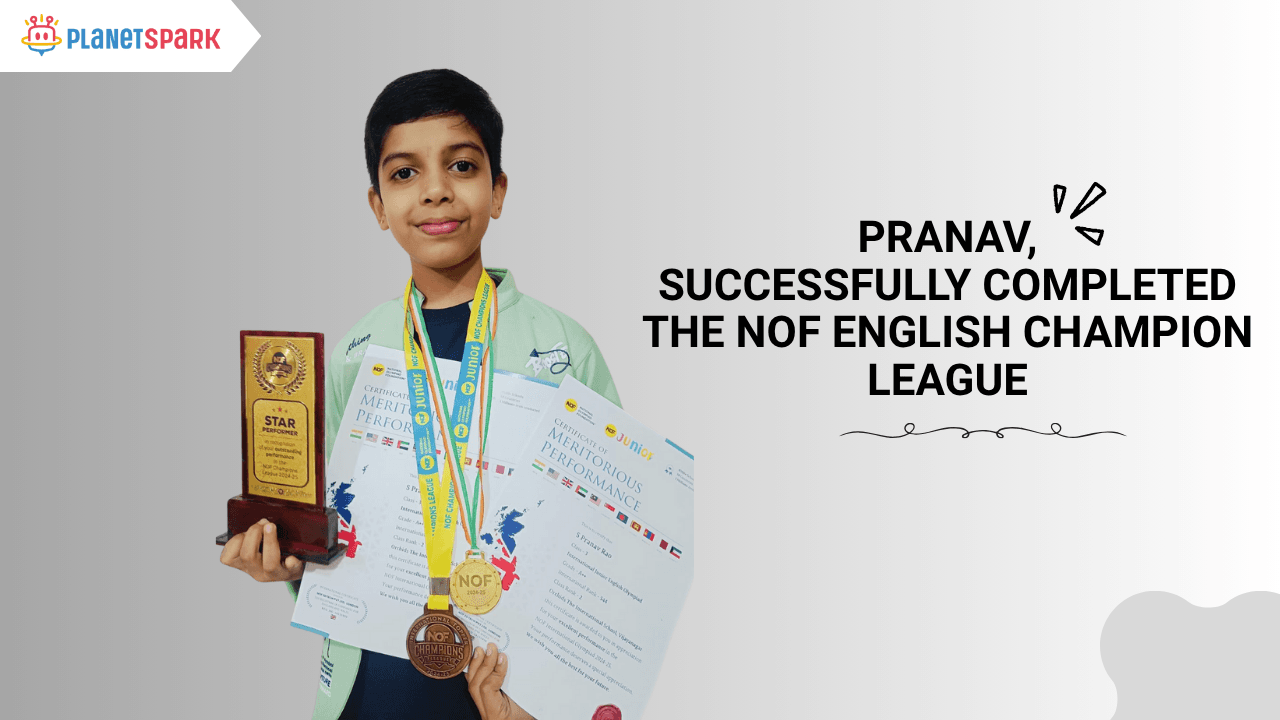
Pranav – A Rising Star in Personality Development
Pranav has shown remarkable growth in confidence and self-expression by successfully completing the NOF English Champion League. His skills in public speaking and creative writing highlight his strong personality development, showcasing effective communication, creativity, and confidence.
Conclusion
The journey of personality development begins at birth and continues through various stages of life. From the baby stage to the school age stage, each phase plays a crucial role in shaping a child’s personality, social skills, emotional intelligence, and cognitive abilities. Understanding these stages of child development helps parents, caregivers, and educators provide the right guidance, support, and encouragement.
By focusing on holistic personality growth in children, children learn to express themselves confidently, manage emotions, build friendships, and tackle challenges effectively. Activities tailored to each stage enhance learning, creativity, and problem-solving while promoting self-esteem and resilience.
At PlanetSpark, we combine structured learning, engaging activities, and expert guidance to ensure children thrive in every stage of development. Our programs focus on nurturing confident, empathetic, and socially aware individuals, preparing them for a bright and successful future.
"Learning emotions, learning life."
Boost your child’s confidence and social skills with PlanetSpark Personality Programs.
Frequently Asked Questions
Personality development is how a child learns to express themselves, handle emotions, interact socially, and develop cognitive and behavioral skills.
It helps parents and educators provide age-appropriate guidance, ensuring children grow confidently and socially aware at every stage.
There are four main stages: Baby Stage, Toddler Stage, Early Childhood Stage, and School Age Stage. Each stage focuses on different aspects of growth.
Toddlers develop early social skills, independence, curiosity, basic language, emotional expression, and problem-solving abilities.
During early childhood, children enhance creativity, cognitive skills, emotional understanding, and social interaction through play, learning, and guided activities.
Yes! Activities like storytelling, creative play, group games, and positive reinforcement support personality growth at home.