
Strategic Thinking Skills for Kids to Make Better Decisions Early


Table of Contents
Strategic thinking is more than just solving problems - it’s about planning, analyzing, and making decisions that lead to better outcomes. For kids, developing strategic thinking skills early can give them a head start in academics, sports, and daily life choices. When nurtured properly, these skills allow children to assess situations, think ahead, and make smart decisions.
Whether it’s deciding how to approach a school project, planning a weekend activity, or solving a tricky puzzle, strategic thinking equips kids to see multiple possibilities and choose the best course of action. It’s a skill that can grow with them into adulthood, benefiting both personal and professional life.
This blog will explore the meaning of strategic thinking, why it’s important, real-life examples, types, and key skills your child can develop.
What is Strategic Thinking?
Strategic thinking meaning refers to the ability to see the bigger picture, anticipate challenges, and plan actions to achieve specific goals. It is a mindset that blends creativity, logic, and foresight.
In simpler terms for kids, strategic thinking is a process where they learn to:
Analyze situations before acting
Weigh pros and cons of each option
Predict potential outcomes
Make thoughtful decisions rather than impulsive choices
Key points about strategic thinking:
It is not just planning but also evaluating and adapting as situations change.
It helps children approach problems methodically.
It combines both critical thinking and creative thinking.
Table: Strategic Thinking vs Regular Thinking
| Feature | Regular Thinking | Strategic Thinking |
|---|---|---|
| Focus | Immediate solution | Long-term impact |
| Approach | Reaction-based | Analysis and planning |
| Outcome | Short-term | Sustainable and effective |
| Skills Used | Observation, memory | Problem-solving, foresight, logic |
Examples for kids:
Choosing how to spend pocket money wisely instead of impulsively buying toys.
Planning study schedules to complete homework before deadlines.
Strategically forming teams for games to increase chances of winning.
By understanding what strategic thinking is, kids can start practicing it in small ways every day, setting the foundation for better decision-making skills.
Why Strategic Thinking is Important for Kids
Developing strategic thinking skills early in life provides kids with a significant advantage in all areas of growth. Here’s why it matters:
1. Enhances Problem-Solving Abilities
Strategic thinking enables children to break down complex problems into smaller, manageable parts. Instead of panicking or guessing, they can analyze solutions, predict outcomes, and choose the most effective path.
2. Improves Decision-Making Skills
Kids learn to evaluate options carefully, anticipate consequences, and make informed decisions. This habit can prevent impulsive choices and teach responsibility from an early age.
3. Builds Confidence and Independence
When children see that their plans work, they gain confidence in their abilities. They start trusting their judgment and become more independent in tackling challenges.
4. Encourages Creativity and Innovation
Strategic thinking is not just about following rules - it encourages exploring new ideas and creative solutions. Kids learn to think “outside the box” while considering the bigger picture.
5. Prepares for Future Challenges
From academics to sports to social situations, strategic thinking prepares children to navigate life’s challenges efficiently. They develop foresight, adaptability, and resilience.
Bullet Points – Everyday Benefits for Kids:
Planning homework and play schedules efficiently
Saving and managing money wisely
Resolving conflicts with friends thoughtfully
Making smarter choices in games and activities
Setting and achieving personal goals
By integrating strategic thinking into daily routines, children can develop a mindset that helps them succeed in school, extracurriculars, and social situations.
“Every child deserves a confident voice.”
Nurture self-expression and leadership with Planetspark.
Examples of Strategic Thinking in Everyday Life
Strategic thinking is not just for school or work - it happens in everyday activities. When kids practice it, they learn to plan, anticipate, and act thoughtfully. Here are some practical examples of strategic thinking for kids:
Planning School Work
Breaking down a project into smaller tasks
Deciding which tasks to finish first based on difficulty
Creating a timetable to complete homework efficiently
Managing Time Wisely
Allocating time for play, study, and rest
Avoiding last-minute rushes by anticipating deadlines
Problem Solving in Games
Planning moves ahead in board games like chess
Strategically forming teams in group activities
Predicting opponents’ moves in sports
Daily Life Decisions
Choosing what to eat or wear based on activities of the day
Managing allowance money to save for something special
Organizing personal belongings for easy access
Table: Strategic Thinking Examples for Kids
| Area | Example | Skills Practiced |
|---|---|---|
| School Projects | Planning steps to complete an assignment on time | Planning, organization, foresight |
| Games | Chess, puzzles, or team strategy | Problem-solving, critical thinking |
| Daily Decisions | Saving pocket money, organizing schedule | Decision-making, time management |
| Social Interactions | Negotiating with friends or solving disputes | Communication, emotional intelligence |
Key Takeaway:
Strategic thinking is all around us. By recognizing these opportunities, kids can practice strategic thinking skills daily and gradually build confidence and foresight.
“Small steps, big impact.”
Empower your child with critical thinking and emotional intelligence at Planetspark.
Types of Strategic Thinking
Understanding the different types of strategic thinking helps kids apply the right approach in different situations. Each type develops a unique set of skills and habits.
1. Analytical Thinking
Focuses on breaking problems into smaller parts
Evaluates data and evidence before making a decision
Helps in schoolwork, experiments, and puzzles
2. Creative Thinking
Encourages new ideas and unconventional solutions
Supports problem-solving in games, projects, and art
Promotes innovation and flexibility
3. Critical Thinking
Involves questioning assumptions and evaluating outcomes
Useful in debates, reasoning exercises, and conflict resolution
Teaches kids to avoid impulsive decisions
4. Systems Thinking
Looks at how different parts of a problem or situation are connected
Helps understand consequences of actions in a broader context
Useful in group projects, community activities, and teamwork
5. Forward-Thinking
Focuses on planning for the future
Anticipates challenges and opportunities
Encourages goal setting and long-term decision-making
Bullet Points – Skills Developed by Each Type:
Analytical Thinking → Observation, logic, problem breakdown
Creative Thinking → Innovation, imagination, adaptability
Critical Thinking → Evaluation, reflection, reasoning
Systems Thinking → Connections, consequences, planning
Forward-Thinking → Goal setting, foresight, strategy
Key Insight:
By exploring these types, kids can understand that strategic thinking is a process that involves multiple skills. They can apply the right approach depending on the situation, whether it’s solving a puzzle, making a plan, or navigating social challenges.
“Confidence today, leaders tomorrow.”
Enroll in Planetspark’s Personality Development Course to help your child shine.
Strategic Thinking Skills You Can Learn
Developing strategic thinking skills is a gradual process that kids can practice every day. These skills not only improve decision-making but also enhance problem-solving, creativity, and confidence. Here are the most important strategic thinking skills for kids:
1. Planning and Organization
Learn to break tasks into smaller steps
Prioritize activities based on importance or deadlines
Keep track of goals and progress
2. Problem-Solving
Identify challenges clearly before acting
Explore multiple solutions and choose the best one
Learn from mistakes to improve future decisions
3. Critical Analysis
Observe and gather information carefully
Ask questions to understand situations deeply
Evaluate the pros and cons of each option
4. Creativity and Innovation
Think outside the box to find unique solutions
Experiment with new ways of doing things
Combine imagination with logic for better outcomes
5. Decision-Making
Anticipate consequences of different actions
Make thoughtful choices instead of reacting impulsively
Practice weighing short-term vs long-term results
6. Adaptability and Flexibility
Learn to adjust plans when situations change
Be open to new ideas and approaches
Build resilience through challenges
Table: Strategic Thinking Skills and How to Practice Them
| Skill | How to Practice for Kids | Benefit |
|---|---|---|
| Planning & Organization | Make weekly schedules, plan projects | Better time management |
| Problem-Solving | Solve puzzles, strategize in games | Smarter decision-making |
| Critical Analysis | Ask questions, observe outcomes | Deep understanding |
| Creativity & Innovation | Try new activities, invent solutions | Innovation & flexibility |
| Decision-Making | Choose tasks or games strategically | Thoughtful choices |
| Adaptability & Flexibility | Adjust plans during games or homework | Resilience & problem handling |
By practicing these skills regularly, kids can strengthen their strategic thinking and apply it in school, games, and even everyday life decisions.
Why Choose Planetspark Personality Development Course
The Planetspark Personality Development Course is designed to go beyond academics and focus on nurturing essential life skills in children. The program emphasizes strategic thinking, self-confidence, leadership, emotional intelligence, and social etiquette, helping kids become well-rounded individuals. Through activity-based learning and personalized guidance, children develop skills that support both personal and academic growth.
Key Features and Benefits:
Holistic Curriculum Beyond Academics: Covers communication etiquette, self-introduction, goal setting, peer interaction, leadership, self-awareness, and critical thinking.
Social-Emotional Learning (SEL) Based Design: Built on CASEL (Collaborative for Academic, Social, and Emotional Learning) principles to foster personal and interpersonal development.
Practical, Activity-Based Learning: Includes mock interviews, public introductions, journaling, feedback sharing, and real-life scenario simulations.
Leadership & Self-Presentation Training: Cultivates soft skills such as empathy, responsibility, assertiveness, and teamwork through engaging challenges.
Confidence Meter & Parent Consultations: Regular updates for parents on a child’s growth in confidence, openness, and leadership orientation.
Etiquette and Body Language Sessions: Teaches eye contact, posture, respectful communication, and tone modulation as part of personality grooming.
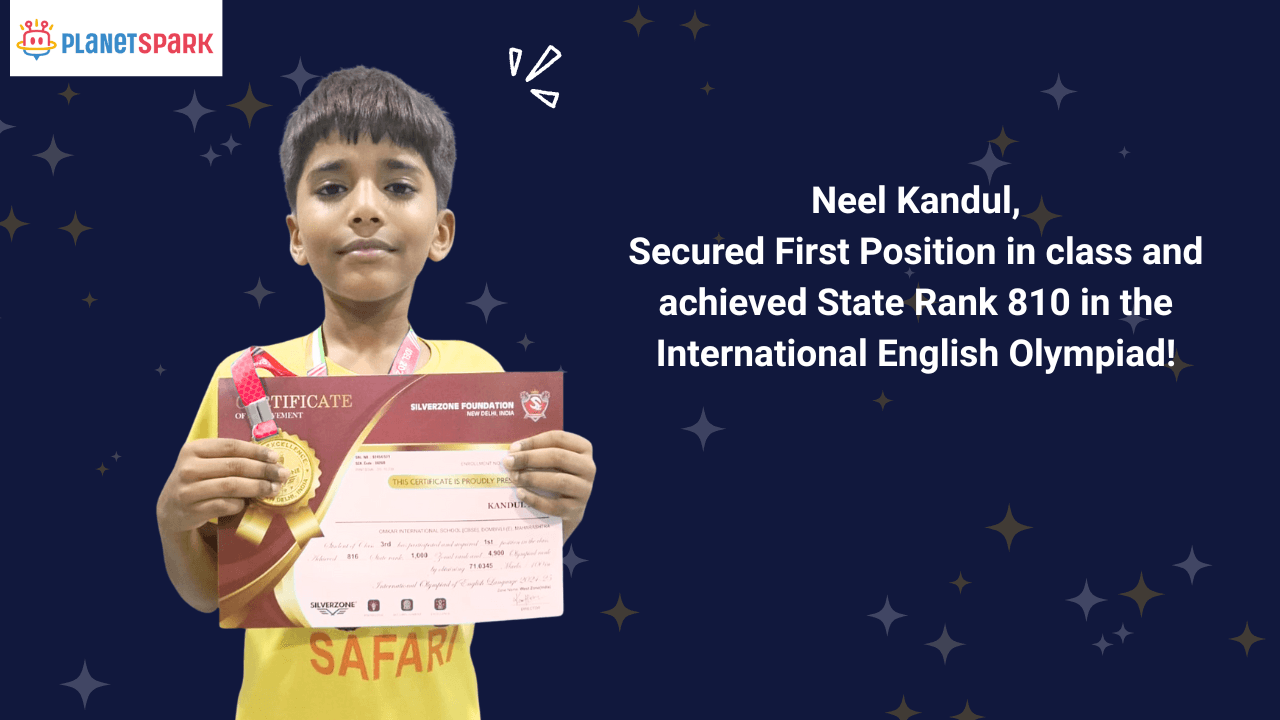
Neel Kandul – Confidence and Excellence in Action
PlanetSpark helped Neel develop strong communication, presentation, and self-expression skills, enabling him to excel academically and personally. His dedication and improved confidence led to achieving first position in class and State Rank 810 in the International Olympiad of English Language, reflecting the impact of holistic personality development.
Through Planetspark, Neel not only enhanced his language abilities but also strengthened leadership, critical thinking, and self-belief, skills that will benefit him throughout life.
Nurturing Strategic Thinking for Lifelong Success
Developing strategic thinking skills early empowers children to make smarter decisions, solve problems creatively, and approach challenges confidently. By understanding what strategic thinking is, exploring its types, practicing real-life examples, and learning essential skills, kids can build a strong foundation for both personal and academic growth.
Programs like the Planetspark Personality Development Course provide the perfect environment to cultivate these abilities. With a holistic, activity-based curriculum focusing on leadership, emotional intelligence, communication, and critical thinking, children not only enhance their strategic thinking but also grow into confident, well-rounded individuals ready to tackle future challenges.
By investing in strategic thinking education, you’re giving children the tools to plan effectively, anticipate outcomes, and make informed decisions that benefit them throughout life. Early practice of these skills helps kids navigate school, social situations, and everyday challenges with foresight and confidence, ensuring lifelong success.
“Great thinkers start young.”
Discover strategic thinking and life skills with Planetspark.
Frequently Asked Questions
Strategic thinking for kids is the ability to plan, analyze situations, and make smart decisions. It helps them solve problems, manage time, and anticipate outcomes in school, games, and daily life.
It develops critical thinking, problem-solving, creativity, and decision-making skills. Kids who practice strategic thinking grow more confident, independent, and prepared for challenges.
Children can start learning basic strategic thinking skills early, even through simple games, puzzles, or daily decision-making. These skills grow stronger as they practice and face real-life challenges.
Examples include planning homework schedules, saving money wisely, making team strategies in games, organizing school projects, or resolving conflicts with friends thoughtfully.
Some main types are analytical thinking, creative thinking, critical thinking, systems thinking, and forward-thinking. Each helps children approach different situations effectively.
Parents can encourage problem-solving, allow kids to plan activities, ask questions that stimulate thinking, provide real-life decision-making opportunities, and praise thoughtful choices.