
Top 10 Stress Resilience Techniques for Professionals


Table of Contents
- What Is Stress Resilience and Why Does It Matter for Profess
- Top 10 Stress Resilience Techniques for Professionals
- How This Helps in Personality Development
- What Makes Effective Resilience Training Programs Different
- Who Benefits Most from Building Stress Resilience Techniques
- Start Building Stress Resilience with PlanetSpark
Every professional reaches a point where performance pressure, back-to-back deadlines, and high-stakes responsibilities start to feel overwhelming. The question is never whether workplace stress will show up. The question is whether you have the resilience skills to handle it without it handling you.
Stress resilience techniques are not quick fixes or relaxation tricks. They are practical, trainable habits that help professionals stay grounded, think clearly, and keep performing at their best even when the environment around them is demanding, uncertain, or intense.
This blog walks you through the top 10 stress resilience techniques that working professionals can start applying immediately, and explains how building emotional resilience skills transforms not just how you handle pressure but how you grow as a person and as a leader. PlanetSpark's personality development programs are designed to help professionals build exactly this kind of resilience, from the inside out.
What Is Stress Resilience and Why Does It Matter for Professionals?
Stress resilience is the ability to absorb pressure, recover from setbacks, and continue functioning effectively without burning out. It is not about feeling no stress. It is about not being stopped by it.
For working professionals, resilience in the workplace directly affects decision-making quality, communication under pressure, relationships with colleagues, and the ability to lead effectively when things get difficult.

Professionals who develop strong resilience skills consistently outperform their peers not because they experience less stress but because they have developed the emotional and mental capacity to respond to it more effectively.
Emotional resilience skills go one level deeper. They involve self-awareness, emotional regulation, and the ability to process difficult experiences without letting them derail your performance or your professional relationships.
Without these skills, even highly talented professionals plateau, burn out, or make poor decisions under pressure. With them, the same pressure becomes fuel for growth.
Top 10 Stress Resilience Techniques for Professionals
1. Build a Consistent Daily Recovery Routine
One of the most underestimated stress resilience techniques is building deliberate recovery time into your day. High performance demands high recovery, and most professionals skip this entirely.
Recovery does not mean doing nothing. It means stepping away from work-mode with intention, whether through a short walk, a few minutes of stillness, or a brief change of environment between tasks.
Professionals who build consistent daily recovery routines maintain higher sustained performance levels, avoid the accumulated fatigue that leads to burnout, and show up to high-pressure situations with greater mental clarity.
Start with 10 minutes of intentional recovery at the midpoint of your workday and protect it like a meeting you cannot cancel.
2. Develop Emotional Awareness Before Emotional Regulation
Most resilience training programs jump straight to managing emotions without first building the awareness needed to identify them accurately. This is why so many programs fail to create lasting change.
Emotional resilience skills begin with emotional literacy: the ability to notice what you are actually feeling, label it precisely, and understand what is triggering it before attempting to change it.
A professional who recognises that what feels like anger in a difficult meeting is actually anxiety about being judged is in a much better position to respond effectively than one who simply tries to suppress the reaction.
Spend 5 minutes at the end of each day reviewing two questions: what did I feel today, and what triggered it? This simple practice builds the emotional self-awareness that makes all other resilience skills more effective.
3. Practice Reframing Under Pressure
Cognitive reframing is one of the most evidence-backed stress resilience techniques available to professionals. It involves deliberately shifting how you interpret a stressful situation to reduce its emotional impact and expand your response options.
This is not positive thinking. It is accurate thinking under pressure. When a project goes off-track, a resilient professional does not pretend everything is fine. Instead, they ask what this situation is actually telling them, what they can control, and what the realistic path forward looks like.
Reframing builds resilience in the workplace by preventing the catastrophising and tunnel-vision thinking that stress produces, replacing it with the calm, solution-focused perspective that high performance requires.
Practice this by writing down one stressful event each week and listing three alternative interpretations of it before deciding how to respond.
4. Strengthen Your Stress Response Through Physical Movement
The connection between physical movement and stress resilience is direct and well-established. Physical activity reduces the physiological effects of stress by regulating the body's stress hormone levels and improving the brain's capacity for clear thinking and emotional regulation.
For working professionals, this does not require a gym membership or a structured fitness program. It requires consistent movement throughout the day, including short walks, standing breaks, and any form of physical activity that raises your heart rate for 20 to 30 minutes three or more times per week.
Professionals who maintain consistent physical movement as part of their stress management routine develop stronger physiological resilience, recover faster from stressful events, and demonstrate greater emotional stability in high-pressure professional situations.
5. Set and Protect Intentional Boundaries
Resilience in the workplace is directly connected to the quality of the boundaries a professional sets around their time, energy, and availability. Professionals who never disconnect from work demands do not build resilience. They deplete it gradually until performance and health both suffer.
Setting intentional boundaries means being specific and deliberate about when you are available, what you take responsibility for, and where your professional limits genuinely lie. It requires the communication confidence to hold those limits even when there is social or organisational pressure to override them.
This is one of the most important resilience skills for professionals in leadership or client-facing roles, where the expectation of constant availability is often the greatest driver of chronic stress.
6. Build a Trusted Support Network at Work
Isolation amplifies stress. One of the most effective stress resilience techniques for professionals is deliberately investing in the relationships that provide perspective, practical support, and psychological safety when pressure increases.
A trusted professional support network does not mean having many work friends. It means having a small number of colleagues, mentors, or peers with whom you can speak honestly about challenges, share perspectives, and think through difficult situations without fear of judgment.
Professionals with strong workplace support networks recover from setbacks faster, experience lower levels of chronic stress, and demonstrate stronger resilience in the workplace over time than those who manage professional challenges in isolation.
Invest intentionally in two or three professional relationships where genuine trust and honest conversation are possible.
7. Develop a Structured Approach to Problem-Solving Under Stress
One of the reasons stress feels so overwhelming for many professionals is that it activates reactive, emotional thinking at exactly the moment when clear, structured thinking is most needed.
A structured approach to problem-solving acts as an anchor in high-pressure moments. When stress levels rise, having a reliable mental framework, such as defining the actual problem, identifying what you can and cannot control, listing three realistic options, and choosing one, reduces the emotional intensity of the situation by giving your mind a structured task to perform.
This is one of the resilience skills that benefits most from deliberate practice. The more familiar the framework becomes in low-pressure situations, the more naturally it activates when pressure is high.
8. Invest in Resilience Training Programs
Individual effort builds resilience, but structured resilience training programs accelerate it significantly. The difference between professionals who develop strong resilience over years of experience and those who develop it quickly is usually access to structured coaching, feedback, and deliberate practice in a supported environment.
Resilience training programs that are effective go beyond generic stress management advice. They assess individual emotional patterns, identify the specific situations and triggers that create the greatest vulnerability, and build personalised development plans that address the root causes of stress reactivity rather than just its symptoms.
PlanetSpark's personality development programs are built on exactly this model, combining expert coaching, personalised assessment, and structured skill-building to help working professionals develop genuine, lasting resilience rather than surface-level coping strategies.
9. Build Mindful Awareness Into Your Professional Routine
Mindfulness as a stress resilience technique is not about meditation retreats or lengthy daily practices. For working professionals, it means developing the ability to direct and sustain attention intentionally, particularly in high-pressure situations where stress pulls focus away from what matters most.
Professionals with stronger mindful awareness respond to difficult situations rather than reacting to them, maintain clearer thinking under pressure, and demonstrate more consistent emotional regulation across different professional contexts.
A practical starting point is a two-minute attention check before any high-stakes meeting or conversation: what am I bringing into this room, what outcome do I want, and what do I need to set aside to show up effectively?
10. Create Meaningful Goals That Connect Effort to Purpose
One of the most powerful long-term stress resilience techniques is clarity of purpose. Professionals who understand clearly why their work matters, what they are building toward, and what values are guiding their decisions are significantly more resilient under pressure than those operating without that clarity.
Purpose does not eliminate stress. It changes the relationship to it. When a professional understands that a difficult period serves a meaningful goal, the same pressure that would feel overwhelming in a purposeless context becomes manageable and even motivating.
Reviewing your professional goals quarterly and reconnecting explicitly to the purpose behind them is one of the most underutilised emotional resilience skills available to working professionals.
How This Helps in Personality Development
Stress resilience is not just a professional skill. It is a foundational dimension of personality development that shapes how you think, communicate, and carry yourself in every area of life.
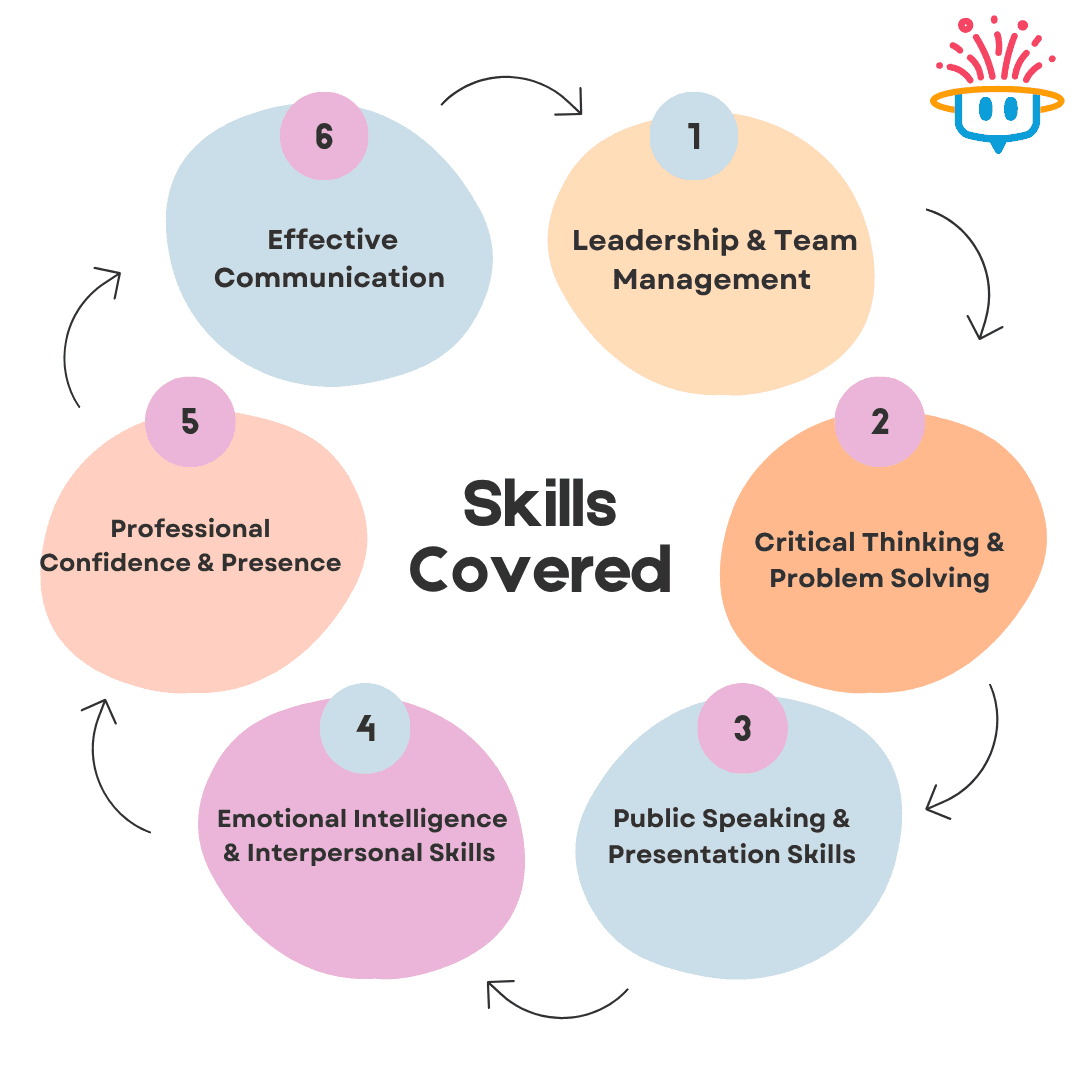
When you build genuine resilience skills, you develop the internal clarity that makes you more confident in how you express yourself, more consistent in how you show up under pressure, and more effective in how you influence the people and situations around you.
Emotional resilience skills build self-awareness, which is the starting point of all meaningful personality development. Without the ability to observe your own emotional patterns and responses, growth remains superficial and inconsistent.
Resilience training programs like those offered by PlanetSpark develop the behavioural consistency that is at the heart of strong personal presence. Professionals who respond with composure, think with clarity, and communicate with steadiness in difficult situations are not just managing stress better. They are demonstrating the kind of grounded, trustworthy character that defines a genuinely developed professional personality.
PlanetSpark's personality development programs connect resilience training directly to these outcomes, making stress resilience a core pillar of professional growth rather than an isolated skill.
What Makes Effective Resilience Training Programs Different
Not all resilience training programs deliver lasting results. The difference between programs that create real change and those that produce short-term improvement before reverting to old patterns comes down to a few specific design principles.
Effective programs start with personalised assessment. Generic resilience advice applied without understanding an individual's specific emotional patterns, professional triggers, and existing strengths rarely produces lasting change. The most effective programs begin by identifying what is actually driving stress reactivity for each individual professional.
They build skills through deliberate practice, not theory. Understanding stress resilience intellectually is not the same as developing the emotional resilience skills needed to apply it under real professional pressure. Effective programs create consistent, realistic practice opportunities that build genuine skill through repetition.
They provide expert feedback that is specific and timely. Professionals develop resilience skills faster when they receive precise, actionable feedback close to the moment of practice. Generic feedback delivered infrequently creates slow progress at best.
They connect resilience development to career outcomes. The most effective resilience training programs for working professionals do not treat resilience as a wellness topic separate from career performance. They connect it directly to the specific professional situations where it matters most.
Who Benefits Most from Building Stress Resilience Techniques
Developing stress resilience skills is valuable across every professional level, but the need is most acute for the following:
- Mid-level managers and team leaders who carry responsibility for both upward and downward performance pressure while managing their own stress without it affecting team culture and performance.
- Senior professionals and executives who operate in high-visibility, high-stakes environments where emotional reactivity carries significant reputational and organisational consequences.
- Client-facing professionals in sales, consulting, or relationship management roles where external pressure, rejection, and demanding stakeholders are a regular part of the professional environment.
- Professionals in transition, whether changing roles, taking on greater responsibility, or navigating organisational change, who face elevated uncertainty alongside sustained performance demands.
- Any professional who recognises that stress is limiting their performance, affecting their relationships, or preventing them from showing up at the level their career requires.
If resilience in the workplace is a gap in your professional development, PlanetSpark's programs can help you close it systematically and sustainably.

Start Building Stress Resilience with PlanetSpark
Stress resilience is not a fixed trait. It is a trainable set of skills that any professional can develop with the right support, structure, and consistent practice.
The ten techniques in this blog give you a strong foundation to start from. But lasting development in emotional resilience skills, resilience in the workplace, and the broader personality growth that resilience enables happens fastest when it is supported by expert coaching, personalised feedback, and structured accountability.
PlanetSpark's personality development programs are built to provide exactly that. Whether you are looking to strengthen your stress resilience techniques, develop deeper emotional resilience skills, or join one of the most effective resilience training programs available to working professionals, PlanetSpark gives you the curriculum, coaching, and practice environment to make measurable and lasting progress.
Frequently Asked Questions
Stress resilience techniques are practical skills and habits that help professionals manage pressure, recover from setbacks, and maintain high performance without burning out. Professionals need them because workplace demands, deadlines, and leadership responsibilities create sustained pressure that, without the right resilience skills, leads to poor decision-making, strained relationships, and reduced performance over time.
Emotional resilience skills are the specific internal capabilities that allow a professional to recognise, process, and regulate their emotional responses under pressure. They differ from general resilience in that they focus specifically on the emotional dimension of how a person responds to stress, rather than just their ability to continue functioning. Building emotional resilience skills is foundational to personality development because it builds the self-awareness and behavioural control that affect every area of professional life.
Resilience in the workplace directly affects how a professional is perceived under pressure, how effectively they make decisions in difficult situations, and how reliably they deliver performance when conditions are demanding. Professionals who demonstrate strong workplace resilience are consistently seen as more credible, more promotable, and more effective as leaders. It is one of the most visible and valued professional qualities at every level of career advancement.
Effective resilience training programs should include personalised assessment of individual stress patterns and triggers, skill-building through deliberate practice in realistic professional scenarios, specific and timely expert feedback, and clear connections between resilience development and career performance outcomes. Generic workshops without personalised coaching rarely produce lasting change. PlanetSpark's personality development programs are built around these principles.
Stress resilience techniques are fully learnable. While some individuals may have natural tendencies toward certain coping styles, research consistently shows that resilience is a trainable skill rather than a fixed personality trait. With structured practice, expert coaching, and consistent development through programs like those offered by PlanetSpark, any professional can build significantly stronger resilience than they currently have.
Building stress resilience develops the self-awareness, emotional regulation, and behavioural consistency that are at the core of genuine personality development. Professionals who develop strong emotional resilience skills become more confident communicators, more credible under pressure, and more effective in their professional relationships. Resilience is not just a stress management tool. It is a foundation of the personal presence, decision-making clarity, and leadership character that define a fully developed professional personality.
Download Free Worksheets
Personalized Communication Roadmaps
Record a video to get a AI generated personalized communication reports