
Master Structured Response Techniques at Work


Table of Contents
- What Are Structured Response Techniques?
- Why Response Structuring Skills Matter for Working Professio
- The Most Effective Structured Response Techniques for Profes
- How to Frame Answers Effectively in Interviews
- Common Mistakes That Undermine Response Structuring
- How PlanetSpark Builds Structured Response Techniques for Pr
- How This Helps in Personality Development
- Who Should Build Response Structuring Skills with PlanetSpar
- Strong Communication Starts with the Right Structure
Most working professionals can answer questions. But very few know how to frame answers effectively in a way that leaves the other person fully informed, confident in the response, and ready to act.
Whether you are in a job interview, a client meeting, a performance review, or a high-pressure boardroom discussion, how you structure your response determines how you are perceived. Response structuring skills are not just a communication tool. They are a professional asset that shapes credibility, clarity, and career trajectory in every interaction you have.
This blog walks you through what structured response techniques are, why they matter, how to give clear responses that land with impact, and how PlanetSpark's training can help you build this skill with expert guidance and consistent practice.
What Are Structured Response Techniques?
Structured response techniques are deliberate frameworks that help you organise your thinking before you speak so that your answer is clear, purposeful, and complete.
They are used across professional contexts. In interviews, they help you frame answers effectively so that the listener receives exactly what they need without confusion. In workplace conversations, they ensure you get to the point without losing context. In leadership communication, they help you deliver complex information in a way people can follow and act on.

Without a structure, most responses tend to be either too long and unfocused or too brief and incomplete. Both outcomes reduce your professional impact.
Structured response techniques solve this by giving your communication a beginning, a middle, and a purposeful end. The result is not robotic speech. It is clarity that comes across as confidence.
Why Response Structuring Skills Matter for Working Professionals
The ability to give clear responses in professional settings is one of the most visible and most underrated career skills a working professional can develop. Here is why it matters more than most people realise:
It Shapes Your Professional Credibility
Every time you respond in a meeting, an interview, or a client conversation, the people around you form a judgment about how well you think. A well-structured answer signals clear thinking, preparation, and professional confidence. A scattered or overly long response does the opposite, even when the underlying idea is strong.
It Reduces Miscommunication
Most miscommunication at work does not come from lack of information. It comes from poorly organised information delivered without structure. When you apply response structuring skills, you ensure that your listener receives your message in the order and format that makes it easiest to understand and act on.
It Directly Impacts Interview Outcomes
Answer framing in interviews is one of the most decisive factors in whether a candidate advances. Interviewers are not just evaluating what you know. They are evaluating how you think, how you communicate under pressure, and whether your answers actually address the question asked. Professionals who know how to frame answers effectively consistently perform better in interviews at every level.
It Supports Leadership Readiness
Senior professionals are expected to communicate with clarity and authority. The ability to take a complex situation and respond to it in a way that is structured, calm, and decisive is a core signal of leadership readiness. Response structuring skills are not soft skills. They are leadership skills.
The Most Effective Structured Response Techniques for Professionals
Understanding how to structure responses well starts with knowing which frameworks apply to which situations. Here are the most impactful structured response techniques working professionals use every day:
The STAR Method for Interview and Situational Responses
STAR stands for Situation, Task, Action, and Result. It is one of the most widely used structured response techniques in professional settings, particularly for answer framing in interviews.
When asked a behavioural question such as "Tell me about a time you handled conflict in your team," STAR gives you a clear framework. You open with the Situation to provide context, move to the Task to explain what was required of you, describe the Actions you took, and close with the Results those actions produced. This structure ensures your answer is complete, focused, and easy for the listener to follow without trailing off or overexplaining.
The PREP Framework for Everyday Professional Communication
PREP stands for Point, Reason, Example, and Point again. This technique is ideal for giving clear responses in meetings, performance discussions, and stakeholder conversations where you need to make a position clear without lengthy preamble.
You state your point directly at the start, give the key reason behind it, support it with a brief and relevant example, and then restate your point to reinforce the takeaway. This structure is particularly effective when you want to avoid being misread or when the room needs a clear, concise answer quickly.
The What-So What-Now What Structure
This framework is designed for reporting on situations, updates, and outcomes. You start with the What, which describes the current situation or finding clearly. You then move to the So What, which explains why it matters and what the impact is. You close with the Now What, which gives direction on the next steps.
This is one of the most useful structured response techniques for team leaders, project managers, and professionals who regularly report upward or across functions.
The Pyramid Principle
The Pyramid Principle places your conclusion first, followed by the supporting arguments, and then the evidence or detail underneath. It is used most effectively in written communication, presentations, and executive briefings where the audience wants to understand the answer before the reasoning behind it.
For working professionals who regularly present to senior stakeholders, this is one of the most powerful response structuring skills to develop. It removes the frustration of long build-ups and gives decision-makers the information they need at the start.
The Bridge Technique for Redirecting or Reframing Questions
Sometimes the question asked is not the one that needs answering, or it contains an assumption that needs to be addressed first. The Bridge technique lets you acknowledge what was asked, transition with a connecting phrase, and then redirect to the answer that is actually relevant and accurate.
This is particularly valuable in high-stakes conversations, interviews, and media interactions where a poorly handled question can create confusion or a wrong impression.
How to Frame Answers Effectively in Interviews
Answer framing in interviews is an area where structured response techniques produce the most immediate and measurable results. Most candidates have the knowledge. What separates those who get the offer is the ability to communicate that knowledge in a way that is clear, relevant, and confident.
Here is how to give clear responses that work in interview settings:
- Begin by pausing briefly before you answer. This is not a sign of uncertainty. It signals that you are taking the question seriously and organising your thinking before you speak.
- Choose your structure before you speak. For behavioural and competency-based questions, STAR is almost always the right choice. For opinion or scenario-based questions, PREP works well. Matching the structure to the type of question is a key part of how to frame answers effectively.
- Keep your answer time-bound. A well-structured answer in an interview context should rarely exceed two minutes. If your response is longer, the structure has broken down somewhere. Practice trimming each section to only what is essential.
- End with the result or the point, not with uncertainty. Many candidates trail off at the end of an answer with "so, yes, that is kind of what happened" or similar phrases that undermine everything said before it. A structured answer ends decisively. You land the closing point and stop.

Common Mistakes That Undermine Response Structuring
Even professionals who understand structured response techniques can fall into habits that reduce the effectiveness of their communication.
Here are the most common patterns to watch for:
- Starting with context that takes too long. When the background to your answer takes more than 20 to 30 seconds to establish, you have lost the listener before the actual point has been made. Practice opening with a brief setup and moving quickly to the substance.
- Over-qualifying every statement. Phrases like "I think," "maybe," "sort of," or "I am not entirely sure but" before your main point signal uncertainty even when the point itself is solid. Structured communication opens with confidence and qualifies only where it genuinely adds nuance.
- Forgetting the closing point. Many professionals deliver a strong opening and solid middle but then let the response dissolve rather than landing a clear ending. Every response should have a deliberate final statement that reinforces the takeaway.
- Ignoring the audience's context. How to give clear responses changes depending on who is listening. A technical explanation that works for a peer may completely lose a senior stakeholder who needs the headline first. Response structuring skills include adapting your structure and vocabulary to fit your audience.
- Rushing when under pressure. High-stakes conversations often trigger faster, less organised speech. The antidote is deliberate practice so that structure becomes automatic even when the pressure is highest.
How PlanetSpark Builds Structured Response Techniques for Professionals
PlanetSpark's communication training for working professionals is built around practical, structured skill development with expert coaching and real-world scenario practice. Here is how the program develops response structuring skills in a way that delivers lasting results:
1:1 Live Personalised Coaching
Every learner works with a dedicated PlanetSpark communication expert in live, one-on-one sessions.
Scenario-Based Practice
PlanetSpark sessions include realistic practice exercises drawn from workplace situations, interview formats, leadership conversations, and stakeholder presentations.
Real-Time Feedback on Communication Structure
Trainers observe how you open responses, how you organise the middle section, and how you land your closing point.
Progressive Curriculum from Foundational to Advanced
PlanetSpark's program builds from the foundational principles of how to give clear responses to advanced techniques for executive communication, high-stakes presentations, and complex stakeholder management.
AI-Powered Progress Tracking
With PlanetSpark's AI-enabled tools, learners receive detailed insights on communication effectiveness, response structure quality, and improvement across sessions.
How This Helps in Personality Development
Structured response techniques are not just a communication strategy. They are a direct driver of personality development for working professionals.
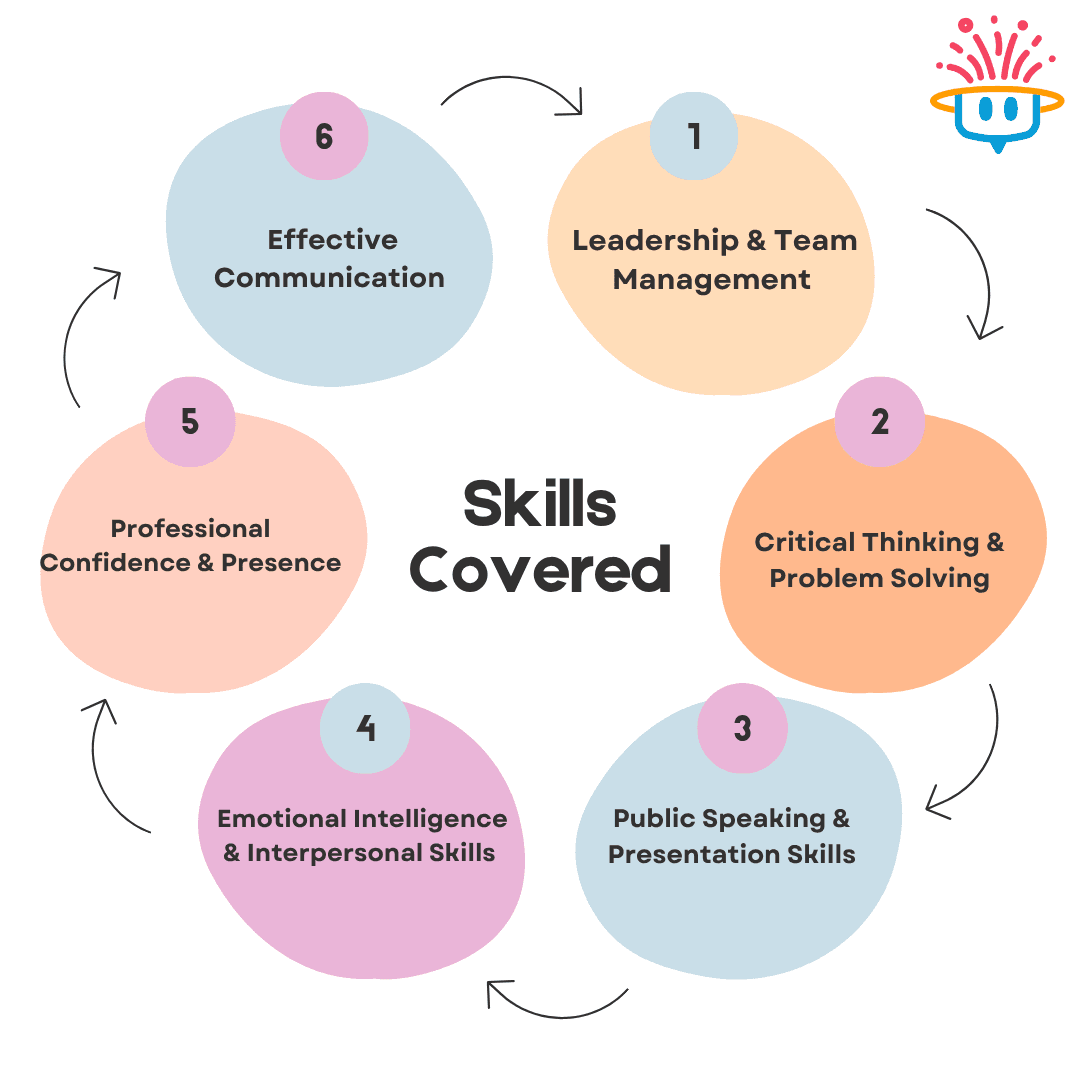
When you know how to frame answers effectively, your confidence in professional situations increases noticeably. You stop second-guessing your responses before you give them. You stop over-explaining because you are unsure how the answer is landing. You replace verbal hesitation with deliberate, composed communication that reflects how well you actually think.
This visible shift in communication changes how others perceive you. In meetings, you come across as prepared and decisive. In interviews, you come across as someone who handles pressure well. In leadership conversations, you come across as someone ready for greater responsibility.
Who Should Build Response Structuring Skills with PlanetSpark
PlanetSpark's communication training is valuable for a wide range of working professionals:
- Mid-level professionals preparing for senior roles who need to develop the communication style that leadership positions demand. Starting early gives a significant advantage when promotion conversations begin.
- Professionals preparing for interviews at the next level who want to move beyond generic preparation and build genuine answer framing skills that hold up under pressure.
- Team leaders and managers who regularly need to communicate clearly with their teams, stakeholders, and senior leadership and want their responses to reflect the clarity and confidence their role requires.
- Client-facing professionals in roles where clear, structured communication directly affects client confidence, outcomes, and relationship quality.
- Any working professional who has ever felt that their thinking is stronger than how they come across in conversation. If you know the answer but struggle to express it with the clarity it deserves, this is the training that closes that gap.
Strong Communication Starts with the Right Structure
The ability to give clear responses, frame answers effectively, and structure communication with deliberate intention is one of the highest-impact skills any working professional can develop.
It changes how you perform in interviews. It changes how you are perceived in meetings. It changes how quickly you are considered for leadership. And it changes how confidently you show up in every professional interaction you have.
Structured response techniques are trainable. With expert coaching, real-world practice, and consistent feedback, working professionals see measurable results quickly and those results compound over a career.
Frequently Asked Questions
Answer framing in interviews directly affects how candidates are evaluated. Interviewers assess not just what you know but how clearly and confidently you communicate it. Structured techniques like STAR give your answer a clear beginning, middle, and end so that the interviewer receives a complete, focused response without confusion or unnecessary length. Professionals who apply these frameworks in interviews consistently perform better and advance further in the selection process.
The PREP framework works well for workplace meetings. You open with your point directly, give the key reason behind it, support it with a brief example, and then restate your point to reinforce the takeaway. This keeps your contribution focused, avoids over-explanation, and ensures your listener walks away with a clear understanding of your position. Adapting this structure to the level of your audience is an equally important part of how to give clear responses in professional settings.
With consistent practice and expert feedback, most working professionals begin to notice measurable improvement in how they structure responses within a few weeks. Deeper fluency, where the structure becomes automatic even under pressure, develops with regular practice over a longer period. PlanetSpark's structured coaching program accelerates this development through targeted sessions, real-world scenario practice, and specific feedback on communication patterns.
Yes. Response structuring is a trainable skill, not an innate talent. Most professionals who feel their communication lacks clarity or confidence are not lacking ideas. They are lacking a framework to organise and deliver those ideas effectively. With the right instruction and practice, any working professional can develop strong response structuring skills that improve their performance across interviews, meetings, leadership conversations, and presentations.
PlanetSpark offers live, one-on-one coaching sessions with certified communication trainers who assess each learner's current communication patterns and provide targeted, actionable feedback. Sessions include scenario-based practice drawn from real workplace and interview situations, progressive curriculum development from foundational clarity to advanced executive communication, and AI-powered tracking of communication improvement across sessions. The program is designed for working professionals and adapts to the specific industries, roles, and career goals of each learner.
Structured response techniques are deliberate communication frameworks that help working professionals organise their thoughts and deliver answers in a clear, purposeful, and complete way. Common examples include STAR, PREP, the Pyramid Principle, and the What-So What-Now What method. These techniques are used in interviews, meetings, presentations, and stakeholder conversations to ensure that every response lands with clarity and impact.
Download Free Worksheets
Personalized Communication Roadmaps
Record a video to get a AI generated personalized communication reports