
Build Structured Thinking for Problem Solving


Table of Contents
- What Are Structured Thinking Skills?
- Why Structured Thinking in Problem Solving Matters
- Core Structured Thinking Skills Every Professional and Stude
- Common Gaps That Prevent Structured Thinking
- What Makes Structured Thinking Skills Training Effective
- How PlanetSpark's Structured Thinking Skills Training Works
- Who Should Build Structured Thinking Skills
- How This Helps in Personality Development
- Strong Thinking Starts Here
Most people know what good thinking looks like when they see it. A colleague who walks into a meeting with a clear point of view, organises a complex issue into two or three crisp options, and lands on a recommendation that everyone immediately understands. That is not natural talent. That is structured thinking, and it is a learnable skill.
Whether you are a working professional trying to move faster in your career or a student preparing to compete in a world that rewards clarity and logic, structured thinking skills are among the most valuable abilities you can build. They determine how well you analyse problems, how convincingly you communicate ideas, and how confidently you handle pressure when decisions need to be made quickly.
PlanetSpark's personality development training helps you build these skills with expert coaching, structured practice, and a program that fits around your existing commitments.
What Are Structured Thinking Skills?
Structured thinking skills are the mental habits and frameworks that allow you to break down complexity, organise information logically, and reach clear conclusions in a systematic way. Rather than reacting to problems with the first thought that comes to mind, a structured thinker approaches a challenge by first understanding what the real problem is, then organising the available information, identifying the most critical variables, and working toward a decision that is defensible and clear.

These skills cover several interconnected abilities:
Logical Structuring Skills - the ability to sequence information in a way that is easy to follow, builds toward a conclusion, and does not leave gaps that weaken your argument or recommendation.
Structured Communication Skills - the ability to express your thinking in writing or speech so that the structure of your ideas is visible to the audience, not just clear to you internally.
Structured Thinking in Problem Solving - the ability to apply a consistent, repeatable process to any problem regardless of whether it is professional, academic, or personal.
MECE Framework Thinking - one of the most widely used structured thinking tools, originally developed at McKinsey and Company. MECE stands for Mutually Exclusive, Collectively Exhaustive. It means organising your thinking into categories that do not overlap and together cover every relevant aspect of the problem.
Together, these form the foundation of how high performers at every level think, communicate, and lead.
Why Structured Thinking in Problem Solving Matters
Unstructured thinking is expensive. It leads to meetings that go in circles, emails that require three follow-ups to clarify, reports that bury the point, and decisions that get revisited because the original reasoning was not clear enough to hold up under scrutiny.
Structured thinking in problem solving changes all of that by giving you a reliable process to apply every time a challenge arises. Here is why it matters across both professional and academic settings:
It Reduces Decision-Making Time When you have a clear framework for breaking down a problem, you spend less time confused and more time moving toward a solution. This is particularly valuable in high-pressure situations where speed and accuracy both matter.
It Improves the Quality of Your Output Structured thinkers produce work that is clearer, more defensible, and easier for others to act on. Whether the output is a proposal, a presentation, an essay, or a recommendation, structured thinking improves its quality at every stage.
It Builds Credibility and Trust People who consistently communicate with clarity and logical structure are trusted more quickly and promoted more often. Structured communication skills signal intellectual rigour and professional maturity to everyone you work with.
It Makes You More Effective Under Pressure When a situation is ambiguous or high-stakes, structured thinking gives you a process to fall back on. Instead of reacting emotionally or going blank, you have a method that works regardless of the circumstances.
Core Structured Thinking Skills Every Professional and Student Needs
Building strong structured thinking requires developing several interconnected capabilities. Here are the ones that matter most across professional and academic environments:
Problem Definition and Decomposition Before solving any problem, you need to define it precisely. Structured thinkers resist the urge to jump to solutions. Instead, they ask what the actual problem is, what is causing it, and what a good solution would need to achieve. Decomposing a complex problem into smaller, manageable components is one of the highest-value logical structuring skills you can develop.
MECE Framework Thinking The MECE framework is one of the most powerful tools for organising thoughts and ensuring nothing important is missed. When your analysis is mutually exclusive, there is no overlap between categories that creates confusion. When it is collectively exhaustive, you have covered all the ground that matters. MECE framework thinking is used by consultants, strategists, and communicators across every major industry and it is entirely learnable with the right guidance and practice.
Issue Tree and Pyramid Thinking Issue trees allow you to map out a problem visually, breaking it into its component parts so you can identify the most important area to address first. Pyramid thinking, developed through the Minto Pyramid Principle, structures your communication so that the conclusion comes first and the supporting logic follows. Both are foundational tools in structured communication skills.
Hypothesis-Driven Analysis Rather than exploring every possible angle before forming a view, structured thinkers develop an early hypothesis and then test it with data. This approach makes analysis faster, more focused, and more likely to lead to a conclusion that is both defensible and useful.
Logical Structuring Skills in Communication The structure of your thinking is only valuable if you can communicate it clearly. Logical structuring skills in communication mean knowing how to organise a spoken or written message so that the audience can follow your reasoning, understand your evidence, and reach the same conclusion you have. This is the bridge between good internal thinking and visible, influential communication.
Prioritisation and Decision Frameworks Not all parts of a problem are equally important. Structured thinkers know how to identify the variables that matter most and focus their energy there rather than treating every element of a problem with the same level of attention.
Common Gaps That Prevent Structured Thinking
Even intelligent, hardworking professionals and students struggle with structured thinking. Recognising where the gaps are is the first step to addressing them:
Jumping to Solutions Too Quickly The most common unstructured thinking habit is skipping problem definition and going straight to the answer. The result is solutions that address the symptom rather than the cause, which means the problem keeps coming back.
Organising Around Information Rather Than Insights Many people structure their communication by listing everything they know rather than leading with what it means. This exhausts the audience before the point is made and makes it harder to influence decisions or get buy-in.
Confusing Volume with Depth More information does not equal more clarity. Structured thinkers know how to select the evidence that is most relevant and present it in a way that reinforces rather than dilutes the argument.
Inability to Adapt the Structure to the Audience A structure that works for a technical audience may not work in a leadership meeting. Structured communication skills include knowing how to adjust the level, language, and emphasis of your thinking for different situations and decision-makers.
Lack of Practice with Frameworks MECE framework thinking and issue tree analysis feel unnatural the first time you try them. Without guided practice in real scenarios, most people revert to their default habits even after being exposed to the frameworks.
If any of these feel familiar, PlanetSpark's structured personality development training is designed to address them systematically.
What Makes Structured Thinking Skills Training Effective
Not every program that claims to teach structured thinking actually builds it. Here is what distinguishes training that creates lasting change from training that does not:
Real-World Problem Scenarios Effective training does not ask you to learn frameworks in theory alone. It puts you inside real business and academic problems and requires you to apply structured thinking in problem solving under conditions that reflect what you actually face.
Personalised Feedback on Your Thinking Patterns Generic instruction cannot address the specific habits that are limiting your structured thinking. The most effective training identifies your actual patterns and gives you targeted feedback on exactly where your logic breaks down or your communication loses clarity.
Practice with Logical Structuring Skills in Communication Building the internal thinking habit is only half the work. Training must also develop your ability to express that thinking in written and spoken communication so that others can see and follow your structure.
Consistent Repetition and Accountability Structured thinking becomes a habit through repetition. Training that combines guided practice with accountability structures ensures that the skills you build in sessions transfer into your daily professional and academic work.
These are the principles PlanetSpark builds every coaching engagement around. Book Your Free Trial to see the program in practice.

How PlanetSpark's Structured Thinking Skills Training Works
PlanetSpark offers structured, expert-led coaching programs that help professionals and students build the thinking skills that drive real career and academic outcomes. Here is what the training includes:
1:1 Live Coaching Sessions Every session is conducted live with an expert trainer who works with your specific thinking patterns, communication style, and goals. This is not pre-recorded content. It is real-time guidance that adapts to where you are and what you need.
Personalised Development Roadmap PlanetSpark begins with a structured assessment to identify your current structured thinking strengths, the gaps that are limiting your clarity and impact, and the development path that will move you fastest toward your goals.
Practice with Real Analytical Scenarios Sessions include applied practice with problem decomposition, MECE framework thinking, issue tree construction, and structured communication exercises drawn from real professional and academic contexts.
Structured Communication Skills Development PlanetSpark's training covers both how you think and how you communicate that thinking. This means developing the ability to write clearly structured documents, deliver logically organised presentations, and contribute in meetings with precision and influence.
AI-Powered Progress Tracking PlanetSpark's tools track your development across sessions, giving you visibility into how your structured thinking and communication skills are improving over time and identifying the areas that still need focused attention.
Who Should Build Structured Thinking Skills
Structured thinking skills are valuable across a wide range of people and contexts. Here is who benefits most:
Working Professionals Anyone in a role that requires analysis, communication, or decision-making gains an immediate advantage from stronger structured thinking. This includes managers preparing for senior roles, consultants, strategists, and any professional whose credibility depends on the quality of their thinking.
Students Preparing for Competitive Environments Whether preparing for entrance exams, competitive job applications, case study interviews, or graduate programs, students who can demonstrate structured thinking in problem solving stand out immediately from those who cannot.
Professionals Preparing for Leadership Roles Structured communication skills become more important, not less, as you move into leadership. The ability to simplify complexity and present it with clarity is one of the defining characteristics of leaders who earn influence and trust quickly.
Anyone Who Wants to Think and Communicate More Clearly You do not need to be in a specific industry or at a specific level to benefit from structured thinking training. If you want to solve problems more effectively, communicate more persuasively, and make decisions with more confidence, this is the skill to build.
How This Helps in Personality Development
Personality development is not about surface-level changes. It is about building the internal clarity, communication strength, and behavioural consistency that shape how you are seen and experienced by everyone around you.
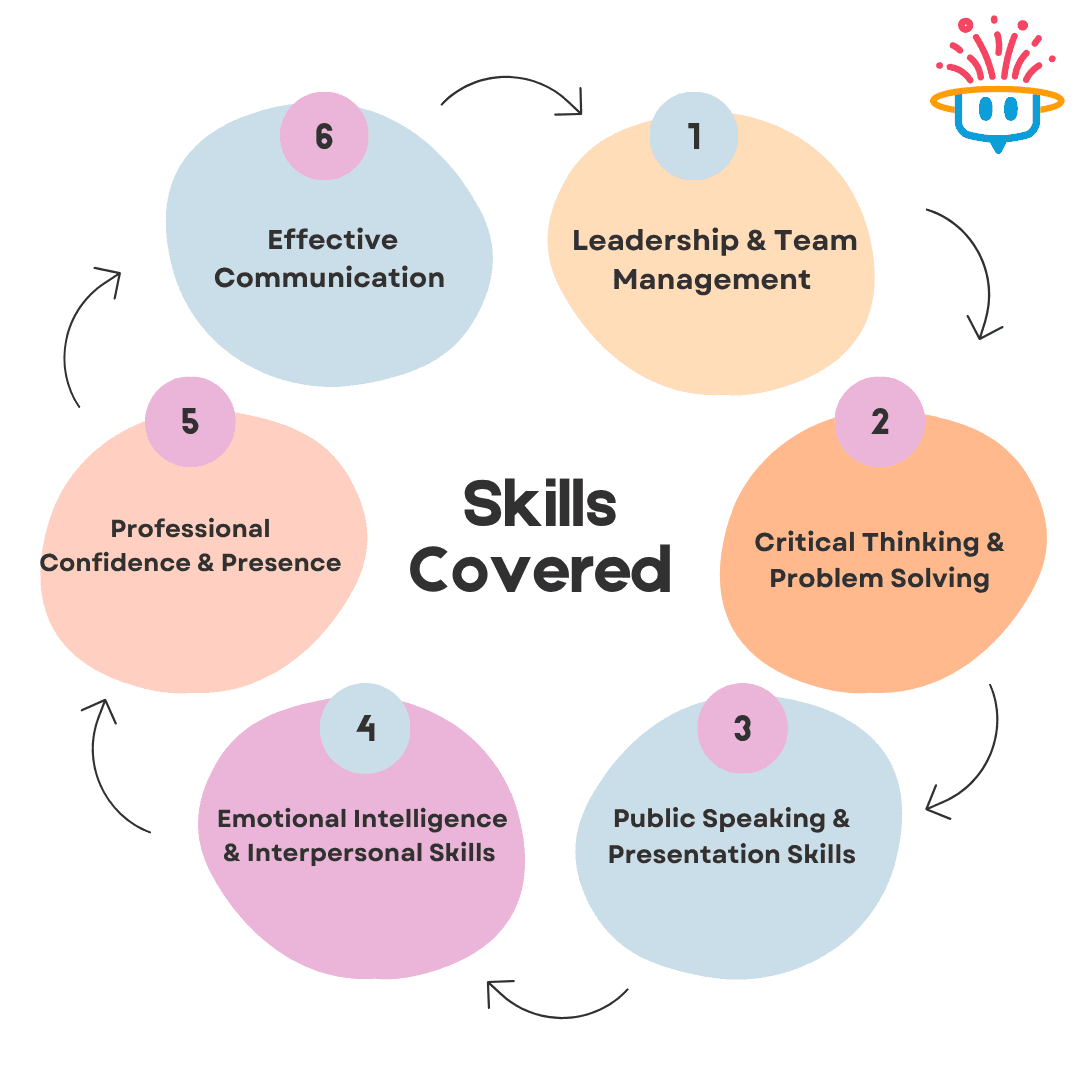
Structured thinking skills sit at the heart of this kind of genuine development. Here is how they connect to the qualities that define a strong, credible, and confident personality:
Clarity in Thinking and Expression People who think in a structured way communicate more clearly, more precisely, and more persuasively. This is one of the most visible markers of professional and personal confidence. When your ideas are organised, others can follow them, which means you get heard in ways that vague communicators simply do not.
Confidence Under Pressure Structured thinking gives you a process to rely on in high-stakes situations. Instead of going blank or reacting defensively when challenged, you have a method that holds up. This builds the kind of composure that people associate with natural confidence but is actually the product of structured practice.
Self-Awareness and Intellectual Discipline Building logical structuring skills requires examining how you currently think and identifying where your reasoning breaks down. This process of self-examination builds the kind of self-awareness that underpins lasting personal and professional growth.
Professional Presence and Credibility How you organise and present your ideas shapes how others evaluate your intelligence, your readiness for responsibility, and your value as a colleague or collaborator. Structured communication skills directly improve the impression you create in every professional interaction.
Decision-Making and Ownership Mindset Structured thinkers do not wait for perfect information before acting. They use frameworks to reach the best available conclusion with the evidence they have and then own that decision. This moves people from passive participation to active leadership in ways that are visible and professionally consequential.
These are the qualities that people are really looking for when they search for ways to speak more confidently, improve their personality, or grow as a professional or leader. Structured thinking is the foundation that makes all of it possible in practice.
PlanetSpark's personality development program is built to develop exactly these qualities through live coaching, structured practice, and consistent expert feedback.
Strong Thinking Starts Here
The professionals and students who consistently outperform are not always the ones who know the most. They are the ones who can think clearly under pressure, organise information efficiently, and communicate their reasoning in ways that move people to action.
Structured thinking skills, logical structuring skills, MECE framework thinking, and structured communication skills are not abstract concepts. They are learnable, practicable, and immediately applicable in every professional and academic situation you face.
PlanetSpark gives you the expert coaching, the structured program, and the consistent practice environment to build these skills in a way that creates lasting change. Whether you are a working professional aiming for a senior role or a student preparing for a competitive future, the investment you make in structured thinking is one of the highest-return decisions you can make.
Frequently Asked Questions
Structured thinking skills are the abilities that help you break down complex problems logically, organise information into clear frameworks, and reach well-reasoned conclusions. They include logical structuring skills, MECE framework thinking, hypothesis-driven analysis, and structured communication. These skills are applicable in professional, academic, and everyday decision-making situations.
Structured thinking in problem solving gives you a repeatable process to apply whenever a challenge arises. Instead of reacting immediately or getting overwhelmed by complexity, you define the problem precisely, decompose it into components, identify the most critical factors, and work toward a decision systematically. This reduces the time it takes to reach a good answer and improves the quality of that answer significantly.
MECE stands for Mutually Exclusive, Collectively Exhaustive. It is a structured thinking framework used to organise information or problems into categories that do not overlap with each other and together cover everything relevant. MECE framework thinking helps ensure your analysis is complete, your communication is clear, and your recommendations are built on solid logical foundations. It is widely used in consulting, strategy, and leadership communication.
Logical structuring skills are the ability to sequence information in a way that is easy to follow, builds toward a conclusion, and does not leave gaps in reasoning. They matter because the way you organise your ideas determines whether others can follow your thinking, trust your conclusions, and act on your recommendations. Strong logical structuring skills improve the quality of everything from emails and reports to presentations and verbal contributions in meetings.
Structured thinking skills are not the same as general intelligence. They are specific, learnable frameworks and habits that help you organise and apply whatever knowledge and intelligence you already have more effectively. Many highly intelligent people think in an unstructured way and struggle to communicate their ideas clearly. Structured thinking training teaches you a process and a set of tools that make your existing abilities more visible, more usable, and more impactful.
PlanetSpark offers personalised live coaching, applied practice with real-world problem scenarios, and structured communication skills development through one-on-one expert sessions. The program begins with an assessment of your current thinking and communication patterns, builds a personalised development roadmap, and tracks your progress using AI-powered tools. Whether you are a working professional or a student, PlanetSpark's training is designed to build structured thinking skills that show up in every professional and academic situation you face.