
Teamwork Tips: Practical Strategies For Strong Collaboration Skills


Table of Contents
Teamwork is one of the most valuable skills a child or adult can develop in today’s world. Whether it is a school project, a workplace assignment, or a community activity, the ability to collaborate effectively can decide how smoothly a task is completed. In a world where communication, leadership, and emotional intelligence matter more than ever, learning teamwork early creates individuals who are confident, resourceful, and ready to excel.
This is exactly where PlanetSpark’s personality development program becomes powerful. Through live, interactive classes, children learn practical teamwork skills that help them lead, speak, collaborate, and solve real-life problems.
What Is Teamwork?
Teamwork is the coordinated effort of a group of individuals working together toward a common goal. It involves communication, cooperation, mutual support, and the ability to understand and value different viewpoints.
A team is not powerful because everyone thinks the same way. A team becomes powerful because each member brings a unique strength, skill, or perspective. Good teamwork blends these strengths to create better outcomes than one person could achieve alone.
PlanetSpark’s curriculum trains students to understand group dynamics, speak confidently in teams, respect opinions, and distribute responsibilities smartly. These skills make them effective team players both in school and life.

Practical Teamwork Tips to Build Strong Collaboration Skills
Below are deeply explained teamwork tips with examples and real-world applications that will help strengthen your collaborative skills.
1. Communicate Clearly and Respectfully
Communication is the backbone of teamwork. When team members express their thoughts clearly, misunderstandings reduce automatically.
Clear communication includes:
Speaking in a way others can understand
Listening actively
Asking questions when confused
Respecting different viewpoints
For example, imagine working on a science project as a group. If no one communicates roles or expectations, the work becomes confusing. But when one member explains the idea, invites others to add suggestions, and summarizes the plan, the team functions smoothly.
PlanetSpark helps students master communication through speaking drills, group discussions, and interactive storytelling, making them clearer and more confident communicators.
2. Establish Clear Roles and Responsibilities
A real team knows who is doing what. When roles are unclear, tasks get repeated, ignored, or completed poorly.
Assigning roles helps:
Prevent confusion
Increase ownership
Boost efficiency
Balance workload
For instance, in a three-member team preparing for a presentation:
One member can research
Another can create visuals
The third can deliver the speech
This clear distribution strengthens teamwork and makes the output more professional.
PlanetSpark teaches children how to divide tasks, take ownership, and collaborate without conflict an essential life skill.
3. Set Common Goals That Everyone Understands
Teamwork fails when members work toward different goals. A shared goal creates unity, direction, and motivation.
A common goal should be:
Specific
Realistic
Measurable
Time-bound
For example, instead of saying “Let’s finish the project soon,” a clearer goal is “Let’s finish the first draft by Thursday evening.”
This keeps the team aligned and accountable.
PlanetSpark uses activities like mission-based tasks and collaborative games to help students learn how to set group goals and work toward them effectively.
Build Confident, Communicative, and Collaborative Young Leaders
PlanetSpark’s personality development classes transform learners into confident team players through real-world practice, feedback, and structured skill-building.
4. Listen Actively to Every Team Member
Active listening is a powerful teamwork skill. It means paying attention, understanding the speaker, and responding thoughtfully.
Active listeners:
Maintain eye contact
Avoid interrupting
Ask clarifying questions
Summarize what they heard
For example, when a team member shares an idea, instead of saying, “No, that won’t work,” an active listener might say, “I understand your point. Can we explore how we can adjust it to fit our plan?”
This approach builds trust and encourages collaboration. PlanetSpark trains students in active listening through structured dialogues and feedback techniques.
5. Respect Different Opinions
Team members rarely think alike. Differences can spark conflict or creativity, depending on how the team handles them.
Respecting others’ ideas is essential because:
It encourages innovation
It reduces conflicts
It makes team members feel valued
It helps teams find better solutions
For example, if one child prefers digital research and another prefers books, combining both approaches leads to richer project content. PlanetSpark teaches emotional intelligence how to handle disagreements, stay calm, and appreciate varied viewpoints.
6. Build Trust Through Reliability and Consistency
A team thrives on trust. When members trust each other to deliver quality work on time, the entire group performs better.
To build trust:
Deliver what you promise
Avoid last-minute excuses
Be consistent with your contributions
Accept responsibility for mistakes
Imagine a team where one member always misses deadlines. The rest must compensate, leading to frustration. But when everyone contributes responsibly, the team’s performance improves drastically.
PlanetSpark uses real-time feedback and collaborative tasks to build consistency and leadership skills in students.
7. Encourage Open Feedback
Good teams give and receive feedback without taking things personally.
Feedback helps:
Improve performance
Refine ideas
Prevent future mistakes
Strengthen team bonds
For example, instead of saying, “Your slide is bad,” you can say, “The content is great. Can we add some visuals to make it clearer?”
PlanetSpark trains children to give constructive feedback through peer activities, debates, and guided communication sessions.
8. Resolve Conflicts Calmly and Fairly
Conflicts are unavoidable, but the way you handle them decides whether the team improves or collapses.
Healthy conflict resolution involves:
Understanding both sides
Avoiding blame
Focusing on solutions
Staying calm
For example, if two team members disagree about the project design, they can list pros and cons for each approach and choose the better one together.
PlanetSpark teaches students emotional control, negotiation skills, and respectful communication, preparing them to handle conflicts confidently.
9. Appreciate and Celebrate Each Other’s Contributions
Recognition boosts motivation and team spirit. Even small appreciation like saying “Great job with the visuals!" can reinforce positivity.
This matters because:
It increases confidence
Encourages continued effort
Builds a positive team environment
Strengthens personal bonds
In school and workplace teams alike, appreciation is a simple yet impactful tool.
PlanetSpark encourages positive reinforcement by teaching students leadership qualities, empathy, and confidence-building techniques.
Want Your Child to Become a Smart Team Player?
PlanetSpark’s Personality Development Program builds communication skills, leadership qualities, empathy, and confidence everything required for strong teamwork.
10. Be Adaptable and Willing to Help Others
Teamwork requires flexibility because unexpected challenges always arise.
Adaptability includes:
Being open to new ideas
Adjusting when plans change
Helping teammates when needed
Learning from mistakes
For example, if a team member falls sick before an event, adaptable teammates quickly reorganize responsibilities to keep the project on track.
PlanetSpark's activities develop resilience and adaptability through problem-solving games and leadership training.
11. Share Knowledge and Learn From Each Other
A team becomes stronger when members share insights instead of hiding skills.
Knowledge sharing leads to:
Better decision-making
Faster problem-solving
Stronger collaboration
Continuous learning
For example, if one teammate excels at design and another at writing, combining their strengths results in much better outcomes.
PlanetSpark encourages collaborative learning through group tasks where students teach and learn from one another.
12. Stay Organised as a Team
Disorganization can slow any team down. Teams must keep track of tasks, deadlines, roles, and progress.
Good organization habits include:
Using shared planners
Creating checklists
Meeting regularly
Reviewing progress
PlanetSpark trains students in organizational skills through structured assignments and time-management activities.
13. Maintain a Positive Attitude
Teamwork becomes much easier when members remain optimistic even during challenges.
A positive attitude:
Reduces stress
Inspires teammates
Improves team morale
Makes problem-solving easier
For example, when a project gets delayed, a positive team member might say, “Let’s see how we can catch up. We’ve managed bigger challenges before.” PlanetSpark helps children develop confidence and positivity through personality development coaching.
Real-Life Examples of Teamwork in Action
To understand teamwork practically, here are some real scenarios:
- Real-Life Examples of Teamwork in Action: To understand teamwork practically, here are some real scenarios:
- School Example: A group of students working on a science experiment shares research, divides roles, communicates updates, and prepares the presentation together. The project succeeds because each student contributes responsibly.
- Workplace Example: In a marketing team, one member designs visuals, another writes content, and another manages research. Their combined teamwork produces a campaign none could create alone.
- Sports Example: In football, a team wins not just because one player scores goals, but because teammates pass the ball, defend, strategize, and coordinate their actions.
PlanetSpark incorporates such real-life scenarios into its curriculum to make learning relevant and practical.
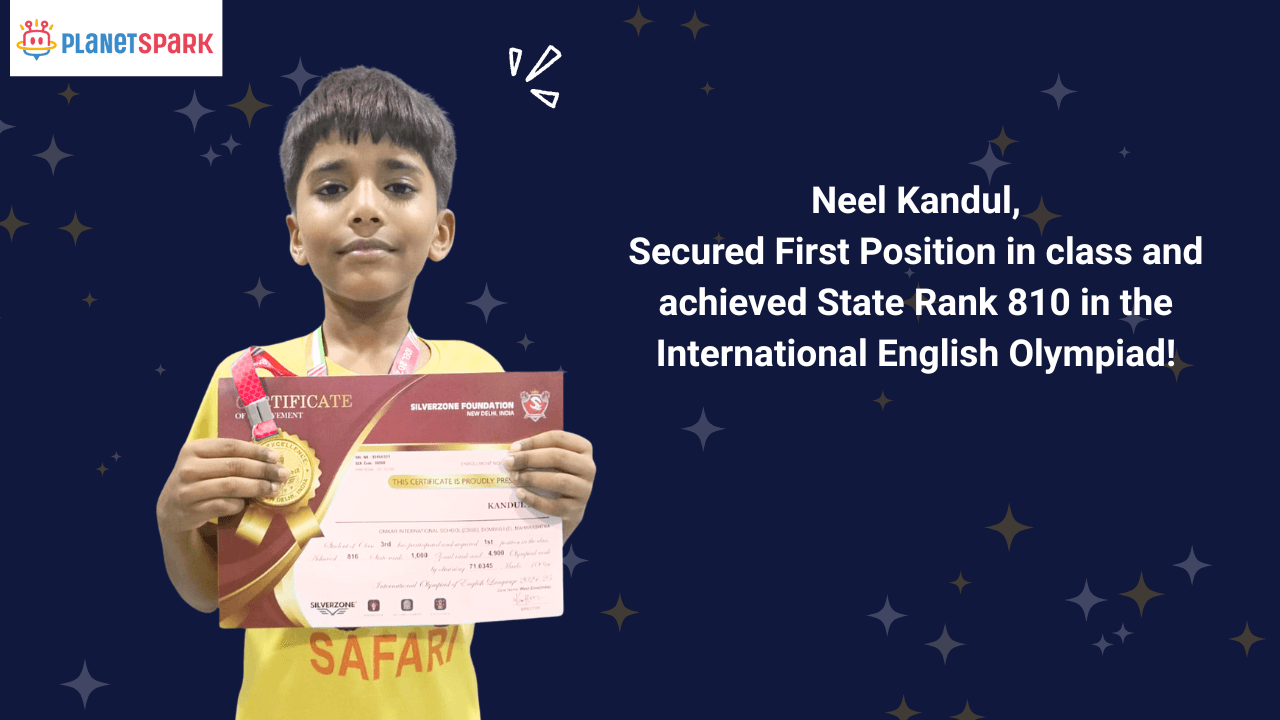
PlanetSpark helped Neel excel - First Position in class and State Rank 810 in the International Olympiad of English Language.
Additional Advanced Teamwork Strategies
Below are deeper strategies useful for teens and adults aiming to refine teamwork skills.
Practice Emotional Intelligence
Emotional intelligence helps you understand your feelings and those of others. Teams with high emotional intelligence perform better, communicate more clearly, and handle pressure efficiently.
It includes:
Managing your emotions
Understanding others’ emotions
Showing empathy
Staying calm during disagreements
PlanetSpark’s coaches help students practice emotional balance through guided activities.
Take Initiative When Needed
Good team players do not always wait for instructions. They take initiative when they see an opportunity to improve something.
Initiative includes:
Suggesting solutions
Volunteering for tasks
Supporting teammates
Offering creative ideas
PlanetSpark builds proactive thinking through leadership exercises, encouraging children to take thoughtful initiative.
Keep Meetings Short and Purposeful
Unstructured meetings waste time. Purposeful meetings help teams discuss updates quickly and move forward efficiently.
Effective meetings include:
A clear agenda
Assigned speakers
Timed discussions
A quick summary at the end
PlanetSpark’s communication curriculum teaches structured speaking and clarity of thought skills essential for productive meetings.
Why Teamwork Skills Matter?
Strong teamwork skills are essential for:
School projects
Workplace collaboration
Leadership roles
Conflict resolution
Creative problem-solving
Group discussions
Sports and extracurricular activities
In fact, many top organizations believe teamwork is one of the strongest predictors of career success. Children who develop teamwork skills early grow into adults who communicate clearly, work cooperatively, and handle challenges with a calm and strategic mindset.
PlanetSpark equips students with these foundational personality traits through guided activities like group presentations, structured debates, role-plays, and leadership exercises.
How PlanetSpark Enhances Teamwork Skills
PlanetSpark’s personality development program offers:
Live, interactive classes
Activities that build leadership qualities
Real group tasks that develop collaboration
Confidence-building exercises
Training in communication, listening, and conflict resolution
Regular feedback and improvement tracking
These elements help children become dependable, adaptable, and effective team members.
Benefits of Choosing PlanetSpark For The Development
Here’s what makes PlanetSpark’s personality development program stand out:
- Live, Interactive Classes: Students learn in real-time with certified instructors, ensuring practical skill development.
- Structured Personality Curriculum: Covers communication, confidence, body language, teamwork, leadership, critical thinking, and emotional intelligence.
- Real-Life Practice: Students participate in debates, group activities, storytelling, and role-plays that enhance teamwork naturally.
- AI-Powered Assessments: Instant feedback helps students track improvements in speaking, clarity, and collaboration skills.
- Confidence-Building Atmosphere: Safe learning space where children express freely and learn from mistakes without fear.
Conclusion
Teamwork is a lifelong skill that shapes personal, academic, and professional success. Whether a child is preparing for school activities or an adult is working in collaborative environments, strong teamwork abilities create smarter decision-makers, effective leaders, and confident communicators.
By focusing on communication, clear goals, respect, adaptability, active listening, conflict resolution, and appreciation, anyone can become a powerful team player. Adding PlanetSpark’s personality development program to this journey accelerates progress and ensures consistent growth through expert guidance, real-world practice, and transformative activities.
When children develop teamwork early, they grow into adults who can lead teams, solve problems, and thrive in any environment.
Frequently Asked Questions
Effective teamwork involves clear communication, shared goals, trust, responsibility, and mutual respect. When team members collaborate with openness and empathy, results improve greatly.
Children can develop teamwork through group activities, school projects, games, and guided communication exercises. Programs like PlanetSpark enhance these skills through structured learning and regular practice.
Communication reduces misunderstandings, helps teams align their goals, supports conflict resolution, and ensures smooth planning. Strong communication is what keeps a team organized.
Practice active listening, respect differing opinions, share responsibilities, stay organized, and offer constructive feedback. The more you collaborate, the stronger your teamwork skills become.
PlanetSpark trains students in confidence, communication, collaboration, leadership, and emotional intelligence. Through interactive classes and real-life activities, learners become capable and confident team players.