
Improve Thought Organization Skills to Improve Clarity and Focus


Table of Contents
- What Are Thought Organization Skills?
- Why Working Professionals Struggle to Organize Thoughts Befo
- Core Thought Structuring Techniques That Actually Work
- How to Organize Ideas Clearly in Different Professional Cont
- Speaking Clarity Skills: What They Are and How to Build Them
- How This Helps in Personality Development
- What Makes PlanetSpark's Approach to Thought Organization Sk
- Who Should Build Thought Organization Skills with PlanetSpar
- Start Building Thought Organization Skills with PlanetSpark
There is a moment most working professionals know well. You are in a meeting, a client conversation, or a high-stakes presentation, and the idea you wanted to express comes out scattered, incomplete, or simply unclear. Not because you did not know what to say, but because the thought was never properly organized before it left your mouth.
Thought organization skills are the ability to sort, sequence, and express your ideas in a way that makes sense to the person listening. They sit at the foundation of every communication skill that professionals are expected to have, and yet they are rarely taught directly.
This blog breaks down what thought organization skills are, why they matter deeply for working professionals, and how building them leads to measurable improvement in clarity, confidence, and career presence.
What Are Thought Organization Skills?
Thought organization skills refer to the mental ability to arrange your ideas logically before and during communication. They allow you to take a complex or multi-layered thought and present it in a sequence that the other person can follow, absorb, and act on.
Thought organization skills are not about speaking more or writing longer. They are about making every word work harder by ensuring the structure behind it is sound.
Why Working Professionals Struggle to Organize Thoughts Before Speaking
The challenge is not intelligence. Most professionals who struggle to organize thoughts before speaking are highly capable individuals who simply have not built a deliberate practice around structuring their communication.
There are a few consistent reasons this happens:
- Information overload without prioritization. When you know a lot about a topic, deciding what to say first and what to leave out becomes genuinely difficult. Without thought structuring techniques in place, the temptation is to include everything, which overwhelms the listener.
- Pressure in high-stakes moments. In a boardroom, a performance review, or a client negotiation, the pressure to perform can collapse even well-developed ideas. Structured thinking under pressure is a trainable skill, but one that most professionals never specifically develop.
- Reactive communication habits. Many professionals have spent years communicating reactively, responding to questions or situations in real time without a consistent framework for organizing their response before delivering it. The habit of pausing to structure before speaking is rarely built by accident.
- Lack of feedback on structure. Most professional feedback focuses on outcomes or content. Very few professionals receive direct, structured feedback on how well they organize and deliver their ideas, so the gap persists without being identified.
Recognizing the specific barrier that applies to you is the first step toward closing it. The second step is building the right thought structuring techniques to address it.
Core Thought Structuring Techniques That Actually Work
Learning how to organize ideas clearly is a practical skill, not an abstract concept. These techniques work because they give your thinking a framework before it reaches the listener.
The PREP Framework (Point, Reason, Example, Point)
Start with your core point. Follow it with the reason behind it. Anchor it with a concrete example. Return to your point to close. This four-step structure is one of the most reliable thought structuring techniques for professional communication because it gives both you and your audience a clear journey through your idea.
Top-Down Thinking
Lead with your conclusion and then support it with reasoning. This is the structure that most senior executives and strong communicators rely on. It respects the listener's time, gives them your most important point immediately, and then provides the context that supports it. For professionals who tend to build slowly to a conclusion, practicing top-down communication produces fast, visible improvements in speaking clarity skills.
The Rule of Three
The human brain organizes information in groups of three more naturally than any other number. When you are making a point, structuring an argument, or walking someone through a recommendation, narrowing your ideas to three key elements dramatically improves how clearly they land.
Pause Before Speaking
This may be the simplest and most underused of all thought structuring techniques. A deliberate pause of two to three seconds before responding gives your mind the space to organize the idea before it exits. It signals confidence rather than hesitation, and it dramatically reduces the filler language and unstructured delivery that undermines speaking clarity skills.
The Three-Question Filter
Before communicating an idea, ask: What is the one thing I want the listener to take away? Why does that matter to them specifically? What is the simplest way to express it? Running your ideas through this filter before you speak is one of the most effective ways to organize thoughts before speaking in professional settings.
How to Organize Ideas Clearly in Different Professional Contexts
The context shapes the structure. Knowing how to organize ideas clearly is not a single, universal skill but one that adapts across different professional environments.
In Meetings
Meetings reward brevity and clarity. Before your next meeting, prepare your two or three key contributions in advance using top-down structure. Lead with your recommendation or insight, support it briefly, and stop. Professionals who speak last and say the most with the fewest words consistently earn the highest credibility in meeting environments.
In Presentations
Presentations are structured communication at scale. The most effective presentations follow a simple architecture: a clear opening that signals what the audience will take away, a body organized around three to four supporting points, and a close that returns to the central message and tells the audience what to do next. Thought organization skills are what determine whether a presentation feels like a guided journey or a data dump.
In One-on-One Conversations
In direct conversations, thought organization shows up in how well you listen and how clearly you respond. When asked a complex question, structured professionals pause, identify the most important element of their answer, and deliver it directly before adding context. This habit alone can transform how you are perceived in performance reviews, coaching conversations, and client interactions.
In Written Communication
Emails and reports that lead with the key message, support it with relevant information, and close with a clear ask or next step are read faster, actioned more quickly, and respected more highly. The same thought structuring techniques that apply to verbal communication translate directly into more effective professional writing.
Speaking Clarity Skills: What They Are and How to Build Them
Speaking clarity skills are the delivery dimension of thought organization. You can have a well-structured idea and still deliver it in a way that dilutes its impact. These are the skills that ensure your organized thinking reaches the listener intact.
Pacing. Speaking too quickly is one of the most common ways professionals undermine their own clarity. Slowing down on key points gives the listener time to process and signals that the idea is worth attention.
Eliminating filler language. Words like "basically," "sort of," "you know," and "kind of" reduce the authority of even well-organized ideas. Recording and reviewing your own communication is one of the fastest ways to identify and address filler patterns.
Signposting. Phrases like "there are two things I want to address" or "the most important point here is" act as structural guides for the listener. They prepare the listener for what is coming and make it easier to follow complex ideas.
Vocal variety. Monotone delivery loses attention quickly, even when the content is strong. Varying your pace, pitch, and emphasis across key points is one of the most underrated speaking clarity skills in professional communication.
Confident closure. Strong communicators end their points clearly. Trailing off, adding unnecessary qualifiers, or repeating the same point in different words at the end of a message weakens the overall delivery. Practicing clean, confident endings to your statements is a small habit that produces a significant improvement in how your communication is received.
How This Helps in Personality Development
Personality development for working professionals is not about surface-level change. It is about building the internal habits, communication clarity, and behavioral confidence that shape how you are perceived and how effectively you operate in professional environments.
Thought organization skills are a direct driver of personality development because they address the gap between how capable you are and how capable you appear. A professional who thinks clearly but communicates in a disorganized way is consistently underestimated. A professional who has built strong thought organization skills is seen as sharp, composed, and authoritative even when dealing with complex or ambiguous situations.
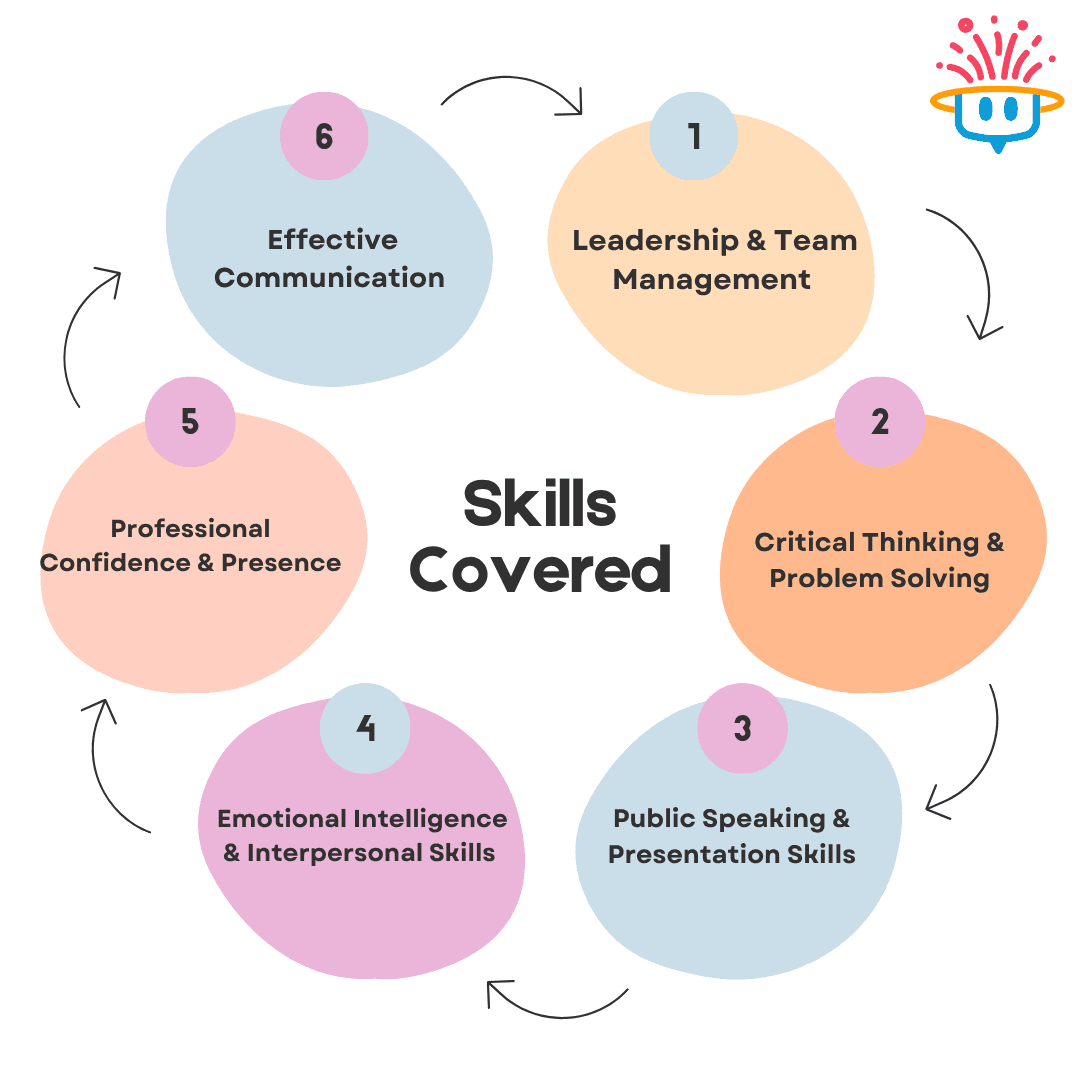
Building thought organization skills contributes to personality development in the following ways:
Confidence under pressure. When you have reliable thought structuring techniques, high-pressure situations become more manageable. The structure itself provides a sense of control that builds composure and reduces anxiety in challenging professional moments.
Professional presence. The way you organize and deliver ideas shapes how you are perceived in meetings, conversations, and leadership moments. Structured communication signals maturity, authority, and credibility in a way that unstructured communication simply cannot.
Self-awareness. Developing thought organization skills requires honest reflection on how you currently communicate. This process builds the self-awareness that is foundational to every dimension of personality development.
Influence and impact. Professionals who can organize thoughts before speaking and deliver them with clarity consistently have more influence over decisions, teams, and outcomes. Influence is the visible result of well-developed speaking clarity skills applied consistently.
Adaptability. Strong thought organization allows professionals to adapt their communication quickly across different audiences, contexts, and professional demands. This adaptability is one of the most valued dimensions of professional personality development.
PlanetSpark's personality development programs for working professionals are specifically designed to build these skills through structured coaching, live practice, and personalized feedback, so that improvement is measurable and lasting.
What Makes PlanetSpark's Approach to Thought Organization Skills Training Effective
Most professionals improve communication skills through experience alone. The problem with that approach is that experience without structured feedback reinforces existing habits, including the ones that are limiting your clarity and impact.
PlanetSpark's training model is built differently:
Live one-on-one coaching sessions ensure that every learner receives direct, personalized attention rather than generic instruction. Your coach works with your specific communication patterns, your industry context, and your professional goals.
Real-world communication scenarios mean that the thought structuring techniques you build are tested in conditions that mirror actual professional situations: boardroom conversations, feedback sessions, high-stakes pitches, and team communication moments.
Immediate feedback on structure and delivery closes the gap between intention and impact faster than any self-directed practice can. Knowing precisely what to improve and how to improve it accelerates progress in speaking clarity skills significantly.
Consistent practice with accountability ensures that new habits are actually formed rather than simply understood. The difference between knowing a technique and applying it automatically under pressure is consistent, coached practice over time.
AI-powered progress tracking gives every learner visibility into how their communication is improving across sessions, which reinforces motivation and ensures that professional development goals are measurably achieved.

Who Should Build Thought Organization Skills with PlanetSpark
PlanetSpark's personality development training for working professionals is designed for:
- Mid-level managers who need to communicate strategy, provide feedback, and lead team conversations with greater clarity and authority than their current communication habits produce.
- Senior professionals and leaders who want to strengthen the thought structuring techniques that underpin their boardroom presence, stakeholder communication, and executive decision-making.
- Professionals in client-facing roles where the ability to organize thoughts before speaking and deliver ideas with precision directly affects outcomes, relationships, and revenue.
- High-potential professionals preparing for leadership who understand that speaking clarity skills are one of the fastest ways to differentiate themselves and accelerate their path to senior roles.
- Anyone who knows their ideas are stronger than their delivery and wants structured support to close that gap permanently.
Start Building Thought Organization Skills with PlanetSpark
The gap between what you know and how clearly you communicate it is one of the most solvable problems in professional development. It does not require more knowledge. It requires structured thought organization skills, reliable thought structuring techniques, and consistent practice that builds the habits needed to organize thoughts before speaking, every time.
PlanetSpark's personality development programs for working professionals give you the structure, the expert coaching, and the real-world practice environment to close that gap permanently.
Your ideas deserve to land the way you intend them to.
Frequently Asked Questions
Thought organization skills are the ability to sort, sequence, and express ideas in a clear, logical order before and during communication. They allow professionals to take complex thinking and deliver it in a way that is easy for the listener to follow and act on. These skills show up across verbal communication, presentations, written messages, and one-on-one professional conversations.
When you organize thoughts before speaking, your message lands more clearly, your credibility increases, and the listener can absorb and respond to your ideas more easily. Disorganized communication creates confusion, requires repeated clarification, and often leads to the speaker's ideas being underestimated. In professional environments, clarity is a direct driver of influence and career advancement.
Some of the most effective thought structuring techniques include the PREP framework (Point, Reason, Example, Point), top-down thinking where you lead with your conclusion and follow with reasoning, the rule of three for grouping ideas, deliberate pausing before responding, and the three-question filter that asks what your key message is, why it matters to the listener, and how to express it simply.
Improving speaking clarity skills involves working on both structure and delivery. On the structure side, using thought organization frameworks before you speak makes a significant difference. On the delivery side, managing your pace, eliminating filler language, using signposting phrases, varying your vocal tone, and closing statements with confidence all contribute directly to how clearly your ideas are received.
Thought organization skills contribute to personality development by building confidence under pressure, improving professional presence, increasing self-awareness, and strengthening your influence over decisions and conversations. When your ideas are well-organized and delivered with clarity, you are perceived as more composed, authoritative, and credible in every professional setting.
PlanetSpark offers live one-on-one coaching sessions, personalized feedback on communication structure and delivery, real-world scenario practice, and AI-powered progress tracking. Rather than teaching generic communication theory, PlanetSpark builds the specific thought structuring techniques and speaking clarity skills each professional needs, with consistent accountability to ensure lasting improvement.
Download Free Worksheets
Personalized Communication Roadmaps
Record a video to get a AI generated personalized communication reports