
What Are Fun Learning Activities for Kids? Ideas to Make Learning Enjoyable
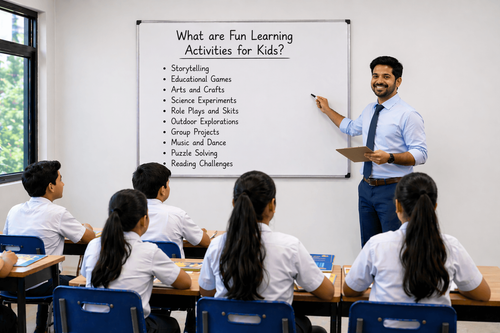

Table of Contents
- Why Fun Learning Activities Matter for Kids
- Types of Fun Learning Activities for Kids
- Educational Games for Kids
- Interactive Learning Activities
- Creative Activities for Children
- Engaging Classroom Activities
- Fun Learning Activities for Kids at Home
- Subject-Wise Fun Learning Ideas
- English Activities
- Maths Activities
- Science Activities
- Social Studies Activities
- Age-Wise Fun Learning Activities
- Preschoolers (3 to 5 Years)
- Kids (6 to 9 Years)
- Pre-Teens (10 to 12 Years)
- Students and Teens (13+ Years)
- How to Make Learning Activities More Effective
- Common Mistakes to Avoid
- Signs That a Learning Activity Is Working
- How Technology Can Support Fun Learning
- Why Confidence Is the Hidden Key to Learning
- PlanetSpark Personality Development Course for Kids and Stud
- Make Learning Joyful, Meaningful, and Consistent
Learning becomes powerful when children enjoy the process. If you are wondering what are fun learning activities for kids?, the answer lies in games, hands-on projects, storytelling, movement tasks, and creative challenges that build skills naturally. This blog covers practical ideas parents and teachers can use at home or in class to improve language, confidence, thinking, and teamwork while keeping children excited to learn. You will also discover age-wise activities, subject-wise ideas, and expert tips to make lessons memorable and effective.
Why Fun Learning Activities Matter for Kids
Children learn best when they are curious, active, and emotionally engaged. Traditional rote learning may help memorisation, but enjoyable activities help deeper understanding and long-term retention.
Key Benefits of Fun Learning
- Improves attention span through active participation
- Builds confidence by allowing self-expression
- Strengthens memory through repetition in playful formats
- Develops communication and teamwork skills
- Encourages creativity and problem-solving
- Reduces fear of mistakes and performance pressure
- Makes children more excited about learning time
How Play Supports Brain Development
When children play, they observe, test ideas, make decisions, and adapt quickly. This supports cognitive growth, emotional regulation, and social intelligence. That is why playful learning is recommended in modern education systems worldwide.
Types of Fun Learning Activities for Kids
Different children enjoy different styles of learning. A mix of activities creates balance and keeps learning fresh.
Educational Games for Kids
Games turn lessons into challenges and rewards. They are excellent for maths, language, memory, and logic.
Popular Educational Games
1. Word Bingo
Create bingo cards with vocabulary words. Call out meanings instead of words.
2. Math Treasure Hunt
Hide number clues around the room. Each answer leads to the next clue.
3. Memory Match
Use flashcards with words, shapes, or facts.
4. Quiz Relay
Divide children into teams and ask quick questions.
5. Puzzle Time
Use jigsaw puzzles, logic puzzles, and pattern games.
Skills Developed Through Games
- Critical thinking
- Fast recall
- Teamwork
- Decision-making
- Healthy competition
Start your child’s confidence and communication journey today with PlanetSpark Personality Development programs.
Interactive Learning Activities
Interactive learning activities involve movement, speaking, collaboration, and participation rather than passive listening.
Best Interactive Learning Activities
Role Play Sessions
Children act as shopkeepers, doctors, reporters, scientists, or teachers. This builds language and confidence.
Show and Tell
Ask children to present an object and explain why it matters to them.
Classroom Polls
Give choices and let students vote, then discuss results.
Think-Pair-Share
Students think individually, discuss with a partner, then share with the group.
Mystery Box
Put an object in a box. Children ask questions and guess what it is.
Why They Work
Interactive tasks help children practise speaking, listening, questioning, and expressing opinions, skills that are essential for academics and life.
Creative Activities for Children
Creativity boosts imagination, originality, and emotional expression. It also helps children enjoy learning beyond textbooks.
Top Creative Activities
Story Completion
Give the first line of a story and let children continue it.
Draw and Describe
Children draw a picture and explain it in words.
Build with Waste Materials
Use cardboard, bottles, or paper to make models.
Poetry Corner
Write simple rhymes on seasons, animals, or family.
Comic Strip Creation
Children create scenes with dialogue bubbles.
Benefits of Creative Learning
- Better vocabulary
- Stronger imagination
- Improved confidence
- Better writing skills
- Emotional expression
Engaging Classroom Activities
Teachers often search for engaging classroom activities that improve participation and discipline while making lessons fun.
High-Impact Classroom Ideas
Hot Seat
One student sits in front and answers rapid-fire questions.
Board Race
Teams solve questions on the board quickly.
Pass the Question
Students pass a ball while music plays. Whoever gets the ball answers.
Peer Teaching
One child explains a concept to another.
Exit Ticket
Before leaving class, students write one thing they learned.
Classroom Results
- Better engagement
- Higher participation
- Stronger peer learning
- Faster concept revision
- More energetic classrooms
Fun Learning Activities for Kids at Home
Parents do not need expensive tools to create learning moments. Daily routines can become educational opportunities.
Easy Home Activities
Kitchen Maths
Measure ingredients and count quantities.
Reading Challenge
Read one story daily and discuss characters.
Vocabulary Jar
Add one new word every day and use it in a sentence.
Nature Walk Journal
Observe plants, birds, weather, and write notes.
Family Debate
Choose fun topics like cats vs dogs or summer vs winter.
Why Home Learning Works
Children feel safe and relaxed at home, which helps them participate more freely and ask questions without hesitation.
Turn everyday learning into skill-building adventures with PlanetSpark Personality Development programs for children and students.
Subject-Wise Fun Learning Ideas
English Activities
Reading Theatre
Read stories with character voices.
Vocabulary Challenge
Find five new words from a story.
Picture Speaking
Describe a picture in complete sentences.
Grammar Hunt
Find nouns, verbs, and adjectives in newspapers.
Maths Activities
Dice Addition
Roll dice and add numbers.
Money Shop Game
Use toy currency for buying and selling.
Shape Hunt
Find circles, squares, and triangles around the house.
Science Activities
Sink or Float Test
Predict and test objects in water.
Shadow Study
Observe shadow length during the day.
Plant Growth Journal
Track a seed growing over weeks.
Social Studies Activities
Map Puzzle
Find countries and states.
Family History Talk
Discuss grandparents and traditions.
Community Helper Role Play
Learn about doctors, police, teachers, and farmers.
Age-Wise Fun Learning Activities
Preschoolers (3 to 5 Years)
- Colour sorting
- Alphabet songs
- Clay shapes
- Animal sounds game
- Counting objects
Kids (6 to 9 Years)
- Story cards
- Word games
- Science experiments
- Quiz games
- Craft projects
Pre-Teens (10 to 12 Years)
- Debate topics
- Presentation practice
- Research projects
- Team challenges
- Creative writing
Students and Teens (13+ Years)
- Public speaking tasks
- Group discussions
- Leadership games
- Case studies
- Goal planning activities
How to Make Learning Activities More Effective
Even the best activity works better with the right approach.
Smart Tips for Parents and Teachers
Keep Instructions Simple
Children engage more when rules are clear.
Use Positive Feedback
Celebrate effort, not only perfect answers.
Rotate Activities
New formats keep interest high.
Allow Choices
Let children choose topics or roles.
Connect Learning to Real Life
Use examples from sports, food, travel, or family life.
Limit Screen Dependence
Use digital tools wisely, but balance with hands-on learning.
Common Mistakes to Avoid
Making Activities Too Competitive
Some competition is healthy, but too much pressure can reduce confidence.
Focusing Only on Results
Enjoyment and skill-building matter more than winning.
Using One Method for Every Child
Children learn differently. Adapt activities to personality and pace.
Ignoring Reflection Time
Ask children what they learned after the activity.
Signs That a Learning Activity Is Working
- Child asks for more learning time
- Better participation in class
- Improved speaking confidence
- Stronger curiosity and questions
- Better memory and retention
- More independent thinking
How Technology Can Support Fun Learning
Digital tools can be useful when used with purpose.
Helpful Tech-Based Ideas
- Interactive quizzes
- Audiobooks
- Language learning apps
- Virtual science simulations
- Presentation practice recordings
Technology should support learning, not replace conversation, creativity, or human guidance.
Why Confidence Is the Hidden Key to Learning
Many children know answers but hesitate to speak. Others understand concepts but struggle to present ideas clearly. Confidence helps children use what they know.
Build Confidence Through Activities Like
- Storytelling
- Speech practice
- Show and tell
- Group games
- Journaling
- Leadership roles
That is why personality development and communication training are becoming important alongside academics.
PlanetSpark Personality Development Course for Kids and Students
PlanetSpark helps children become confident speakers, creative thinkers, and expressive learners through personalised live classes and technology-enabled practice. Every child gets 1:1 personal trainers who understand learning style, pace, and personality. A personalised curriculum identifies gaps in fluency, grammar, confidence, and structuring skills.
With SparkX AI video analysis, children receive feedback on voice clarity, body language, confidence, grammar, and flow. AI-led practice sessions make speech and storytelling practice available beyond class hours. Spark Diary builds daily writing habits through reflections, poems, and creative tasks.
The platform uses gamified learning through quizzes, vocabulary games, spelling tasks, and grammar challenges that keep students motivated. Parents stay informed through regular PTMs and comprehensive progress reports covering content quality, critical thinking, confidence, delivery, and organisation.
Children also grow through exclusive clubs and communities like Debate Club, Story Writing Club, Poetry Circles, Comedy Club, Podcasting Club, and Writers Guild. Through Sparkline, a safe sharing platform, students can publish creative work and celebrate peer achievements. Frequent contests, showcases, and recognitions give children real opportunities to shine.
Give your child the confidence to speak, create, and lead with PlanetSpark Personality Development classes.
Make Learning Joyful, Meaningful, and Consistent
If you have been asking what are fun learning activities for kids?, the best answer is simple, activities that combine joy with skill-building. Games, storytelling, creative projects, discussions, and hands-on tasks make children active learners instead of passive listeners. Whether at home or in the classroom, these methods improve confidence, communication, memory, and curiosity. The key is consistency, variety, and encouragement. When children enjoy learning, they naturally grow faster and stronger. Combine engaging activities with the right mentorship, and learning can become one of the happiest parts of a child’s day.
Frequently Asked Questions
Fun learning activities for kids are tasks that combine education with enjoyment. Examples include word games, storytelling, science experiments, role play, puzzles, craft projects, and quizzes. These activities help children learn concepts while staying engaged and motivated.
Educational games for kids improve memory, problem-solving, teamwork, and subject understanding. They reduce boredom and make practice enjoyable. Children often learn faster when concepts are introduced through play rather than repetition alone.
Parents can use reading challenges, kitchen maths, family debates, vocabulary jars, and nature observation tasks. Use simple materials, encourage discussion, and praise effort. Everyday routines can become meaningful learning opportunities.
Some of the best engaging classroom activities include board races, hot seat, think-pair-share, peer teaching, quiz relays, and exit tickets. These methods increase participation, communication, and attention during lessons.
PlanetSpark combines expert-led 1:1 classes, gamified modules, AI practice tools, public speaking tasks, storytelling sessions, writing activities, progress reports, and clubs that make learning exciting. It helps kids and students build confidence, communication, creativity, and leadership skills in an enjoyable way.