
Develop A Winning Mindset To Achieve Your Personal And Professional Goals


Table of Contents
- Understanding the Meaning of a Winning Mindset
- Winning Is a Mindset: How Thoughts Shape Success
- The Winning Mindset: Key Traits That Separate High Achievers
- How to Develop a Winning Mindset in Daily Life
- Common Barriers That Block a Winning Mindset
- Winning Mindset in Personal Life vs Professional Life
- Practical Exercises to Build a Strong Winning Mindset
- How PlanetSpark Helps You Build a Winning Mindset
- Conclusion: Turning Your Mindset into Real Success
A winning mindset is not just about talent or luck. It is a way of thinking that pushes individuals to stay consistent, focused, and solution-oriented even when challenges arise. In today’s fast-changing world, success is less about resources and more about mental strength, clarity, and persistence. This is where the idea of a winning mindset becomes extremely important.
The concept of a winning mindset revolves around how a person interprets challenges and opportunities. People with this mindset do not see failure as the end. Instead, they see it as feedback that helps them improve. This approach builds resilience and long-term growth in both personal and professional life. When someone develops a winning mindset, they naturally begin to make better decisions, stay motivated longer, and perform more effectively under pressure.
In many ways, winning is a mindset that separates high achievers from those who struggle to move forward. Two people may have the same skills, but their outcomes can be completely different based on their thinking patterns. One might give up early, while the other keeps refining their approach until they succeed. This difference highlights how powerful mindset truly is.
The winning mindset also plays a key role in building confidence. When individuals believe they can improve through effort, they are more likely to take action, learn from mistakes, and grow consistently. This belief system becomes a foundation for success in school, career, relationships, and personal development.
In modern learning environments and workplaces, the winning mindset is often seen as a key predictor of success. It helps individuals stay adaptable, open to feedback, and willing to push beyond comfort zones. Over time, this mindset transforms not only outcomes but also identity, shaping people into more capable and confident versions of themselves.
Understanding the Meaning of a Winning Mindset
The winning mindset is best understood as a combination of beliefs, attitudes, and daily habits that drive consistent improvement. It is not a fixed trait but a developed way of thinking that evolves with experience and practice. At its core, the winning mindset focuses on progress rather than perfection.
To understand it deeply, we must first recognize how thoughts influence behavior. When a person believes that effort leads to improvement, they are more likely to take on challenges. This belief forms the foundation of the idea that winning is a mindset. It shifts attention from external limitations to internal control, encouraging individuals to take responsibility for their growth.

There are several key elements that define the winning mindset:
1. Growth-Oriented Thinking
People with a winning mindset believe they can improve over time. They focus on learning rather than avoiding failure.
2. Consistency Over Perfection
Instead of waiting for perfect conditions, they take consistent action. This builds long-term momentum.
3. Emotional Control
A strong mindset helps individuals stay calm under pressure and make better decisions during setbacks.
4. Solution-Focused Approach
Instead of complaining about problems, they actively look for solutions and alternatives.
To make the concept clearer, here is a simple comparison:
| Fixed Mindset | Winning Mindset |
|---|---|
| Avoids challenges | Embraces challenges |
| Fears failure | Learns from failure |
| Gives up easily | Persists longer |
| Focuses on limitations | Focuses on possibilities |
This comparison shows how the winning mindset changes the way people react to situations. The winning mindset is not about never failing, but about how quickly one recovers and improves after failure.
Understanding this difference is essential because it affects every area of life. From academics to career growth, relationships to personal goals, mindset plays a silent but powerful role in shaping outcomes. When individuals start aligning their thoughts with the principles of the winning mindset, they naturally begin to perform better and feel more confident in their abilities.
Winning Is a Mindset: How Thoughts Shape Success
Winning is a mindset that begins with how a person thinks about success, effort, and failure. It is not limited to external achievements like grades, promotions, or recognition. Instead, it starts internally, with the belief that improvement is always possible. When individuals understand that winning is a mindset, they begin to see that outcomes are heavily influenced by thought patterns rather than just circumstances.
Thoughts play a powerful role in shaping actions. For example, if someone believes “I can’t do this,” their behavior automatically becomes hesitant, avoidant, and inconsistent. On the other hand, someone who thinks “I will figure this out” is more likely to take action, experiment, and persist. This difference in thinking creates completely different life trajectories.
A major part of winning is mindset lies in self-talk. Self-talk is the internal dialogue that runs in our minds throughout the day. It can either build confidence or destroy motivation. People with a winning mindset consciously train their self-talk to stay positive, realistic, and growth-focused.
Here are some ways thoughts directly shape success:
1. Beliefs Create Actions
Beliefs like “effort leads to improvement” push individuals to practice more and stay consistent.
2. Thoughts Influence Emotions
Positive thinking creates confidence and reduces fear, while negative thinking increases stress and hesitation.
3. Mindset Affects Decision-Making
A winning mindset helps people make long-term decisions instead of short-term emotional choices.
4. Focus Determines Direction
What you focus on expands. Focusing on solutions leads to progress, while focusing on problems leads to stagnation.
To understand this better, consider the following real-life pattern:
| Thought Pattern | Resulting Behavior | Outcome |
|---|---|---|
| “I will fail” | Avoids challenges | No growth |
| “I can learn” | Takes action | Improvement |
| “This is too hard” | Gives up early | Missed opportunities |
| “This is a challenge” | Keeps trying | Success over time |
This shows clearly that winning is a mindset that starts in the mind before it appears in real life results. By shifting thoughts, individuals can gradually shift their entire life direction.
The winning mindset is not about ignoring difficulties but about interpreting them differently. Challenges become opportunities, failures become lessons, and setbacks become stepping stones. This mental shift is what separates average performance from high achievement in the long run.
“Success begins where excuses end.”
Unlock confidence, communication, and leadership with PlanetSpark Personality Development Course.
The Winning Mindset: Key Traits That Separate High Achievers
The winning mindset is defined by specific traits that consistently appear in high achievers across fields like education, business, sports, and personal development. These traits are not innate talents but developed behaviors that strengthen over time with practice and awareness. Understanding the winning mindset through its core traits helps individuals identify what needs to change in their own thinking and habits.
One of the most important traits of the winning mindset is resilience. Resilience is the ability to recover quickly from setbacks. High achievers do not avoid failure; they respond to it with learning and improvement. This allows them to move forward even when results are not immediate.
Another essential trait is discipline. The winning mindset relies heavily on consistent effort rather than occasional motivation. Discipline ensures that actions are taken even when motivation is low. This is what creates long-term success.
Adaptability is also a key part of the winning mindset. In a constantly changing environment, those who can adjust their strategies and learn new skills tend to perform better. High achievers do not stick rigidly to one method; they evolve with circumstances.
Let’s break down the key traits in detail:
1. Discipline Over Motivation
Motivation is temporary, but discipline creates consistent progress even on difficult days.
2. Strong Self-Belief
Individuals believe in their ability to improve, even when current results are not ideal.
3. Emotional Stability
They manage stress, pressure, and criticism without losing focus.
4. Continuous Learning
High achievers always look for ways to improve skills, knowledge, and performance.
5. Goal Orientation
They set clear goals and align daily actions toward achieving them.
Here is a quick comparison of behaviors:
| Trait | High Achievers | Average Performers |
|---|---|---|
| Discipline | Follow routines consistently | Work only when motivated |
| Failure Response | Learn and retry | Quit or avoid |
| Learning | Continuous improvement | Limited effort after success |
| Focus | Long-term goals | Short-term comfort |
The winning mindset becomes powerful when these traits work together. For example, discipline ensures consistency, resilience helps overcome setbacks, and adaptability allows improvement in changing situations. Together, they create a strong foundation for success in both personal and professional life.
Over time, these traits shape identity. A person no longer just tries to succeed; they begin to think and act like someone who naturally succeeds. This transformation is the true power of developing a winning mindset.
“Your mindset shapes your future.”
Build a winning personality with PlanetSpark and transform how you speak, think, and grow.
How to Develop a Winning Mindset in Daily Life
Developing a winning mindset is not a one-time activity. It is a daily practice built through small, consistent actions and conscious thinking. The good part is that anyone can build it, regardless of their current situation or background. The winning mindset grows when individuals intentionally train their thoughts, habits, and responses to everyday situations.
The first step in developing a winning mindset is awareness. Most people operate on autopilot, reacting to situations without analyzing their thoughts. To change this, individuals must start noticing how they respond to challenges, criticism, and failure. Awareness helps identify negative patterns and replace them with constructive thinking.
Another important step is setting clear intentions. People with a winning mindset do not just go through the day randomly. They set goals, priorities, and focus areas. This gives direction and reduces wasted effort. Even small daily goals contribute to long-term success.
Practical Ways to Build a Winning Mindset Daily
1. Start the Day with Direction
Begin each day with a clear plan. Identify 2–3 important tasks instead of overwhelming yourself with a long list.
2. Practice Positive Self-Talk
Replace thoughts like “I can’t do this” with “I will try and improve.” This slowly rewires thinking patterns.
3. Reflect on Failures
Instead of ignoring mistakes, analyze them. Ask:
- What went wrong?
- What can I learn?
- How can I improve next time?
4. Surround Yourself with Growth-Oriented People
Environment plays a major role in shaping mindset. Being around motivated individuals encourages better thinking.
5. Take Action Even When Uncomfortable
The winning mindset grows when action is taken despite fear or doubt.
Here is a simple daily framework:
| Time of Day | Winning Mindset Action |
|---|---|
| Morning | Set goals and priorities |
| Afternoon | Focus on execution without distractions |
| Evening | Reflect on progress and mistakes |
| Night | Plan improvements for tomorrow |
Consistency in these small habits builds strong mental discipline over time. The winning mindset does not develop through motivation alone but through repeated behavior that reinforces growth thinking.
As these practices continue, individuals start noticing changes in confidence, decision-making, and productivity. They begin to respond differently to challenges, seeing them as opportunities instead of obstacles. This shift is the foundation of long-term success in both personal and professional life.
“Confidence is built, not born.”
Join PlanetSpark Personality Development Course and develop strong life skills for success.
Common Barriers That Block a Winning Mindset
While developing a winning mindset is possible for everyone, several internal and external barriers often prevent individuals from building it effectively. These barriers are usually not visible at first but strongly influence behavior, confidence, and decision-making over time. Understanding them is essential because the winning mindset can only grow when these obstacles are identified and addressed.
One of the most common barriers is fear of failure. Many individuals avoid challenges because they are afraid of making mistakes. This fear limits learning and stops growth. Instead of viewing failure as a learning opportunity, they see it as a reflection of their ability, which directly weakens the mindset.
Another major barrier is negative self-belief. When people constantly doubt their abilities, they limit their potential. Thoughts like “I am not good enough” or “Others are better than me” create mental blocks that reduce motivation and effort. This directly contradicts the principle that winning is a mindset built through belief and action.
Lack of consistency is also a major issue. Many people start with enthusiasm but fail to maintain regular effort. Without consistency, progress becomes slow or invisible, which further reduces motivation.
Key Barriers to a Winning Mindset
1. Fear of Failure
Stops individuals from taking necessary risks and learning from experience.
2. Negative Thinking Patterns
Constant self-doubt reduces confidence and action-taking ability.
3. Procrastination
Delaying tasks leads to missed opportunities and reduced discipline.
4. Lack of Clear Goals
Without direction, effort becomes scattered and ineffective.
5. External Pressure
Excessive comparison with others creates stress and reduces focus on personal growth.
To understand these barriers better, here is a breakdown:
| Barrier | Impact on Mindset | Result |
|---|---|---|
| Fear of failure | Avoids challenges | No growth |
| Negative thinking | Low confidence | Poor performance |
| Procrastination | Delayed action | Missed goals |
| No clarity | Confusion | Inconsistent results |
Overcoming these barriers requires conscious effort and continuous self-correction. The winning mindset develops when individuals choose action over fear, learning over avoidance, and growth over comfort. Once these barriers are reduced, personal and professional progress becomes significantly faster and more sustainable.
“Great minds are trained, not created.”
Improve communication and personality with PlanetSpark’s expert-led development program.
Winning Mindset in Personal Life vs Professional Life
The winning mindset plays a powerful role in shaping both personal and professional success, but its application looks slightly different in each area. Understanding this difference helps individuals use the same mindset more effectively across different situations in life. At its core, the winning mindset remains the same, but the environment, challenges, and outcomes vary.
In personal life, the winning mindset is mainly about self-discipline, emotional balance, and personal growth. It influences how individuals handle relationships, health, habits, and self-development goals. For example, someone with a strong winning mindset will focus on building better routines, improving communication in relationships, and maintaining emotional control during conflicts. They do not allow temporary emotions to dictate long-term decisions.
In contrast, in professional life, the winning mindset is more focused on performance, productivity, adaptability, and achievement. It influences how individuals handle deadlines, workplace pressure, teamwork, and career growth. A person with a winning mindset in a professional setting will actively look for solutions, take ownership of tasks, and continuously upgrade their skills to stay relevant.
The interesting part is that both areas are deeply connected. Improvement in one area often reflects in the other. For example, better discipline in personal life leads to higher productivity at work, while professional confidence can improve personal decision-making.
Key Differences Between Personal and Professional Winning Mindset
| Aspect | Personal Life | Professional Life |
|---|---|---|
| Focus | Self-growth & balance | Performance & results |
| Challenges | Emotions, habits, relationships | Deadlines, competition, skills |
| Success Measure | Happiness, stability | Growth, achievements |
| Mindset Application | Consistency in habits | Consistency in execution |
How Winning Mindset Works in Both Areas
1. In Personal Life
- Builds better daily habits like exercise, reading, and self-reflection
- Improves emotional intelligence and communication
- Helps in maintaining discipline in lifestyle choices
2. In Professional Life
- Encourages accountability and ownership
- Enhances problem-solving ability under pressure
- Supports continuous learning and career advancement
The winning mindset ensures that individuals do not compartmentalize their growth. Instead, they develop a unified way of thinking that supports success in every area of life. When a person consistently applies this mindset, they begin to experience stability in personal life and progress in professional life simultaneously.
Ultimately, the winning mindset acts as a bridge between potential and performance. Whether at home or at work, it ensures that actions remain aligned with long-term goals rather than short-term distractions.
Practical Exercises to Build a Strong Winning Mindset
Building a winning mindset requires more than understanding concepts; it demands consistent practice through real-life exercises. These exercises help rewire thinking patterns, improve discipline, and strengthen mental resilience over time. When practiced regularly, they gradually transform the way individuals respond to challenges, setbacks, and opportunities.
One of the most effective exercises is daily reflection. Taking just 10–15 minutes at the end of the day to analyze actions and thoughts can significantly improve self-awareness. This practice helps individuals identify what went well, what went wrong, and what can be improved. Over time, reflection builds clarity and better decision-making.
Another powerful exercise is visualization. This involves imagining successful outcomes before they happen. Athletes, entrepreneurs, and high achievers often use this technique to mentally prepare for success. Visualization strengthens belief and reduces fear of failure, which is essential for a winning mindset.
Core Exercises to Develop a Winning Mindset
1. Daily Goal Setting
- Write 2–3 important tasks every morning
- Focus only on meaningful priorities
- Avoid overwhelming task lists
2. Thought Reframing
Whenever a negative thought arises, consciously replace it with a constructive one.
Example:
“I will fail” → “I will learn through practice”
3. Comfort Zone Challenge
Take one small uncomfortable action daily, such as speaking up in meetings or trying a new skill. This builds confidence over time.
4. Progress Tracking
Maintain a simple record of daily achievements, no matter how small. This reinforces consistency and motivation.
5. Self-Discipline Training
Set small commitments and stick to them, such as waking up early or completing tasks before deadlines.
Here is a simple weekly practice plan:
| Day | Exercise Focus |
|---|---|
| Monday | Goal setting + planning |
| Tuesday | Comfort zone challenge |
| Wednesday | Reflection + learning |
| Thursday | Visualization practice |
| Friday | Progress tracking review |
| Saturday | Skill improvement |
| Sunday | Rest + mindset reset |
These exercises work best when done consistently rather than occasionally. The winning mindset is built through repetition, not intensity. Small daily improvements compound into major life changes over time.
As individuals continue practicing these techniques, they begin to notice increased confidence, better focus, and improved emotional control. This gradual transformation is what ultimately builds a strong and sustainable winning mindset in both personal and professional life.

How PlanetSpark Helps You Build a Winning Mindset
PlanetSpark plays an important role in helping individuals develop a strong winning mindset by focusing on essential life skills such as communication, confidence, and structured thinking. A winning mindset grows when people are exposed to the right environment where they can practice, learn, and improve continuously. PlanetSpark provides this environment through guided learning sessions that encourage learners to express themselves freely, overcome fear, and build self-belief. When individuals participate in regular speaking and interaction activities, they gradually become more confident in their thoughts and actions. This directly strengthens the belief that winning is a mindset built through practice, consistency, and improvement. Over time, learners begin to shift from self-doubt to self-confidence, which is a key transformation required for personal and professional success.
PlanetSpark supports this transformation through structured activities that focus on real-world skills and mindset development.
- Builds confidence through regular speaking and communication practice
- Helps improve clarity of thought and structured expression
- Encourages learning from feedback instead of fearing mistakes
- Develops discipline through consistent practice routines
- Strengthens problem-solving and critical thinking abilities
- Promotes a growth-oriented approach to challenges and learning
- Helps individuals overcome fear of judgment and failure
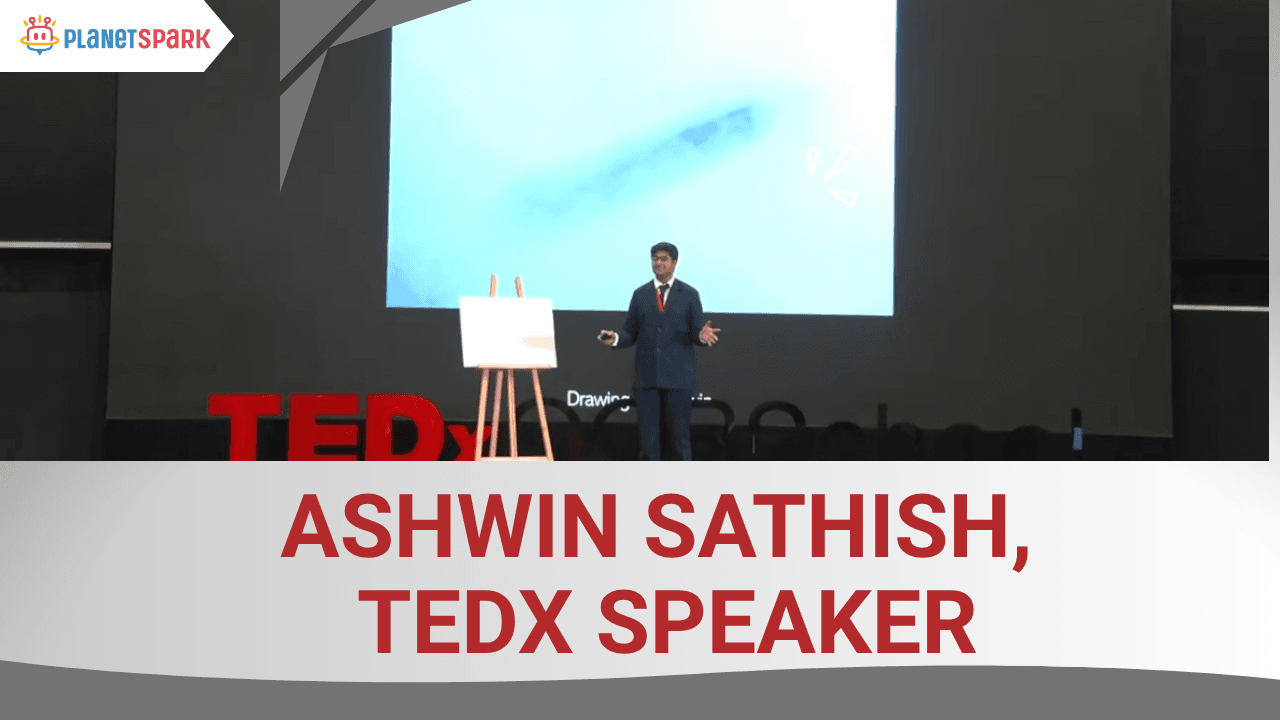
Success Story: Ashwin Sathish – TEDx Speaker from New Delhi
Ashwin Sathish, a Grade 8 student from New Delhi, became a TEDx Speaker by showcasing confidence, clarity, and strong communication skills. From active classroom participation to speaking on a global stage, his journey reflects consistent growth and courage.
His achievement highlights how early development of expression and confidence can help young learners turn ideas into impactful voices that inspire others.
Conclusion: Turning Your Mindset into Real Success
A winning mindset is the foundation of long-term success in both personal and professional life. It shapes how individuals think, respond, and grow in different situations. When someone consistently believes that improvement is possible, they begin to take actions that lead to real progress. This is why the idea that winning is a mindset is so powerful, it shifts focus from limitations to possibilities.
Throughout life, challenges, failures, and setbacks are unavoidable. However, individuals with a strong winning mindset do not get stuck in these moments. Instead, they use them as opportunities to learn, adapt, and grow stronger. This ability to stay focused and resilient creates a clear difference between average outcomes and high achievement.
The winning mindset is not built overnight. It develops through daily habits, consistent effort, and conscious thinking. Small changes in attitude, such as practicing discipline, improving self-talk, and staying committed to goals, gradually lead to a stronger mental framework. Over time, these changes transform not only results but also confidence and identity.
Ultimately, success is not just about talent or external conditions. It is about how a person thinks, acts, and persists over time. When individuals fully embrace the winning mindset, they unlock their true potential and move closer to achieving their personal and professional goals with clarity and confidence.
“Speak with confidence, lead with impact.”
PlanetSpark Personality Development Course helps you become expressive, confident, and future-ready.
You must read:
Invest In Upskilling To Stay Competitive And Grow Your Career In 2026
Build Success Habits That Lead To Long-Term Growth And Achievement
Frequently Asked Questions
A winning mindset is a way of thinking that focuses on growth, learning, and persistence. It helps individuals stay positive, overcome challenges, and achieve their personal and professional goals.
A winning mindset is important because it shapes how you respond to failure, pressure, and opportunities. It helps you stay focused, consistent, and motivated, which leads to better results in life and career.
Yes, anyone can develop a winning mindset through practice, self-awareness, and consistent effort. It is not a natural talent but a skill that can be built over time.
“Winning is a mindset” means success starts with how you think. If you believe in learning and improvement, your actions naturally lead you toward success.
You can improve it by setting clear goals, practicing positive self-talk, learning from mistakes, staying disciplined, and taking consistent action even when motivation is low.
Habits like daily goal setting, reflection, discipline, continuous learning, and stepping out of your comfort zone help in building a strong winning mindset.