
Fun with Phonics: Engaging Activities to Build Reading Skills
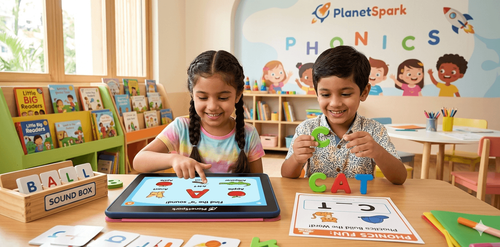

Table of Contents
- What Is Phonics and Why Is It Important?
- Benefits of Fun with Phonics
- Phonics Activities for Kids
- Learn Phonics Easily: Simple Strategies
- Phonics Practice Exercises
- Common Challenges in Learning Phonics
- Tips for Parents and Teachers
- Building Strong Reading Skills Through Phonics
- Making Learning Fun and Meaningful
Learning to read is one of the most important milestones in a child’s development—and phonics plays a key role in making that journey smooth and enjoyable. When taught the right way, phonics doesn’t feel like a lesson; it feels like play. That’s exactly what fun with phonics is all about—turning learning into an engaging, interactive, and joyful experience.
In this guide, we’ll explore exciting phonics activities for kids, creative phonics games, and simple ways to learn phonics easily through effective phonics practice exercises.
What Is Phonics and Why Is It Important?
Phonics is a method of teaching reading by connecting sounds (phonemes) with letters or groups of letters. It helps children decode words by sounding them out rather than memorizing them.
For example, a child learns that:
- “C” makes the /k/ sound
- “A” makes the /a/ sound
- “T” makes the /t/ sound
Putting them together forms the word “cat.”
Why Phonics Matters
Phonics builds a strong foundation for reading and writing. It helps children:
- Helps recognize letter-sound relationships
- Improves pronunciation
- Builds reading confidence
- Develops spelling skills
- Without phonics, children may struggle to read unfamiliar words.
- With phonics, they become independent readers and learn more effectively.
Without phonics, children may struggle to read unfamiliar words. With phonics, they gain independence in reading.
Benefits of Fun with Phonics
Making phonics enjoyable has a powerful impact on how children learn. When learning feels like play, children stay motivated and engaged.
Key Benefits:
• Improves Reading Skills
Children learn to decode words faster, making reading smoother and more enjoyable.
• Boosts Confidence
As kids start recognizing words on their own, their confidence grows naturally.
• Enhances Memory
Interactive phonics activities help children remember sounds and patterns more effectively.
• Encourages Active Learning
Games and activities keep children involved, reducing boredom and distraction.
• Builds Strong Language Foundation
Phonics strengthens both reading and writing skills from an early stage.
Fun learning creates a positive association with reading, which lasts a lifetime.
Phonics Activities for Kids
The best way to teach phonics is through hands-on, engaging activities. These phonics activities for kids make learning exciting and interactive.
Here are more examples added to each activity to make it richer and more engaging:
1. Sound Matching Game
Write letters on cards and match them with pictures that begin with those sounds.
Examples:
- “B” → Ball, Banana, Book
- “C” → Cat, Car, Cup
- “S” → Sun, Snake, Spoon
This activity helps children connect sounds with real-world objects and improves recognition.
2. Phonics Treasure Hunt
Hide objects around the house and ask children to find items starting with a specific sound.
Examples:
- “Find something that starts with /s/” → Spoon, Socks, Soap
- “Find something that starts with /b/” → Bag, Bottle, Ball
- “Find something that starts with /t/” → Toy, Table, Towel
This makes learning active, exciting, and movement-based.
3. Word Building with Blocks
Use letter blocks to form simple words like “dog,” “sun,” or “hat.”
Examples:
- C + A + T → Cat
- B + E + D → Bed
- P + I + G → Pig
- R + A + T → Rat
Children learn blending sounds while physically engaging with letters, which improves memory.
4. Rhyming Words Activity
Encourage kids to find words that rhyme.
Examples:
- Cat → Bat, Hat, Mat, Rat
- Dog → Log, Fog, Jog
- Sun → Fun, Run, Bun
- Pen → Ten, Hen, Men
This activity strengthens phonemic awareness and sound patterns.
5. Sound Sorting Game
Give children a mix of objects or pictures and ask them to sort based on starting sounds.
Examples:
- /b/ → Ball, Book, Banana
- /c/ → Car, Cup, Cake
- /m/ → Milk, Moon, Monkey
You can also mix all items together and ask children to group them correctly.
Experience structured learning, expert support, and practical techniques that truly work.
🚀 Unlock Your Child’s Bright Future with a FREE 1:1 Phonics Skills Demo Class
Phonics Games That Make Learning Fun
Games are one of the best ways to make phonics exciting. These phonics games combine learning with play.
1. Phonics Bingo
Create bingo cards with letters or sounds. Call out a sound, and children mark the correct letter.
2. Sound Hopscotch
Write letters on the floor. Call out a sound, and children jump to the correct letter.
3. Spin and Read
Use a spinner with letters. Wherever it lands, the child says the sound and a word.
4. Phonics Memory Game
Match cards with letters and corresponding images.
5. Word Relay Race
Children race to form words using letter cards.
These games:
- Keep children active
- Improve sound recognition
- Make learning enjoyable
Learn Phonics Easily: Simple Strategies
Teaching phonics doesn’t have to feel complicated or overwhelming. With the right approach, children can learn phonics easily while enjoying the process. The key is to keep learning simple, consistent, and engaging so that children stay motivated.
1. Start with Basic Sounds
Begin with simple letter sounds like /a/, /b/, and /c/ before introducing blends (like “bl” or “st”) and digraphs (like “sh” or “ch”). This step-by-step approach builds a strong foundation and prevents confusion.
2. Use Visual Aids
Children learn better when they can see and connect. Flashcards, charts, and picture-based tools help reinforce letter-sound relationships and make learning more interactive.
3. Practice Daily
Short, regular practice sessions are far more effective than long, tiring ones. Even 10–15 minutes of daily phonics practice can lead to noticeable improvement over time.
4. Read Aloud
Reading aloud together helps children hear correct pronunciation, rhythm, and sound patterns. It also builds listening skills and strengthens their understanding of how words are formed.
5. Use Repetition
Repetition is essential in phonics learning. Repeating sounds, words, and patterns helps children remember them more easily and apply them confidently.
Consistency and patience are the keys to success. With regular practice and encouragement, children can quickly develop strong phonics skills.
Phonics Practice Exercises
Regular phonics practice exercises play a crucial role in reinforcing learning and improving reading fluency. These exercises help children apply what they’ve learned in a practical way.
1. Blending Sounds
Teach children to combine individual sounds to form words:
- /c/ + /a/ + /t/ = cat
2. Segmenting Words
Help children break words into smaller sounds:
- Dog → /d/ /o/ /g/
3. Fill in the Missing Letter
Give incomplete words and ask children to complete them:
- C _ t → Cat
4. Reading Simple Sentences
Start with easy sentences like:
- “The cat sat on the mat.”
5. Dictation Practice
Say a word aloud and ask children to write it. This improves listening, spelling, and writing skills.
These exercises not only strengthen reading ability but also build confidence and independence in young learners.
Common Challenges in Learning Phonics
While phonics is an effective way to build reading skills, some children may face difficulties during the learning process. These challenges are completely normal and can be addressed with the right approach and support.
Common Issues:
• Confusing similar sounds (b/d, p/q)
Young learners often mix up letters that look or sound alike. This happens because they are still developing visual and sound recognition skills.
• Difficulty blending sounds
Some children struggle to combine individual sounds into complete words, which can slow down reading progress.
• Lack of interest
If phonics lessons feel repetitive or boring, children may lose interest and become less motivated to learn.
How to Overcome Them:
To make learning easier, use fun activities and interactive games that keep children engaged. Regular practice is important, but it should be short and enjoyable. Encourage children with positive feedback to build confidence, and most importantly, be patient.
Every child learns at their own pace, and with consistent support, they can overcome these challenges successfully.
Tips for Parents and Teachers
Supporting children during phonics learning is essential for building strong reading foundations. The right approach can make a huge difference in how quickly and confidently a child learns. Instead of focusing only on results, it’s important to create a positive and encouraging learning environment.
Effective Tips:
• Keep sessions short and engaging
Children have shorter attention spans, so brief and interactive sessions work best. Use games, songs, or storytelling to maintain their interest.
• Use positive reinforcement
Encourage children with praise and rewards. Simple words like “great job” or “well done” can boost their confidence and motivation.
• Celebrate small achievements
Recognizing even small progress helps children feel successful and keeps them motivated to learn more.
• Create a learning routine
A consistent schedule helps children develop discipline and makes learning a natural part of their daily routine.
What to Avoid:
Avoid forcing children to learn, as it can create resistance. Overloading them with too much information can also lead to confusion. Instead, correct mistakes gently and guide them patiently.
A supportive and stress-free environment makes phonics learning easier, more effective, and enjoyable for children.
Building Strong Reading Skills Through Phonics
Phonics is the foundation of reading. When children master phonics, they:
- Read fluently
- Understand better
- Write confidently
Planetspark provides personalised and interactive 1:1 sessions with our expert teachers where we cover all channels of communication for all age groups.
With guided learning, children not only learn phonics but also develop strong communication skills.
Making Learning Fun and Meaningful
“Fun with phonics” is more than just a teaching method—it’s a way to make learning enjoyable, engaging, and effective. By using creative activities, interactive games, and consistent practice, children can develop strong reading skills with confidence.
Planet Spark covers each area of communication skills whether it’s public speaking or creative writing, ensuring overall development for learners.
With the right guidance and approach, every child can become a confident reader.
✨ Book Your FREE 1:1 Demo Class Today!
From ABCs to “Once Upon a Time”—watch them read their first book!
Speak. Write. Lead. Join PlanetSpark

Frequently Asked Questions
Phonics is a method of teaching reading by linking sounds with letters.
Children can start learning phonics as early as 3–5 years old.
Use games, activities, songs, and interactive exercises.
Planet Spark uses interactive sessions, expert teachers, and structured learning to make phonics easy and engaging.
Yes, it focuses on phonics, reading, and overall communication skills.
No, it also covers public speaking, creative writing, and personality development.