
Discover the story of Iswaran the storyteller
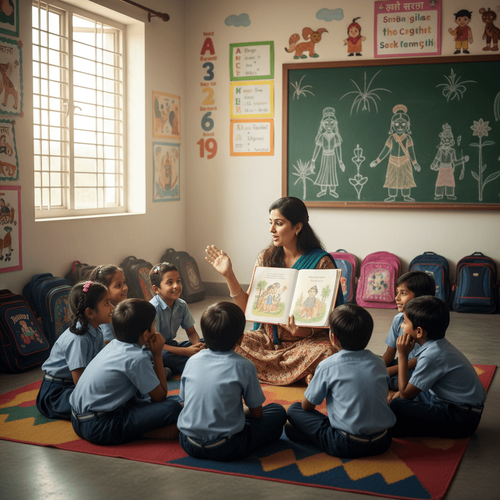

Storytelling has always been at the heart of Indian culture. From grandparents narrating folktales to modern classrooms exploring literature, stories shape the way we think, feel, and learn. One such memorable tale is Iswaran the storyteller, a character who appears in R. K. Laxman’s collection The Storyteller.
And this is exactly what modern learning platforms like PlanetSpark focus on. They help students become confident communicators, excellent storytellers, and future-ready individuals by going beyond rote learning.
Iswaran the Storyteller
This story is written by R.K. Laxman and is about Iswaran, a cook and servant who works for a young man named Mahendra. Iswaran is not just an ordinary cook and he has a wonderful talent for storytelling.
Iswaran would do all his daily chores like cooking, cleaning, and washing, but his most special quality was the way he narrated stories. He had a habit of describing even small incidents with so much drama and detail that they sounded real and exciting. For example, he once narrated how he controlled a wild elephant using just a stick. He added suspense, action, and surprise in every story, keeping Mahendra entertained all the time.
One day, Iswaran told Mahendra about a haunted house and a ghostly woman carrying a foetus in her arms. Mahendra got scared, even though he pretended not to believe in such tales. Later, he himself felt as if he saw a ghostly figure outside his window. This shows how powerful Iswaran’s storytelling was, his imagination could influence even a practical man like Mahendra.
Moral of the Story
The story highlights the art of storytelling and how imagination, when used creatively, can make even ordinary events sound extraordinary. It also teaches that we should enjoy stories but not get carried away by superstitions or fear.
Students often study this piece in school, and it is more than just a lesson in English literature. It teaches us the power of imagination, the charm of expression, and how stories can influence those around us.
The story highlights two things:
The art of narration matters as much as the content.
Imagination can transform ordinary life into extraordinary experiences.
Iswaran reminds us that storytelling is a skill every student can learn. It is not limited to literature but is also useful in presentations, debates, and communication in general.
Themes in Iswaran the Storyteller
The story is rich in themes that go beyond entertainment. Some key takeaways include:
Imagination and creativity: Iswaran’s stories teach us that imagination makes learning more engaging.
The power of expression: His tone, gestures, and choice of words could hold attention.
Belief and doubt: Mahendra’s constant confusion between believing and questioning reflects how stories influence emotions.
Cultural storytelling: The tale shows how oral traditions remain powerful in shaping society.

Why Students Still Study Iswaran the Storyteller
Generations of students read this story because it resonates with real life. In classrooms, it is often used to:
Teach the elements of narrative writing
Stories naturally contain characters, settings, problems, and solutions. When children listen to or read stories, they see how these parts come together to form a complete narrative. This helps them understand the structure of good writing and gives them a model for creating their own stories.Help students practice comprehension and analysis
By reading or listening to stories, kids learn to pay attention to details, understand the sequence of events, and identify the main message. Discussing what happened, why characters acted in certain ways, and what the moral is strengthens their comprehension and critical thinking skills.Show how tone and delivery affect communication
The same story can sound funny, serious, or suspenseful depending on how it is told. When students observe different tones and styles of storytelling, they understand that communication is not just about words, but also about expression, voice, and delivery. This skill helps them in reading aloud, public speaking, and even everyday conversations.
For school-going children, stories like these are not just assignments but also lessons in how to engage an audience. Teachers use it to show how body language, expressions, and creativity can make someone a strong communicator.
This is exactly what parents want for their children today a platform where kids go beyond grammar drills and textbook learning. That’s why PlanetSpark has become a go-to choice for thousands of families.
How Teachers Use Iswaran the Storyteller in Class
Teachers often ask students to retell the story in their own words, discuss the themes, or even act out scenes. This helps in:
Boosting imagination
Stories take children into different worlds filled with new characters, adventures, and ideas. This sparks creativity and helps them imagine possibilities beyond their everyday life. A strong imagination not only makes learning fun but also encourages innovation and original thinking.Practicing vocabulary
Listening to or reading stories introduces kids to new words in a natural way. They hear how words are used in sentences, which makes it easier for them to remember and use these words in their own speech or writing. Over time, stories help expand their vocabulary without making it feel like a lesson.Improving confidence in speaking
When children retell stories, read aloud, or even act them out, they practice expressing themselves clearly. This builds fluency and reduces hesitation. As they gain experience, they start feeling more confident in speaking, both in classrooms and in daily conversations.
Some even ask students to create their own versions of ghostly tales or adventures inspired by Iswaran.
This practice aligns beautifully with PlanetSpark’s approach, where students are constantly encouraged to apply concepts in real-life scenarios, role plays, and storytelling competitions.
The Use of Iswaran in Today’s World
You might wonder: why do children still need to read and discuss stories like Iswaran’s? The answer is simple that is communication is the foundation of success. Whether it is pitching an idea, giving a speech, or narrating experiences, storytelling is an essential life skill.
Iswaran shows us that storytelling is not about grand events. It is about the way you tell it. A simple encounter can become unforgettable if narrated well. Students today, preparing for competitive environments, need this exact skill.
PlanetSpark Framework: At PlanetSpark, children learn frameworks such as the IDEA model (Introduce, Describe, Explain, Add emotion) and story telling courses for kids to build storytelling skills step by step. These structured methods ensure that a child not only speaks but also connects with the audience just like Iswaran.
Why Parents Should Encourage Storytelling
Parents who encourage children to narrate stories notice several benefits:
Better confidence in school presentations
Improved writing skills
Stronger listening and comprehension abilities
A habit of creative thinking
By combining stories like Iswaran’s with structured learning at PlanetSpark, children develop a balanced skill set that stays with them for life.
About PlanetSpark: Building the Next Generation of Storytellers
PlanetSpark is one of India’s fastest-growing platforms for communication skills and storytelling. It offers live 1:1 classes and group workshops where students learn public speaking, creative writing, debating, and personality development.
Genre-Based Curriculum
Covers short stories, poetry, essays, journals, book reviews, and persuasive letters. Each genre has dedicated lessons to develop versatile writing skills.Writing + Speaking Integration
Students present their written work orally to boost confidence and storytelling flow. Classes follow the LSRW approach: Listening, Speaking, Reading, and Writing.Editing, Feedback, and Rewriting
Focuses on revision with real-time editing, peer reviews, and teacher feedback. Students learn to improve clarity, structure, and style effectively.Real Publishing Opportunities
Students can publish work on PlanetSpark’s blog, e-magazine, or co-authored anthologies. This builds confidence, recognition, and a sense of achievement.
Conclusion
Iswaran the storyteller is more than a short story. It is a lesson in communication, creativity, and influence. From Mahendra’s experiences, we learn that words have the power to shape emotions, build connections, and create lasting impressions.
For students today, these skills are even more important. And while reading stories helps, practicing them in a structured way with guidance makes all the difference. That is where PlanetSpark steps in—to turn young learners into confident storytellers who can shine in school, career, and life.
Frequently Asked Questions
It was written by R. K. Laxman, one of India’s most beloved cartoonists and writers.
The story highlights imagination, expression, and the influence of narration.
By practicing narration, reading widely, and joining structured programs like PlanetSpark.
Yes, it improves communication, leadership, and presentation skills.
PlanetSpark offers live classes where children learn frameworks, practice stories, and build confidence.
Absolutely. Storytelling makes speeches engaging and helps the speaker connect with the audience.