

Interpersonal skills are the foundation of effective communication and relationship-building in both personal and professional settings. They help individuals connect, collaborate, and resolve conflicts with empathy and confidence. Now will see all 7 types of it-
7 Types of Interpersonal Skills Every Child Must Master

Last Updated At: 30 Oct 2025
19 min read
Table of Contents
- Understanding 7 Types of Interpersonal Skills
- Why Interpersonal Skills Matter More Than Ever
- How Parents Can Encourage Interpersonal Growth at Home
- The Long Term Impact of Strong Interpersonal Skills
- Integrating Interpersonal Learning in Daily Routines
- How PlanetSpark Helps You Become a Better Listener and Commu
- Conclusion
Every child dreams of being understood, appreciated, and confident in expressing themselves. But what truly sets successful kids apart is their ability to connect but not just talk. This connection comes from strong interpersonal skills and also the foundation of communication, empathy, and teamwork.
In this blog, we’ll explore the 7 types of interpersonal skills every child must master and how building them early through guided programs like PlanetSpark’s Communication and Public Speaking Courses can transform their confidence, academic performance, and future relationships.
Understanding 7 Types of Interpersonal Skills
1. Communication Skills: The Foundation of Every Interaction
Communication is the bridge that connects people. It’s more than just speaking but also it’s about expressing thoughts clearly, listening with intent, and understanding others’ viewpoints. For children, this skill shapes every relationship and this is like from how they talk to teachers and classmates to how they express emotions at home.
When children learn to communicate effectively, they gain the power to share ideas, ask questions, and handle conflicts without frustration. It boosts not only their academic participation but also their self-confidence.
How communication skills show up in daily life:
A child confidently answering questions in class
Expressing opinions in a respectful tone
Writing clear, meaningful essays or notes
Using gestures, eye contact, and posture effectively
Ways to strengthen communication in children:
Encourage storytelling sessions at home
Play word games that build vocabulary
Ask open-ended questions and let them explain freely
Allow them to express disagreement politely
Example:
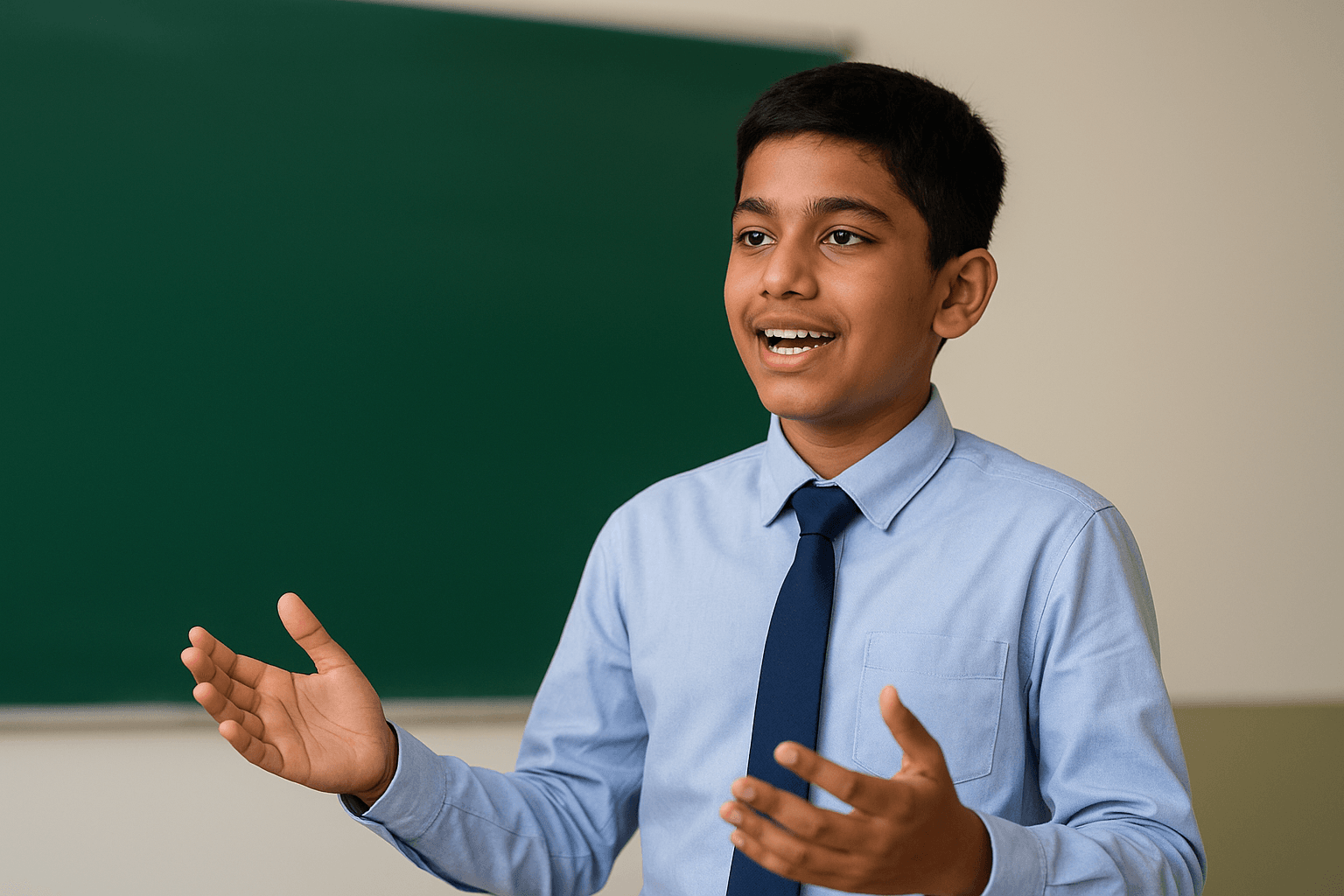
Imagine a child explaining a project idea to their group, using clear examples and maintaining eye contact. That moment reflects how well communication can build influence and understanding the first step to leadership.
2. Emotional Intelligence: The Power to Understand Feelings
Emotional intelligence (EQ) is the ability to understand and manage one’s emotions while recognizing and empathizing with others’. It helps children handle stress, control impulses, and stay positive in challenging situations.
When a child has a high EQ, they don’t react impulsively and also they respond thoughtfully. They become better friends, students, and problem solvers because they know how emotions shape behavior.
Key traits of emotionally intelligent children:
They recognize their feelings (like anger, sadness, or joy)
They stay calm under pressure
They empathize with others’ emotions
They apologize or forgive when needed
Practical ways to develop EQ in kids:
Help them name their emotions (“I’m upset because…”)
Teach deep breathing or journaling for emotional control
Discuss how others might feel in different situations
Encourage gratitude and appreciation for small acts
Example:
When a friend forgets to share a toy, an emotionally intelligent child doesn’t lash out and they express disappointment calmly and move on. That small act of control builds maturity and social respect.
3. Teamwork and Collaboration: Working Together to Win Together
Teamwork teaches children that success feels best when shared. It’s about learning to cooperate, respect differences, and combine strengths to achieve a common goal. In today’s interconnected world, teamwork is an essential life skill that prepares children for group tasks in school, college, and their future careers.
Children who understand collaboration know that leadership is not about control but also it’s about contribution. They learn patience, compromise, and responsibility, which make them more adaptable and empathetic.
Traits of children who collaborate well:
They listen to others’ opinions before deciding
They share responsibilities fairly
They motivate peers and value contributions
They handle disagreements calmly
Activities to boost teamwork:
Encourage group board games or home projects
Assign roles in family activities (leader, planner, speaker)
Praise collective achievements, not just individual success
Teach them to rotate leadership roles in group activities
Example:
In a class project, one child handles visuals, another writes, and a third presents. They discuss ideas, resolve small conflicts, and celebrate as a team. That experience of cooperation is what builds lifelong teamwork skills.
4. Conflict Resolution: Solving Problems Peacefully
Conflict is unavoidable like whether it’s about sharing toys, ideas, or opinions. But teaching children how to resolve disagreements respectfully helps them develop patience, understanding, and problem-solving abilities.
Conflict resolution is not about winning arguments and it’s about finding balance. It teaches children that every disagreement is an opportunity to listen, learn, and find solutions that make everyone comfortable.
Core principles of conflict resolution:
Listen before reacting
Stay calm and use respectful language
Focus on the issue, not the person
Seek solutions, not blame
Ways to nurture this skill:
Teach children to express feelings with “I” statements (“I feel upset because…”)
Encourage discussions instead of punishments
Praise calm problem-solving instead of loud arguments
Model respectful disagreement as parents
Example:
When two siblings fight over TV time, a conflict-resolving child says, “Let’s take turns like you watch now, and I’ll watch later.” This calm, fair solution shows maturity and empathy and the traits that last a lifetime.
5. Empathy: Seeing the World Through Another’s Eyes
Empathy is one of the most powerful interpersonal skills and the ability to feel what others feel and respond with care. It helps children build compassion, kindness, and stronger emotional bonds.
An empathetic child becomes more inclusive, understanding, and sensitive toward others’ needs. They don’t just react to what people say and they recognize how others might feel beneath their words.
Why empathy matters for kids:
Builds emotional connections with peers
Reduces bullying and promotes kindness
Enhances teamwork and leadership skills
Fosters a sense of responsibility toward others
Simple ways to teach empathy:
Read stories that highlight emotions and morals
Ask your child how they think a character felt in a story
Encourage community service or helping acts at home
Model empathy that show compassion in your own interactions
Example:
A child notices a classmate sitting alone and decides to invite them to play. That simple act reflects deep empathy and a quality that builds both confidence and character.
6. Active Listening: The Secret to Meaningful Communication
Listening actively means giving full attention but not just hearing the words but understanding the message behind them. It’s one of the most underrated interpersonal skills, yet it’s crucial for success in school and relationships. You can also practive and explore ways to improve your listening by differentiating between hearing vs listening.
Children who practice active listening develop patience, focus, and emotional awareness. They retain information better, respect others’ viewpoints, and make people feel valued during conversations.
Key signs of active listeners:
They make eye contact and nod while listening
They don’t interrupt while others speak
They ask relevant questions afterward
They summarize or repeat points to confirm understanding
How to help your child become a better listener:
Read stories and ask them to retell what they heard
Play “Listen and Repeat” or “Simon Says” games
Model good listening by giving them your full attention
Teach them to wait their turn before responding
Example:
During a group activity, a child listens carefully to a classmate’s instructions before acting. This attentiveness helps the whole team function better and also showing that true listening is the key to success in communication.
7. Leadership and Influence: Guiding Others with Positivity
Leadership is not about authority but also it’s about influence, responsibility, and vision. Children who develop leadership early tend to take initiative, motivate others, and solve problems with creativity and empathy.
Good leaders lead by example, inspire confidence, and listen to their teams. They are dependable, proactive, and emotionally aware and the qualities that come from a combination of all other interpersonal skills.
What leadership looks like in children:
Volunteering to lead a project or organize an event
Helping peers resolve misunderstandings
Taking responsibility for mistakes instead of blaming others
Encouraging others to participate and share ideas
Ways to develop leadership in children:
Assign small leadership tasks at home (organizing games, helping siblings)
Encourage decision-making and also let them plan a day or a family meal
Praise initiative and responsibility
Expose them to group projects and speaking opportunities
Example:
A student who leads a group presentation ensures everyone contributes, manages time, and wraps up confidently. That’s leadership and the ability to bring out the best in others while staying humble and goal-focused.
Strong communication starts early. Help your child master the 7 types of interpersonal skills that shape confidence and emotional growth.
Book a free trial today!
Why Interpersonal Skills Matter More Than Ever
In today’s fast-changing digital age, emotional connection is slowly taking a backseat. Children often find it easier to communicate through screens than through face-to-face conversations. While technology has opened countless opportunities, it has also reduced the depth of human connection. Many kids now spend more time texting than talking, which affects how they express themselves and relate to others.
This is where interpersonal skills step in like they are the invisible glue that holds relationships, teamwork, and communication together. These skills are not limited to just speaking well; they include empathy, listening, cooperation, and emotional intelligence. In short, interpersonal skills help children connect, understand, and grow into emotionally strong individuals.
When children develop these skills early, they learn to handle emotions with maturity, collaborate effectively, and adapt to various social environments. Whether it’s a school project, a group performance, or a playground conversation, the ability to communicate with empathy and confidence gives them an edge that no textbook can.
Why These Skills Matter in the Modern World
Balancing Screen and Reality:
In an age where children are surrounded by gadgets, interpersonal skills help them reconnect with the real world. It teaches them how to hold meaningful conversations, read emotions, and respond appropriately — skills that can’t be developed through social media likes or emojis.Academic and Career Readiness:
Research shows that emotional and social intelligence play a huge role in academic and career success. A child who can express thoughts clearly, work in a team, and manage stress will always stand out — not just for grades, but for confidence and adaptability.Mental and Emotional Health:
Interpersonal connections improve emotional resilience. Children who can talk about their feelings are less likely to bottle up emotions. They learn to process disappointment, celebrate success, and seek help when needed — all signs of healthy emotional development.Leadership Development:
Leadership begins with connection. When children learn to motivate others, handle disagreements calmly, and listen to diverse opinions, they lay the foundation for future leadership. These are qualities that define future changemakers, not just achievers.Social Harmony and Cultural Awareness:
In a world that’s more diverse than ever, empathy and understanding help children appreciate different backgrounds, perspectives, and experiences. This creates compassionate, inclusive individuals who value cooperation over competition.
Key Benefits of Developing Interpersonal Skills Early
Enhances emotional health and self-awareness:
Children learn to identify, express, and regulate emotions. They understand that it’s okay to feel sad, angry, or scared or what and learn how to manage these emotions constructively.Builds better relationships at home and school:
Kids with strong interpersonal skills connect easily with teachers, friends, and family. They resolve misunderstandings faster and build trust-based relationships that last.Strengthens teamwork and communication:
Working with others teaches them patience, listening, and respect and it is essential traits for collaboration both in academics and life.Boosts leadership and confidence for future roles:
Early exposure to communication and collaboration prepares children for leadership opportunities later in life and from leading a class project to confidently expressing opinions in public.

The Bottom Line
Interpersonal skills are not just “good-to-have” qualities; they are life skills. They form the emotional framework that supports a child’s academic performance, mental health, and career growth.
Children who master interpersonal skills become adaptable, thoughtful, and empathetic individuals and they are ready to handle life’s challenges with confidence and compassion. In a world where technology keeps changing, these timeless human abilities make all the difference.
Every great communicator begins with good listening, empathy, and teamwork. Unlock your child’s potential to connect and express with confidence.
Book a free trial now!
How Parents Can Encourage Interpersonal Growth at Home
Parents are every child’s first teachers, and home is the first classroom for learning interpersonal skills. Children observe everything like how you speak, listen, solve conflicts, and express emotions. Your behavior becomes their blueprint for how to communicate with the world.
Building interpersonal skills doesn’t always require structured lessons. It’s about creating daily opportunities for conversation, collaboration, and emotional learning. Small, consistent actions go a long way in shaping how children connect and respond to others.
1. Model Good Communication
Children learn best by imitation. When parents speak clearly, listen without interrupting, and explain their thoughts calmly, kids naturally adopt those habits.
Share stories about your day to model open communication.
Use a calm tone even during disagreements and it teaches them that respect matters more than being “right.”
Ask for their opinions on small family matters; it makes them feel heard and valued.
Example:
If your child is upset after a fight with a friend, don’t jump to solve it immediately. Listen first, empathize, and then guide them to find the right words to express their feelings.
2. Encourage Social Exposure
Interpersonal growth thrives in interaction. Give your child plenty of opportunities to meet and connect with people of different ages and backgrounds.
Arrange playdates, family gatherings, or community activities.
Encourage participation in school clubs, sports, or drama.
Teach polite greetings, introductions, and conversation starters.
Every interaction like from chatting with a neighbor to helping a classmate that strengthens their comfort with social situations and builds their confidence.
3. Praise Positive Behavior
Children repeat what is rewarded. Recognizing small acts of kindness, cooperation, or calmness encourages them to behave that way more often.
Compliment your child when they listen patiently or share with a sibling.
Acknowledge when they solve conflicts without arguing.
Use specific praise like, “I liked how you waited for your turn” instead of a simple “Good job.”
These reinforcements show children that empathy and respect are qualities worth celebrating.
4. Discuss Emotions Openly
Emotional discussions help children become comfortable identifying and expressing what they feel.
Ask about their day and not just what they did, but how it made them feel.
Normalize feelings like disappointment or jealousy instead of dismissing them.
Share your own emotions occasionally to show vulnerability and honesty.
Example:
If your child says, “I’m sad because I didn’t win the game,” validate it by saying, “It’s okay to feel sad so, what do you think you could try next time?” This builds resilience and emotional clarity.
5. Engage in Joint Problem-Solving
Collaborative problem-solving is a practical way to teach negotiation, compromise, and decision-making.
Let them participate in small family decisions like choosing dinner or planning outings.
When conflicts arise between siblings, guide them to discuss solutions rather than imposing one.
Ask, “What do you think we should do?” and this shifts responsibility and builds confidence.
It teaches children that their opinions matter and that cooperation is the key to harmony, not authority.
6. Use Stories and Games to Reinforce Learning
Interactive storytelling, role-playing, and family games make learning interpersonal skills fun and memorable.
Use stories where characters face emotional or social dilemmas.
Pause and ask your child how they would handle it differently.
Play games like “emotion charades” to help them recognize non-verbal cues.
This type of learning develops empathy, awareness, and adaptability and without making it feel like a lesson.
7. Be Consistent and Patient
Interpersonal growth takes time. Children may not immediately understand emotional regulation or active listening, but with consistent practice and gentle reminders, they’ll internalize these values.
Patience, encouragement, and leading by example are your most powerful tools. Remember, every small moment and a dinner conversation, a bedtime story, a shared laugh and that is shaping how your child will communicate and connect in the future.
The Long Term Impact of Strong Interpersonal Skills
Building interpersonal skills during childhood does much more than help children make friends. It shapes their character, emotional growth, and ability to face challenges in life. When children learn to communicate clearly, express their emotions, and respect others’ perspectives, they develop emotional intelligence that lasts a lifetime.
These skills are not limited to social situations. They prepare children for real world success. A child who learns to speak confidently in a classroom discussion today will one day be able to present ideas in a meeting with clarity and poise. Similarly, a student who practices teamwork in school projects learns the essence of collaboration which becomes invaluable in future workplaces.
Strong interpersonal skills also help children manage conflicts and bounce back from difficulties. When they lose a game or face a disagreement with a friend, they learn to handle the situation with calmness and fairness. This ability to stay composed and solve problems peacefully leads to resilience that is an essential trait in every phase of life.
Here are some long term benefits of developing interpersonal skills early:
Better academic performance: Students who communicate effectively and collaborate with peers tend to perform better in group assignments and classroom activities.
Improved confidence: The ability to express thoughts clearly boosts self assurance and reduces hesitation in public or social settings.
Stronger relationships: Children who understand empathy and respect form deeper and more meaningful connections with friends and family.
Career readiness: In the professional world, qualities like communication, leadership, and teamwork are highly valued, often more than technical skills.
Balanced emotional health: Kids who learn to understand their feelings and others’ emotions grow into adults who manage stress and pressure with maturity.
In essence, nurturing interpersonal skills is an investment in a child’s future. These skills prepare them not just to succeed academically or professionally but to live a more connected, confident, and emotionally balanced life.
Integrating Interpersonal Learning in Daily Routines
Developing interpersonal skills does not require formal lessons or structured classes. The best learning often happens at home through small everyday interactions. Parents can use daily routines as wonderful opportunities to build communication, empathy, and cooperation in a natural and engaging way.
Here are some simple yet effective ways to help children learn interpersonal skills at home:
Family conversations at the dinner table: Set aside time for a relaxed, device free meal. Encourage everyone to share highlights of their day. Let children listen, respond, and ask questions. This helps them learn active listening and respectful communication.
Collaborative household tasks: Involve children in small chores such as organizing books, setting the table, or planning a weekend activity. These tasks teach teamwork, patience, and the joy of shared responsibility.
Storytime reflection: After reading a story or watching a short film together, discuss the characters’ choices and feelings. Ask questions like “What would you do in this situation?” This activity helps children understand empathy and moral reasoning.
Outdoor play and group activities: Games, sports, or art projects with friends promote cooperation, leadership, and fair play. They also teach children how to celebrate wins gracefully and accept losses without frustration.
Conflict resolution practice: When disagreements arise among siblings or friends, guide children to express their thoughts calmly and listen to each other’s side. Encourage them to find a fair solution instead of stepping in to solve it immediately.
These small daily practices gradually help children see the value of positive communication and emotional understanding. As they grow, they naturally start applying these lessons in different areas of life and at school, with friends, and in new environments.
When interpersonal learning becomes a part of everyday life, children grow into individuals who are emotionally intelligent, cooperative, and compassionate. They learn to connect, lead, and succeed not just with words but with understanding and empathy.
How PlanetSpark Helps You Become a Better Listener and Communicator
At PlanetSpark, every child is guided to discover their voice and learn the art of meaningful communication. Our one to one coaching ensures that each learner receives personal attention, customized feedback, and visible improvement with every session.
The focus is not just on speaking well but also on listening actively, understanding emotions, and responding thoughtfully. These are the qualities that turn ordinary speakers into confident communicators and empathetic leaders.
Step by Step Skill Building
PlanetSpark’s curriculum is carefully designed to help children develop communication skills through interactive activities, real time practice, and feedback based learning. Each stage builds on the previous one, helping learners progress naturally and confidently.
Here are the core areas covered in the training:
Body Language: Children learn to use facial expressions, posture, and gestures to make their presence felt. They understand how simple movements can make communication powerful. For instance, maintaining eye contact or standing tall while speaking can instantly boost confidence and credibility.
Voice Modulation: Voice plays a key role in holding attention. Through guided exercises, children learn how to use tone, pitch, and pace to make their voice expressive. For example, varying pitch while narrating a story helps maintain interest and adds emotional depth to communication.
Speech Structuring and Storytelling: Learners are taught how to organize their ideas logically, ensuring clarity and flow. They also explore storytelling techniques to make their speeches engaging. For instance, using a simple structure of beginning, middle, and end helps children speak with confidence and coherence.
Debating and Persuasive Techniques: To build confidence and critical thinking, students participate in turncoat debates, mock parliaments, and group discussions. They learn to craft persuasive arguments using the classical principles of ethos, pathos, and logos like credibility, emotion, and logic. These experiences nurture clarity of thought and the courage to express opinions respectfully.
TED Style Training Modules
PlanetSpark’s TED style sessions are among the most exciting parts of the learning journey. Here, children are trained to create and deliver speeches that inspire and connect with audiences.
Conclusion
Interpersonal skills are more than just communication tools but also they are life skills that shape confidence, empathy, and emotional intelligence. When developed early, these abilities prepare children to build strong relationships, handle challenges gracefully, and succeed in every area of life.
Parents play a powerful role in nurturing these qualities through everyday conversations, encouragement, and positive reinforcement. With the right environment and guidance, children can transform into confident communicators and compassionate individuals who understand the value of connection.
If you want your child to speak with confidence, listen with empathy, and lead with clarity, it is time to take the first step toward developing strong interpersonal skills.
Frequently Asked Questions
Interpersonal skills refer to the abilities that help individuals communicate, interact, and build relationships effectively. They include listening, empathy, teamwork, communication, and problem solving.
Strong interpersonal skills help kids succeed in academics, group projects, and future careers. They also boost social confidence and empathy. PlanetSpark’s courses ensure kids gain these skills in a fun, engaging way.
Yes, interpersonal skills can be developed through practice, real life interactions, and positive feedback. Engaging activities and guided communication training make learning enjoyable and effective.
Parents can model good communication, encourage family discussions, and let children participate in decisions. Daily routines like storytelling and teamwork naturally build interpersonal awareness.
The key types include verbal communication, non verbal communication, listening, empathy, teamwork, leadership, and conflict resolution. Together, these skills shape emotional and social intelligence.
Progress varies for each child, but consistent practice and supportive feedback can bring noticeable improvement within a few weeks. The goal is steady growth, not instant perfection.
PlanetSpark uses personalized one to one training sessions that focus on communication, body language, and public speaking. Children receive step by step guidance to improve confidence and clarity.
PlanetSpark combines expert coaching, interactive learning, and real time performance tracking. Every session is designed to help children communicate with authenticity, creativity, and confidence.