
Activities to Enhance Social Interaction for Kids
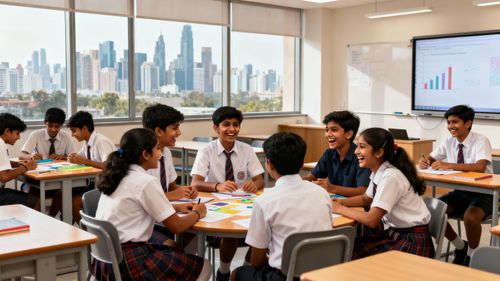

Table of Contents
- Why Social Interaction Activities Matter for Children’s Grow
- Types of Activities to Enhance Social Interaction
- Interactive Activities That Enhance Social Awareness
- Classroom Activities That Enhance Social Skills
- Home-Based Activities to Enhance Social Interaction
- How Activities to Enhance Social Interaction Build Communica
- How PlanetSpark Builds Social Interaction and Communication
- Your Child’s Confidence Begins With Strong Social Skills
Social interaction is one of the
most essential skills for a child’s emotional and communication development. Parents and educators often search for engaging, meaningful, and practical activities to enhance social interaction so that kids can learn cooperation, empathy, conversation skills, confidence, and teamwork. This blog covers the most effective strategies and activities that boost social skills, how these activities help in communication growth, and why structured training like public speaking courses can accelerate this development.
Why Social Interaction Activities Matter for Children’s Growth
Parents today want their children to communicate clearly, build meaningful friendships, collaborate with ease, and express themselves with confidence. These skills are essential not only for academic success but also for emotional wellbeing and future leadership. This is why activities to enhance social interaction are becoming a core part of early childhood development. They serve as powerful tools that help children learn how to navigate conversations, understand emotions, manage social expectations, and build strong interpersonal connections.
In today’s digital-first world, children often spend more time engaging with screens than with real people. While technology offers convenience, it also reduces opportunities for kids to practise face-to-face communication. This shift has made it harder for children to naturally develop essential social skills like empathy, cooperation, active listening, and conflict resolution. As a result, parents and educators now need to intentionally create structured social experiences through activities such as group discussions, storytelling, role-play, team-building games, collaborative tasks, and guided public speaking exercises.
These activities do more than just keep children occupied. They strategically nurture the core elements of holistic communication, which include:
Verbal Communication:
Learning to express thoughts clearly, use the right vocabulary, and speak with confidence.
Non-Verbal Communication:
Understanding facial expressions, gestures, posture, and eye contact to convey emotions and meaning.
Teamwork and Collaboration:
Working together, sharing responsibilities, and contributing to group goals.
Emotional Intelligence:
Recognising one’s own emotions and understanding others’ feelings to build healthy relationships.
Problem-Solving:
Learning to think logically, analyse social situations, and find solutions as a team.
Confidence Building:
Overcoming hesitation, speaking up in groups, and becoming comfortable with new people.
Respectful Disagreement:
Learning how to express differing opinions politely and handle conflicts constructively.
Leadership and Participation:
Taking initiative, guiding peers, and engaging actively in social settings.
Perspective-Taking:
Understanding diverse viewpoints, practising empathy, and becoming more emotionally aware.
Adaptability and Resilience:
Adjusting to new situations, managing setbacks, and staying calm under social pressure.
Whether these activities take place at home, in school, or in community settings, they help children express themselves more openly, connect meaningfully with peers, and develop stronger interpersonal skills. Over time, these experiences shape children into confident communicators who can speak with clarity, listen with empathy, and collaborate effectively.
Moreover, social interaction activities form the foundation for higher-order soft skills such as public speaking, debating, storytelling, leadership communication, and relationship building. When children participate in structured social tasks, they naturally improve their ability to speak confidently in front of others, think critically, and present ideas clearly.
Types of Activities to Enhance Social Interaction
Group activities are one of the most effective ways to enhance social interaction among children. These tasks allow kids to communicate with others, make friends, exchange ideas, learn negotiation skills, cooperate with team members, and handle disagreements. Below are powerful group-oriented activities that promote meaningful communication.
1. Circle Time Discussions
Circle time encourages structured conversations. Students sit in a circle and respond to simple prompts like:
What made you happy today
What is something you learned recently
One thing you want to improve
This helps children practise listening, sharing, and turn-taking. It builds confidence in shy learners and teaches assertiveness to expressive students. The simplicity of circle time makes it perfect for daily practice.
2. Collaborative Art
Group art projects are excellent for developing teamwork, decision-making, and coordination. Activities such as mural painting, collage-making, and group craft encourage negotiation and shared responsibility. Children learn to divide tasks, appreciate different artistic ideas, and collectively build something unique.
3. Story Chain Game
This fun storytelling activity enhances creativity and collaborative thinking. One child starts a story with one line, and each child adds a new line. Kids not only practise imagination but also listening, quick thinking, and maintaining narrative flow. It strengthens verbal communication and group bonding.
4. Group Discussions and Mini Debates
Structured conversations teach children to express opinions respectfully. Small debates on simple topics like:
Is summer better than winter
Are books better than cartoons
Should school uniforms be compulsory
This activity helps children present ideas, listen to opposing views, disagree respectfully, and respond logically. It is a perfect introduction to public speaking and debating.
5. Problem-Solving Challenges
Activities such as build the tallest tower, puzzle races, or escape-the-room challenges push kids to collaborate, divide roles, and think critically. These tasks develop leadership, cooperation, and decision-making under pressure.
Interactive Activities That Enhance Social Awareness
Children don’t learn empathy by instruction, they learn it by experience. These activities foster emotional intelligence and help children build healthy relationships with peers.
6. Role-Play Scenarios
Children act out scenarios like ordering at a restaurant, resolving a disagreement, welcoming a new student, or asking for help. This helps them practise communication in real-life situations, build conversational confidence, and handle social challenges smoothly.
7. Emotion Cards Game
Cards with facial expressions or emotion words help children identify and talk about feelings. Kids learn to read emotional cues, express emotions, and respond sensitively to others.
8. Compliment Circle
Children sit in a circle and give a compliment to the person next to them. This strengthens positive communication, builds confidence, and teaches kids the value of appreciation.
9. Team Sports
Games like relay races, football, or basketball encourage teamwork, strategy, and verbal coordination. Team sports build leadership qualities, social bonding, and resilience. They also teach kids to handle wins and losses gracefully.
10. Buddy Reading
Pairing students for reading helps them practise patience, turn-taking, and cooperation. Kids develop empathy by helping each other understand difficult words or concepts.
Classroom Activities That Enhance Social Skills
Classrooms provide the perfect environment for structured social interaction. Here are practical classroom activities that teachers and parents can use.
11. Show and Tell
Children bring an item from home and talk about it. This boosts confidence, communication, vocabulary, and clarity of expression. It also helps peers develop curiosity and active listening skills.
12. Peer Teaching
Kids teach a small concept to a partner or a group. This develops leadership, confidence, articulation, and responsibility. It also improves self-esteem and retention of knowledge.
13. Group Projects
Projects that require research, planning, creativity, and teamwork help children build collaboration skills. Kids learn to compromise, distribute roles, brainstorm ideas, and present together.
14. Creative Drama
Drama-based activities help children express emotions, build imagination, and interact socially in a playful way. They learn body language, voice modulation, and emotional expression naturally.
15. Class Bingo
This is a socializing game where children find classmates who match descriptions like:
Someone who likes chocolate
Someone who has a pet
Someone who can dance
It encourages communication and helps children interact with multiple peers in a fun way.
Home-Based Activities to Enhance Social Interaction
Social skills begin at home. Parents play a huge role in developing communication habits.
16. Family Conversations
Daily conversations at meals help children express thoughts, share emotions, and practise polite communication.
17. Board Games
Games like Monopoly, Scrabble, or Pictionary teach turn-taking, negotiation, patience, and teamwork.
18. Cooking Together
Cooking encourages coordination, instruction-following, and shared responsibility.
19. Playdates
Structured playdates with specific themes like craft day, storytelling day, or puzzle day enhance group bonding and cooperation.
20. Chore Buddies
Pairing siblings for tasks builds teamwork and accountability.
How Activities to Enhance Social Interaction Build Communication Skills
Social interaction is the foundation upon which strong communication and public speaking skills are built. Before a child can speak confidently on stage, they must first learn how to express themselves comfortably in everyday conversations. This is why activities to enhance social interaction play such an important role in shaping a child’s communication journey. When children interact with peers, participate in conversations, collaborate in group tasks, and express thoughts openly, they gain an early and natural training ground for public speaking.
Children who regularly engage in social activities learn to navigate different communication situations—asking questions, expressing opinions, listening actively, responding politely, managing emotions, and interpreting body language. These are the same fundamental skills they need when they face an audience, participate in a debate, or deliver a structured speech.
Here is how social interaction activities directly contribute to communication and public speaking growth:
1. Vocabulary Expansion
When children interact with others—through discussions, role-plays, group games, and collaborative tasks—they are exposed to new words, expressions, and sentence patterns. Peer conversations and guided interactions naturally expand their vocabulary without the pressure of formal learning.
2. Improved Sentence Structure
Through conversations, storytelling, and group activities, children practise forming complete, meaningful sentences. Over time, this improves their grammatical accuracy, articulation, and clarity. Good sentence structure is essential not just for everyday communication but also for constructing speeches and arguments in public speaking.
3. Confidence Building
A child who feels comfortable speaking with peers is more likely to speak confidently with larger groups. Social interaction activities help children overcome stage fear gradually, starting with small safe interactions and progressing to more structured speaking tasks. Confidence built in daily conversations becomes the stepping stone to confidence on stage.
4. Better Emotional Expression
Social activities encourage children to express feelings, opinions, and experiences. This emotional clarity enables them to communicate more authentically in public speaking, storytelling, and debates. Children who express emotions well also connect better with audiences.
5. Strengthened Listening Skills
Listening is half of communication. Activities such as group games, pair tasks, buddy reading, and collaborative discussions train children to listen carefully, follow cues, respond thoughtfully, and respect others’ viewpoints. Strong listening skills make children better debaters, presenters, and conversationalists.
6. Enhanced Presentation Abilities
Many social activities require children to explain ideas, demonstrate tasks, or share experiences in front of peers. This exposure develops early presentation habits—maintaining eye contact, speaking clearly, gesturing naturally, and organising thoughts coherently.
7. Empathy and Social Awareness
Through teamwork, role-play, and shared experiences, children learn to understand others’ feelings and perspectives. Empathy helps them connect better with listeners and respond sensitively to audience reactions. It also makes them collaborative team members in group presentations or debates.
8. Clear and Structured Communication
Activities like storytelling, discussions, peer teaching, and problem-solving require children to organise thoughts before speaking. This reinforces structured communication—an essential requirement for public speaking, informative speeches, extempore tasks, and classroom presentations.
How PlanetSpark Builds Social Interaction and Communication Skills
PlanetSpark is one of the most advanced platforms for developing a child’s public speaking, communication, and social confidence.
Below is the detailed content you requested, included exactly as instructed:
1:1 Public Speaking Coaching by Communication Experts
Every child receives individual coaching, allowing for customized feedback and personalized growth. Trainers are certified in communication and child psychology.
Step-by-Step Skill Building
The curriculum covers body language, voice modulation, speech structuring, storytelling, persuasive techniques, extempore, and debating.
Children learn to:
Master facial expressions
Use powerful gestures
Emphasize intonation
Structure speeches effectively
Students practise rebuttals, counterarguments, turncoat debates, respectful disagreements, and using ethos, pathos, and logos.
TED-Style Training Modules
Kids deliver impactful speeches using the hook, message, story, CTA framework.
Real-Time Practice with Global Peers
Children join panel discussions, debates, storytelling circles, and group engagements with learners from over 13 countries.Video Feedback Loop
Personalised Curriculum
A detailed roadmap identifies gaps in fluency, grammar, vocabulary, structure, and confidence.
SparkX – AI-Enabled Video Analysis
This evaluates voice, body language, clarity, delivery, and organisation.
AI-Led Practice Sessions
Children receive instant feedback on fluency, grammar, pacing, and voice.
Spark Diary
A digital journal that helps build consistent writing habits.
Your Child’s Confidence Begins With Strong Social Skills
Social interaction is not just a skill. It is the foundation of confidence, communication, emotional strength, friendships, and leadership. Children who learn social skills early grow into expressive, empathetic, and resilient individuals. With the right activities, gentle guidance, and structured training, every child can become a confident communicator and a socially aware leader.
You may also read:
Frequently Asked Questions
Group games, storytelling, role-play, peer teaching, and collaborative projects are the most effective activities for strengthening social interaction skills.
They help children develop communication, empathy, leadership, confidence, and emotional intelligence.
Parents can encourage conversations, board games, shared chores, family projects, and playdates.
They build confidence, vocabulary, expression, active listening, and clarity, which directly contribute to strong public speaking skills.
PlanetSpark’s Public Speaking Course offers personalised coaching, AI-powered evaluation, global practice groups, and structured curriculum for communication excellence.