
Debate Competition Topics in English for School Students
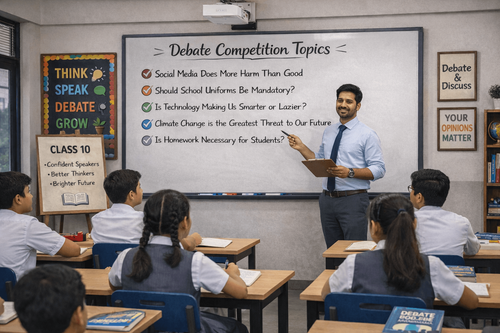

Table of Contents
- Why Debate Competitions Are Important for Students
- Types of Debate Competition Topics
- Best Debate Competition Topics for Students
- Inter School Debate Competition Topics
- Best Topic for Debate Competition – How to Choose
- Debate Topics for Students Based on Categories
- Tips to Prepare for Debate Competitions
- Common Mistakes to Avoid in Debates
- How Debate Skills Help in Future
- Why Choose PlanetSpark for Public Speaking
- Building Confidence Through the Right Debate Topics
Choosing the right debate competition topics can shape how confidently students express ideas, think critically, and perform on stage. Whether you’re preparing for a classroom debate or an inter-school competition, selecting engaging and relevant topics is the first step toward success. This blog covers a wide range of debate topics, categorized by difficulty and relevance, along with expert tips to help students prepare, present, and win debates effectively.
Why Debate Competitions Are Important for Students
Debates are more than just speaking activities, they are powerful tools for overall personality development.
Key Benefits of Debate Competitions
- Enhances Critical Thinking
Students learn to analyze topics from multiple perspectives. - Improves Communication Skills
Structured arguments help improve fluency and clarity. - Boosts Confidence
Speaking in front of an audience builds stage presence. - Encourages Research Skills
Students develop the habit of gathering facts and evidence. - Develops Leadership and Teamwork
Group debates teach collaboration and responsibility.

Types of Debate Competition Topics
Understanding the type of debate helps in selecting the best topic and preparing accordingly.
1. Argumentative Debate Topics
These focus on presenting strong arguments for or against a motion.
- Should homework be banned?
- Is social media harmful to students?
- Should uniforms be compulsory in schools?
2. Persuasive Debate Topics
These aim to convince the audience emotionally and logically.
- Why reading books is better than watching TV
- Importance of discipline in student life
3. Informative Debate Topics
These focus on sharing knowledge and awareness.
- Impact of climate change
- Importance of digital education
Best Debate Competition Topics for Students
Easy Debate Topics for Beginners
These topics are ideal for younger students or beginners.
- Should students get more holidays?
- Is online learning better than offline learning?
- Should mobile phones be allowed in school?
- Are cartoons useful for children?
- Should exams be abolished?
Intermediate Debate Topics
- Is technology making us less social?
- Should school days start later?
- Is homework necessary for learning?
- Are video games beneficial?
- Should junk food be banned in schools?
Advanced Debate Topics
- Artificial Intelligence, boon or threat?
- Should voting be compulsory?
- Is globalization beneficial for developing countries?
- Should the internet be censored?
- Is climate change reversible?
Inter School Debate Competition Topics
Inter-school debates are more competitive and intellectually challenging, requiring students to present well-researched, balanced, and impactful arguments. These debates often focus on current trends, real-world challenges, and future-focused ideas, pushing students to think beyond textbooks and develop strong opinions supported by facts.
Trending Topics for Inter-School Debates
Role of AI in Education
- AI is transforming classrooms through personalised learning and smart assessments
- Tools like adaptive learning platforms help students learn at their own pace
- Reduces teacher workload by automating grading and administrative tasks
- However, over-reliance on AI may reduce human interaction in learning
- Raises concerns about data privacy and ethical use of student information
- Debate angle: Is AI enhancing education or replacing the human touch?
Is Remote Learning the Future?
- Remote learning provides flexibility and accessibility for students worldwide
- Enables learning from top educators without geographical limitations
- Cost-effective compared to traditional schooling in some cases
- However, lacks social interaction and classroom discipline
- Can lead to screen fatigue and reduced engagement
- Debate angle: Will remote learning replace traditional classrooms or complement them?
Are Influencers Shaping Youth Negatively?
- Influencers impact lifestyle, fashion, and opinions of young audiences
- Can spread awareness and promote positive causes
- However, may promote unrealistic standards and consumerism
- Risk of misinformation and lack of accountability
- Strong influence on mental health and self-image
- Debate angle: Are influencers role models or sources of pressure for youth?
Should Schools Teach Financial Literacy?
- Financial literacy helps students understand money management early
- Teaches budgeting, saving, investing, and responsible spending
- Prepares students for real-world financial decisions
- However, adding it to the curriculum may increase academic burden
- Requires trained educators and structured content
- Debate angle: Is financial education as important as traditional subjects?
Is Mental Health Education Necessary in Schools?
- Promotes emotional awareness and well-being among students
- Helps reduce stigma around mental health issues
- Encourages students to seek help when needed
- Can improve academic performance and social relationships
- However, requires trained counselors and proper implementation
- Debate angle: Should mental health be a core part of school education?
Help your child shine in inter-school debates with structured training from the PlanetSpark Public Speaking Course.
Best Topic for Debate Competition – How to Choose
Choosing the best topic can make a huge difference in performance.
Factors to Consider
1. Relevance
Pick topics that are current and relatable.
2. Interest Level
Students should feel excited about the topic.
3. Availability of Content
Ensure enough data and examples are available.
4. Audience Engagement
Choose topics that spark curiosity and discussion.
Debate Topics for Students Based on Categories
Choosing the right category helps students structure their arguments better and connect with real-world issues. Below are expanded and detailed debate topics with guiding angles to help students build strong arguments.
Education-Based Topics
Education debates allow students to reflect on their own learning systems and suggest improvements.
Should exams be replaced with continuous assessment?
- Continuous assessment focuses on regular evaluation rather than one-time exams
- Reduces exam stress and promotes consistent learning habits
- Encourages practical understanding instead of rote memorisation
- However, it may increase pressure due to constant evaluation
- Raises questions about fairness and standardisation across schools
Is online education effective?
- Offers flexibility and access to global resources
- Helps students learn at their own pace
- Useful during emergencies like pandemics
- However, reduces face-to-face interaction and social development
- Depends heavily on internet access and self-discipline
Should coding be mandatory in schools?
- Coding builds logical thinking and problem-solving skills
- Prepares students for future tech-driven careers
- Encourages creativity and innovation
- But may add academic pressure for non-technical students
- Schools need proper infrastructure and trained teachers
Technology-Based Topics
Technology debates help students understand the impact of digital advancements on daily life.
Is AI replacing human intelligence?
- AI can automate tasks and improve efficiency
- Used in healthcare, education, and business decision-making
- Raises concerns about job displacement
- Lacks emotional intelligence and human creativity
- Debate revolves around “replacement vs enhancement”
Are smartphones harmful to students?
- Smartphones provide access to information and learning apps
- Enable communication and digital literacy
- However, lead to distractions and reduced attention span
- Can cause addiction and affect mental health
- Balance between productive use and overuse is key
Is digital privacy a myth?
- Personal data is constantly collected by apps and platforms
- Raises concerns about data misuse and surveillance
- Lack of awareness among users about privacy settings
- Governments and companies play a major role
- Debate focuses on awareness, regulation, and user control
Social Issues
These topics help students develop empathy and awareness about societal challenges.
Gender equality in education
- Equal opportunities for all genders is essential for progress
- Educating girls leads to economic and social development
- Still challenges in rural and underprivileged areas
- Debate can explore policy changes and awareness
Should child labor be completely banned?
- Child labor affects education and childhood development
- Violates basic human rights
- However, in some regions, children work due to poverty
- Debate includes ethical concerns vs economic realities
- Focus on solutions like education and financial support
Is social media causing anxiety among youth?
- Social media creates comparison and peer pressure
- Can impact self-esteem and mental health
- However, also provides platforms for expression and connection
- Debate revolves around usage patterns and awareness
- Importance of digital well-being and balance
Environment Topics
Environmental debates encourage responsibility toward the planet and future generations.
Should plastic be completely banned?
- Plastic pollution harms oceans and wildlife
- Non-biodegradable and long-lasting waste problem
- Alternatives like paper and biodegradable materials exist
- However, plastic is cheap and widely used
- Debate includes feasibility, cost, and awareness
Is climate change the biggest global threat?
- Leads to extreme weather, rising sea levels, and disasters
- Affects food security and human survival
- Requires global cooperation and urgent action
- Some argue other issues like poverty are equally critical
- Debate focuses on priority and global responsibility
Should governments invest more in renewable energy?
- Renewable sources like solar and wind are sustainable
- Reduce dependence on fossil fuels
- Help combat climate change
- Initial setup costs are high
- Debate includes long-term benefits vs short-term challenges
Tips to Prepare for Debate Competitions
Research Thoroughly
- Gather facts, statistics, and real-life examples
- Use credible sources
Structure Your Argument
- Introduction
- Main arguments
- Counterarguments
- Conclusion
Practice Delivery
Voice Modulation
Use tone variations to emphasize points
Body Language
Maintain eye contact and confident posture
Time Management
Stick to the allotted time
Want your child to practise debates with real-time feedback? Join the PlanetSpark Public Speaking Course and see visible improvement.
Common Mistakes to Avoid in Debates
- Speaking without structure
- Lack of evidence
- Ignoring counterarguments
- Poor time management
- Monotone delivery
How Debate Skills Help in Future
Debating is not just for school competitions, it shapes future success.
- Helps in interviews and presentations
- Builds leadership skills
- Improves decision-making
- Enhances persuasive communication
Why Choose PlanetSpark for Public Speaking
The PlanetSpark Public Speaking Course is designed to transform children into confident communicators through a highly personalised and tech-enabled approach. Every child receives 1:1 personal trainers who understand their unique learning style and provide tailored guidance across speaking, storytelling, grammar, and writing.
The program offers a personalised curriculum that evolves with the child’s progress, ensuring consistent development. With SparkX AI video analysis, students receive detailed insights on voice, body language, and content delivery. Additionally, AI-led practice sessions allow independent learning with instant feedback.
The Spark Diary encourages daily writing habits, while gamified learning modules make skill-building engaging and fun. Regular parent-teacher meetings and progress reports ensure transparency and measurable improvement.
Students also gain exposure through exclusive clubs like Debate Club, Story Writing Club, and Podcasting Club, helping them apply skills in real-world scenarios. Platforms like Sparkline and frequent competitions give children opportunities to showcase their talents and gain recognition.
This holistic approach ensures children not only learn but excel in communication and public speaking.
Enroll your child in the PlanetSpark Public Speaking Course and unlock their true potential today.
Building Confidence Through the Right Debate Topics
Selecting the right debate competition topics is the foundation of a successful debate journey. A well-chosen topic not only enhances interest but also allows students to explore ideas, think critically, and express themselves confidently. From simple classroom debates to competitive inter-school platforms, the right preparation and guidance can make a significant difference.
Encouraging students to participate in debates helps them develop essential life skills like communication, confidence, and analytical thinking. With the right mix of topic selection, structured preparation, and consistent practice, every student can become a powerful speaker. Investing in skill-building platforms and expert guidance ensures long-term growth, helping children succeed not just in debates but in academics and future careers as well.
You can also read:
Frequently Asked Questions
The best topics are those that are relevant, engaging, and age-appropriate. Examples include education, technology, social issues, and environment-related topics. Choosing a topic that allows both sides of argument ensures a balanced debate.
Students should focus on research, structuring arguments, and practising delivery. Using facts, examples, and counterarguments strengthens their position. Regular practice improves confidence and fluency.
An interesting topic is one that is relatable, current, and thought-provoking. Topics that connect with real-life situations tend to engage both participants and audiences more effectively.
Debate competitions enhance communication skills, critical thinking, confidence, and research abilities. They also prepare students for future academic and professional challenges.
A structured program like the PlanetSpark Public Speaking Course helps students build strong debating skills through personalised training, AI feedback, and real-world practice opportunities.