
Effective Speaking: Tips to Communicate Clearly and Confidently
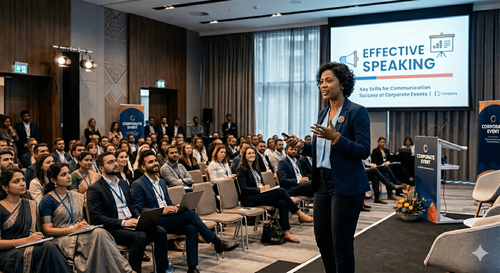

Table of Contents
Watch someone speak well in a room and something almost invisible happens. People lean in. Interruptions stop. The conversation follows their lead. It looks effortless, which is exactly why it's so misleading. What reads as natural confidence is almost always the result of very specific habits, practiced enough times that they stopped feeling deliberate.
Effective speaking isn't a personality type. It's a skill set, and this blog covers how to build it, for students, professionals, and anyone who's ever left a conversation feeling like they left their best point on the floor.
That's precisely what PlanetSpark's Public Speaking program is designed around. Not performance polish. Not memorised scripts. The actual mechanics of how confident speaking gets built, habit by habit, session by session, with expert coaches who give real feedback on real speaking rather than generic advice you could have found anywhere. Whether you're a student preparing for presentations, a professional who wants to communicate more clearly under pressure, or a parent whose child goes quiet the moment a room is watching, PlanetSpark has a structured path for exactly that starting point.
What Do Confident Speakers Do Before They Open Their Mouth, and How Does PlanetSpark Teach It?
Confident speakers form a single clear point before speaking. Knowing your destination before starting prevents trailing sentences and mid-speech corrections.
Watch a genuinely confident speaker closely and one pattern shows up every time. They know where they're going before they start moving. Most people do the opposite. They open their mouth and find out what they think as the words arrive, which is exactly why so many conversations trail off without landing anywhere useful.
Here's what that habit actually looks like and how PlanetSpark builds it:
- Lock in one sentence before you begin. Not a rough direction. A fully formed sentence you could deliver in one breath if the situation demanded it. Everything else is support material built around that anchor.
- The "what I mean is" moment is a structural problem. You've heard it. You've probably said it. Someone gives an explanation then immediately backtracks because the first version didn't quite get there. That's not a vocabulary issue. It's what happens when the point wasn't fully formed before speaking began.
- PlanetSpark coaches start here before anything else. Before delivery technique. Before body language. Before vocal polish. Because none of those surface-level adjustments fix the underlying problem of not knowing where a sentence is headed when it starts.
- The specific practice: state your core point in one sentence before speaking at any length. Feels strange the first few times. Becomes automatic faster than most learners expect.
- It transfers everywhere. Classroom contributions, boardroom presentations, the slightly awkward conversation with a manager about a raise. Once the habit is internalized, it shows up across every speaking context without conscious effort.
Read More: The Art of Talking Smart: Secrets to Effective Conversation
How Do Pace and Pause Affect How Confident You Sound, and What Does PlanetSpark Focus on in Sessions?
Slow pace signals control and trust. Deliberate pauses replace filler words and give listeners time to absorb what was just said.
The next time you're in a room with someone who communicates really well, pay attention to their speed. They're almost certainly speaking more slowly than you think. Not dramatically. But measurably slower than the average person under any kind of pressure. Research on speaker perception consistently shows that rate of speech is one of the strongest predictors of how competent and authoritative a speaker is judged to be, even when the content is identical.
How does speaking pace affect listener perception?
- Fast speech reads as anxiety to a listener, even when the content underneath is genuinely strong
- Slowing down signals that the speaker trusts what they're saying is worth waiting for
- The practical target: roughly twenty percent slower than whatever feels natural when nervous
- It feels uncomfortably slow from the inside. It doesn't sound that way to the room
Why do deliberate pauses work better than filler words?
- Filler words, "um," "so," "you know," exist because silence feels like failure to the speaker
- To the listener, a deliberate pause signals that what was just said actually matters
- It creates space to absorb a point rather than scrambling to keep up with the next one
- PlanetSpark coaches give specific feedback on exactly where pauses would have strengthened a point and where filler words buried something that deserved to land
What's the most effective eye contact technique for group speaking?
- Scanning a crowd when nervous creates more anxiety, not less
- The technique that consistently works: pick one person, complete one thought with them, move to the next
- It converts the pressure of addressing a room into a series of individual conversations
- PlanetSpark sessions practice this in group settings specifically because it needs to become instinctive, not something remembered halfway through a presentation
Not sure where your pace and pauses are costing you? Book a free trial class with PlanetSpark and actually hear it in your own speech.
Why Do Confident Speakers Still Get Nervous, and How Does PlanetSpark Use This in Coaching?
Nerves and excitement are physiologically identical. Confident speakers interpret pre-speech tension as readiness, not as a warning to retreat.
Every skilled speaker still gets nervous. Every single one. The difference between a speaker who freezes and one who performs has nothing to do with the presence or absence of nerves. It's entirely about what they understand those nerves to mean. This is where PlanetSpark's coaching starts, before any technique work happens at all, because without this reframe, learners keep avoiding the very practice that would fix the problem.
What does the nervousness reframe actually involve?
- Nervousness and excitement produce physiologically identical sensations: elevated heart rate, heightened awareness, physical tension before a high-stakes moment
- The speaker who freezes interprets those sensations as a warning signal, something going wrong
- The speaker who performs interprets the exact same sensations as readiness, the body preparing for something that matters
- Same physiology. Completely different outcome in the room
Why does PlanetSpark introduce this before technique work?
- When nervousness is understood as preparation rather than failure, resistance to practicing in front of others drops noticeably
- That drop in resistance is what makes all subsequent technique work actually stick
- Without this reframe, learners avoid the very practice that would close the gap, which is how people spend years stuck at exactly the same level
What's the practical technique that follows?
- Memorise the opening two sentences of any prepared speaking situation, just the entry point, nothing more
- The whole thing doesn't need to be scripted, just the moment of beginning
- Once movement starts, momentum tends to carry the rest forward
- Anchoring the opening removes the worst of the anxiety load and gives the speaker a runway to find their footing
Read More: Improve Public Speaking with a Quick and Easy Way to Effective Speaking
Explore PlanetSpark Public Speaking Classes
What Confident Speakers Have, You Can Build Too
PlanetSpark's Public Speaking classes are for students, working professionals, and kids who want to communicate more clearly, stay composed under pressure, and walk away from conversations knowing their point actually landed.
- Live, interactive sessions with expert public speaking coaches
- Structured curriculum from foundational communication habits to advanced delivery
- Personalized feedback after every speaking practice
- Real-world scenarios that mirror actual high-stakes speaking situations
- Confidence-building framework suited to every age and experience level
- Flexible scheduling built around school timetables and professional routines
Ready to build the speaking habits that confident communicators actually use? Explore PlanetSpark Public Speaking classes today.
Every Room You Walk Into Is an Opportunity That Already Exists
The Speakers You Admire Were Not Born That Way
The person whose words land cleanly, whose presence makes others pay attention, whose communication seems to cost them nothing. They didn't arrive that way. They practiced specific habits until those habits became invisible. And the invisibility is the point. That's what mastery looks like from the outside.
Pick one thing from this blog. The deliberate pause. The single sentence that holds your core point before you begin. The eye contact with one person at a time instead of the whole room at once. Take it into the next conversation that matters and notice what shifts.
The gap between the speaker you are now and the one you've quietly admired in rooms is smaller than it looks. It's just a practiced distance. And practice has a direction.
Frequently Asked Questions
Introversion and speaking confidence are separate things. Clarity before speaking, deliberate pace, and structured delivery suit careful thinkers well.
Three work fast: memorise your opening two sentences before any prepared speaking situation, replace filler words with deliberate pauses, and make eye contact with one person at a time. Each changes how a speaker reads to a listener without requiring months of practice.
Almost always the gap between thinking privately and performing under observation. It narrows with repeated low-stakes practice. PlanetSpark's sessions create that environment deliberately, conditioning learners to think clearly while being watched
Yes, when sessions are live and interactive rather than pre-recorded. PlanetSpark's online Public Speaking classes use real-time coaching with immediate feedback, replicating the essential dynamic of in-person coaching without the scheduling constraints.
Professional contexts require conciseness, persuasion under time pressure, and composure during difficult questions. PlanetSpark's adult sessions use real workplace scenarios rather than generic exercises, making the practice transfer directly into situations that matter.