
5 Best Winning Tips for Elocution Competitions


An elocution competition is one of the most powerful platforms where your voice becomes your strongest tool. Whether you are a student preparing for your first school contest or a working professional looking to sharpen your public speaking skills, mastering elocution can completely transform how you communicate and carry yourself in front of others.
At PlanetSpark, students and professionals learn that winning an elocution competition is not just about having the loudest voice or the most dramatic delivery. It is about clarity, confidence, and the ability to connect with your audience in a meaningful way. That connection starts long before you step on stage, and this blog will walk you through exactly how to build it.
What is Elocution?
Before diving into winning strategies, it is important to understand what is elocution and why it matters.
Elocution is the art of speaking clearly, expressively, and effectively in public. It involves a combination of pronunciation, voice modulation, tone, pace, body language, and emotional delivery. When someone practices elocution, they are not just learning how to speak louder. They are learning how to speak with intention.

Elocution has been a valued skill across centuries, from courtrooms and parliaments to school stages and corporate boardrooms. Today, it is one of the most sought-after communication skills for both students and professionals because it builds the foundation for confident, articulate self-expression.
Understanding what is elocution helps you approach the competition not as a performance pressure but as an opportunity to express yourself powerfully.
Why Elocution Competitions Matter
Elocution competitions are more than a stage event. They are structured environments designed to help you grow.
For students, participating in an elocution competition builds confidence, improves academic communication, and develops critical thinking through research and speech preparation. For working professionals, the skills practised in elocution directly translate to presentations, client conversations, leadership communication, and team engagement.
The preparation process itself, researching a topic, writing a speech, rehearsing delivery, and managing nerves, trains the mind and body to communicate under pressure. That training stays with you long after the competition ends.
5 Best Winning Tips for Elocution Competitions
1. Choose and Know Your Topic Deeply
The foundation of any winning elocution competition performance is a thorough understanding of your topic. Judges and audiences can immediately tell when a speaker is reading words versus sharing genuine understanding.
Start by picking a topic that genuinely interests you. Your natural enthusiasm will come through in your voice and body language. Once your topic is selected, research it from multiple angles. Understand the facts, the counterarguments, and the real-world impact. This depth of knowledge gives you the confidence to deviate slightly from your script if needed and still stay on point.
Write your speech in your own voice. Avoid using complex words simply to sound impressive. Clear, natural language delivered with conviction always wins over complicated language delivered with hesitation.
At PlanetSpark, students are guided to choose topics that connect to their personal experiences and perspectives, which makes their speeches feel authentic and memorable.
2. Master Voice Modulation and Pace
One of the most common reasons people do not win elocution competitions is speaking in a flat, monotone voice. Voice modulation, the ability to vary your pitch, pace, tone, and volume, is what transforms a speech into a compelling performance.
Speak slowly when you want the audience to absorb a key point. Speed up slightly to build momentum or excitement. Lower your voice to add gravitas, and raise it to create energy. Pause deliberately at powerful moments. Silence used well is one of the most effective tools in elocution.
Practice out loud every single day. Record yourself on your phone and listen back critically. Notice where you are rushing, where your voice is flat, and where you naturally emphasise the right words. The more you hear yourself, the faster you improve.
PlanetSpark's 1:1 live sessions help students receive immediate, personalised feedback on voice modulation, allowing them to correct patterns they cannot notice on their own.
3. Work on Pronunciation and Diction
Crystal-clear pronunciation is non-negotiable in an elocution competition. Judges specifically evaluate how clearly and correctly you articulate each word. Sloppy diction or mispronounced words immediately reduce your credibility, no matter how strong your content is.
Practise tongue twisters daily to strengthen the muscles in your mouth and improve articulation. Work on sounds that are commonly mispronounced in your language or regional accent. Listen to skilled orators, news anchors, or debate champions and study how they pronounce specific words.
Pay attention to word stress and syllable emphasis. Saying a word with the wrong stress can change its meaning or make it sound unclear. For example, the word "present" changes meaning entirely based on which syllable you stress.
If English is not your first language, this practice is even more valuable. Over time, consistent work on diction builds muscle memory that makes precise pronunciation feel natural and effortless.
4. Use Body Language and Stage Presence Intentionally
Your words are only part of what the audience experiences. Your posture, gestures, eye contact, and movement on stage communicate just as much as your speech, sometimes more.
Stand tall with your feet shoulder-width apart and your weight evenly balanced. This grounded stance projects confidence before you speak a single word. Avoid swaying, pacing randomly, or crossing your arms, as these habits signal nervousness and distract from your message.
Use hand gestures deliberately to emphasise key points, but avoid using them constantly, as that becomes distracting. Make sustained eye contact with different parts of the audience. This creates a sense of personal connection and shows that you are speaking to people, not reading to them.
Facial expressions must match your words. If you are speaking about something inspiring, your face should reflect that energy. Emotional congruence, when your face matches your words, makes your speech feel genuine and powerful.
Practise in front of a mirror or ask someone to video your rehearsals. You will quickly identify habits you did not know you had.
5. Manage Nervousness and Build Stage Confidence
Even the most experienced speakers feel nervous before taking the stage. The difference between those who perform well and those who freeze is how they manage that nervousness.
In the days leading up to your elocution competition, rehearse in environments that simulate the real stage. Speak to your family, friends, or classmates. Visit the actual venue if possible and practise there. Familiarity reduces anxiety significantly.
On the day of the competition, use deep breathing techniques before stepping up. Breathe in slowly for four counts, hold for four, and release for four. This activates your body's calm response and steadies your voice.
Visualise yourself delivering a strong, clear speech before you begin. Athletes call this mental rehearsal, and research consistently shows that it improves performance. Remind yourself that nervousness is simply energy, and you can choose to channel that energy into your delivery.
PlanetSpark helps students build stage confidence through consistent practice, structured feedback, and guided mock performances so that by competition day, the stage feels familiar, not frightening.
How This Helps in Public Speaking
Participating in and preparing for an elocution competition contributes directly to personal growth in ways that extend far beyond the stage.
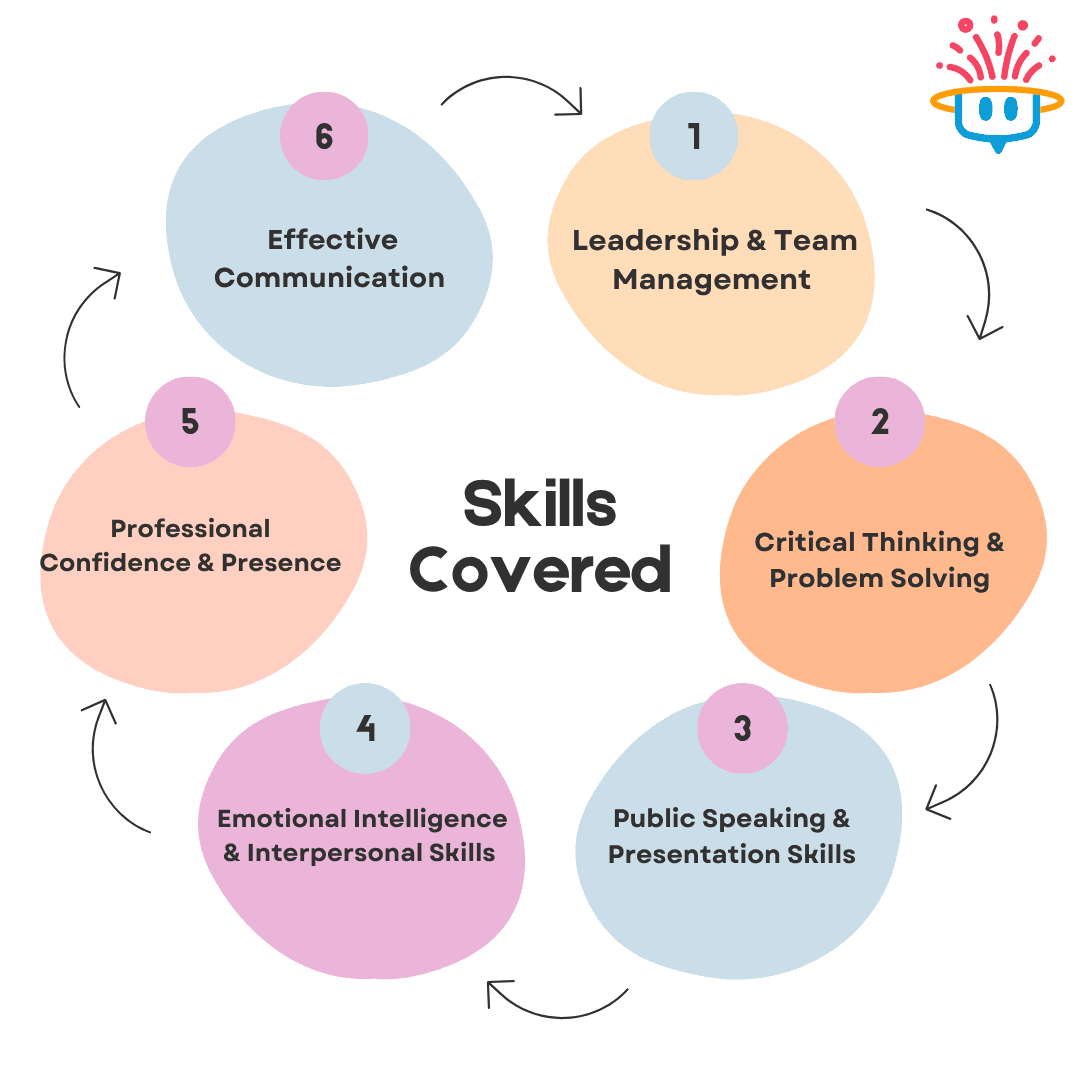
Every time you research a speech, organise your thoughts, and present them clearly, you are strengthening your critical thinking and communication skills. These are core components of a strong, well-rounded personality.
Voice training and body language awareness teach you how to carry yourself in any setting, from a job interview to a client meeting to a classroom discussion. The confidence you build through elocution becomes a part of how you naturally interact with the world.
For students, elocution practice develops emotional vocabulary and self-expression, making them more articulate in academic and social situations. For professionals, it sharpens executive presence and the ability to lead conversations with clarity and authority.
PlanetSpark's personality development programs integrate elocution training as a core pillar because the habits formed on stage, preparation, clear thinking, confident delivery, and calm under pressure, are exactly the habits that shape successful individuals.
Related Topics to Explore
Public Speaking Tips for Beginners helps you understand the building blocks of confident communication before you take the stage.
Debate Skills and Argumentation covers how to structure logical arguments and respond to opposing views, skills that complement elocution powerfully.
Body Language for Confident Communication dives deeper into how posture, gestures, and eye contact shape how others perceive you.
Storytelling Techniques for Speakers explores how weaving narrative into your speech makes it more memorable and impactful.
Quick Summary Before You Go
Winning an elocution competition comes down to five key pillars: knowing your topic deeply, mastering voice modulation and pace, practising clear pronunciation and diction, using body language with intention, and managing nervousness through consistent preparation. Understanding what is elocution helps you see it not as a performance but as an act of clear, confident self-expression. The skills you build through elocution practice compound over time and contribute to lasting personality development in every area of your life.
How PlanetSpark Helps You Win
PlanetSpark offers structured, personalised programs that help both students and working professionals develop strong elocution and public speaking skills from the ground up.
1:1 Expert Mentoring gives you focused, personalised coaching where your specific speech patterns, pronunciation gaps, and confidence challenges are addressed directly.
Concept-First Learning ensures you understand why each skill matters, from voice modulation to body language, so the techniques stick and become natural.
Mock Performance Sessions let you practise in front of a live audience in a supportive environment, building the stage familiarity that reduces performance anxiety.

Guided Feedback and Correction helps you identify and fix habits you cannot spot on your own, from rushed pacing to monotone delivery to inconsistent eye contact.
Progress Tracking gives students and parents clear visibility into how communication confidence is growing over time.
This is where hesitation becomes clarity and a good speaker becomes a great one.
Ready to Win Your Next Elocution Competition
Whether you are preparing for your first school competition or refining your skills for a professional setting, the journey to becoming a confident, articulate speaker starts with the right guidance and consistent practice.
With PlanetSpark's expert-led programs, you do not just prepare for a competition. You build communication skills that stay with you for life.
Frequently Asked Questions
Elocution is the art of speaking clearly, confidently, and effectively. It helps students improve pronunciation, voice modulation, body language, and overall communication skills, making them confident speakers both in competitions and daily life.
Focus on what you can control quickly: know your speech well enough to deliver it without looking down constantly, practise your opening and closing lines until they feel natural, work on slowing your pace, and use a few deep breathing exercises before stepping on stage. Consistent rehearsal even over a short period makes a significant difference.
The most common mistakes include speaking too fast due to nervousness, using a flat and monotone voice, avoiding eye contact with the audience, using excessive filler words like um and uh, and not matching facial expressions to the emotion of the speech. Being aware of these in advance helps you consciously avoid them during practice.
Elocution helps professionals communicate with greater clarity and authority during presentations, client conversations, team meetings, and leadership situations. Strong diction, confident body language, and controlled pacing make your ideas easier to understand and harder to dismiss, giving you a measurable edge in professional environments.
Public speaking is a broader term that covers any form of speaking to an audience, including motivational talks, presentations, and debates. Elocution is a more specific discipline focused on the quality of speech itself, including clarity, pronunciation, tone, and delivery. Elocution skills are foundational to becoming a strong public speaker overall.
Children can begin basic elocution training as early as five or six years old through storytelling, pronunciation exercises, and simple recitation. Structured training becomes most effective between the ages of eight and fourteen, when children develop stronger language awareness and can apply feedback to improve their delivery meaningfully over time.