
Develop Confident Body Language with PlanetSpark

Table of Contents
- What Is a Hand Gesture
- Why Hand Gestures Are Important
- How Hand Gestures Show Confidence
- Types of Hand Gestures We Use Every Day
- Good Hand Gestures for Public Speaking
- Common Hand Gesture Mistakes
- What Is Hand Gesture Recognition
- How Hand Gesture Recognition Works
- Why Learning Hand Gestures Helps Kids
- How PlanetSpark Helps You Improve Hand Gestures
- Final Tips to Use Hand Gestures Confidently
Communication is not only about words. The way we move our hands while speaking can completely change how people understand us. A strong hand gesture can make a speaker look confident, clear, and powerful. A weak or distracting hand movement can reduce impact. That is why understanding hand gesture is important for both working professionals and kids.
When you speak in meetings, presentations, interviews, debates, or stage performances, your body speaks before your words do. A well timed hand gesture supports your message. It helps you explain ideas clearly. It also keeps the audience engaged.
In this blog, you will understand what a hand gesture really means, why it matters, and how it builds confident body language. We will also explore hand gesture recognition and how modern technology reads our movements.
Let us begin with the basics.
What Is a Hand Gesture
A hand gesture is a movement of the hand that expresses an idea, feeling, or message. We use hand gesture naturally in daily life without thinking about it. When we wave hello, show thumbs up, or point at something, we are using a hand gesture.
Understanding hand gesture meaning in Simple Words
The hand gesture meaning is simple. It refers to how hand movements communicate thoughts without using words. Sometimes, one small movement can say more than a full sentence.
For example:
A thumbs up means approval
A raised palm means stop
Clapping hands show appreciation
Pointing can show direction
These gestures help people understand us quickly.
Below is a simple table to explain how gestures work:
| Gesture | What It Shows | Where We Use It |
|---|---|---|
| Open palms | Honesty and openness | Presentations, meetings |
| Closed fists | Strong emotion or determination | Speeches |
| Waving | Greeting or goodbye | Daily communication |
| Finger pointing | Giving direction | Teaching, guiding |
A hand gesture supports spoken words. When words and gestures match, communication becomes stronger. If they do not match, people feel confused.
Why We Use Hand Gestures Naturally
Humans are expressive beings. Even babies use hand gesture before they learn to speak. This shows that gestures are part of natural communication.
We use gestures because:
They help explain complex ideas
They make stories interesting
They show emotions clearly
They reduce misunderstanding
For professionals, controlled gestures show authority and clarity. For kids, learning the right hand gesture builds stage confidence and improves public speaking skills.
Cultural Differences in Hand Gestures
Not all gestures mean the same in every country. One hand gesture might mean something positive in one place and something negative in another. That is why learning proper usage is important, especially in global environments.
A confident speaker understands:
When to use open gestures
When to keep hands steady
How to avoid aggressive pointing
How to maintain balance
Mastering hand gesture meaning is the first step toward powerful communication.
Why Hand Gestures Are Important
A hand gesture is not just decoration while speaking. It is a powerful communication tool. Research shows that people remember visual communication better than only spoken words. When your hands support your speech, your message becomes clearer.
Improves Clarity in Communication
When explaining a concept, gestures act like visual aids. For example:
Showing size with your hands helps people imagine scale
Counting on fingers helps list points clearly
Using open palms invites trust
Without gestures, speech can feel flat. With the right hand gesture, ideas become easier to understand.
Builds Confidence and Authority
Confident speakers use steady and controlled movements. Nervous speakers hide their hands or move them randomly.
Strong gestures:
Show control
Display energy
Keep audience attention
Reduce filler words
Professionals in leadership roles use purposeful gestures to command presence. Kids who learn gesture control early develop stronger stage presence and perform better in public activities.
Supports Memory and Learning
Gestures also help the speaker remember points. When you connect ideas with movements, your brain stores information better. This is why teachers use gestures while teaching.
Benefits include:
Better recall
Structured speaking
Logical flow
Natural rhythm
Enhances Emotional Expression
Communication is not only about logic. Emotion matters too. A hand gesture can show excitement, concern, happiness, or seriousness.
For example:
Spreading arms shows enthusiasm
Slow hand movement shows calm explanation
Firm gestures show confidence
When gestures match emotions, communication feels authentic.
Common Signs of Poor Gesture Usage
Not every gesture is effective. Some movements distract the audience.
Avoid:
Crossing arms repeatedly
Playing with fingers
Pointing aggressively
Hiding hands behind back
Controlled movements improve credibility.
In today’s digital world, even technology studies gestures. This field is known as hand gesture recognition. It allows machines to understand human movements through cameras and sensors. This shows how powerful and meaningful gestures are in communication.
Understanding the importance of hand gesture is essential for anyone who wants to improve public speaking, leadership presence, or classroom performance.
“Speak with confidence, shine everywhere.”
Enroll in PlanetSpark’s Public Speaking course today!
How Hand Gestures Show Confidence
Confidence is not only heard in your voice. It is seen in your posture, eye contact, and especially in your hand gesture. Before you speak a single word, people observe your body language. Strong and balanced gestures instantly create a positive impression.
A confident hand gesture is controlled, purposeful, and natural. It matches your words and emotions. When your gestures support your message, people trust you more.
Open vs Closed Gestures
One of the biggest differences between confident and nervous speakers is hand position.
| Gesture Type | What It Communicates | Impact on Audience |
|---|---|---|
| Open palms | Honesty and openness | Builds trust |
| Hands visible | Transparency | Creates comfort |
| Crossed arms | Defensive attitude | Creates distance |
| Hands in pockets | Nervousness or lack of interest | Reduces authority |
Open gestures make you look approachable. Closed gestures create barriers. Professionals who present ideas in meetings often keep their palms slightly open to signal clarity and confidence.
The Power Position of Hands
Keeping your hands between your chest and waist area is considered a strong speaking zone. Movements in this area look natural and controlled.
Confident speakers:
Use smooth movements
Avoid sudden jerks
Pause their hands when making key points
Keep gestures aligned with speech rhythm
When your hands move with intention, your audience feels guided rather than distracted.
Gestures That Strengthen Authority
Certain gestures naturally increase your presence:
Steepling fingers while explaining a point
Counting points on fingers
Using a firm downward motion to emphasize importance
Spreading hands slightly to show inclusiveness
These gestures signal structure and leadership. They make your message feel organized.
Confidence for Kids and Professionals
For kids, learning how to use a hand gesture correctly helps reduce stage fear. Instead of freezing, they learn where to place their hands and how to move them naturally.
For professionals:
Gestures improve presentation impact
They make negotiations stronger
They enhance interview performance
They create leadership presence
When gestures match your tone and message, your communication becomes powerful and memorable.
Common Confidence Killers
Avoid these habits:
Fidgeting with fingers
Repeating the same motion again and again
Pointing too often
Overacting with dramatic movements
Balanced movements create credibility. Too little movement looks stiff. Too much looks uncontrolled.
Mastering hand gesture builds visible confidence. It transforms ordinary speech into impactful communication.
“Your words can inspire, let them be heard.”
Join PlanetSpark and master Public Speaking skills.
Types of Hand Gestures We Use Every Day
We use a hand gesture many times daily without noticing it. These gestures fall into different categories based on purpose. Understanding these types helps both kids and professionals improve communication consciously.
1. Emblem Gestures
These gestures have a specific meaning and can stand alone without words.
Examples:
Thumbs up
Victory sign
Waving
Raised palm for stop
These gestures are simple and direct. People instantly understand them.
2. Illustrative Gestures
These gestures support spoken words. They help explain ideas visually.
For example:
Showing size with both hands
Indicating direction while giving instructions
Demonstrating shape or movement
Illustrative gestures make communication clearer and more engaging.
3. Descriptive Gestures
These gestures help describe abstract ideas.
Examples include:
Moving hands upward to show growth
Spreading arms to show expansion
Rotating hands to show change
These gestures are useful in presentations, storytelling, and teaching.
4. Emotional Gestures
These express feelings.
Common examples:
Clapping to show excitement
Placing hand on chest to show sincerity
Slow hand movement to show calmness
These gestures make communication more human and relatable.
5. Regulating Gestures
These gestures manage conversations.
Examples:
Raising hand to ask a question
Using palm to pause someone
Gesturing to invite someone to speak
These are commonly used in classrooms, meetings, and group discussions.
Comparison of Gesture Types
| Type | Purpose | Where Commonly Used |
|---|---|---|
| Emblem | Direct meaning | Daily life |
| Illustrative | Explain ideas | Teaching, speaking |
| Descriptive | Show abstract concepts | Presentations |
| Emotional | Express feelings | Speeches |
| Regulating | Control flow | Meetings, classrooms |
Understanding these types improves clarity. It also prevents misuse.
In modern technology, different gesture categories are studied deeply in hand gesture recognition systems. These systems analyze movement patterns to understand human communication. That shows how structured and meaningful gestures truly are.
When you become aware of the types of hand gesture you use daily, you gain control over your body language. This awareness is the first step toward confident communication.
“Confidence starts with a single word.”
Learn Public Speaking at PlanetSpark and speak boldly.
Good Hand Gestures for Public Speaking
Public speaking becomes powerful when words and hand gesture work together. Whether you are presenting in a boardroom or speaking on a stage, your gestures guide the audience’s attention. A controlled hand gesture makes your message clearer and more memorable.
Many speakers focus only on voice modulation. However, the audience observes your hands constantly. If your gestures look natural and aligned with your speech, you appear confident and credible.
Gestures That Strengthen Your Speech
Certain gestures are highly effective during presentations:
Open palms while introducing an idea
Counting on fingers when listing points
Spreading hands slightly to show comparison
Using gentle forward motion to emphasize action
Bringing hands together to show conclusion of a point
These gestures create structure in your speech. They help the audience follow your ideas step by step.
Using the Gesture Box Technique
Professional speakers often stay within an imaginary box from shoulders to waist. This area is called the gesture zone. Movements inside this space look controlled and professional.
Benefits of staying in the gesture zone:
Avoids exaggerated movements
Keeps gestures visible
Maintains visual balance
Prevents distraction
If your hands move too high or too low, it reduces impact.
Synchronizing Gesture with Speech
A hand gesture should match the exact moment you speak an important word. For example:
If you say, “There are three reasons,” raise three fingers at the same time.
If you say, “This is a big opportunity,” show expansion with your hands.
Timing creates clarity. When gestures come too early or too late, communication feels disconnected.
Gestures for Different Speaking Situations
| Situation | Recommended Gesture Style |
|---|---|
| Business presentation | Controlled and structured |
| Motivational speech | Energetic and expressive |
| Teaching session | Illustrative and clear |
| Online meeting | Smaller, camera-friendly gestures |
Professionals should adapt gestures based on context. Kids can practice storytelling with expressive movements to build stage comfort.
Mistakes to Avoid While Speaking
Avoid these common errors:
Repeating one movement constantly
Hiding hands behind back
Crossing arms
Playing with objects
Over dramatic acting
Good public speakers understand that every hand gesture must serve a purpose. Random movement distracts. Purposeful movement influences.
When gestures align with confidence and clarity, your audience listens with attention and trust.
“Every great speaker was once a learner.”
Kickstart your journey with PlanetSpark’s Public Speaking course.
Common Hand Gesture Mistakes
While a strong hand gesture builds authority, incorrect gestures can damage your message. Many people move their hands without awareness. These unconscious movements often signal nervousness.
Understanding common mistakes helps you correct them early.
1. Overusing Gestures
Too much movement can overwhelm the audience. Constantly waving hands reduces seriousness. Strong communication needs balance.
Signs of overuse:
Hands never stay still
Large dramatic swings
Continuous finger movement
Solution:
Pause hands at key moments
Use gestures only to support important points
Practice in front of a mirror
2. Defensive Gestures
Some gestures create emotional barriers.
Examples include:
Crossed arms
Clenched fists
Hands tightly folded
These gestures signal discomfort or resistance. In professional settings, they reduce approachability.
3. Nervous Habits
Many speakers develop habits without realizing.
Common nervous gestures:
Cracking knuckles
Touching face repeatedly
Playing with ring or pen
Adjusting clothes often
These habits distract the audience from your message.
4. Aggressive Pointing
Pointing directly at someone can appear rude or dominating. Instead, use open palm direction gestures. This feels respectful and inclusive.
5. Mismatch Between Words and Movement
If you say something positive but your hands are stiff or closed, people feel confusion. Communication must be consistent.
Impact of Poor Gestures
| Mistake | Audience Reaction |
|---|---|
| Excessive movement | Feels distracting |
| Closed posture | Feels unapproachable |
| Nervous fidgeting | Reduces credibility |
| Aggressive pointing | Feels uncomfortable |
Both kids and professionals benefit from awareness training. Practicing in a structured environment improves control and confidence.
In advanced communication research, gesture patterns are analyzed deeply in hand gesture recognition systems. These systems detect movement errors and inconsistencies. This proves that gestures are measurable and meaningful.
Correcting mistakes transforms an average speaker into a confident communicator. Awareness is the first step. Practice is the second. Consistency builds mastery.
“Express yourself, impress the world.”
PlanetSpark helps you master Public Speaking effortlessly.
What Is Hand Gesture Recognition
Hand gesture recognition is the technology that allows machines to understand and interpret human hand movements. It is widely used in computers, gaming, robotics, and virtual reality. With hand gesture recognition, a simple movement of the hand can control devices, interact with apps, or even communicate with robots.
This shows how important hand gestures are - not just for humans but also for machines. Understanding hand gesture helps in creating accurate gestures for recognition systems, which is why both professionals and kids can benefit from learning correct hand movements.
How Hand Gesture Recognition Works
Hand gesture recognition works by capturing hand movements through cameras or sensors and then analyzing them using software. It involves:
Detection: The system identifies the hand in the camera frame.
Tracking: The hand’s position and movement are tracked over time.
Recognition: The software interprets the gesture and assigns it a meaning.
For example:
A swipe right gesture can turn a page in an app
A thumbs up gesture can send approval in games
A pointing gesture can select an object on the screen
Applications of Hand Gesture Recognition
| Field | Use Case | Benefit |
|---|---|---|
| Gaming | Motion-based controls | Immersive experience |
| Robotics | Robot control | Hands-free operation |
| Education | Virtual teaching tools | Interactive learning |
| Healthcare | Sign language recognition | Communication aid |
Hand gesture recognition combines technology and communication. For kids, it can make learning interactive and fun. For professionals, it opens new ways to interact with tools without touch.
Why It Matters for Learning Hand Gestures
Understanding hand gesture recognition helps learners:
See the importance of precise gestures
Improve communication clarity
Gain confidence in public speaking and presentations
Bridge human-computer interaction
When kids practice hand gestures consciously, they not only improve confidence but also align better with digital recognition systems used in modern learning platforms.
“Your voice deserves to be confident and clear.”
Enhance your skills with PlanetSpark Public Speaking course.
How Hand Gesture Recognition Works
The process of hand gesture recognition involves multiple steps that convert physical movements into digital information. Understanding this process helps learners see why proper hand gesture technique is essential.
Step 1: Capturing the Hand
High-resolution cameras or depth sensors capture the hand’s movement. Good lighting and clear positioning make recognition more accurate.
Step 2: Tracking Movements
The system follows the hand in 3D space. Movements like waving, pointing, or clapping are recorded frame by frame.
Step 3: Identifying Gesture Features
The software analyzes patterns such as:
Finger positions
Hand orientation
Motion trajectory
Speed of movement
This helps the system distinguish between different gestures.
Step 4: Interpreting Gestures
Machine learning algorithms compare captured movements with pre-trained gesture libraries. Once matched, the gesture is given a meaning.
Example:
Open palm → Stop command
Fist → Grab or select
Index finger swipe → Next page
Step 5: Action Execution
After recognition, the system executes the associated action. This can be:
Turning a slide in a presentation
Controlling a robot arm
Interacting with virtual objects
Benefits for Learning and Development
Improves precision in hand movements
Encourages conscious practice of gestures
Connects physical communication with technology
Enhances confidence in presentations
By understanding how hand gesture recognition works, both kids and professionals can appreciate the importance of every movement. Precise and meaningful gestures are not just visually effective - they can be digitally interpreted too.
Why Learning Hand Gestures Helps Kids
Learning hand gestures is more than just moving hands- it builds confidence, clarity, and effective communication from an early age. For kids, using the right hand gesture helps express ideas, emotions, and instructions without hesitation. It also supports language skills by connecting thoughts to visible actions.
When children practice hand gestures, they:
Improve focus and memory by linking movement with speech
Develop better stage presence for presentations or performances
Communicate emotions clearly, reducing misunderstandings
Build self-confidence and reduce nervousness in public speaking
Learn to express ideas visually, enhancing creativity
Strong hand gesture skills also prepare kids for future learning experiences. Whether interacting in classrooms, storytelling, or participating in group activities, gestures help them convey messages effectively. Early practice builds habits that last into adulthood, making professional presentations and daily communication more natural.

How PlanetSpark Helps You Improve Hand Gestures
PlanetSpark provides structured programs to enhance hand gestures alongside communication skills. Their methods focus on combining learning with fun, ensuring both kids and professionals can benefit.
Key Features:
Interactive Activities: Engage learners with exercises that improve hand movements naturally
Live Sessions: Practice gestures in real-time with expert guidance
Feedback and Correction: Personalized tips to refine gestures for clarity and confidence
Storytelling Techniques: Use gestures effectively in stories, presentations, and discussions
Confidence Building: Combine gesture practice with speech to reduce nervousness
By integrating gesture training into communication programs, PlanetSpark ensures learners develop confident body language. This makes speaking in public, online, or in classrooms easier and more impactful.
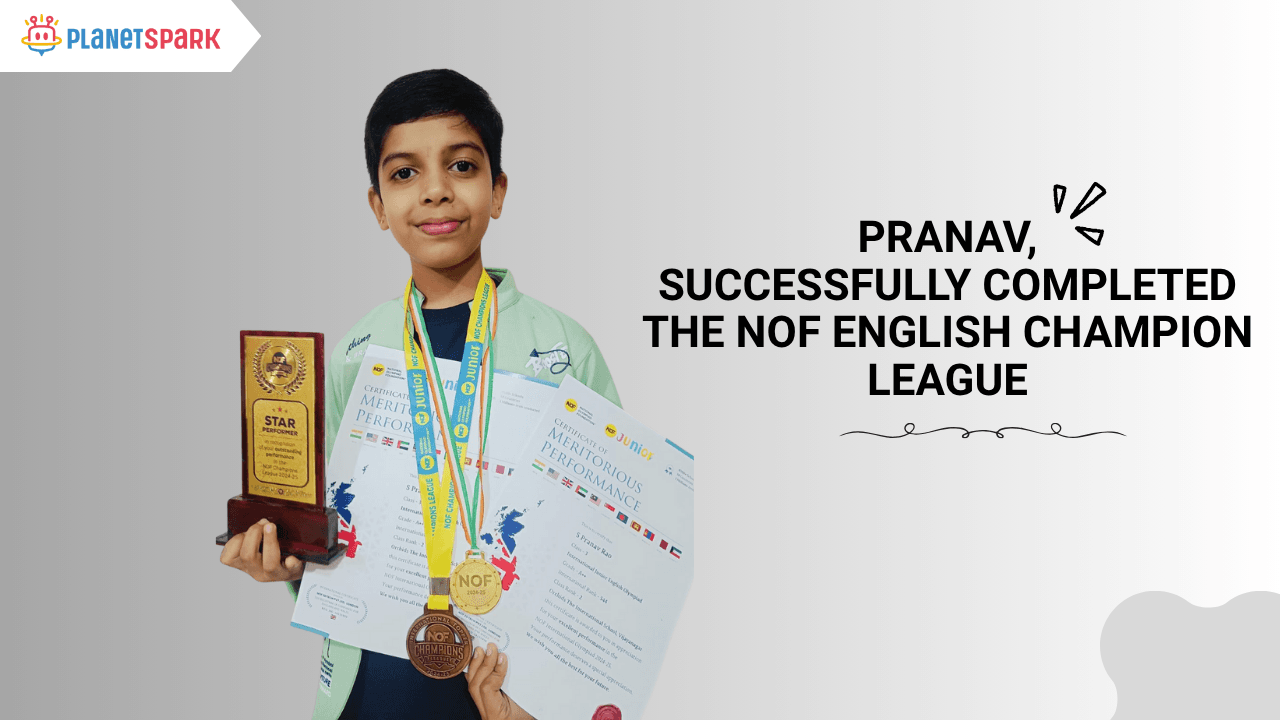
Pranav’s Outstanding Achievement in English
Pranav, a bright Grade 3 student, has successfully completed the NOF English Champion League, demonstrating exceptional talent in both Public Speaking and Creative Writing. His dedication and hard work have earned him recognition, highlighting his creativity, confidence, and communication skills. Pranav’s success reflects his passion for learning and his ability to excel in language and expression.
Frequently Asked Questions
A hand gesture is a movement of the hand that communicates ideas, emotions, or messages without words.
Hand gestures make communication clearer, show confidence, engage the audience, and help express emotions effectively.
Yes, learning hand gestures helps kids improve confidence, express ideas clearly, and perform better in public speaking or classroom activities.
Hand gesture recognition is a technology that enables machines to detect and interpret human hand movements using cameras and sensors.
Proper hand gestures make speech engaging, highlight key points, guide audience attention, and show confidence and authority.
Overusing gestures, fidgeting, aggressive pointing, or mismatched movements can distract the audience and reduce credibility.