
How to Build Self-Confidence in Kids | Guide


Every parent wants their child to step into the world with courage, clarity, and a sense of self-worth. Yet, in an age where children face academic pressure, comparison, social media exposure, and constant evaluations, confidence can sometimes become shaky. This is why learning how to build self-confidence in kids isn’t just an optional part of upbringing; it is a core life skill.
Children who believe in themselves communicate better, build stronger friendships, perform well in school, take initiative, and handle challenges with a healthy attitude. On the other hand, a child who constantly doubts themselves may hesitate to speak up, avoid new situations, or fear making mistakes.
But here’s the reassuring truth:
Confidence can be taught, shaped, and strengthened, just like any other skill.
Ways to Be More Confident (For Kids)
How to build self-confidence in children becomes easier when you introduce small, consistent habits that strengthen their inner voice. Below are the most effective, child-friendly methods backed by developmental psychology and real classroom experience.
1. Encourage Kids to Speak Up in Daily Life
Confidence grows when children feel heard. Encourage them to speak during family conversations, order their own food at restaurants, or introduce themselves to new people.
Simple prompts you can use:
“What do you think about this?”
“Do you want to share your idea?”
“How would you solve this?”
Kids who learn to express themselves early naturally gain stronger communication skills and reduce fear of judgment.
2. Teach Them Positive Self-Talk
Children often adopt the voice they hear the most, yours and their own. Help them replace self-doubts with empowering thoughts.
Examples of confidence-building self-talk:
“I can try my best.”
“It’s okay to make mistakes.”
“I learn something new every day.”
“I believe in myself.”
Positive self-talk is the fastest way to build self-worth.
3. Make Them Comfortable With Making Mistakes
A confident child doesn’t fear mistakes; they understand that mistakes are part of learning. Instead of asking, “Why did you do this wrong?” try:
“What did you learn from this?”
“Let’s try again together.”
“Every expert was once a beginner.”
This rewires their mindset from fear to curiosity.
4. Give Them Small Responsibilities
Responsibility builds confidence because it makes kids feel trusted. Start with simple tasks:
Packing their own school bag
Helping set the table
Watering plants
Choosing their outfit for the day
These micro-achievements slowly shape a confident identity.
5. Celebrate Effort, Not Just Outcomes
Praise is powerful, but it must be the right kind.
Instead of saying:
“You are so smart!”
Say:
“You worked really hard on this!”
“Your practice is showing results!”
Effort-based praise teaches resilience and long-term confidence.
6. Build Communication Skills Early
Children who speak confidently naturally feel confident. Activities you can introduce:
Daily 2-minute storytelling
Expressing how their day went
Show-and-tell sessions at home
Reading aloud
Impromptu mini-speeches
These create real-life speaking situations that reduce hesitation and boost self-assurance.
7. Help Them Participate in Creative Activities
Creative expression opens confidence pathways because it allows kids to express ideas freely. Encourage:
Arts and crafts
Creative writing
Storytelling
Public speaking
Acting/role play
When kids see their ideas come alive, their self-worth strengthens.
Don’t let your child miss out; public speaking batches are almost full.
8. Reduce Comparison, Focus on the Child’s Journey
Comparison kills confidence faster than failure. Teach kids:
Everyone learns at their own pace
Their strengths matter
Their progress counts
Improvement is more important than perfection
This helps them form a healthy self-image.
9. Encourage Kids to Interact With New People
Confidence grows when children learn to handle social situations. Support them in:
Meeting new friends
Talking to teachers with clarity
Asking questions in class
Participating in group activities
The more children interact, the more fearless they become.
10. Role Play to Prepare for Real Situations
Role plays build confidence by removing fear of the unknown. Try:
“Meeting a new friend”
“Introducing yourself to the class”
“Asking for help”
“Speaking on a stage”
This prepares them emotionally and mentally for real-life speaking.
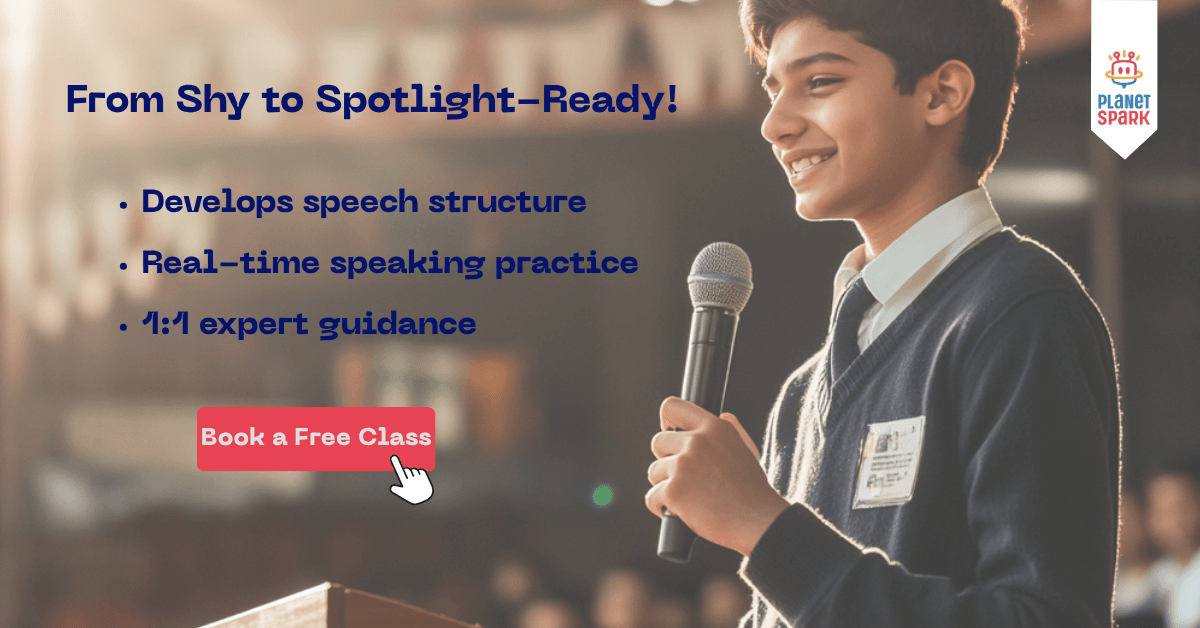
11. Use Public Speaking Programs to Build Confidence Faster
Public speaking allows children to practice structured expression. It improves:
Vocabulary
Stage confidence
Body language
Communication clarity
Social presence
Enrolling in a guided program helps kids see quick and lasting improvement.
Confidence vs. Insecurity
Confidence and insecurity may look similar on the surface, but the internal experience for a child is completely different. Understanding the difference helps parents support their child better and identify the early signs of low self-esteem. When the goal is to learn how to build self-confidence in kids, clarity matters.
A confident child feels capable even when they don’t have all the answers. They are willing to try, explore, ask, and express. Insecure children, on the other hand, fear being wrong or judged. They may stay silent, avoid challenges, or hide their ideas.
Let’s break this down in a simple way.
1. What a Confident Child Looks Like
A confident child typically:
Tries new things even if they’re unsure
Asks questions comfortably
Speaks clearly and maintains eye contact
Handles small failures without breaking down
Shows curiosity and independence
Participates in school or group activities
These behaviors show that the child trusts their abilities and feels comfortable expressing themselves.
2. What an Insecure Child Looks Like
An insecure child may:
Stay silent even when they know the answer
Fear of speaking in front of others
Seek approval constantly
Compare themselves too often
Avoid tasks that require effort
Lose confidence after one small mistake
Parents sometimes misinterpret this as “shyness,” but insecurity is different. It is often rooted in fear of judgment, lack of opportunities to practice speaking, or low self-esteem.
3. Why the Difference Matters
Misidentifying insecurity as personality can delay important support. Kids don’t “grow out” of insecurity automatically; they need encouraging environments and structured opportunities to express themselves. That is why Public Speaking programs for kids are extremely impactful. When children learn how to speak, narrate, present, and express, insecurity slowly fades.
Just like muscles need exercise, confidence grows only with practice.
Give your child the confidence boost they deserve. Public speaking batches are filling fast.
Enroll now or book a free demo class before the next slot disappears!
Being More Confident Has a Lot of Benefits
Confidence is not just an emotional skill; it transforms a child’s entire personality, social life, academic performance, and long-term career readiness. When you focus on how to build self-confidence early, you set a strong foundation for life.
Below are the biggest advantages confident children commonly enjoy.
Stronger Academic Performance
Confident children do better in school because they’re not scared to:
Ask questions
Clarify doubts
Participate in class
Present projects
Share ideas freely
A child’s confidence directly impacts their willingness to learn and participate.
Better Communication Skills
Kids with confidence speak more fluently, share ideas with ease, and interact with peers effortlessly. They develop:
Better vocabulary
Improved expression
Sharper listening skills
Clearer articulation
This is why Public Speaking is considered a confidence-building powerhouse. It builds both the skills and the mindset kids need.
Less Fear, More Courage
Confident children are not afraid of:
Stage speaking
New situations
Participating in competitions
Meeting new people
They learn to manage pressure, make decisions, and face challenges bravely.
Stronger Social Connections
Confidence helps kids make friends easily. They engage more during:
Playtime
Group activities
School events
Online classes
Team tasks
A confident child builds meaningful relationships because they communicate better.

From Hesitant Speaker to School-Level Star Performer
Before PlanetSpark
Pranav was bright, thoughtful, and full of ideas, but expressing them confidently in front of others was a challenge. Speaking in class made him nervous, and presenting in front of an audience felt overwhelming.
What Changed After Joining PlanetSpark
With personalised 1:1 sessions, fun speaking activities, and regular confidence-building exercises, Pranav began opening up.
He learned how to structure his thoughts, speak clearly, and embrace the stage instead of avoiding it.
Pranav’s Big Achievement
Awarded First Prize in the School Public Speaking Competition
His performance stunned teachers and filled his parents with pride.
A child who once hesitated to raise his hand now stands on the stage with confidence and clarity.
What His Journey Teaches Us
Pranav’s story proves one thing: when children receive the right guidance, their confidence doesn’t just grow…
It transforms.
Seats for this week’s Public Speaking demo class are nearly full.
Higher Creativity and Imagination
Confidence unlocks creativity. Children who feel free and supported are more likely to:
Write stories
Create art
Tell imaginative tales
Build ideas
Experiment with new skills
This is why confident kids shine in storytelling, creative writing, and expressive skills.
Better Emotional Health
Confidence leads to:
Higher resilience
Better coping with stress
More positivity
Stronger mental health
Kids learn that mistakes are normal and growth is possible.
Why Choose PlanetSpark Public Speaking?
Parents looking for real, long-term improvement in communication and confidence choose PlanetSpark because it blends learning, practice, and performance. Public Speaking isn’t just about speaking loudly; it’s about developing clarity, expression, confidence, and leadership.
Here’s why PlanetSpark stands out.
1:1 Expert Coaching: Every child receives personalized attention from certified communication trainers and child psychology experts, ensuring customized feedback and steady improvement.
Step-by-Step Skill Building: The program systematically develops skills like body language, voice modulation, storytelling, debating, and persuasive speaking.
TED-Style Training: Students learn to craft powerful speeches following the “Hook–Message–Story–Call-to-Action” model used by TEDx speakers.
Global Practice Platforms: Children engage in live debates, panel discussions, and storytelling sessions with peers from over 13 countries.
Competitions and Leagues: Frequent internal contests and a national-level Public Speaking League give learners real-world performance opportunities.
Video Feedback Loop: Students receive recordings of their speeches and review them with their coach for detailed feedback and growth.
Public Speaking can change your child’s life,
Book a free demo class now and let them discover their limitless potential.
Confidence Begins With a Small Step: Give Your Child That Step Today
Building confidence in kids isn’t about forcing big changes overnight. It’s about small, meaningful moments, speaking up in class, sharing a story, answering a question, or simply expressing an opinion without fear. These little wins shape a child who grows up believing in their own voice.
Public speaking acts as the perfect accelerator in this journey. It teaches children to stand tall, express clearly, think creatively, and embrace new challenges. When kids consistently practice speaking, storytelling, and structured communication exercises, confidence stops being something they chase; it becomes a part of who they are.
As a parent, your support, encouragement, and engagement make all the difference. But having expert guidance multiplies a child’s growth speed. That’s where the right learning environment becomes powerful.
Public Speaking at PlanetSpark creates that environment, a space where your child is heard, celebrated, corrected gently, and trained confidently.
Give your child the space, guidance, and platform they deserve.
Their confidence story starts with one simple decision, and you’re the one who gets to make it.
If You Loved This Blog, You May Also Enjoy These Topics
Create a separate section on your page where readers who are already invested can dive deeper. You can convert these into internal linking opportunities as well.
Frequently Asked Questions
Every child grows at their own pace. Some kids show improvements within weeks, especially when they practice regularly through structured activities like storytelling, speaking, or role-play. Others take longer, and that’s completely normal. Confidence builds steadily when a child feels safe, encouraged, and supported.
Absolutely. Public speaking is one of the strongest tools for confidence-building. It gives kids a chance to express ideas, think on their feet, and speak with clarity. Even shy children begin opening up when placed in gentle, mentor-guided speaking environments.
Yes — in fact, shy children often benefit the most. Small, achievable communication activities such as reading aloud, show-and-tell, or short daily conversations can spark major transformation. The key is consistency and positive reinforcement.
Confidence can be nurtured from as early as 4–5 years old. The sooner kids learn to communicate openly and express emotions, the more naturally confident they become in later years. But remember, it is never too late to start.
Simple habits make a big difference. Have daily conversations about their day, appreciate their efforts, ask open-ended questions, and celebrate small wins. Encourage them to speak in front of family members or participate in small school activities.