
Top Humour Tricks to Upgrade in Public Speaking


Table of Contents
- Humour That Builds Instant Connection With Your Audience
- Smart Humour Techniques to Make Your Content Memorable
- Humour Through Delivery, Timing & Body Language
- Humour That Energises the Room & Boosts Engagement
- Humour Safety Rules Every Speaker Must Follow
- From Classroom Learner to TEDx Speaker Ashwin Sathish’s Insp
- Student-Friendly Humour Tricks to Shine in Class Presentatio
- PlanetSpark: The Ultimate Platform for Confident Public Spea
- Humour Makes You a Speaker People Love Listening To
Public speaking skills play a major role in how confidently we express ideas in school, college or on stage. This guidance explains how to improve public speaking skills by using humour to create engaging and memorable presentations. You will learn simple techniques that make speaking easier for learners at any level. With PlanetSpark students receive personalized training practice sessions and expert feedback that strengthen communication and help to become highly skilled public speakers.
Humour That Builds Instant Connection With Your Audience
Humour is not just entertainment but a communication tool. When used well, it builds rapport and opens your audience to your message. Below are the most powerful connection-based humour techniques.
Start With a Simple Laugh Line (Not a Joke)
A laugh line is a light remark that triggers a smile without the pressure of a punchline.
Examples:
“I hope you’re all ready. I’ve prepared exactly as much as my coffee allowed.”
“Don’t worry—my presentation is shorter than your email inbox today.”
Why it works:
Feels natural
Reduces tension
Builds immediate warmth
Doesn’t require comedic talent
It’s the perfect ice-breaker for speakers of all experience levels.

Use Observational Humour for Relatable Moments
Observational humour is effective because everyone instantly connects to common experiences.
Examples:
“Funny how meetings always end with ‘let’s schedule another meeting.’”
“We all trust Wi-Fi more than we trust people, which is sad, but true.”
Benefits:
Universally relatable
Harmless and inclusive
Makes you look attentive and present
Ideal for corporate and academic speaking settings.
Personality Through Mild Self-Deprecation
Self-deprecating humour works wonderfully when it’s gentle and situational.
Examples:
“I’ve practiced this speech so much that even my plants know my script.”
“My first presentation was so bad, even my confidence unfriended me.”
Use it to appear humble and human and avoid undermining your credibility. Parents who are looking for guidance to make their kid good in public speaking can click this link.
Smart Humour Techniques to Make Your Content Memorable
This section covers how to improve your public speaking skills with a detailed humour structure used by professional speakers and comedians but simplified for everyday presentations.
The Rule of Three (Comedy’s Golden Formula)
Format:
Expected
Expected
Unexpected twist
Example:
“I love early meetings: they’re productive, inspiring… and perfectly timed to ruin your sleep cycle.”
Why audiences love it:
Predictability + twist = laughter
Easy to set up
Works in both formal and informal spaces
Prepare your child for real-world communication with PlanetSpark’s coaching.
Clever Exaggeration for Comic Effect
Exaggeration creates humour without insulting anyone.
Examples:
“I waited for the report so long, I think my coffee turned into iced coffee.”
“I was so nervous I could power a small town.”
Guidelines:
Keep it obvious
Keep it harmless
Tie it back to your message
This trick adds energy and visual colour to your talk.
Call-Back Humour for a Professional Finish
A call-back refers to a joke or moment from earlier in the speech.
Example:
If you started with:
“I’m 80% ready and 20% caffeine.”
Later:
“If this slide doesn’t load, just blame the 20% caffeine section.”
Why audiences love it:
Feels clever and intentional
Shows structure
Rewards active listening
Call-backs make your speech feel polished and cohesive.
Humorous Analogies & Metaphors
Funny comparisons help people understand complex ideas quickly.
Examples:
“Handling deadlines is like juggling knives, still you hope for the best and pray no one throws another one.”
“Explaining this concept is like assembling IKEA furniture: confusing at first, satisfying once it works.”
Benefits:
Simpler explanations
Strong mental images
Higher retention
This technique is great for educators, trainers, and keynote speakers.
Let your child shine with PlanetSpark’s fun and effective speaking lessons.
Humour Through Delivery, Timing & Body Language
Even the best humour falls flat without the right delivery. These techniques help you sound (and look) naturally funny without overacting.
The Punchline Pause
Timing can make or break humour.
Technique:
Pause before the funny part
Deliver the punchline
Pause again to let it land
Example:
“I tried meditating before this talk… (pause)… but remembering to relax stressed me out even more.”
Pausing builds anticipation and elevates the humour instantly.
Subtle Facial Expressions & Physical Humour
You don’t need dramatic comedy acting but small gestures are enough.
Examples:
A slow, exaggerated nod
A confused eyebrow raise
Mimicking a short dialogue
Why it works:
Universally understood
Adds personality
Keeps attention high
Just avoid overdoing it in formal contexts.
Situational Humour When the Unexpected Happens
If something goes wrong, use it as humour.
Examples:
“Perfect timing! Even the microphone wanted a dramatic moment.”
“If that noise was my phone, please tell my mom I’m working.”
This style makes you look confident and authentic. If you hesitate in speaking english, then click this link and become fluent in a week.
Support your child’s growth with PlanetSpark’s personalised public speaking training.
Humour That Energises the Room & Boosts Engagement
Highly skilled public speakers keep audiences awake, alert, and involved. Here’s how humour helps you do that.
Safe Audience Interaction (Funny, Not Embarrassing)
Ask simple humour-friendly questions:
“How many of you have attended a meeting that definitely should’ve been an email?”
“Raise your hand if your Monday morning motivation lasts exactly 6 minutes.”
Good interaction rules:
Keep it broad
Avoid sensitive topics
No personal teasing
This builds instant energy.
Humorous Transition Lines
Transitions are often dull but add flavour instead.
Examples:
“If you survived that section, congratulations. The next one is the fun part.”
“Before your brains start overheating, let’s move ahead.”
These keep the pace lively and engaging.
Humour Safety Rules Every Speaker Must Follow
Humour is powerful, but mishandled humour can alienate your audience. These rules keep you safe.
Avoid Sensitive, Offensive, or Divisive Humour
No matter how tempting, never joke about:
Religion
Politics
Culture
Gender
Personal appearance
Stereotypes
Humour should unite the room, not split it.
Use Sarcasm Lightly
Sarcasm is powerful but tricky.
Safe version:
“Of course I love deadlines. Especially when they rush toward me like a high-speed train.”
Avoid personal sarcasm and keep it general and playful.
Practice the Funny Elements Out Loud
Humour depends on:
Timing
Rhythm
Tone
Pausing
Expression
Practising aloud helps you adjust your delivery until it feels natural.
Learn From Comedians—But Don’t Copy Them
Observe comedians for:
Timing
Story structure
Punchline rhythm
BUT never copy their jokes because they won’t suit your context. Borrow technique, not content.
From Classroom Learner to TEDx Speaker Ashwin Sathish’s Inspiring Rise
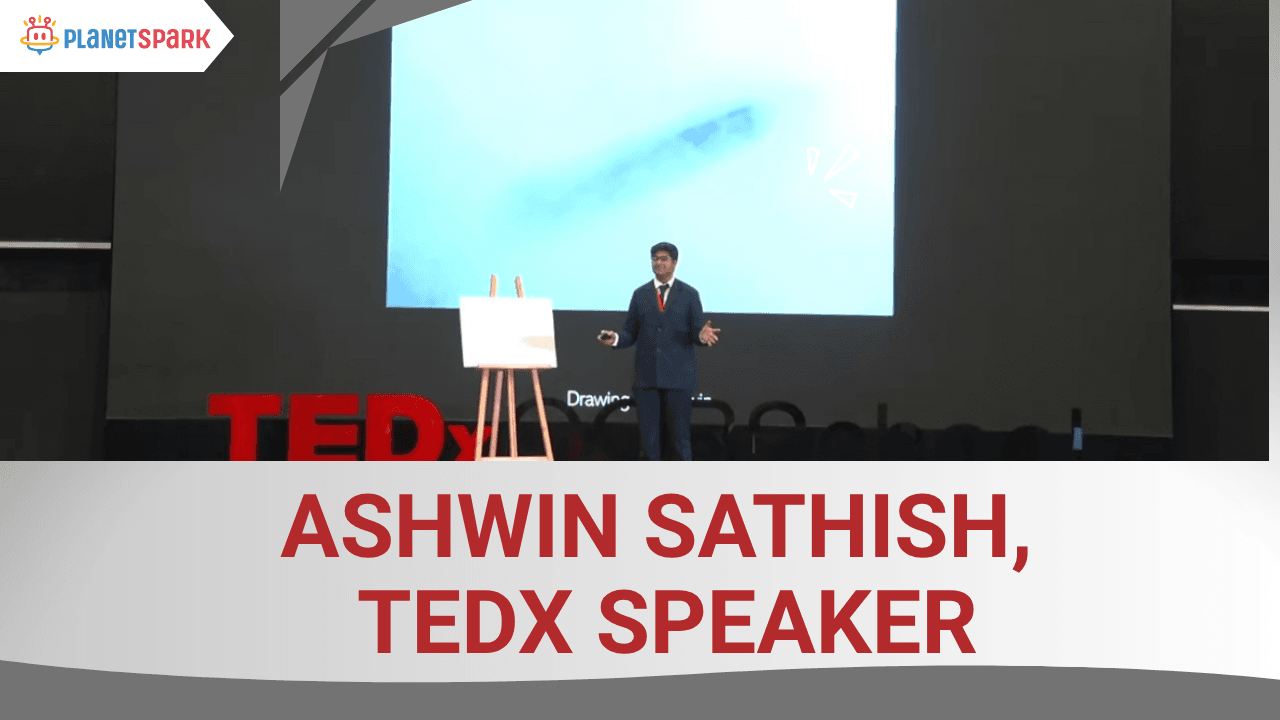
Ashwin Sathish, a Grade 8 student from New Delhi, delivered an impactful TEDx talk that sparked meaningful conversations. His journey from building confidence in the classroom to speaking powerfully on a global platform shows what voice vision and courage can achieve.
If you are inspired by his achievement and want to build the confidence to speak on big stages too, you can start your journey today by joining PlanetSpark.
Student-Friendly Humour Tricks to Shine in Class Presentations
Whether it’s a classroom presentation, a college seminar, a viva, or a campus speaking event, students often feel the most pressure when all eyes are on them. But humour can turn anxiety into confidence and transform a dull academic talk into something energetic, memorable, and fun. Here’s how students can use humour effectively in academic settings without sounding unprofessional.
Use “Classroom Observational Humour” to Break the Ice
Students share similar struggles like assignments, deadlines, group projects, early classes, technical glitches. These experiences make great humour starters.
Examples:
“I’m convinced our assignment deadlines travel faster than the speed of light.”
“If this projector stops working, I’ll take it as a personal sign to go home.”
Why it works:
Relatable to both teachers and students
Lightens the atmosphere
Makes you appear confident and calm
This creates instant engagement within the first few seconds.
Add Humour to Explain Tough Academic Concepts
Funny analogies are gold for students because they make complex topics easier to understand.
Examples:
“Think of photosynthesis as a plant’s version of eating takeout and sunlight edition.”
“Economics is basically: resources limited, wants unlimited… just like our snacks during exams.”
Benefits:
Makes your explanation memorable
Shows creativity
Helps you stand out among classmates
Humour turns academic clarity into academic excellence.
Gentle Self-Humour to Show Confidence (Without Undermining Yourself)
Students can use mild self-humour to show confidence and authenticity.
Examples:
“I practiced my presentation at home. My family said it was great with the condition that I never be near them again.”
“I promise this presentation is shorter than our syllabus… hopefully.”
Just ensure the joke is never about your competence. It should show personality, not weakness.
Use Light Interaction to Keep Classmates Awake
Classrooms get boring fast. A small humour-infused interaction keeps everyone alert.
Examples:
“Raise your hand if you’ve ever opened the textbook and immediately closed it again.”
“How many of us revise only when the teacher announces a surprise test? …Exactly.”
This kind of engagement boosts attention and makes teachers appreciate your audience management skills.
Humour in Group Presentations (Without Chaos)
Group presentations tend to become formal or disconnected. Humour can unify the flow.
Techniques:
Use light call-back humour between teammates
Add a fun analogy to transition sections
Use relatable student-life examples
Example call-back:
If the first speaker jokes:
“My part is short because I value your time.”
The next speaker can say:
“My part is longer because I value marks.”
It builds teamwork and makes the presentation feel coordinated.
Humour Helps You Stand Out Academically
In academic settings, teachers look for:
Confidence
Clarity
Engagement
Original thinking
Humour helps you shine in all four areas. A student who can deliver a clear explanation and make the class smile is always remembered and often rewarded with higher participation scores, better presentation marks, and greater visibility on campus.
PlanetSpark: The Ultimate Platform for Confident Public Speakers
PlanetSpark helps children become strong, expressive, and fearless speakers through personalised coaching and innovative learning tools. With expert mentors and real-world practice, students develop clarity, fluency, confidence, and stage presence that stays with them for life.
Why PlanetSpark Is the Best Choice for Public Speaking Training
1:1 personalised public speaking coaching to build confidence and clear expression.
Certified communication trainers guiding children through structured, interactive learning sessions.
TED-style speech training modules helping students deliver powerful, engaging presentations.
Live debates and group activities improve quick thinking and stage presence.
SparkX AI video analysis offers detailed performance insights for continuous improvement.
Gamified learning through SparkBee to strengthen vocabulary, grammar, and language skills.
AI-led practice sessions enabling independent speech and storytelling improvement anytime.
Creative clubs and showcases providing real platforms to practise and perform confidently.
Humour Makes You a Speaker People Love Listening To
Humour is one of the simplest ways to grow into a highly skilled public speaker because it builds connection and helps your audience relax and enjoy your message. By adding light jokes, natural observations and simple personal stories you make every presentation more engaging and memorable. These humour tricks boost confidence, improve clarity and strengthen your stage presence. Start practicing them and you will see your speaking impact rise quickly.
Frequently Asked Questions
Humour helps you connect with your audience quickly, reduce tension, and keep people engaged. It makes complex ideas relatable and creates a memorable experience, helping you deliver your message with more clarity, confidence and authenticity.
Start with light observations, simple analogies and gentle self humour. Avoid offensive jokes and focus on relatable moments. These tricks require no comedy talent and instantly make your speech more natural, friendly and engaging for any audience.
Use clean, relevant humour connected to your topic. Avoid sensitive subjects and keep jokes short. The goal is not to perform comedy but to add warmth and personality that supports your message and strengthens audience connection.
Yes, humour helps students reduce anxiety, capture attention and explain academic concepts more simply. It makes presentations lively and memorable while helping students speak with confidence and show creativity in both classroom and seminar settings.
PlanetSpark provides expert guided sessions that teach students humour usage, delivery techniques and structured speaking practice. Their personalised training builds strong communication habits helping young learners grow into confident speakers ready for school stages and competitions.
Yes, PlanetSpark trainers include humour based learning in their curriculum. Students practice storytelling, funny analogies and confident delivery so they can speak naturally on stage and improve public speaking skills with real time feedback and continuous support.