
Online Vs Offline Education for Public Speaking for Kids | PlanetSpark
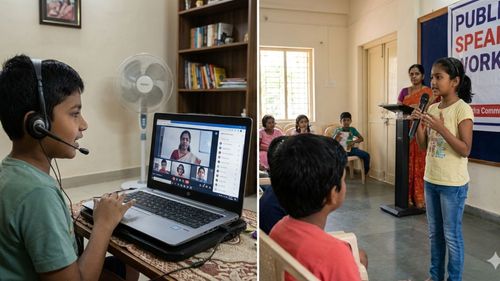

Table of Contents
- Why Public Speaking Is a Super Skill for Kids
- Should Kids Learn Public Speaking Through Online or Offline
- What Do We Mean By Online Vs Offline Education?
- How Kids Are Taught Public Speaking in Online and Offline Cl
- How Kids Learn Public Speaking With PlanetSpark
- Online vs. Offline Public Speaking Courses for Kids
- Speak Up Smart! Pros and Cons of Online and Offline Public S
- A Young Voice That Learned to Shine
- How Kids Are Taught Public Speaking in Online and Offline Cl
- PlanetSpark: The Ultimate Platform for Confident Public Spea
- Where Confident Voices Begin and Shine With PlanetSpark
Worried about choosing the wrong learning format for your child’s public speaking confidence?
Public speaking is a life skill that shapes confidence, clarity, and leadership in children, making the debate around online vs offline education especially important. Parents often struggle to choose the right learning format for their child’s communication growth. This guide breaks down both approaches, their impact on young learners, and explains how PlanetSpark’s expert-led, interactive programs help kids become confident and effective speakers.
Why Public Speaking Is a Super Skill for Kids
Public speaking helps kids express ideas clearly, share opinions confidently, and build strong communication skills from an early age. Whether through online education or traditional classroom settings, learning to speak in front of others enhances self-confidence, creativity, and the ability to think independently in everyday situations. Programs like PlanetSpark further strengthen these abilities through structured practice, expert guidance, and regular speaking opportunities.
In today’s world, kids communicate both on screens and in real life. That’s why public speaking, whether through online or offline education, prepares them for school presentations, competitions, and future careers, helping them feel confident whether they’re speaking in a classroom or on a digital platform.
Should Kids Learn Public Speaking Through Online or Offline Education?
Learning public speaking is like learning a superpower that helps you share your ideas confidently! But should you learn it through online or offline education? Let’s make it easy to understand, especially with trusted platforms like PlanetSpark guiding young learners:
Online education with PlanetSpark guides you to learn from home, where you feel relaxed and confident. You can speak without fear and practice at your own pace.
You get to talk to teachers and friends live on screen, which helps you improve step by step.
Offline education means learning in a classroom with friends around you, which helps you get used to speaking in front of real people.
Classroom learning helps you read facial expressions and body language easily.
Online classes are flexible and fun, while offline classes feel more traditional.
Both online and offline education help you become a better speaker. The best choice is the one that makes you feel confident, happy, and excited to speak up.
What Do We Mean By Online Vs Offline Education?
Before we can decide which method works better, we first need to understand each one.
What Is Online Education?
Online education means learning through the internet. Instead of sitting in a classroom, kids join live classes on computers or tablets, interact with teachers and classmates in real time, and learn from anywhere, whether at home or while travelling. They use online education platforms like PlanetSpark offer interactive tools, videos, and activities that make learning flexible and engaging.
Examples of online education with PlanetSpark include live video classes, interactive sessions, digital assignments, and activities that help kids practice skills like public speaking and communication.
What Is Offline Education?
Offline education is the traditional way of learning. It involves going to a physical classroom with a teacher and classmates, raising hands, sitting at desks, and learning face-to-face. This method has been used in schools and coaching centres for many years.
In offline education, kids receive immediate feedback from teachers, interact physically with peers, and learn through direct classroom experiences.
Boost your child’s public speaking skills with PlanetSpark’s expert coaching.
What’s the Difference Between Online Education and Offline Education?
Here is a simple comparison to understand the difference between online education and offline education:
Online education allows learning from anywhere, while offline education requires a physical location.
Online education offers flexible schedules, whereas offline education follows fixed timings.
Online education uses digital tools and internet-based learning, while offline education relies on classrooms and physical materials.
Online education involves virtual interaction, while offline education focuses on face-to-face interaction.
This difference between online education and offline education shows that both methods have unique strengths. Online education offers convenience and flexibility, while offline education emphasises in-person social interaction.
How Kids Are Taught Public Speaking in Online and Offline Classes
Public speaking is taught differently in online and offline education, but both aim to help kids speak clearly and confidently. The table below shows how learning methods vary in each format and how they support skill development.
Both online and offline classes help kids develop strong public speaking skills in age-appropriate and engaging ways.
How Kids Learn Public Speaking With PlanetSpark
PlanetSpark helps kids develop strong public speaking skills through guided practice, expert mentoring, and confidence-building activities.
- Builds kids’ confidence through structured public speaking practice and regular performance-based sessions.
- Uses expert trainers to enhance kids’ speech clarity, expression, and communication skills.
- Encourages kids to think creatively and present ideas confidently before peers.
- Offers interactive lessons that keep kids engaged and motivated to speak freely.
- Tracks kids’ progress with personalized feedback and measurable public speaking growth.
Prepare your child for real-world communication with PlanetSpark’s coaching.
Online vs. Offline Public Speaking Courses for Kids
Kids today can choose from different types of spoken English courses, depending on how they like to learn. These courses are designed to improve speaking, vocabulary, and confidence in daily conversations, especially through structured programs like PlanetSpark.
- Beginner spoken English courses focus on basic words, simple sentences, and correct pronunciation, which PlanetSpark builds through guided practice and expert feedback.
- Fluency-building courses help kids speak smoothly through conversations, storytelling, and role plays, a core focus of PlanetSpark’s curriculum.
- Grammar and vocabulary courses teach sentence structure and word usage in a fun, easy way using interactive activities, similar to PlanetSpark’s learning approach.
- Public speaking and communication courses combine spoken English with confidence-building activities, an area where PlanetSpark strongly supports young learners.
- Online courses offer live classes, interactive exercises, and flexible schedules, making learning accessible through platforms like PlanetSpark.
- Offline courses provide classroom practice and real-world speaking exposure.
Both online and offline courses support kids at different learning stages and communication needs, with PlanetSpark helping bridge the gap through personalised, engaging learning experiences.
Speak Up Smart! Pros and Cons of Online and Offline Public Speaking Classes for Kids
Public speaking classes help kids build confidence, express ideas clearly, and overcome stage fright. Both online and offline formats offer unique learning experiences with their own advantages and challenges.
Online Public Speaking Classes
Offline Public Speaking Classes
Both formats help kids become confident speakers; the best choice depends on comfort and learning style.
Which One Is Better for Kids: Online or Offline Education?
Choosing online or offline education depends on a child’s comfort and confidence. PlanetSpark’s online classes offer safe, live speaking practice, small groups, expert mentors, personalised feedback, and engaging activities, while offline learning builds stage presence. The best option matches each child’s learning style.
A Young Voice That Learned to Shine
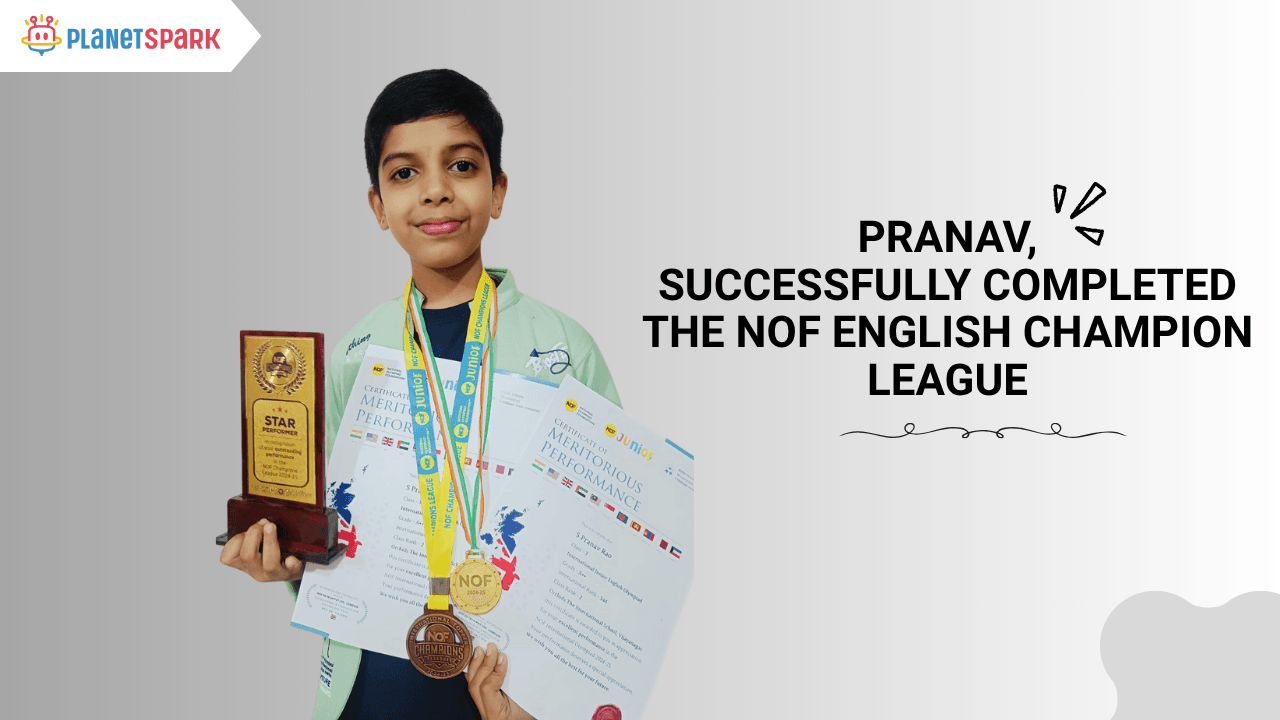
Pranav, a Grade 3 star, successfully completed the NOF English Champion League, showcasing his brilliance in Public Speaking and Creative Writing.
Just like Pranav, every child has the potential to speak confidently and express ideas clearly. Join PlanetSpark today and help your child discover their voice, build confidence, and shine on every stage of life.
How Kids Are Taught Public Speaking in Online and Offline Classes
Public speaking classes are designed to help kids speak clearly, confidently, and without fear. While the goal is the same, the teaching methods in online and offline classes differ slightly.
In online public speaking classes, kids learn through live interactive sessions with expert PlanetSpark mentors who guide them step by step. Children practice storytelling, debates, role plays, and presentations, receive instant feedback, use fun visual tools, and revisit recorded sessions by building confidence, clarity, and strong speaking skills at their own pace.
In offline public speaking classes, kids learn in physical classrooms with face-to-face interaction. Teachers encourage children to speak in front of classmates, participate in group discussions, and deliver short speeches. This helps kids improve body language, eye contact, and stage presence while getting comfortable speaking before a live audience.
PlanetSpark: The Ultimate Platform for Confident Public Speakers
PlanetSpark helps children become strong, expressive, and fearless speakers through personalised coaching and innovative learning tools. With expert mentors and real-world practice, students develop clarity, fluency, confidence, and stage presence that stays with them for life.
Why PlanetSpark Is the Best Choice for Public Speaking Training
1:1 personalised public speaking coaching to build confidence and clear expression.
Certified communication trainers guide children through structured, interactive learning sessions.
TED-style speech training modules helping students deliver powerful, engaging presentations.
Live debates and group activities improve quick thinking and stage presence.
SparkX AI video analysis offers detailed performance insights for continuous improvement.
Gamified learning through SparkBee to strengthen vocabulary, grammar, and language skills.
AI-led practice sessions enable independent speech and storytelling improvement anytime.
Creative clubs and showcases provide real platforms to practise and perform confidently.
Where Confident Voices Begin and Shine With PlanetSpark
Public speaking is more than just a skill that shapes a child’s confidence, personality, and future success. When children learn to express their thoughts clearly, they feel more confident in school, social situations, and everyday conversations.
The right learning environment plays a key role in this journey. With expert mentors, interactive activities, and regular speaking practice, PlanetSpark creates a supportive space where children feel encouraged to speak without fear. Engaging sessions help kids build clarity, confidence, and creativity step by step.
By focusing on real communication rather than memorisation, PlanetSpark empowers children to overcome stage fright and speak with purpose. From classroom presentations to real-life interactions, kids learn to express themselves confidently and shine wherever they go.
Also Read:
Frequently Asked Questions
Kids can start learning public speaking as early as four years old. Early practice helps build confidence, clear expression, and strong communication habits that support academic and social growth.
Yes, public speaking helps shy kids express themselves gradually. Structured activities and supportive guidance help them overcome fear, gain confidence, and speak comfortably in front of others.
PlanetSpark uses live interactive sessions, expert coaches, storytelling, debates, and presentations to help kids practice speaking regularly and build confidence in a fun, supportive environment.
Yes, online classes provide a comfortable space for practice, personalised feedback, and interactive learning, helping kids gain confidence and improve speaking skills at their own pace.
PlanetSpark focuses on real communication skills, personalised feedback, and consistent practice, helping kids overcome stage fright and speak confidently in school and everyday life.
Kids should practice public speaking regularly through short activities, conversations, and presentations. Consistent practice helps improve clarity, confidence, and expression over time.