
Peer Communication Tasks: Meaning, Types, Benefits, and Guide
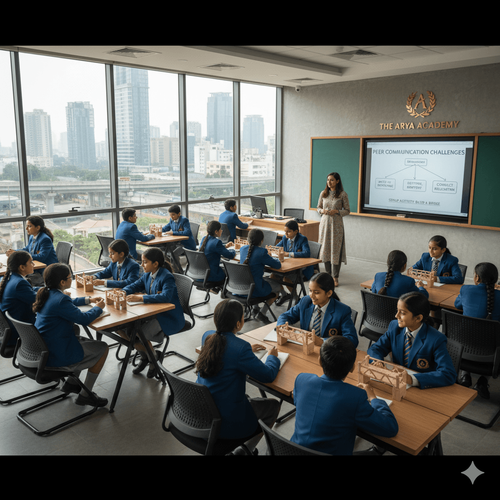

Table of Contents
- What Are Peer Communication Tasks?
- Components of Effective Peer Communication Tasks
- Types of Peer Communication Tasks
- How Peer Communication Tasks Improve Speaking Confidence
- Designing Peer Communication Tasks for Maximum Learning
- Examples of High-Impact Peer Communication Tasks
- Benefits of Peer Communication Tasks in Education
- PlanetSpark Public Speaking Course
- Your Child Is One Skill Away from Transformational Growth
Peer communication tasks are interactive activities
that help students build essential speaking, listening, collaboration, and social skills by working directly with their classmates. The purpose of this blog is to explain what peer communication tasks are, why they matter, how they support classroom learning, and how they improve confidence and real-world communication skills. This blog covers definitions, examples, benefits, frameworks, and how to use them effectively in education.
What Are Peer Communication Tasks?
Peer communication tasks refer to structured interactions where students engage with each other to exchange ideas, solve problems, build stories, negotiate, or present viewpoints. These tasks are designed to create meaningful conversations that build social communication, teamwork, and confidence. These activities are widely used in speaking-based classrooms, language learning, and personality development programs.
Why Peer Communication Tasks Matter in Modern Learning
In today’s classrooms, peer communication tasks are essential for helping children grow beyond academic content. They build social expression, negotiation skills, critical thinking, and real-time speaking fluency. They include formats like pair discussions, partner games, peer debates, joint storytelling, collaborative writing, and problem-solving challenges. Secondary keywords such as collaborative learning activities, communication skill development, peer-led interactions, student communication strategies, and classroom participation techniques relate directly to this domain.
Children learn to:
Exchange ideas confidently
Listen actively
Ask meaningful questions
Build arguments
Respond respectfully
Collaborate on tasks
Think critically under time pressure
These tasks activate communication in natural settings, encouraging children to speak without fear.
Components of Effective Peer Communication Tasks
Strong peer communication tasks are built on structure, clarity, and engagement. Here’s what makes them effective:
Clear Objective and Communication Purpose
Each task needs a defined purpose, such as persuading a partner, narrating a story, solving a puzzle, describing an event, or presenting an argument. Without an objective, communication becomes random and unfocused.
Student-Centered Interactions
Peer communication tasks put children at the center. Instead of teachers leading the conversation, students take charge and initiate dialogue. This helps them practise leadership and independent thinking.
Real-World Relevance
Tasks should mimic real-world communication scenarios:
Ordering food
Interviewing someone
Sharing daily experiences
Debating real issues
Negotiating solutions
Presenting ideas
These make learning relatable and meaningful.
Types of Peer Communication Tasks
Peer communication tasks come in many forms, each designed to build specific speaking, listening, and collaborative abilities. These activities encourage interaction, creativity, negotiation, and idea-sharing in enjoyable and purposeful ways. Here are the most impactful types used in classrooms and communication-focused programs.
1. Peer Interviews
In this activity, students interview each other using structured or open-ended prompts. This encourages them to ask meaningful questions, listen attentively, and share personal insights.
Benefits:
Improves questioning skills, develops active listening, boosts self-expression, and nurtures conversational flow.
Example prompts:
What motivates you most
What is a challenge you overcame
Describe your biggest dream
Additional points:
Peer interviews help children learn how to guide a conversation, respond spontaneously, and connect with someone emotionally. It’s a powerful activity for building confidence in informal speaking situations.
2. Partner Storytelling
This task involves two students building a story together, sentence by sentence. One starts with an opening line, and the other continues, creating an unpredictable, imaginative narrative.
Benefits:
Enhances creativity, sharpens listening, expands vocabulary, and encourages quick thinking.
Additional points:
Partner storytelling also teaches children how to maintain continuity in ideas, support each other’s contributions, and collaborate in a fun, pressure-free format.
3. Think-Pair-Share Activities
This classic strategy encourages children to think individually about a question, discuss their thoughts with a partner, and finally share the idea with the class.
Benefits:
Strengthens logical structuring of ideas, increases participation, and builds confidence through incremental sharing.
Additional points:
The step-wise approach helps shy or hesitant students open up gradually. It teaches them to refine ideas through discussion before addressing a larger audience.
4. Peer Debates
In peer debates, partners take opposing stances on a topic and defend their position with logic, examples, and reasoning.
Benefits:
Develops persuasive speaking, improves logical reasoning, encourages respect for differing viewpoints, and builds clarity in argumentation.
Additional points:
Debates also enhance research skills, critical thinking, and emotional control under verbal pressure. Students learn to disagree respectfully, an essential life skill.
5. Problem-Solving Discussions
Students work together to solve a puzzle, case study, or hypothetical scenario. This format pushes them to articulate thoughts clearly and think collaboratively.
Benefits:
Strengthens analytical thinking, encourages team coordination, and promotes solution-oriented communication.
Additional points:
These discussions replicate real-life workplace communication where collaboration is crucial. Children learn patience, idea comparison, and logical decision-making.
6. Classroom Communication Games
Engaging games create a lively learning environment and build fluency in an enjoyable way.
Examples:
Partner guessing games
Role-based dialogues
Rapid-fire Q&A rounds
Opinion trading tasks
Benefits:
Boosts spontaneity, improves articulation, enhances social fluency, and strengthens peer bonding.
Additional points:
Communication games reduce anxiety, encourage risk-taking in speech, and help children think on their feet.
How Peer Communication Tasks Improve Speaking Confidence
Peer communication tasks help children find their voice by practising with someone of their own age group. This reduces fear of judgment and creates a safe, friendly environment to speak freely. Over time, children develop fluency, clarity, and presence in communication.
Improving Listening Skills
Through peer tasks, children learn to:
Focus on what the other person says
Interpret tone, expressions, and gestures
Respond meaningfully rather than randomly
Why this matters:
Listening is the foundation of strong communication. These skills build emotional intelligence, improve comprehension, and strengthen relationships.
Enhancing Vocabulary and Expression
Regular interaction exposes children to new words, sentence structures, and ideas shared by their peers.
Additional points:
They imitate strong language forms, learn better phrasing, and strengthen expressive clarity. This naturally enhances academic writing and storytelling.
Developing Critical Thinking and Reasoning
Tasks like debates, persuasive speaking, and collaborative problem-solving push students to think deeply, justify their thoughts, and defend their viewpoints logically.
Result:
Children become sharper thinkers with well-organised thoughts and strong decision-making skills.
Building Social and Emotional Skills
Peer communication enhances social development by teaching:
Teamwork
Empathy
Negotiation
Respectful disagreement
Emotional control
Additional points:
These skills prepare children for real-world interactions, leadership opportunities, and healthy relationship-building.
Designing Peer Communication Tasks for Maximum Learning
To make peer communication tasks effective, activities must be intentional and carefully structured. The design of the task plays a critical role in ensuring meaningful and educational communication.
Step 1: Set a Clear Communication Goal
Each activity should target one specific skill, such as:
Fluency
Grammar usage
Argument building
Listening accuracy
Creative expression
Confidence
Why it matters:
Clear goals help children stay focused and allow teachers to evaluate progress more accurately.
Step 2: Create Engaging Prompts
Prompts should be open-ended, thought-provoking, and interesting enough to spark conversation.
Examples:
If you could change one school rule, what would it be
Convince your partner that your favourite book is the best
Describe an imaginary invention you want to build
Additional points:
Good prompts encourage creativity, critical thinking, and emotional expression. They keep conversations lively and meaningful.
Step 3: Structure the Interaction
A structured task ensures fairness and clarity.
Structure guidelines:
Time limit: 2–3 minutes per student
Defined roles: Speaker, listener, questioner
Clear outcome: Summary, reflection, or conclusion
Additional points:
Structure prevents chaos, ensures equal participation, and helps students practise discipline in communication.
Step 4: Include Reflection
After completing the task, students should reflect on what they learned.
Reflection can include:
What went well
What was challenging
What new idea they understood
How they could express better next time
Benefit:
Reflection builds metacognition, helping children analyse their own speaking behaviour and grow consistently.
Examples of High-Impact Peer Communication Tasks
These tasks are known for producing quick, visible improvements in speaking and listening skills.
Partner Introduction Challenge
Students gather information about their partner through conversation and then introduce them to the class.
Benefit:
Strengthens listening, paraphrasing, memory, and spontaneous speaking.
Two-Minute Persuasion Game
Each student persuades their partner about a topic in just two minutes.
Benefit:
Enhances persuasive techniques, clarity, and thought organisation.
Joint Speech Building
Two students collaborate to build a short speech together.
Benefit:
Teaches teamwork, logical flow, and idea integration.
Peer Feedback Circles
Students listen to each other and offer supportive feedback.
Benefit:
Promotes constructive criticism, empathy, and communication awareness.
Describe and Draw Task
One student describes a picture while the other draws based on verbal instructions.
Benefit:
Boosts descriptive clarity, listening precision, and visual interpretation skills.
These tasks reinforce speaking, listening, articulation, creativity, and clarity while making learning deeply enjoyable.
Benefits of Peer Communication Tasks in Education
Peer communication tasks contribute to holistic development by improving academic, communication, social, and long-term personal skills.
Academic Benefits
These tasks strengthen core academic skills:
Improved comprehension
Stronger vocabulary
Better grammar application
Enhanced writing ability
Higher classroom engagement
Additional advantage:
Students learn to connect ideas better, which improves performance across subjects such as English, social studies, and even science.
Communication Benefits
Peer tasks help children become clearer, more confident communicators:
Clear articulation
Better confidence
Stronger storytelling skills
Improved persuasion and negotiation
Structured speaking with logical flow
Additional points:
These benefits prepare students for speeches, presentations, debates, and everyday interactions.
Social Benefits
Children gain essential interpersonal skills like:
Teamwork
Empathy
Conflict resolution
Leadership
Adaptability
Additional points:
These skills shape responsible, cooperative, emotionally intelligent individuals.
Long-Term Personal Growth
Children who practise peer communication tasks consistently become:
Confident speakers
Independent thinkers
Effective collaborators
Stronger problem-solvers
Impact:
They develop a lifelong ability to express themselves clearly, work well with others, and excel in academic and professional environments.
PlanetSpark Public Speaking Course
PlanetSpark’s Public Speaking Course is designed to build confident communication skills in children using scientifically structured teaching, real-time practice, and personalised 1:1 coaching.
1:1 Public Speaking Coaching by Communication Experts
Every student learns with a dedicated personal trainer. Each coach understands the child’s learning style and gives targeted feedback that accelerates growth.
Step-by-Step Skill Building
Children learn:
Body language
Voice modulation
Speech structuring
Persuasion
Storytelling
Debating
Extempore speaking
They master expressions, gestures, intonation, logical flow, and impactful delivery. Debating modules include counterarguments, rebuttals, turncoat debates, mock parliaments, and respectful disagreements using ethos, pathos, and logos.
TED-Style Training Modules
Students learn how to deliver powerful speeches using the hook-message-story-call-to-action structure.
Real-Time Practice with Global Peers
Children participate in debates, discussions, storytelling circles, and group learning with students from 13 countries.
Your Child Is One Skill Away from Transformational Growth
Communication is far more than a subject taught in classrooms. It is a life-defining skill that shapes how children think, express ideas, build relationships, and lead with confidence. Peer communication tasks lay the groundwork by helping young learners speak freely, collaborate with peers, and develop clarity of thought. But when combined with structured, expert-led public speaking training, these foundational skills transform into lifelong strengths.
A child who learns to communicate confidently grows into a strong thinker, a persuasive speaker, and a resilient problem-solver. They participate more actively, express themselves without hesitation, and navigate social and academic challenges with ease. Communication empowers them to shine on stage, in classrooms, and in future professional settings.
You may also read:
Frequently Asked Questions
Peer communication tasks are structured speaking and interaction-based activities where students work with peers to develop fluency, listening, social confidence, and collaborative skills.
They help build communication confidence, critical thinking, listening skills, creativity, and teamwork through real-time interactions.
These tasks benefit all ages, but they are highly effective for 6 to 15-year-olds who are developing social communication and public speaking skills.
Ideally, 3 to 4 times a week for consistent improvement in fluency, articulation, and social communication.
PlanetSpark provides 1:1 coaching, structured public speaking modules, AI-led analysis, global group practice, and personalised learning paths to accelerate speaking confidence.