
Why Mind Mapping Works for Time Management


Time is one of the most valuable resources we have, yet it often feels like there is never enough of it. If you have ever struggled with deadlines, procrastination, or feeling overwhelmed, learning proper time management through mind mapping can change the way you organize your life.
In this blog, we will explore how mind mapping helps in managing time effectively, its benefits, practical examples, and how students and professionals can apply it to build a more productive routine.
Why Mind Mapping Works for Time Management
Visual Clarity:
A mind map takes complex schedules, to-do lists, or project plans and condenses them into a single visual structure. Instead of flipping through multiple pages of notes or scrolling through long lists, you can see all your responsibilities at a glance. This visual clarity helps you quickly identify priorities, spot dependencies, and understand the bigger picture, making it easier to plan your day efficiently.Brain-Friendly:
Our brains naturally process and remember visuals better than plain text. Mind maps take advantage of this by using colors, keywords, images, and connections between tasks. This approach aligns with how memory functions, allowing you to recall tasks and deadlines more easily without constantly checking reminders or notes.Enhanced Engagement:
Traditional planners or spreadsheets can feel rigid and boring, leading to procrastination. Mind maps add a creative element to planning. Drawing branches, using different shapes, icons, or colors keeps you actively engaged with your schedule. This interactive approach makes the planning process more enjoyable and increases the likelihood of following through on your commitments.Flexibility:
Unlike calendars with fixed time slots, mind maps allow you to move tasks around effortlessly. Priorities change, emergencies happen, and new tasks arise. Mind maps adapt quickly, helping you reorganize without disrupting the overall structure of your plan.Motivation Boost:
A well-structured mind map reduces stress by showing progress visually. Checking off branches, coloring completed tasks, or marking milestones gives a tangible sense of achievement. This visual feedback motivates you to continue and maintain consistency in your schedule.

Benefits of Using Mind Maps for Time Management
Mind maps are powerful tools for organizing tasks, improving focus, and managing time effectively. Here’s how they help in daily life:
Better Focus:
With tasks visually organized into categories, you immediately know which items need urgent attention. This reduces the mental clutter of deciding what to do next. For example, a student might have branches for “Homework,” “Revision,” and “Extracurricular Activities.” Seeing tasks like “Submit math assignment” highlighted under “Homework” helps them focus on pressing priorities without distraction.Improved Productivity:
Large or complex tasks often feel overwhelming. Mind maps break them into smaller, achievable steps. Instead of a vague task like “Prepare for exam,” you can create sub-branches such as “Revise chapters 1–5,” “Solve past papers,” and “Memorize formulas.” Each small step gives a clear action plan, making progress visible and boosting productivity.Reduced Stress:
Scattered tasks can create anxiety and confusion. Mind maps provide structure, making even heavy workloads feel manageable. For instance, a professional planning a project can visually map deadlines, meetings, and deliverables, reducing stress by knowing exactly what needs to be done and when.Enhanced Creativity:
Mind maps encourage brainstorming and exploring multiple approaches. A student planning a science project might add branches for “Materials,” “Experiment Ideas,” and “Presentation Design,” allowing creative problem-solving while staying organized.Long-Term Discipline:
Using mind maps consistently trains your brain to plan and prioritize naturally. Over time, this builds discipline and time-conscious habits, benefiting both work and personal life. For example, tracking weekly goals visually can become a habit that improves productivity across all areas.
How to Create a Time Management Mind Map
Creating a time management mind map is a practical and creative way to organize tasks, track progress, and stay focused. Here’s a step-by-step guide to making one:
Start with the Central Idea:
Begin by writing the core goal in the center of your page or digital screen. This could be broad, like “Time Management”, or specific, such as “Project Submission.” The central idea acts as the anchor for all other branches, giving your mind map a clear starting point.Create Main Branches:
Think of the major areas of your life or work. For students, main branches might include “Subjects,” “Assignments,” and “Extracurricular Activities.” For professionals, branches could be “Meetings,” “Reports,” “Client Work,” and “Self-Development.” These branches give your map a clear structure and help you organize tasks by category.Add Sub-Branches:
Break down each main category into smaller, actionable tasks. For instance, under “Work,” you could add “Prepare slides,” “Email clients,” or “Update tracker.” Sub-branches ensure every detail is captured and nothing important is overlooked.Prioritize with Symbols:
Use colors, stars, or numbers to indicate urgency. For example, tasks marked “1” or highlighted in red can mean “do today,” while green tasks can indicate lower priority. This visual prioritization helps you focus on what matters most.Set Deadlines:
Assign clear timelines to each task. Instead of writing “Finish report,” specify “Submit draft by Tuesday 5 PM.” Deadlines create accountability and prevent last-minute stress.Review and Update:
Mind maps are dynamic tools. Review them daily or weekly, mark completed tasks, and adjust priorities as needed. This keeps your plan relevant, realistic, and effective.
Give your child the confidence to speak with clarity and impact!
Experience personalized coaching with expert trainers in communication and child psychology.
Book a free demo class today
Tips to Get the Most Out of Mind Mapping
Use Colors and Icons: Adding colors and icons makes your mind map visually appealing and easier to remember. For example, use red for urgent tasks, blue for learning goals, and green for personal growth. Icons like clocks, books, stars, or checkmarks help you quickly identify categories, adding clarity and making the map more engaging.
Keep it Simple: Avoid creating too many branches or including unnecessary details. The purpose of a mind map is to simplify your ideas and tasks, not complicate them. A clear, concise map is easier to follow and more effective for planning and decision-making.
Update Regularly: Life and priorities change constantly. A mind map that isn’t updated quickly loses relevance and effectiveness. Treat your mind map as a living document, reviewing and revising it frequently to reflect new tasks, deadlines, or goals.
Combine with Digital Tools: While paper mind maps work well, digital tools like XMind, MindMeister, or Canva allow quick edits, sharing, and storage. Digital maps are especially helpful for students and professionals who need frequent updates and collaboration.
Practice Consistency: Like any habit, mind mapping becomes more effective with regular use. Incorporate it into your daily routine and for instance, spend 10 minutes each morning updating your map before starting work. Consistent practice improves planning, memory, and productivity over time.
Common Mistakes to Avoid
Mind maps are powerful tools for organizing tasks, boosting focus, and improving productivity—but only if used correctly. Many beginners make simple mistakes that reduce their effectiveness. Here’s how to avoid them:
Overcomplicating the Map:
One of the most common pitfalls is adding too many branches, excessive details, or unrelated ideas. A cluttered mind map can quickly become confusing and hard to follow. Keep it simple and focused on key tasks and goals. For example, instead of writing every single step for a project like “Research, draft, revise, finalize, proofread, format, email, follow up, print, submit” on one branch, break it down logically into two or three sub-branches like “Research & Draft”, “Revise & Finalize”, and “Submission”. This approach keeps your mind map clean and easy to navigate.Forgetting Timelines:
Without deadlines, a mind map can turn into just a long list of tasks with no sense of urgency. Assign specific dates, times, or milestones to each task to stay accountable. For instance, instead of writing “Complete assignment,” specify “Complete assignment by Thursday 5 PM”. This creates urgency and ensures you stay on track with priorities.Not Updating Regularly:
Life is dynamic, and priorities change constantly. If your mind map is not updated to reflect new tasks, goals, or challenges, it quickly becomes outdated and ineffective. Make it a habit to review and revise your map weekly. For example, if a meeting is postponed or a new project is added, adjust your branches and deadlines accordingly.Using It Once and Stopping:
Mind mapping works best with repetition. Using it sporadically limits its benefits. Incorporate it into your daily or weekly routine, check off completed tasks, and refine strategies. Over time, this practice improves planning skills, memory retention, and overall productivity.Neglecting Visuals and Color Coding:
A mind map is not just about words and it’s a visual tool. Using colors, symbols, or small images makes your map more memorable, easier to navigate, and visually appealing. For example, highlight urgent tasks in red, ongoing tasks in yellow, and completed ones in green. Adding icons like clocks for deadlines or stars for priority tasks can further enhance clarity and focus.
By avoiding these common mistakes, your mind map can become a reliable and effective tool for organizing your time, staying focused, and achieving your goals. Remember, simplicity, clarity, and consistency are key to making mind mapping work for you.
Why Choose PlanetSpark for Proper Time Management Mind Mapping?
Expert Guidance : Where children learn from trained mentors who simplify concepts like mind mapping and time management through interactive teaching.
1:1 Public Speaking Coaching by Communication Experts
Every child receives personalized one-on-one coaching, allowing for customized feedback and measurable growth. Trainers are certified in communication and child psychology, ensuring supportive and effective guidance.
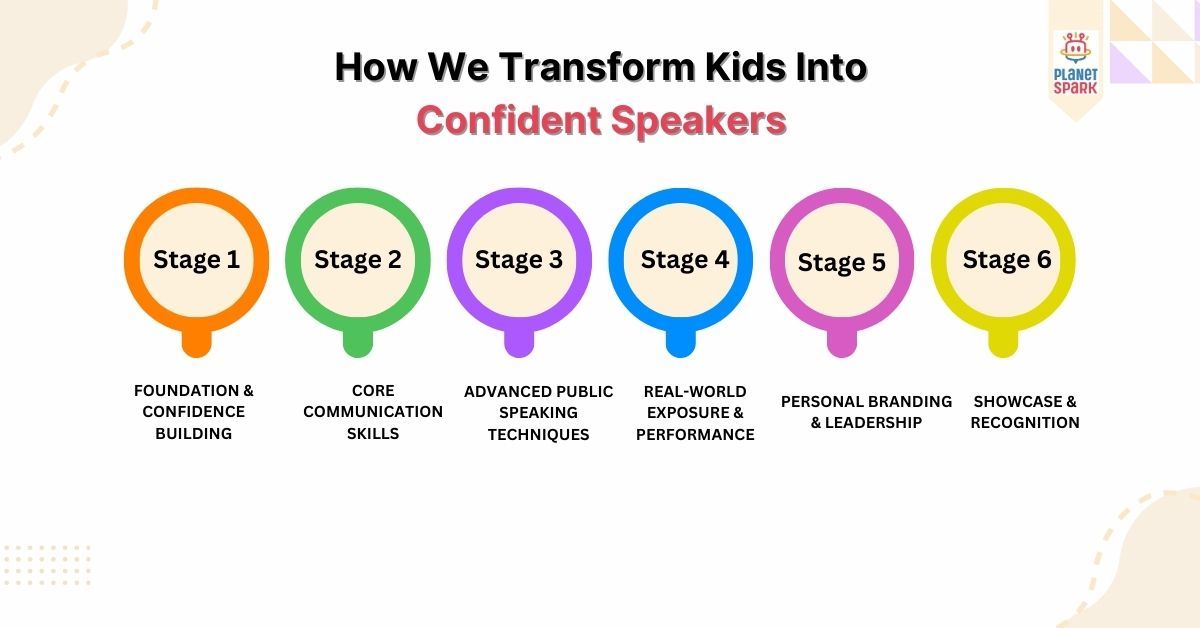
Step-by-Step Skill Building
The curriculum covers essential public speaking skills, including:
Body Language: Master facial expressions and gestures to convey messages assertively.
Voice Modulation: Use intonation and emphasis to create vocal impact.
Speech Structuring & Storytelling: Organize content for seamless flow and engaging narratives.
Persuasive Techniques & Debating: Practice counterarguments, rebuttals, turncoat debates, mock parliaments, and effectively use ethos, pathos, and logos.
TED-Style Training Modules
Children are trained to deliver impactful speeches using the “Hook → Message → Story → Call-to-Action” framework inspired by TEDx speakers, helping them communicate confidently and captivate audiences.
Conclusion
Proper time management mind mapping is not just a planning technique but a mindset shift that helps you see time as an ally rather than a limitation. By turning tasks into visual maps, you create clarity, motivation, and structure in both personal and professional life. Unlike rigid schedules, mind maps give you the freedom to adapt while staying focused on your goals. They reduce stress, increase productivity, and encourage creativity in approaching daily challenges.
Students can use them to study smarter, professionals can streamline their work, and families can build balanced routines. The more consistently you practice mind mapping, the more natural it becomes to organize your life effectively. Start small, keep it simple, and make it a regular habit. Over time, you will notice that your goals feel more achievable and your time feels more under control.
Frequently Asked Questions
PlanetSpark integrates mind mapping into its live, interactive sessions where children learn how to break down study tasks, organize homework, and balance extracurricular activities. The mentors guide students step by step in creating visual maps, ensuring they understand how to apply the technique in real scenarios like exam preparation or project deadlines.
PlanetSpark caters to learners between 4 to 16 years, which is an ideal age range to develop habits like proper time management. Younger kids learn through simple visuals and storytelling, while older students apply mind maps for subjects, assignments, and personal growth.
Yes. PlanetSpark maintains transparent communication with parents. After every few sessions, parents receive detailed updates on how their child is performing, including their ability to create and use mind maps effectively.
Absolutely. One of the biggest benefits of teaching time management through mind mapping is stress reduction. When students know exactly what to revise, in what order, and within what timeline, they feel more in control. PlanetSpark mentors show children how to plan their study schedules visually.
Yes, the skill goes beyond just studies. At PlanetSpark, students also learn how to apply mind mapping to hobbies, personal goals, and daily routines. For example, children can plan their sports practice, family time, or creative projects using the same techniques.
PlanetSpark uses live classes with expert mentors, not pre-recorded videos. Children participate in activities, draw their own maps, and get instant feedback. The interactive nature of the sessions ensures that kids are not just passive listeners but active creators of their learning strategies.
Yes, PlanetSpark offers a demo session where parents and children can experience the teaching style firsthand. In this session, children are introduced to mind mapping with simple exercises, so parents can see how engaging and effective the approach is.