
Fun Role-Play Ideas to Improve Speaking Skills for Kids
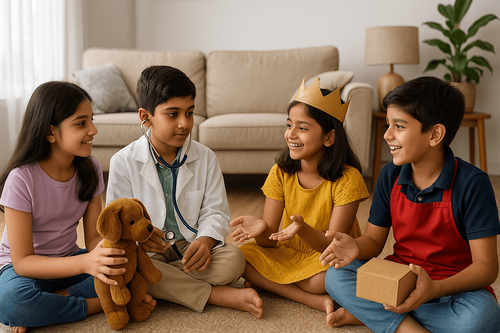

Table of Contents
- Role-Play Ideas to Improve Speaking Skills for Kids
- What Is Role-Play and Why Is It Effective for Kids?
- Benefits of Role-Play Activities for Speaking Skills
- How Parents Can Support Role-Play at Home
- Tips to Make Role-Play More Effective for Speaking Skills
- How Role-Play Helps Shy or Introverted Kids
- Age-Wise Role-Play Ideas for Kids
- Common Mistakes Parents Should Avoid During Role-Play
- How Role-Play Builds Vocabulary in Daily Situations
- Setting Up a Mini Role-Play Corner at Home
- Role-Play Activities for Online Learning
- How Teachers Can Use Role-Play in Classroom Activities
- Combining Storytelling and Role-Play for Better Speaking Ski
- Role-Play Prompts to Encourage Creative Thinking
- How to Use Everyday Household Items as Role-Play Props
- Signs Your Child Is Improving Through Role-Play
- Role-Play Games for Sibling Bonding
- Printable Role-Play Cards for Kids
- How Role-Play Supports Emotional Intelligence in Kids
- Role-Play for Building Listening Skills
- Using Role-Play to Reduce Screen Time
- How Role-Play Helps Kids in Public Speaking
- Role-Play as a Tool for Conflict Resolution
- Role-Play Ideas for Group Activities and Playdates
- Why Choose PlanetSpark?
- Conclusion
Speaking skills play a crucial role in a child’s early development. They help children express their thoughts clearly, interact confidently, and build meaningful connections with others. When kids learn to communicate effectively at a young age, they also develop strong listening skills, better comprehension, and the confidence to participate in conversations at home, school, and social settings.
Role-play also boosts creativity, expression, and emotional understanding. Whether pretending to be a teacher, doctor, superhero, or storyteller, kids get the chance to practice communication in a playful and meaningful way. Through these small but powerful activities, children gradually become more confident speakers and better communicators.
Role-Play Ideas to Improve Speaking Skills for Kids
Here are some enjoyable and easy-to-do role-play ideas that help children practice speaking while having fun. These can be done at home, in classrooms, or even during group activities.
1. Shopkeeper & Customer
Kids learn to ask questions, give responses, handle simple negotiations, and practice polite conversation.
2. News Reporter & Interviewee
Great for improving clarity and confidence. Kids report news, ask questions, or act as celebrities or characters being interviewed.
3. Teacher & Student
A classic role-play where kids explain topics, ask questions, and practice structured speaking.
4. Doctor & Patient
Helps build vocabulary related to health, body parts, and feelings, while encouraging kids to express concerns clearly.
5. Story Characters
Let kids act out fairy tales, superhero scenes, or their own stories, boosting imagination and expressive speech.
6. Real-Life Situations
Airport check-in, restaurant conversations, school events, birthday planning, kids learn everyday communication skills.
7. Emotion-Based Role-Plays
Ask kids to express emotions like joy, sadness, surprise, fear, or excitement in different scenarios. This builds emotional intelligence and expressive speaking.
What Is Role-Play and Why Is It Effective for Kids?
Role-play is a fun activity where kids pretend to take on different roles, like a teacher, doctor, shopkeeper, or story character and act out situations using their imagination. It feels like play, but it is actually a powerful learning tool because children naturally express themselves more freely when they are pretending. Instead of memorizing sentences or repeating lines, they speak spontaneously, think creatively, and use language in a meaningful context. This makes role-play one of the best ways to build speaking skills without it feeling like a lesson.
Role-play supports language development in several ways. Kids experiment with new vocabulary, form sentences naturally, and practice asking and answering questions. They also learn how conversations work, taking turns, responding politely, and expressing emotions. On top of that, role-play helps children make sense of the world by acting out real-life situations.
Emotional and social benefits include:
Helps kids understand feelings like happiness, fear, and courage
Encourages empathy by letting them see situations from another person’s point of view
Strengthens cooperation and teamwork
Reduces fear of public speaking gradually
Benefits of Role-Play Activities for Speaking Skills
Role-play is more than pretend play, it’s a complete communication-building experience. When kids take on a character or a scenario, they naturally start to talk more, describe situations, and respond to prompts. These small conversations gradually build their fluency and help them become confident speakers.
Key benefits include:
Builds confidence and fluency: Kids speak without fear because they are “in character,” which helps reduce hesitation and shyness.
Enhances vocabulary and sentence structure: They learn new words related to situations, like medical terms while playing doctor or formal language while acting as a teacher.
Encourages listening and quick thinking: Kids must listen to the other person’s role and respond instantly, improving reflexive communication.
Helps overcome shyness: Children who fear speaking often feel safer expressing themselves through pretend roles.
Promotes teamwork and empathy: Many role-plays involve teamwork, sharing space, taking turns, and understanding others’ emotions.
Overall, role-play makes speaking practice active, natural, and enjoyable, turning everyday moments into communication lessons.
How Parents Can Support Role-Play at Home
Parents play a key role in making role-play effective. The goal is not perfection, it’s practice, fun, and communication. You don’t need expensive props or elaborate setups. Even small gestures can encourage big improvements.
How to support role-play easily:
Use simple props: A notebook, mask, old toys, or kitchen items can become tools for role-play.
Encourage storytelling: Ask your child to continue or expand a story through dialogue.
Create a safe, judgment-free space: Let kids speak freely without correcting every small mistake.
Participate occasionally: Join them as a customer, student, or interviewer to build engagement.
Set weekly themes: “Hospital week,” “Superhero day,” or “Restaurant night” add excitement and structure.
When parents are supportive and involved, kids speak more confidently and enjoy the process even more.
Tips to Make Role-Play More Effective for Speaking Skills
Role-play becomes far more impactful when structured with simple techniques that guide children without limiting their creativity. These tips help make each session meaningful and supportive.
Useful tips include:
Ask open-ended questions: Instead of yes/no questions, ask “What happens next?” or “Why do you think that?”
Record short sessions: Kids love watching themselves, and it also helps parents notice progress.
Mix real-life and imaginative scenarios: Combine daily-life conversations with fantasy-based role-plays for balanced learning.
Use visual prompts: Flashcards, pictures, or props help spark stories and conversations.
Include peer interaction: Group role-play builds teamwork, listening skills, and confidence.
By adding small strategies like these, role-play becomes a powerful practice routine that supports long-term language development.
Give your child the confidence to speak clearly, book a free PlanetSpark trial today!
How Role-Play Helps Shy or Introverted Kids
Role-play is one of the most effective tools to help shy or introverted children feel more comfortable speaking. When a child steps into a character like a doctor, superhero, or shopkeeper, they temporarily step out of their real personality. This reduces self-consciousness and allows them to express themselves more freely without the fear of being judged. Because they are “pretending,” their natural hesitation drops, and they start speaking more confidently.
Shy kids often struggle with eye contact, volume control, or initiating conversations. Role-play gently builds these skills by giving them structured scenarios where speaking is required but not forced. They can practice asking questions, responding politely, and expressing feelings in a safe and playful setting. This repeated exposure helps them gradually overcome social anxiety.
Parents can further support their shy child by offering simple prompts, appreciating small efforts, and choosing low-pressure characters to begin with like a friendly librarian or a patient customer. Over time, these small role-play moments lead to real-life confidence.
Age-Wise Role-Play Ideas for Kids
Children of different ages respond to role-play differently, so tailoring activities to their developmental stage makes learning more effective. Younger kids thrive on simple, imaginative scenarios, while older kids enjoy structured conversations and real-world role-plays.
For Ages 3–5
Pretend cooks and customers
Superheroes and villagers
Animal characters
Family scenarios (mom, dad, baby role-plays)
These help them form simple sentences, explore emotions, and build early vocabulary.
For Ages 6–8
Doctor–patient
Teacher–student
Shopkeeper–customer
Story characters (princess, pirate, robot)
This age group enjoys structured play with more dialogue. It helps them learn to ask questions and describe situations.
For Ages 9–12
News reporter interviews
Debate-style role-plays
Tourist and guide
Job interview simulation
Problem-solving situations
Older kids learn real communication skills through these activities, clear speech, confidence, and reasoning. Age-specific role-play ensures each child learns at the right pace.
Common Mistakes Parents Should Avoid During Role-Play
Role-play is meant to be fun, but certain mistakes can unintentionally make kids feel pressured or discouraged. Avoiding these ensures your child enjoys the activity and learns naturally.
Common mistakes include:
Correcting every mistake immediately: This makes kids nervous and stops spontaneous speaking. Encourage, don’t interrupt.
Making role-play too realistic or strict: If the setup feels like a test, kids lose interest. Keep it playful.
Choosing roles that feel difficult: For shy kids, avoid roles that require heavy dialogue at first.
Failing to participate: Kids get motivated when parents show enthusiasm and join the fun.
Overloading with props: Props should support play, not distract from it.
Parents should focus on appreciation, gentle guidance, and flexible storytelling. The goal is to build confidence, not perfection. When parents create a relaxed environment, kids speak more freely and enjoy the learning process.
How Role-Play Builds Vocabulary in Daily Situations
Role-play helps kids learn new words faster because they use them in meaningful, real-life contexts not just memorization. For example, when acting as a shopkeeper, they learn words like “bill,” “discount,” “change,” and “receipt.” When playing doctor, they naturally pick up terms like “check-up,” “temperature,” “medicine,” and “symptoms.” Because kids hear these words within situations, they remember them better.
Daily activities offer endless chances to build vocabulary:
Home: Kitchen role-play teaches food names; cleaning role-play teaches household vocabulary.
Outdoors: Pretending to be a street vendor, gardener, or tourist guide enhances descriptive language.
School-related play: Kids learn academic vocabulary when acting as teachers or students.
Through role-play, children use new words with purpose, explaining, describing, asking, and responding. This helps them form longer sentences, improve clarity, and speak confidently in different life situations. Over time, this natural exposure builds strong speaking foundations.
Unlock your child’s creativity and communication skills with expert-led online classes.
Setting Up a Mini Role-Play Corner at Home
A dedicated role-play corner encourages kids to practice speaking anytime they want. You don’t need to create anything fancy or expensive, a small, organized space is enough to spark imagination. Choose a corner of the living room or bedroom and add simple items like a small table, a box of props, paper, markers, and a few costumes.
Things you can include in the corner:
Old scarves, hats, or caps
Empty boxes for “shop” play
A toy stethoscope
A chalkboard or whiteboard
Storybooks for inspiration
Flashcards with themes or characters
Make the space comfortable and accessible. Allow kids to change the theme weekly, restaurant one week, school the next. When kids know that a role-play corner exists just for them, they initiate conversations more freely and start speaking without instruction. This consistent exposure strengthens their language, creativity, and confidence.
Role-Play Activities for Online Learning
Online learning environments also provide great opportunities for role-play, especially in virtual classrooms or Zoom sessions. Kids can interact with peers, practice conversation, and build speaking skills even when they’re not physically together. Virtual role-play works wonderfully because kids feel safer behind a screen and often speak more confidently.
Here are online-friendly ideas:
Virtual news reporting using webcam as “studio camera”
Character interviews where kids portray authors, athletes, or story characters
Digital shopkeeper game using on-screen items
Problem-solving scenarios where kids discuss solutions
Story continuation role-plays where each child adds a scene
Teachers and parents can also use breakout rooms, emojis, and digital props to make it more engaging. Online role-play helps kids build fluency, clarity, and digital communication skills, skills that are increasingly important today.
How Teachers Can Use Role-Play in Classroom Activities
Role-play is one of the most powerful communication tools teachers can use in the classroom because it transforms speaking practice into an active, collaborative, and enjoyable learning experience. Teachers can integrate role-play into different subjects, English, science, social studies, and even value education to help students express ideas clearly and confidently. Classroom role-play encourages teamwork, active listening, and spontaneous speaking, making lessons more interactive.
Teachers can start with simple setups such as “Ask a question to your partner,” then expand into structured role-play scenarios like shopkeeper–customer, reporter interviews, conflict resolution scenes, or character reenactments from stories or history chapters. Group role-plays help students learn to negotiate, divide dialogue, and present together, which builds leadership and communication.
To make it successful, teachers can:
Provide a theme or situation
Give students 2–3 minutes to plan
Allow creative freedom
Encourage participation without focusing on mistakes
Rotate roles so everyone gets a turn
When used consistently, role-play helps students speak more fluently, express thoughts confidently, and build essential classroom communication skills.
Combining Storytelling and Role-Play for Better Speaking Skills
Storytelling and role-play blend beautifully to create a powerful learning experience for kids. Storytelling lets children create ideas, while role-play gives them a stage to bring those ideas to life. When both are combined, children not only imagine characters but also become them, helping them speak naturally, confidently, and creatively.
Teachers or parents can start with a short story prompt such as “A lost puppy finds a magical forest” and ask kids to act out characters like the puppy, forest animals, or a magical guide. This improves expressive skills and gives kids a chance to practice tone, emotion, and dialogue.
Benefits of combining both include:
Stronger imagination and creative thinking
Better vocabulary through descriptive scenes
Improved emotional expression
Greater fluency and longer sentences
More confidence in public speaking
This combination is especially helpful for kids who struggle with traditional speaking activities. The storytelling element gives direction, while role-play adds excitement, helping kids learn naturally through play.
Role-Play Prompts to Encourage Creative Thinking
Creative prompts help kids explore new ideas and speak more freely. They remove hesitation because children have a topic to build on, allowing imagination to take over. These prompts make role-play more structured, fun, and effective for improving speaking skills.
Creative role-play prompts include:
“You discover a talking tree in the forest. What does it say?”
“You are a superhero with a new power. Explain how you help people.”
“You are the principal for one day. What rules would you change?”
“A robot visits your home. What questions do you ask it?”
“You are a scientist who invented a machine. Show how it works.”
“A friendly alien wants to learn about Earth. Teach them!”
“You open a restaurant in space. What’s on the menu?”
Parents and teachers can print or write these prompts on small cards to make them easy to pick and act out. These spark imagination, encourage spontaneous speaking, and help children form longer sentences.
Boost your child’s storytelling and speaking skills, enrol in a session today!
How to Use Everyday Household Items as Role-Play Props
You don’t need fancy toys or costumes for role-play. Everyday household items become imaginative props that help kids bring scenes to life and speak more confidently. Simple objects spark creativity and make the activity feel realistic, helping kids use language in practical, meaningful situations.
Items you can use:
Old newspapers – for reporter role-play
Plastic utensils – for restaurant play
Bags and boxes – for shopkeeper scenes
Bedsheets – as capes, costumes, tents, or backdrops
Old phones or remotes – for office or customer-service role-play
Bowls and containers – for cooking or café scenarios
Notebooks and markers – for teacher–student role-plays
Using familiar household objects helps kids connect role-play to real life. It also encourages problem-solving, figuring out how one item can represent another. This imaginative use of simple props boosts expressive language, improves storytelling, and encourages kids to describe objects, situations, and actions naturally.
Signs Your Child Is Improving Through Role-Play
Parents often wonder how to measure progress when their child participates in role-play. Improvement doesn’t always happen suddenly, it appears in small but meaningful changes. Observing these signs helps parents understand how role-play is strengthening communication.
Key signs include:
Longer sentences: Your child begins to speak in full, connected sentences during role-play and outside it.
More confidence: They start initiating conversations and speaking without hesitation.
Better vocabulary: They use new words naturally, like “receipt,” “temperature,” “order,” or “appointment.”
Clearer expressions: They describe ideas, emotions, or actions with more detail.
Improved listening: They respond to cues, stay in character, and listen actively.
Better social interaction: More eye contact, better turn-taking, and polite dialogue.
Increased imagination: They create new scenarios on their own instead of waiting for prompts.
These small improvements show steady growth in communication, helping parents track progress without pressure.
Role-Play Games for Sibling Bonding
Role-play is one of the best ways for siblings to bond because it encourages cooperation, teamwork, and shared creativity. When siblings act out scenarios together, they learn how to communicate, negotiate roles, resolve disagreements, and work as a team, skills that strengthen both language and relationships.
Fun sibling role-play games include:
Restaurant Game: One becomes the chef, another the server or customer.
Detective Game: Kids solve a mystery together by asking questions and describing clues.
Teacher–Student Game: Both take turns being the teacher, improving listening and speaking for both.
Adventure Stories: Siblings act as explorers, superheroes, or detectives on a mission.
Hospital Game: One becomes the doctor, the other the patient, switching roles afterward.
These activities reduce screen time, spark creativity, and give siblings shared experiences that improve communication naturally. Over time, they learn to speak politely, cooperate better, and build stronger connections.
Printable Role-Play Cards for Kids
Printable role-play cards make activities easy, structured, and fun. They are especially helpful for parents and teachers who want quick prompts without planning new scenarios every time. Each card contains a character or a situation that kids can act out immediately.
Examples of printable card ideas:
Characters: Doctor, chef, scientist, reporter, astronaut, librarian, superhero, traveler
Situations: Lost item, solving a mystery, visiting a new planet, shopping at a market, planning a party
Emotion cards: Happy, scared, surprised, confused, excited
Dialogue starters: “What happened next?” “How can I help you?” “Tell me more about it.”
You can print them on small colored cards, shuffle them, and let kids pick one at random. This simple tool boosts creativity, encourages spontaneous speaking, and gives endless role-play possibilities, perfect for both home and classroom learning.
How Role-Play Supports Emotional Intelligence in Kids
Role-play is one of the most effective and natural ways to build emotional intelligence in children. When kids take on different characters like a doctor comforting a patient or a teacher helping a student, they learn to understand emotions beyond their own. They begin to step into someone else’s perspective, which strengthens empathy and emotional awareness. This ability to imagine how others feel helps children develop kindness, compassion, and better social behavior.
During role-play, kids express emotions freely, happiness, fear, excitement, confusion, or frustration without hesitation. This emotional expression teaches them how to manage and communicate feelings in real life. Parents and teachers can gently guide them by asking questions like, “How does your character feel right now?” or “How would you help someone who is sad?” Such prompts help kids verbalize emotions clearly.
Over time, role-play becomes a safe environment where children learn to understand their feelings, identify others' emotions, and respond in thoughtful, meaningful ways. This emotional development supports healthier friendships, better communication, and stronger confidence.
Role-Play for Building Listening Skills
While role-play is great for speaking, it also significantly improves listening skills, a key component of good communication. Kids naturally listen more attentively when they are involved in a fun, imaginative activity. During role-play, they must pay attention to their partner’s dialogue, follow cues, respond logically, and stay in character. This strengthens their concentration and teaches them the importance of active listening.
For example, in a doctor–patient scenario, the “doctor” must listen carefully to understand the patient’s symptoms. In a teacher–student role-play, the “student” pays attention to instructions. These small moments teach kids how listening affects outcomes and relationships.
Parents and teachers can enhance this skill by adding simple rules such as:
“You can respond only after the other person finishes speaking.”
“Repeat one line before giving your answer.”
“Follow the instruction given by your character.”
These techniques encourage children to pause, think, and respond appropriately. With consistent practice, kids become better listeners not just in play but also in school and daily conversations.
Using Role-Play to Reduce Screen Time
With screens becoming a major part of kids’ daily routines, finding engaging offline activities is essential. Role-play is one of the best ways to reduce screen time naturally because it is fun, interactive, and attention-grabbing. Kids get so involved in acting out characters that they forget about devices altogether.
Role-play activates creativity, movement, and imagination, everything that screens often limit. Children enjoy pretending to be doctors, chefs, explorers, superheroes, or teachers because it allows them to control the story and express themselves. Parents can set up simple scenarios or role-play corners at home to make the activity more inviting.
Another advantage is that role-play encourages social interaction, children talk, negotiate, and collaborate, which screens don’t provide. It also gives parents and siblings a chance to bond together. Over time, when role-play becomes part of a routine, kids naturally shift away from passive screen time and move toward active, meaningful play that supports brain development and communication skills.
How Role-Play Helps Kids in Public Speaking
Role-play acts as a foundation for public speaking because it teaches kids to express themselves in front of others with confidence. When children act out characters, they practice speaking aloud, experimenting with tone, and projecting their voice. This gives them the courage to speak clearly even when facing an audience.
Public speaking requires good voice modulation, facial expressions, and body language, all of which kids learn naturally through role-play. For example, a child acting as a teacher must explain topics clearly. A child playing a news reporter must speak with clarity and confidence. These playful scenarios mirror real public speaking situations.
Role-play also reduces stage fear because kids don’t feel judged when pretending. They focus on the character instead of worrying about making mistakes. This makes it easier for them to talk in class, participate in school assemblies, or give short speeches. Over time, children who engage regularly in role-play show better clarity, confidence, and communication in formal speaking environments.
Role-Play as a Tool for Conflict Resolution
Role-play teaches kids how to navigate disagreements and resolve conflicts respectfully. Children often struggle to express their feelings during arguments, but role-play gives them a safe way to practice problem-solving and polite dialogue. For example, parents can create situations like “two kids wanting the same toy” or “friends planning an activity but disagreeing.” Kids act out both sides and learn how to communicate solutions calmly.
Through these scenarios, children practice skills like:
Expressing feelings using words
Listening to the other person’s viewpoint
Offering compromise
Using polite language (“Can we share?” “Let’s take turns.”)
Understanding fairness
This not only strengthens communication but also helps them handle real-life disagreements with maturity. Role-play also teaches kids emotional control, how to manage frustration, disappointment, or anger.
By practicing these scenarios regularly, children develop healthy approaches to teamwork, friendship, negotiation, and conflict management. These lessons stay with them throughout life.
Role-Play Ideas for Group Activities and Playdates
Role-play is perfect for groups and playdates because it encourages collaboration, creativity, and joyful interaction among kids. When children act in groups, they learn teamwork, sharing roles, and following a storyline together. This strengthens communication while making the activity fun and socially rewarding.
Great group role-play ideas include:
Restaurant Role-Play: Kids take roles as chef, waiter, cashier, and customer.
Adventure Missions: A team of explorers searching for treasure or solving mysteries.
Community Helpers Play: Kids act as firefighters, police officers, doctors, and teachers.
Newsroom Role-Play: Reporters, weather presenters, editors, and cameramen.
Space Mission: Astronaut crew members planning and executing a mission.
Group role-plays build leadership, cooperation, and expressive language. They also help children learn how to divide responsibilities, negotiate characters, and present ideas as a team. These activities make playdates productive while strengthening communication skills in fun and engaging ways.

Why Choose PlanetSpark?
Helping children become confident speakers requires the right guidance, practice, and environment. PlanetSpark offers all three through its structured online learning programs designed specifically for young learners. With a focus on communication, creativity, and expression, PlanetSpark ensures that every child grows into a fluent and self-assured speaker.
Personalized Learning: Every child learns differently, and PlanetSpark recognizes that. Kids receive customized lessons based on their current speaking level, confidence, and communication goals. This ensures steady progress without overwhelming them.
Interactive & Fun Role-Play Sessions: PlanetSpark integrates activities like storytelling, role-play, and real-life speaking scenarios to make learning more engaging. Children get to practice speaking in fun, relatable situations that improve fluency and clarity.
Focus on Public Speaking & Communication: From voice modulation to expression, PlanetSpark helps kids develop essential speaking skills. Lessons also include conversation practice, presentation basics, and confidence-building exercises.
Creative Writing & Vocabulary Building: To support better speaking, children also learn how to build stronger sentences, use better vocabulary, and express ideas clearly, skills that naturally enhance communication.
Expert Mentors for Consistent Growth: Trained educators guide children through structured activities, provide feedback, and help them overcome stage fear or hesitation.
Conclusion
Role-play is one of the most powerful tools to help children become confident, expressive, and clear speakers. By allowing kids to act out different characters and everyday situations, role-play builds fluency, boosts vocabulary, and improves their ability to think and respond quickly. Whether your child wants to speak confidently in class, build stronger communication skills, or express ideas more creatively, these simple role-play activities offer a fun and effective learning path.
Regular practice makes a big difference. When children are encouraged to speak, explore, and express themselves without judgment, they naturally develop stronger communication habits that help them succeed in school and everyday life. With the right guidance and environment, every child can become a confident speaker and role-play is a great place to begin.
Frequently Asked Questions
Role-play encourages children to speak freely, use new vocabulary, and respond naturally in different situations. This strengthens fluency, confidence, and expression.
Children aged 4–12 benefit the most because this is when communication skills develop rapidly, and playful learning works best.
Yes. Kids who practice speaking through role-play become more confident answering questions, participating in discussions, and expressing ideas in class.
Most activities need little to no materials—just everyday items like toys, books, household objects, or simple prompts to spark imagination.
Even 10–15 minutes a day can significantly improve speaking skills, especially when combined with encouragement and active listening.
Our supportive environment, fun activities, and step-by-step confidence-building approach help even the shyest children open up and participate.