
Sample Speech on Global Warming for Students (2025)
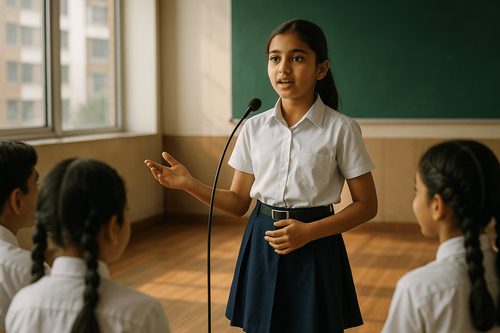

Every year, students across the world prepare a global warming speech for competitions, debates, assemblies, and English presentations. But behind the speeches and school assignments lies a very real concern: the planet is warming faster than at any other time in human history. The rising temperatures, extreme climate patterns, melting ice caps, and environmental damage make global warming a topic every student must understand, think about, and speak confidently on.
This blog walks students through a powerful speech, a complete structure, and the key points they should include when presenting the topic. Whether you're preparing for a competition or simply want a better understanding, this guide will help you speak clearly, confidently, and meaningfully.
![global warming]](https://cdn5.planetspark.in/media/Copy_of_AI_ads_1200_x_628_px_1_15625d2394.png)
Speech on Global Warming for Students
Delivering a compelling global warming speech requires more than stating facts. Students must speak with empathy, conviction, and clarity to make their audience understand why this topic matters. Below is a thoughtfully written, emotionally grounded speech that blends science with storytelling, perfect for school use.
A Powerful Sample Speech on Global Warming
Respected teachers and my dear friends,
Today, I want to talk about a topic that affects every plant, every animal, every nation, and every child: global warming. In simple words, global warming is the rise in Earth’s average temperature caused by greenhouse gases like carbon dioxide and methane. But beyond scientific definitions, global warming is a warning. A warning that our planet, our home, needs help.
Imagine waking up one day and realising the seasons no longer feel like they used to, winters becoming warmer, summers becoming unbearably hot, rains arriving late or all at once. This isn’t imagination anymore. It’s happening now. Polar ice caps are melting at a rapid speed, sea levels are rising, and heatwaves are becoming stronger every year.
But the biggest question remains: How did we get here?
Human activities, burning fossil fuels, cutting down forests, polluting oceans, and expanding industries, have pushed the planet into crisis. What once took nature thousands of years to balance is now disrupted within decades.
Yet, even in the middle of this environmental emergency, hope exists. Because the power to slow down global warming is not only in the hands of scientists or leaders, it’s in the simple choices each of us makes daily. Planting a single tree, saving electricity, reducing waste, walking instead of using vehicles, and encouraging recycling at home, these actions may seem small, but together they create powerful change.
Global warming is not a distant threat. It is our present reality. And if we do not act today, tomorrow might become harder to protect.
Let us pledge to stay informed, stay responsible, and work together for a cleaner, safer, and greener planet.
Thank you.
This speech is emotionally engaging, easy to deliver, and suitable for any age group. But more importantly, it creates awareness, the true purpose of public speaking on global issues.
How to Structure an Effective Global Warming Speech
Great speeches don’t happen by luck; they follow a thoughtful structure. When students prepare a speech on global warming, they often worry about what to include, how to begin, or how to make their words interesting. A well-designed structure helps them speak smoothly, confidently, and memorably.
A strong speech on global warming should feel like a journey, starting with curiosity, moving through understanding, and ending with inspiration. Here’s how students can craft such a journey:
Begin with a Hook That Opens the Listener’s Eyes
Every speech needs a moment that grabs attention. For a global warming speech, this could be a startling fact (“The last decade was the hottest ever recorded”), a relatable scenario (“Remember how hot last summer was?”), or an emotional trigger (“Imagine our future without glaciers or coral reefs”).
Public speaking becomes powerful when the audience feels connected from the first sentence.
Help your child build a voice that stands out. Seats are filling faster than expected.
Explain Global Warming in Simple, Clear Language
Complex scientific details can confuse listeners. The goal is clarity, not complexity.
Students should explain global warming in everyday language: how greenhouse gases trap heat, how pollution adds to the problem, and why human activities disturb Earth’s natural balance. When students speak clearly, even younger listeners understand the urgency.
Build the Body of the Speech with Real-World Examples
Real examples make the topic believable. Students can refer to:
Melting Himalayan glaciers
Rising sea levels in coastal regions
Increasing wildfires
Floods are becoming more frequent
Animals are losing their habitats
Examples act as proof, and proof strengthens public speaking.
Introduce the Human Responsibility
A powerful global warming speech doesn’t just describe the problem; it shows how humans contribute to it.
Students can talk about burning fuel, industrial waste, deforestation, excessive plastic use, and how daily choices influence environmental health. This part of the structure encourages self-awareness.
Offer Practical Solutions that Inspire Hope
The best speeches end with hope, not fear. Students should suggest simple solutions that anyone can follow, such as:
Saving energy
Reducing plastic use
Recycling waste
Planting trees
Using eco-friendly alternatives
This gives the audience a sense of empowerment.
End with a Memorable, Motivating Line
A speech should linger in the listener’s mind. Students can conclude with lines like:
“The Earth is speaking , are we listening?”
“A greener tomorrow begins with today’s choices.”
“Protecting the planet is not optional; it is essential.”
A powerful ending turns a good speech into a memorable one.
Key Points to Cover in a Global Warming Speech
To help students create a rich, clear, and complete speech, here are the core areas every global warming speech should include. This section gives them depth for explanation and clarity for presentation.
Define Global Warming Clearly and Simply
Start with a simple, relatable definition. Students should explain that global warming is the long-term rise in Earth’s temperature due to the increase in greenhouse gases. Explaining the concept in conversational terms, using analogies like a “blanket trapping heat around the Earth”, helps listeners visualise the issue.
Explain the Human Activities Behind It
A powerful speech doesn’t jump into effects without first explaining the causes. Students should highlight:
Burning of fossil fuels
Deforestation
Industrial pollution
Excessive plastic use
Agricultural emissions
These causes help the audience understand how human behaviour shapes the climate.
Present Real, Observable Effects
Listeners respond more strongly when they can imagine the impact. Students should mention the melting of glaciers, hotter days, disturbed rainfall, rising sea levels, and loss of biodiversity. These examples bring global warming to life.
Show How It Affects People and Daily Life
Instead of keeping the topic distant, students should connect it to the present:
Why do summers feel harsher
Why do floods and droughts appear more frequently
How food production is becoming unpredictable
When a speech connects global warming to real life, it creates urgency.
Offer Clear, Actionable Solutions
Every powerful speech ends with hope. Students should encourage small but meaningful actions:
Saving electricity
Using public transport
Recycling waste
Planting trees
These solutions bring balance to the speech and show leadership.
Want your child to confidently speak on topics that matter?
How Global Warming Is Changing Our Planet
Global warming is not just a scientific theory discussed in textbooks; it is a visible shift happening around us. Students preparing a global warming speech must understand this impact deeply so they can speak with emotion, clarity, and conviction.
The planet is warming faster than ever before. Ice caps are shrinking. Coral reefs are dying. Forests are experiencing wildfires more often. Natural disasters that were once rare now occur several times a year. The Earth’s climate is changing at a pace that many species, including humans, cannot fully adapt to.
But the effects go beyond physical damage. Global warming affects health, food, water, homes, wildlife, and even economies. It impacts farmers’ harvests, increases the spread of diseases, reduces freshwater sources, and threatens cities near coastlines.
What makes this topic powerful for public speaking is that the audience doesn’t need imagination; they can see the changes happening around them. Students can talk about heatwaves breaking records every year, floods disrupting schools and communities, and drought affecting crops.
To strengthen a speech, students should include global examples too, Australia’s forest fires, Antarctica’s melting ice shelves, and coral bleaching in the Great Barrier Reef. Today’s speeches must go beyond classroom knowledge; they must show how the Earth is responding in real time.
Global warming isn’t a distant crisis for the future; it is shaping our present. And this is exactly why a well-prepared public speaking performance on this topic can create awareness, responsibility, and action among listeners.
What to Do to Reduce the Harm of Global Warming?
A speech on global warming becomes complete when it ends with a meaningful call to action. Students should inspire their audience with practical, hopeful steps. Public speaking isn’t just about informing; it’s about influencing people to act.
Here are key areas students can highlight:
1. Encourage Everyday Climate Responsibility
Small decisions create big changes. Using less electricity, turning off lights, carrying reusable bottles, and avoiding plastic bags are simple steps every listener can adopt immediately.
2. Promote Tree Plantation and Green Living
Every tree planted removes carbon dioxide from the air. Students can encourage collective tree-planting drives, restoring parks, and protecting green spaces around schools and communities.
3. Support Clean and Renewable Energy
Solar energy, wind energy, and hydropower reduce dependence on fossil fuels. Students can talk about how schools, homes, and future cities can embrace cleaner solutions.
4. Spread Awareness Through Public Speaking
One of the strongest tools for reducing global warming is awareness. Students who confidently speak about global warming inspire their peers, families, and communities to act.
When a speech moves people emotionally and intellectually, it becomes more than an academic exercise; it becomes a contribution to the world.
This is the power of public speaking: it shapes opinions, drives change, and inspires future leaders.
Why Choose PlanetSpark for Public Speaking?
When a child learns how to express ideas powerfully, they don’t just speak better, they think better, analyse better, and influence better. PlanetSpark builds these abilities through structured, interactive, and confidence-building public speaking training for young learners.
Students practice real-world topics like global warming, learn how to build arguments, speak with clarity, overcome stage fright, and develop a strong communication style. The learning environment is fun, personalised, and designed to transform shy speakers into confident voices.
Whether it’s debates, speeches, competitions, interviews, or storytelling, PlanetSpark ensures every child learns the art of expression, one of the most important skills for the future.
1:1 Expert Coaching: Every child receives personalized attention from certified communication trainers and child psychology experts, ensuring customized feedback and steady improvement.
Step-by-Step Skill Building: The program systematically develops skills like body language, voice modulation, storytelling, debating, and persuasive speaking.
TED-Style Training: Students learn to craft powerful speeches following the “Hook–Message–Story–Call-to-Action” model used by TEDx speakers.
Global Practice Platforms: Children engage in live debates, panel discussions, and storytelling sessions with peers from over 13 countries.
Competitions and Leagues: Frequent internal contests and a national-level Public Speaking League give learners real-world performance opportunities.
Video Feedback Loop: Students receive recordings of their speeches and review them with their coach for detailed feedback and growth.
Give Your Child the Confidence to Speak, Lead & Shine,
Writing That Builds Confidence, Clarity & Character
Written communication isn’t just another academic skill; it’s a tool that shapes how students think, express, and grow. When kids learn to write with clarity and confidence, they unlock the ability to share ideas, persuade, question, imagine, and understand the world around them.
Whether it’s crafting a crisp school paragraph or developing long-form essays, strong writing opens doors, better marks, better expression, and better opportunities. And the best part? Writing is a skill anyone can build with the right guidance, practice, and encouragement.
Each topic you explored in this blog offers a stepping stone toward helping students become sharper thinkers and powerful communicators. The more they write, the more they learn to express who they truly are.
If you’re ready to explore deeper insights or more skill-boosting topics, there’s a whole world waiting for you just a scroll away.
If You Loved This Blog, You’ll Love These Too
Below are smart content pathways to keep readers exploring more on similar skills:
Frequently Asked Questions
The best way is to write regularly, short summaries, diary entries, essays, or even classroom notes. When students practice consistently, they naturally become clearer, more confident, and more expressive. Reading good writing also helps them absorb structure, vocabulary, and tone.
Clarity, structure, vocabulary, grammar, and purpose. When students know what they want to say, arrange ideas logically, use accurate grammar, and choose the right words, their writing becomes far more impactful.
Absolutely. Reading exposes students to sentence flow, storytelling patterns, new words, and different writing styles. It sharpens their imagination and helps them understand how professional writers communicate ideas.
Teachers can assign diverse writing tasks, provide constructive feedback, encourage rewriting, and guide students on how to structure paragraphs. Most importantly, teachers help students understand the why behind each writing choice.
Because most academic tasks, exams, emails, and even online interactions depend on writing. Strong writing makes students stand out, express themselves clearly, and perform better academically and socially.