
Teaching Gratitude to Children: A Complete Parent’s Guide
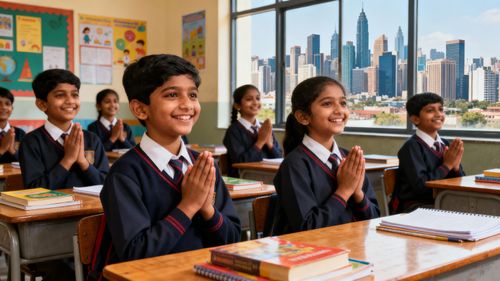

Table of Contents
- Why Teaching Gratitude to Children Matters
- Why Some Children Struggle with Gratitude
- Practical Techniques for Teaching Gratitude to Children
- The Role of Communication Skills in Expressing Gratitude
- Building Communication That Strengthens Gratitude
- A Powerful Ending: Raise a Child Who Notices, Appreciates, a
Teaching gratitude to children is more than encouraging thank you; it shapes their mindset, emotional well-being, behaviour, and relationships for life. In this blog, you will learn what gratitude truly means for young minds, how to teach it effectively, which daily habits nurture it, and why grateful children become confident, kinder, and stronger individuals. We explore practical techniques, scripts, real-life scenarios, and age-wise strategies to build appreciation that lasts. You will also learn how communication skills support gratitude and how PlanetSpark’s Public Speaking Course strengthens a child’s ability to express it confidently.
Why Teaching Gratitude to Children Matters
Gratitude is a powerful emotional and social skill, yet many parents assume children will learn it automatically. In reality, teaching gratitude to children is an active and intentional process. Gratitude requires children to recognise kindness, understand value, acknowledge effort, express appreciation, and develop empathy. These skills do not form without structured guidance.
Gratitude is not just saying thank you but understanding why something deserves appreciation. This means children need emotional maturity, cognitive awareness, and communication skills to truly express gratitude. When we teach gratitude intentionally, children learn to pause, reflect, and see goodness around them.
The Science Behind Gratitude in Childhood
Teaching gratitude to children is supported by research in child psychology, behavioural sciences, and emotional development. Studies show that grateful children demonstrate higher resilience, improved mental health, stronger relationships, and better academic performance. Gratitude fosters positive thinking patterns, reduces anxiety, and helps children cope with challenges more calmly.
Children who practise gratitude show:
Better self-regulation
Higher empathy
Improved social behaviour
Greater optimism
Stronger communication skills
Gratitude strengthens emotional intelligence for children by teaching them to recognise emotions in themselves and others. When children understand effort, kindness, and value, they naturally treat others with more respect. This emotional growth supports ethical behaviour, good manners, discipline, and conflict resolution.
Why Some Children Struggle with Gratitude
Teaching gratitude to children is not always simple or natural. While parents may expect children to behave gratefully, many developmental, emotional, and environmental factors can make gratitude difficult to understand or express. Identifying these challenges helps you respond with patience, not frustration.
Children may struggle with gratitude due to:
Cognitive development limits (they cannot understand abstract concepts yet)
Emotional immaturity (difficulty recognising or naming feelings)
Overstimulation or distractions (too much happening around them)
Lack of parental modelling (children imitate what they see)
Instant gratification culture (things come too easily)
Limited vocabulary (they don’t know how to express gratitude)
Understanding why children struggle allows parents to use the right strategies without expecting more than what is age-appropriate.
Age-Appropriate Development Differences
Young children, especially ages 3–6, are naturally egocentric due to how the brain develops. They do not fully understand:
Another person’s effort
Sacrifice or compromise
Emotional labour
Time investment
Long-term value
Expecting deep, meaningful gratitude from a four-year-old is unrealistic. Instead of expecting perfect behaviour, focus on smaller milestones such as:
Recognising kindness
Identifying when someone helps them
Saying thank you with gentle reminders
Understanding basic sharing
As children grow (ages 7–12), they begin to understand:
Effort behind actions
That people give time, energy, and resources
Why appreciation matters
How their behaviour impacts relationships
During teens years, children become capable of:
Expressing gratitude spontaneously
Reflecting deeply
Showing emotional awareness
Giving back meaningfully
Gratitude is developmental—it grows with the child, not overnight.
Overabundance and Instant Gratification Culture
Modern children often receive:
Quick entertainment
Fast solutions
New toys without waiting
Rewards without effort
Limited exposure to struggle
When everything is easily available, children may begin to:
Expect things instantly
Lose patience
Take kindness for granted
Feel entitled
Not value effort
To counter this, parents can:
Limit instant rewards
Use rewards thoughtfully, not as a routine response.Teach the cost and effort behind things
Explain how time, money, or hard work made something possible.Encourage earning privileges
Let children work toward something through responsibility.Introduce delays
Waiting builds appreciation and reduces entitlement.
Teaching gratitude also means teaching children that not everything comes instantly.
Lack of Emotional Vocabulary
Many children feel grateful but cannot express it because they don’t have the words.
This challenge comes from:
Low emotional vocabulary
Limited communication skills
Shyness or hesitation
Lack of practice in expressing feelings
To strengthen emotional vocabulary, teach children words like:
grateful
thankful
appreciative
fortunate
touched
proud
supported
Use guiding questions:
How did it make you feel when your friend helped you?
Do you think grandma felt happy when you thanked her?
What can you say to show your appreciation?
Provide simple expression templates:
I feel happy that you helped me.
I appreciate that you spent time with me.
Thank you for doing this for me.
Practical Techniques for Teaching Gratitude to Children
Below are detailed, research-backed strategies and scripts to nurture gratitude. Each technique connects positive parenting strategies, emotional learning, communication development, and daily practices.
Technique 1: Label Emotions First
Children cannot recognise gratitude if they do not recognise emotions. Begin by teaching emotional words and helping children identify how they feel.
Teach words like:
grateful
thankful
proud
fortunate
appreciative
happy
supported
Use daily scenarios:
You got help from your friend. How did that make you feel?
You received a gift. Do you feel thankful for it?
You shared your toy. Does it make you feel proud?
Benefits:
Strengthens emotional intelligence for children
Builds emotional vocabulary
Helps children express feelings respectfully
Makes gratitude meaningful, not robotic
Technique 2: Reflect on Effort, Not Object
Shift children’s attention from:
What did you get?
to
Who helped you, and why does it matter?
Questions to ask:
Who did something kind for you today?
Why do you think they did it?
Was it easy or did it require effort?
How can you show appreciation?
This helps children:
Recognise effort
Notice intentions
Value people over objects
Understand emotional labour
This technique develops empathy and deeper gratitude.
Technique 3: Teach Appreciation Through Chores
Children learn to value effort when they participate in it. Chores help them understand:
Time
Responsibility
Energy
Contribution
Chores that build gratitude:
Cleaning their room
Setting the table
Helping prepare meals
Watering plants
Taking care of pets
Helping younger siblings
Benefits:
Builds responsibility
Reduces entitlement
Helps children understand others’ work
Develops appreciation for everyday tasks
Chores should not feel like punishment but like contribution. Contribution builds gratitude.
Technique 4: Gratitude Letters and Cards
Writing gratitude teaches:
Clarity
Structure
Emotional expression
Thoughtfulness
Ideas:
Weekly gratitude letters
Festival or birthday appreciation cards
Thank-you notes to teachers
Notes to friends or neighbours
Gratitude entries in a journal
PlanetSpark’s writing modules help children:
Expand vocabulary
Structure ideas
Express emotions clearly
Develop consistent writing habits
This turns gratitude into a thoughtful, reflective practice.
Technique 5: Encourage Observation of Kindness
Children must first notice kindness before they can appreciate it.
Teach them to observe:
Someone opening a door
Someone sharing food
Someone offering help
Someone comforting them
Someone spending time with them
Ask reflective questions:
What did you notice today that made you feel good?
Who was kind to you at school?
Did someone make your day easier?
The more children observe kindness, the more grateful they become.
Technique 6: Use Positive Reinforcement Wisely
Praise the behaviour you want to see—authentic appreciation.
Good praise examples:
I like how you thanked your friend sincerely.
You expressed gratitude very thoughtfully.
That was a kind and genuine thank-you.
Avoid transactional praise, such as:
If you say thank you, I’ll give you chocolate.
This teaches children to perform gratitude for reward instead of meaning.
Gratitude must be internal, not externally motivated.
Technique 7: Teach Children to Give Back
Giving deepens gratitude. When children realise they can contribute, they learn to value what they have.
Ways to teach giving:
Sharing toys or books
Helping siblings or friends
Participating in charity drives
Donating clothes they’ve outgrown
Making homemade appreciation cards
Helping parents in daily tasks
Benefits:
Builds empathy
Develops generosity
Strengthens social values
Encourages mindful behaviour
Giving teaches children that gratitude is an action, not just a feeling.
The Role of Communication Skills in Expressing Gratitude
Gratitude and communication are inseparable. Many children feel thankful but cannot express it due to shyness, emotional hesitation, or lack of vocabulary.
Strong communication skills help children articulate gratitude meaningfully.
Why Gratitude Requires Communication
Communication helps children:
Structure their thoughts
Express feelings clearly
Use appropriate tone
Speak with sincerity
Explain why they are grateful
Understand the emotional impact of their words
A child who communicates well becomes naturally more grateful because they can:
Share appreciation confidently
Express emotions respectfully
Acknowledge kindness thoughtfully
Maintain healthy relationships
Gratitude becomes stronger when children learn how to say it properly.
How PlanetSpark Helps Children Express Gratitude
PlanetSpark’s Public Speaking Course builds essential communication skills that support gratitude expression. Children develop:
Vocabulary building: Learning emotional words
Body language training: Using gestures, eye contact, and facial expressions
Voice modulation: Learning sincerity through tone and pitch
Speech structuring: Organising thoughts clearly
Storytelling: Expressing gratitude through stories
Social interaction: Practising appreciation during group discussions and debates
These skills help children:
Express gratitude naturally
Speak confidently in social settings
Communicate emotions with clarity
Build stronger relationships
Become empathetic, expressive communicators
Building Communication That Strengthens Gratitude
1:1 Public Speaking Coaching by Communication Experts
Every child receives personalised guidance from certified trainers who understand communication psychology. Individualised coaching helps children express gratitude more meaningfully, offering immediate feedback tailored to their communication style.
Step-by-Step Skill Building
Children learn:
Body language
Voice modulation
Speech structuring
Storytelling
Debating
Persuasive techniques
Extempore skills
These skills help children express appreciation with confidence and clarity.
Storytelling and Expression
Gratitude is closely tied to storytelling. Children learn to express experiences like receiving help, feeling supported, or appreciating kindness through structured narratives.
TED-Style Training Modules
The hook-message-story-CTA model teaches children to express gratitude with impactful storytelling and meaningful communication.
Real-Time Practice with Global Peers
Children interact with peers from 13+ countries, learning to appreciate diverse perspectives and express gratitude in conversations naturally.
A Powerful Ending: Raise a Child Who Notices, Appreciates, and Expresses Goodness
Teaching gratitude to children is one of the greatest gifts a parent can offer. Gratitude shapes their emotional landscape, behaviour, confidence, and relationships. It teaches them not only to receive with appreciation but also to give with kindness. When children learn gratitude early, they grow into compassionate thinkers, strong communicators, and grounded adults who see beauty and goodness in everyday moments.
Gratitude is not a lesson; it is a lifelong practice. With consistent guidance, rituals, communication support, and emotional awareness, every child can become naturally grateful.
You may also read:
Frequently Asked Questions
It helps children build empathy, emotional intelligence, self-regulation, and healthy social behaviours.
You can begin as early as age three by modelling manners, appreciation, and simple expressions.
Gratitude jars, bedtime reflections, thank-you cards, gratitude walks, and storytelling.
It helps children express appreciation clearly, respectfully, and confidently.
By strengthening vocabulary, expression, empathy, storytelling, and social communication through structured public speaking programs.