
Learn Verbal Expression Skills for Better Speaking


Table of Contents
- What Are Verbal Expression Skills?
- Why Verbal Expression Skills Matter for Students and Profess
- Common Reasons People Struggle with Self-Expression in Commu
- How to Improve Self-Expression Skills: Practical Strategies
- Self-Expression Skills Across Different Situations
- How This Helps in Public Speaking
- What Makes PlanetSpark's Approach to Verbal Expression Skill
- Who Should Build Verbal Expression Skills with PlanetSpark
- Start Building Verbal Expression Skills with PlanetSpark
Most people have strong ideas in their heads. The problem is not thinking. The problem is expressing those thoughts clearly when it counts, whether that is during a team presentation, a client call, a college debate, or a casual group discussion.
Verbal expression skills are what bridge the gap between what you think and what others understand. And in a world where how you communicate shapes how you are perceived, building this skill is no longer optional. It is essential.
This blog breaks down what verbal expression really means, how to improve self-expression skills, and why PlanetSpark's public speaking training program is the most structured and effective way to build them.
What Are Verbal Expression Skills?
Verbal expression skills are the set of abilities that allow you to communicate your thoughts, ideas, opinions, and emotions through spoken words in a way that is clear, confident, and easy for others to understand.
These skills go well beyond vocabulary. They include how you structure what you say, how you control your pace and tone, how you hold your listener's attention, and how well your words actually reflect what you mean.
Strong verbal expression skills cover:
Clarity of thought and language so that what you say matches what you intend to communicate, without confusion or unnecessary filler.
Tonal control and pacing because delivery shapes meaning just as much as words do.
Audience awareness meaning the ability to adjust your language, complexity, and style based on who you are speaking to.
Confidence under pressure so you can express yourself in high-stakes situations without losing your train of thought.
Structured communication the ability to organise ideas logically before and during speech, rather than rambling or going off-track.
Self-expression in communication is not about sounding impressive. It is about being understood. That is what verbal expression skills are built to achieve.
Why Verbal Expression Skills Matter for Students and Professionals
Whether you are a student preparing for group discussions and interviews or a working professional navigating meetings, presentations, and stakeholder conversations, verbal expression skills shape how every interaction goes.
For Students
In academic environments, the ability to express thoughts clearly makes the difference between a student who gets noticed and one who fades into the background. Group discussions, debates, seminars, and interviews all demand the ability to take a clear position and communicate it with conviction. Students with strong self-expression skills are more confident during viva exams, college placements, and extracurricular activities.
For Working Professionals
At work, ideas that cannot be communicated effectively rarely gain traction. A plan that sits inside your head, or comes out muddled in a meeting, does not move forward. Professionals with strong verbal expression skills can present recommendations clearly, influence decisions, handle client interactions confidently, and lead teams with greater credibility. These skills become even more important as you move into senior roles where how you communicate defines how you lead.
In both cases, improving self-expression skills leads to better outcomes in relationships, performance, and career advancement.
Common Reasons People Struggle with Self-Expression in Communication
Understanding where the gap lies is the first step toward closing it. Here are the most common reasons people find it difficult to express themselves clearly:
Unclear thinking before speaking When thoughts are not organised before you speak, what comes out is fragmented and hard to follow. This is one of the most common barriers to effective self-expression in communication.
Fear of being judged Many people hold back their real thoughts because they worry about how others will react. This creates guarded, vague communication that leaves listeners unsatisfied.
Limited vocabulary and language range A small vocabulary forces people to approximate meaning rather than express it precisely. The result is messages that feel incomplete or misleading.
Nervousness and anxiety Stress disrupts the connection between thought and speech. Under pressure, even confident thinkers can lose their flow, forget words, or speak too quickly to be understood.
Habit of over-explaining or rambling Some people express themselves at length but say very little. The inability to be concise is itself a self-expression skill gap that affects how seriously others take your communication.
Lack of audience awareness Speaking the same way to every person in every situation reduces effectiveness. Strong self-expression requires adapting to context, not just expressing whatever is on your mind.
How to Improve Self-Expression Skills: Practical Strategies
Improving self-expression skills requires consistent, deliberate effort, not just motivation. Here are the most effective strategies to build this ability over time:
Organise your thoughts before you speak Take a moment to identify your main point before speaking. If you know what you want to say before you say it, your delivery will naturally be cleaner and more confident. Practise structuring your responses using a simple framework: point, reason, example.
Read widely and build your vocabulary Exposure to different writing styles, topics, and perspectives gives you a wider range of language tools. The more words you have available, the more precisely you can express your thoughts clearly.
Record and review yourself Recording yourself speaking and watching it back is one of the fastest ways to identify habits you are not aware of, such as filler words, monotone delivery, or loss of eye contact. It is also one of the most underused self-improvement tools.
Practise out loud, not just in your head Thinking through what you want to say is different from saying it. Rehearsing out loud, even in private, builds the muscle memory and confidence required for real-time verbal expression.
Seek specific feedback Generic feedback like "you did well" does not improve self-expression skills. Seek feedback that is specific and behavioural, from a coach, trainer, or trusted peer who can point to exactly what is working and what needs adjustment.
Work with a trained coach Structured coaching from an expert accelerates progress far beyond self-directed effort alone. PlanetSpark's trainers provide targeted, real-time feedback on verbal expression skills in every live session.
Self-Expression Skills Across Different Situations
Self-expression skills are not just useful in formal settings. They come into play in almost every area of life. Here is how expressing thoughts clearly makes a difference across common situations:
In interviews The ability to structure your answers, speak with confidence, and express your experience clearly directly affects whether you are selected. Candidates with strong verbal expression skills stand out in every round of the interview process.
In team meetings Professionals who can express an idea, defend a position, or raise a concern clearly and calmly earn more respect from peers and leaders. Those who mumble, over-explain, or go off-track lose the room.
In academic settings From class participation to seminar presentations to college debates, self-expression in communication is the tool that separates students who are noticed from those who are overlooked.
In social and networking situations Conversations flow better, relationships form faster, and first impressions are stronger when you can express yourself with ease, warmth, and clarity.
In leadership For anyone in or preparing for a leadership role, verbal expression skills are foundational. You cannot inspire a team, align stakeholders, or resolve conflict without the ability to express your thoughts clearly and with authority.

How This Helps in Public Speaking
Public speaking is where verbal expression skills are tested at their highest level. Every component of self-expression, including clarity, structure, tone, pacing, and presence, becomes visible in front of an audience.
Here is how building verbal expression skills directly improves your public speaking ability:
Structured thought leads to structured speech Speakers who express thoughts clearly do not ramble or lose their thread. They know where they are going with every sentence, which makes their talks easier to follow and more persuasive.
Confident self-expression reduces stage fear Much of what people call stage fear is actually the fear of not being able to express themselves under pressure. As self-expression skills improve, so does the ability to recover mid-speech, handle unexpected questions, and hold the audience's attention even when nervous.
Tonal control creates audience engagement Verbal expression is not just about words. Varying your pace, modulating your volume, and using pauses deliberately all contribute to how audiences receive your message. These are trainable verbal expression skills.
Audience awareness shapes delivery Strong verbal expression includes the ability to read the room and adjust. A public speaker who can shift from formal to conversational, from detailed to high-level, based on who is listening, is a speaker people want to hear again.
Vocabulary and precision build credibility Speakers who express themselves with precision and the right vocabulary are perceived as more knowledgeable and authoritative. Building your verbal expression skills directly raises the quality of every public speaking performance.
PlanetSpark's public speaking program is specifically designed to develop these skills through live practice, expert feedback, and structured coaching that builds real-world speaking ability, not just theoretical knowledge.
What Makes PlanetSpark's Approach to Verbal Expression Skills Training Effective
Not every training program delivers lasting results. PlanetSpark's public speaking program is built around the principles that actually move the needle on verbal expression and self-expression skills:
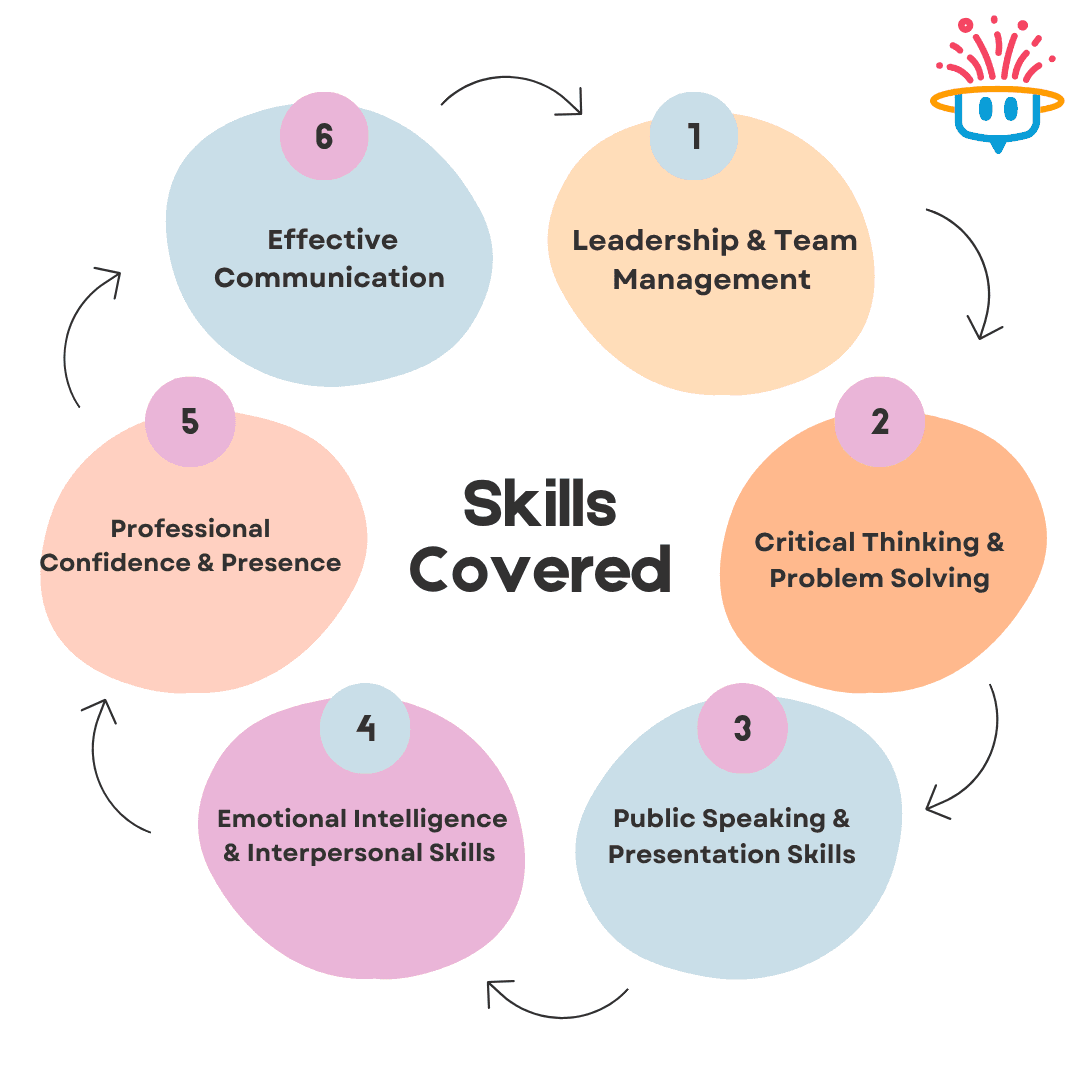
Live, Interactive Coaching Sessions Every session is conducted live with a certified expert trainer. This means real-time feedback on how you are expressing yourself, not a recorded video you watch and forget.
Personalised Feedback on Your Communication Style Trainers assess each learner's specific verbal habits and provide targeted coaching on what is actually limiting their self-expression. One-size-fits-all advice does not close individual skill gaps.
Real Scenario Practice Sessions include practice in scenarios that mirror actual situations you will face, from presentations and debates to professional introductions and impromptu questions. Expressing thoughts clearly under real-world conditions is what builds lasting confidence.
Structured Progression PlanetSpark's curriculum builds verbal expression skills progressively, from foundational clarity and vocabulary to advanced delivery, persuasion, and public speaking performance. Each stage builds on the last.
Consistent Accountability Real improvement in self-expression skills requires consistent practice and honest feedback over time. PlanetSpark builds both into every engagement so progress is visible, measurable, and sustained.
Who Should Build Verbal Expression Skills with PlanetSpark
This program is designed for anyone who wants to communicate more confidently and clearly. Specifically, it is ideal for:
- Students preparing for group discussions, debates, college interviews, and academic presentations who want to develop strong self-expression skills before they step into competitive environments.
- Working professionals who want to express themselves more clearly in meetings, client interactions, leadership discussions, and formal presentations.
- Individuals who have strong ideas but struggle to articulate them under pressure, in public settings, or even in everyday conversations.
- Anyone who has been told their communication needs improvement but has never had structured support to actually improve it.
If expressing your thoughts clearly and confidently is a priority for your career or academic growth, PlanetSpark's public speaking program gives you the coaching and practice environment to make it happen.
Start Building Verbal Expression Skills with PlanetSpark
Verbal expression skills are not a fixed trait. They are a learnable, trainable, and improvable set of abilities that directly impact how you are understood, how you are perceived, and how far your ideas actually travel.
Whether you are a student working toward your first major interview or a professional preparing for a high-stakes presentation, the path forward is the same: structured practice, expert coaching, and consistent feedback.
PlanetSpark's public speaking program is built to deliver exactly that.
Frequently Asked Questions
Verbal expression skills are the abilities that allow you to communicate your thoughts, ideas, and emotions through spoken words in a clear, organised, and confident way. They include vocabulary range, tone control, pacing, audience awareness, and the ability to structure and deliver ideas under pressure.
You can improve self-expression in communication by organising your thoughts before speaking, building vocabulary through reading, practising out loud, recording yourself to identify habits, and working with a trained coach who provides specific and actionable feedback. Consistent practice in real scenarios makes the biggest difference.
Expressing thoughts clearly means being able to translate what is in your mind into spoken words that are easy for others to understand, without unnecessary filler, rambling, or vagueness. It involves choosing the right words, structuring your ideas logically, and adjusting your delivery based on the listener and context.
Self-expression skills help students perform better in group discussions, interviews, debates, viva exams, and presentations. Students who can express their ideas clearly and confidently are more likely to stand out in academic and competitive settings, and they build the communication foundation that their professional careers will depend on.
Verbal expression skills directly strengthen public speaking by improving how clearly and confidently you deliver ideas, how well you structure your content, how effectively you control your tone and pace, and how well you can engage and hold the attention of an audience. Building verbal expression skills reduces stage fear and raises the overall quality of every speaking performance.
PlanetSpark provides live, expert-led public speaking coaching with personalised feedback on each learner's specific communication habits. The program includes real scenario practice, structured skill progression, and consistent accountability that helps both students and working professionals build verbal expression skills that last well beyond the classroom.