
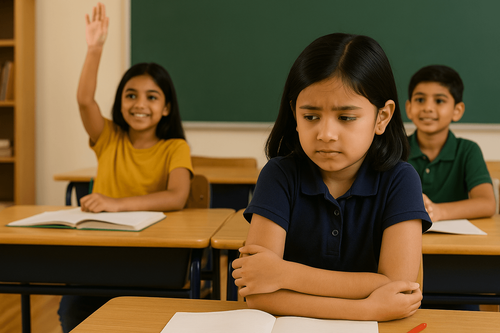

Speaking up is not a simple act for every child. The inability to speak up affects academic performance, social participation, and emotional development.
Understanding why children avoid speaking up is the first step in addressing the issue. Equally important is learning how to help a shy child socialize, communicate confidently, and express themselves freely in both structured and spontaneous situations.
Understanding Why Children Avoid Speaking Up
Many factors contribute to speaking reluctance. Children are not silent because they lack intelligence or understanding. Rather, they experience internal or external barriers that prevent them from expressing themselves comfortably.
Common reasons include:
Fear of being wrong
Overthinking responses
Social anxiety
Sensory overwhelm in group settings
Negative past experiences
Difficulty forming sentences under pressure
Perfectionism
Low self-confidence
Temperamental shyness
Highly observant personalities who prefer to listen rather than speak
Some children speak freely at home but freeze in classrooms or around peers. Others remain quieter in all environments. Understanding these patterns helps caregivers identify how to help a shy child socialize more effectively.
Emotional Factors Behind Speaking Hesitation
Children often avoid speaking because of emotional barriers. Fear, insecurity, or self-doubt can significantly affect their willingness to communicate.
Emotional blockers include:
Fear of judgment
Worry about classmates laughing
Feeling overwhelmed by attention
Past criticism
Highly sensitive temperament
Belief that others speak better
These emotions make speaking feel risky. For many children, silence becomes a coping mechanism rather than a choice.
When parents wonder how to encourage a shy child to speak up, the root often lies in understanding these emotional triggers rather than forcing participation.
Empower your child to open up without fear or hesitation.
Enroll in PlanetSpark’s Confidence and Communication Program today.
Social Dynamics That Limit Participation
Children respond strongly to social environments. When peer groups feel intimidating, exclusive, or highly competitive, shy children withdraw.
Social factors include:
Dominant or louder peers
Fear of interrupting
Worries about being unnoticed or ignored
Difficulty reading conversational cues
Introverted social wiring
Limited exposure to group conversations
Children may perceive speaking up as socially risky. In these cases, learning how to help a shy child socialize effectively becomes crucial for improving participation.
Cognitive and Developmental Factors Behind Silence
Some children hesitate because speaking requires complex cognitive skills: organizing thoughts, sequencing information, retrieving vocabulary, and responding in real time. When these processes are still developing, children may speak less.
Cognitive factors include:
Slow processing speed
Difficulty retrieving words quickly
Overthinking responses
Language delays
Difficulty summarizing thoughts
Children who feel mentally overloaded may stay silent to avoid mistakes. This is why learning how to help shy child gain confidence in thought organization and verbal clarity is essential.
Environmental Factors Shaping a Child’s Confidence
Environment plays a powerful role in communication. Some children need calm, predictable spaces to speak comfortably, while others thrive in lively, interactive settings.
Environmental factors that influence participation:
Noise levels
Class size
Teacher attitude
Family communication habits
Cultural expectations about speaking
Opportunities to practice
When environments are unpredictable or overstimulating, quiet children may withdraw further. Modifying surroundings can be an important part of learning how to help a shy child socialize.
Why Some Children Are Vocal at Home but Silent Outside
Many parents report that their child speaks confidently at home but becomes extremely quiet in classrooms or social situations. This is normal and rooted in familiarity.
Reasons include:
Comfort with family
Predictable home routines
Lack of performance pressure
Minimal fear of judgment
More patient conversational partners
Outside the home, children face unfamiliar expectations and must navigate complex social cues. This gap is a key area where parents look for how to encourage a shy child to speak up.
Help your shy child take the first brave step toward self-expression.
Book a free PlanetSpark demo class and watch their voice grow stronger.
The Role of Temperament in Shyness
Temperament is biologically rooted. Some children are naturally reserved, observant, and slow to warm up. These children often communicate deeply but cautiously.
Traits linked to shyness include:
High sensitivity
Strong observational skills
Preference for small groups
Cautious approach to new people
Thoughtful internal processing
Temperament is not a weakness. It simply means children need tailored strategies when considering how to help shy child gain confidence.
Long-Term Effects of Avoiding Speaking Up
When children consistently avoid speaking, it may impact:
Academic participation
Social relationships
Oral communication development
Decision-making skills
Leadership growth
Confidence in adulthood
The good news: with guidance and consistent practice, these patterns can change. Understanding how to help a shy child socialize early prevents long-term communication barriers.

Practical Strategies to Encourage Children to Speak Up
Once the root causes are identified, parents and teachers can begin implementing practical, evidence-based strategies to support reluctant speakers.
Highly effective methods include:
Creating predictable routines
Asking open-ended questions
Giving extra processing time before answers
Modelling confident communication
Normalizing mistakes
Encouraging turn-taking
Letting children rehearse responses quietly first
Providing choices instead of demands
These strategies reduce cognitive and emotional pressure, making speaking feel more manageable.
How to Help a Shy Child Socialize in Real-Life Settings
The primary keyword how to help a shy child socialize applies directly here.
Parents can support social comfort by:
Arranging small, calm playdates
Encouraging shared activities rather than forced conversations
Preparing children for social situations beforehand
Teaching simple conversational openers
Practicing introductions at home
Joining interest-based classes
Allowing gentle observation before participation
Socializing does not mean becoming extroverted. It means developing comfort in interacting with others, at one’s own pace.
Don’t let shyness hold your child back from sharing great ideas.
Join PlanetSpark’s expert-led communication sessions for early learners.
How to Encourage a Shy Child to Speak Up in Groups
For group environments like classrooms, clubs, or family gatherings, effective strategies include:
Structured speaking roles
Partner-based activities
Sentence starters
Predictable question patterns
Visual aids
Preparation time before speaking
Opportunities to share opinions in writing first
Children speak more confidently when they understand expectations clearly. These methods align with how to encourage a shy child to speak up in group settings.
Best Activities for a Shy Child to Build Expression
Hands-on activities are extremely helpful for quiet children. The keyword best activities for a shy child fits naturally here.
Recommended activities include:
Story sequencing
Puppet shows
Role-playing
Picture-based storytelling
Mirror speaking exercises
Small group drama tasks
Turn-taking card games
Emotion-based storytelling
These activities help shy children practice expression without pressure, gradually improving fluency and confidence.

How to Help Shy Child Gain Confidence Over Time
Confidence grows gradually when children feel safe, supported, and understood. Using the keyword how to help shy child gain confidence, parents can focus on manageable steps.
Methods include:
Praising effort instead of performance
Avoiding correction during speaking
Teaching positive self-talk
Modelling confident behavior
Encouraging small leadership moments
Allowing silence without rushing the child
Building pride in small achievements
Confidence is the foundation for speaking comfort. When confidence grows, expression follows naturally.
How PlanetSpark Helps Children Speak Up with Confidence
PlanetSpark uses a research-backed communication development approach that helps children speak clearly, confidently, and fearlessly.
One-to-One Mentorship
Children receive personalized support tailored to their temperament and speaking patterns.
Structured Speaking Frameworks
Students learn clear methods for expressing ideas, sequencing thoughts, and speaking without fear.
Confidence-Building Games
Interactive activities reduce hesitation and make verbal expression enjoyable.
Storytelling and Role-Play
Children practice real-world speaking situations in a safe environment.
Guided Social Communication Practice
Sessions help students learn how to help a shy child socialize through structured interaction.
Continuous Feedback
Coaches help children improve tone, clarity, and thought organization.
Over To You
A child’s reluctance to speak is never a sign of weakness. It is a sign that they need a safer space, gentler encouragement, and structured opportunities to find their voice. By understanding why children stay quiet and learning how to help a shy child socialize through thoughtful routines, expressive activities, and supportive communication habits, parents can spark meaningful change. Every small moment of encouragement strengthens self-belief.
Every successful interaction builds confidence. Over time, even the quietest children learn to express themselves, participate actively, and communicate with clarity and pride. With the right environment, guidance, and consistent practice, every child can discover that their voice has value and deserves to be heard.