
Why Every Child Should Start Learning Public Speaking
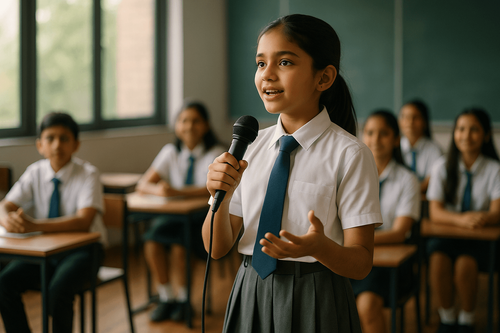

Table of Contents
- Why Every Child Should Learn Public Speaking
- What Is Public Speaking?
- Why Should Kids Learn Public Speaking?
- Why Public Speaking Is Important for Students
- How Public Speaking Helps in Daily Life
- Why Parents Should Encourage Public Speaking
- Why Public Speaking Is Important in Today’s World
- What Happens When Kids Avoid Public Speaking
- How Public Speaking Improves Emotional Intelligence
- Fun Activity: “Mirror Speaking Game”
- Checkpoints for Confident Speaking
- The Role of Schools in Teaching Public Speaking
- Why Public Speaking Builds Leadership Skills
- How Public Speaking Improves Social Skills and Teamwork
- How Public Speaking Builds Emotional Strength
- Fun Activit “Speak with a Smile”
- How Public Speaking Encourages Empathy
- Quick Reflection Time
- How Creativity Grows Through Public Speaking
- Building Problem-Solving Skills Through Speaking
- Fun Activity “Think and Speak Challenge”
- The Long-Term Benefit of Thinking Like a Leader
- How Public Speaking Improves Listening
- Table: Public Speaking vs Shyness
- How Teachers Can Help Students Learn Public Speaking
- Fun Act: “The Confidence Circle”
- Why Public Speaking Matters for Future Careers
- Tips for Parents and Children to Practice at Home
- Common Mistakes in Public Speaking
- Fun Table “Do’s and Don’ts of Public Speaking”
- Conclusion
- About PlanetSpark : Public Speaking
Have you ever felt your heart race or your voice shake when you had to speak in front of your class? Don’t worry almost every child feels that way at first. The good news is that public speaking isn’t just for adults or leaders; it’s a skill every child can learn, and it can completely transform their confidence. In this blog, you’ll discover why public speaking is so important for kids, how it helps in school and everyday life, and simple activities they can try at home or in the classroom to build confidence step by step.
At PlanetSpark, we help children overcome fear, speak clearly, and express themselves confidently through fun, personalised, and interactive communication classes. Let’s get started!
Why Every Child Should Learn Public Speaking
Public speaking is one of the most important skills every child can learn. It helps children express their ideas clearly, build confidence, and overcome shyness. When children speak in front of others, they learn to organize thoughts, listen better, and respect different opinions. Public speaking also improves creativity, leadership, and problem solving abilities. It prepares children for school presentations, interviews, and future careers. Most importantly, it teaches them to believe in themselves and communicate with kindness and clarity. Learning to speak confidently today helps children grow into strong, thoughtful, and successful adults tomorrow.
Give Your Child the Power to Communicate Clearly, Join a Free Class
What Is Public Speaking?
Public speaking means expressing your thoughts clearly and confidently in front of a group of people. It can be as small as sharing your weekend story in class or as big as speaking on stage in a competition.
It’s not about being perfect it’s about sharing your ideas with confidence and connecting with others through words, tone, and expression.
Simple Example
Imagine you’re telling your classmates about your favorite book. If you make eye contact, speak clearly, and share your excitement, you’re already doing public speaking!
Why Should Kids Learn Public Speaking?
Public speaking helps children in many ways not just in school but in every part of life. Here’s why it’s such an important skill:
| Benefit | How It Helps |
|---|---|
| Builds Confidence | Children learn to express their ideas without fear. |
| Improves Communication | They learn how to speak clearly and listen to others. |
| Boosts Leadership | Great leaders are always great speakers. |
| Enhances Academic Success | Speaking in class improves thinking and learning skills. |
| Develops Empathy | It helps kids understand how words impact others. |
Why Public Speaking Is Important for Students
Public speaking teaches children how to organize thoughts, express emotions, and connect with others. These skills make learning easier and more fun.
When a student can express ideas confidently, they also become better at explaining lessons, answering questions, and even helping friends understand difficult topics.
Fun Fact
Did you know that even famous speakers like Mahatma Gandhi were once shy? They learned confidence through practice!
How Public Speaking Helps in Daily Life
Public speaking isn’t only for speeches and debates. It helps children every single day in small ways too.
Asking questions in class
Talking to new friends
Sharing ideas in a group
Participating in storytelling or drama
Expressing opinions at home
When children learn to speak up, they feel heard and valued. It builds a strong sense of self-belief.
Read more and discover how kids master clarity, pronunciation, and confident speaking with PlanetSpark
Why Parents Should Encourage Public Speaking
Parents play a big role in helping children become confident speakers. You don’t need to be a teacher just a good listener!
Here’s how parents can help:
Listen patiently when your child speaks.
Encourage them to share daily stories.
Avoid interrupting or correcting too quickly.
Praise their efforts, not just their performance.
Parent Tip Table
| Action | Why It Helps |
|---|---|
| Listening Attentively | Builds your child’s confidence to speak more. |
| Asking Open Questions | Encourages creative thinking and expression. |
| Praising Small Wins | Motivates your child to keep improving. |
| Practicing Together | Makes learning fun and stress-free. |
Why Public Speaking Is Important in Today’s World
In today’s world, communication is everything. Whether it’s online classes, group projects, or future careers, speaking skills are needed everywhere.
Children who can express themselves well are better at teamwork, problem-solving, and leadership. Good speakers are also good thinkers they know how to share ideas and listen to others respectfully.
Example
A student who can present ideas clearly during school projects is more likely to stand out, lead a team, and score higher.
What Happens When Kids Avoid Public Speaking
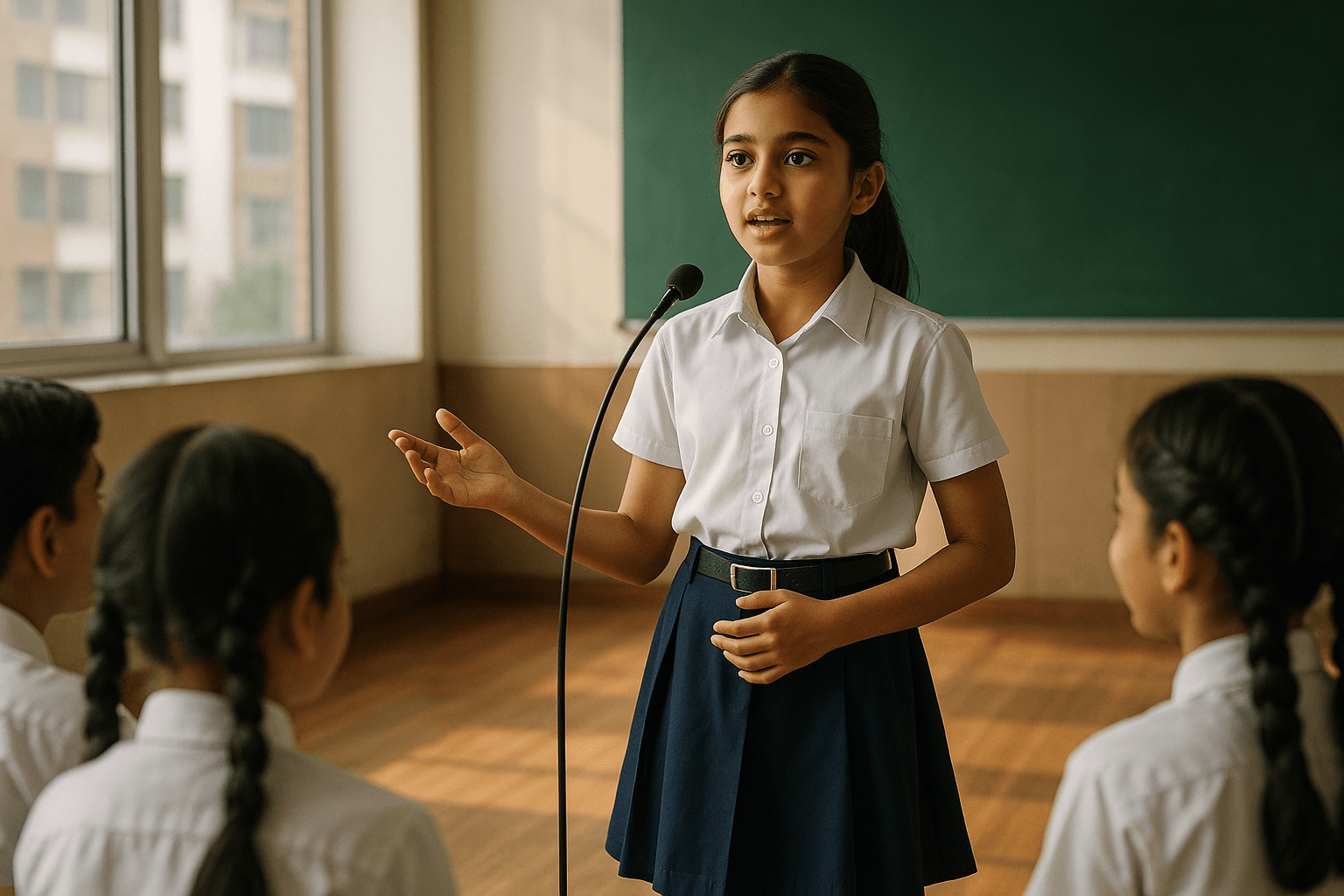
Children who don’t practice speaking early often face challenges later.
They may struggle with stage fear, low confidence, or even anxiety during interviews or group activities.
Practicing from a young age makes communication natural and easy.
How Public Speaking Improves Emotional Intelligence
Public speaking is not just about words it’s also about emotions. Children learn how to understand feelings, handle nervousness, and connect with others emotionally.
| Emotional Skill | How Public Speaking Builds It |
|---|---|
| Self-awareness | Helps children recognize their emotions. |
| Empathy | Encourages understanding of audience feelings. |
| Self-control | Teaches calmness under pressure. |
| Motivation | Inspires self-improvement and confidence. |
Fun Activity: “Mirror Speaking Game”
Stand in front of a mirror.
Choose a simple topic like “My favorite animal.”
Speak for one minute while watching your expressions.
Try smiling, standing tall, and speaking clearly.
Reflect: What did you like about your voice or expression?
This simple activity builds awareness and confidence.
Checkpoints for Confident Speaking
Speak slowly and clearly.
Make eye contact with your listeners.
Use hand gestures naturally.
Smile when you speak.
Practice regularly, even for small moments.
These checkpoints make a huge difference in confidence.
Start the Journey to Confident Speaking ,Book a Free Demo Class
The Role of Schools in Teaching Public Speaking
Schools are great places to practice public speaking. Teachers can create small opportunities for children to speak such as morning assemblies, storytelling sessions, or group discussions.
When schools encourage open communication, students learn teamwork, creativity, and confidence.
Why Public Speaking Builds Leadership Skills
Leaders need to inspire, motivate, and guide others all of which require strong speaking skills.
Children who start speaking early are better at leading school projects, expressing ideas, and helping others.
Public speaking also teaches responsibility and respect for others’ opinions.
The Connection Between Speaking and Thinking
Speaking helps children process what they learn. When they explain something aloud, their brain organizes information better. For example, if a student explains how plants grow in front of the class, they are not just memorizing; they are understanding and communicating knowledge.
Public speaking also improves focus and memory. When children speak in front of others, they pay more attention to details and learn how to recall important points in the right order.
How Public Speaking Improves Social Skills and Teamwork
Public speaking is not just about talking; it’s also about connecting with others.
When children learn to express themselves clearly, they become better listeners, friends, and teammates. Speaking in front of a group helps them understand how people react, what captures attention, and how to share ideas respectfully.
In school, children often work on group projects, class presentations, or story-telling sessions. Public speaking teaches them how to listen when others speak, wait for their turn, and add valuable thoughts to group discussions. This builds teamwork, patience, and mutual respect.
Communication That Builds Friendships
When children can express their feelings confidently, they find it easier to make friends.
A child who says, “Can I play with you?” or “I like your idea!” is practicing small forms of public speaking every day. Over time, these little moments make them socially confident and emotionally stronger.
Here’s a quick comparison:
| Situation | Without Public Speaking Skills | With Public Speaking Skills |
|---|---|---|
| Joining a group activity | Feels shy and quiet | Joins with excitement and ideas |
| Sharing opinions in class | Stays silent | Expresses views politely |
| Making new friends | Avoids talking | Starts friendly conversations |
Children who learn public speaking early feel more comfortable around new people and are able to solve misunderstandings using kind and clear words.
How Public Speaking Builds Emotional Strength
Public speaking also helps children understand and manage their emotions.
At first, speaking in front of others can make anyone nervous. But each time they practice, children learn how to stay calm and brave. They realize that mistakes are okay and that everyone can improve with time.
At PlanetSpark, trainers often encourage children to take small steps like sharing a one-minute story or talking about their favorite hobby. This helps them slowly build emotional balance and self-control. When a child says, “I was scared, but I did it anyway,” they are already showing emotional intelligence the power to understand and manage feelings.
Handling Stage Fright the Smart Way
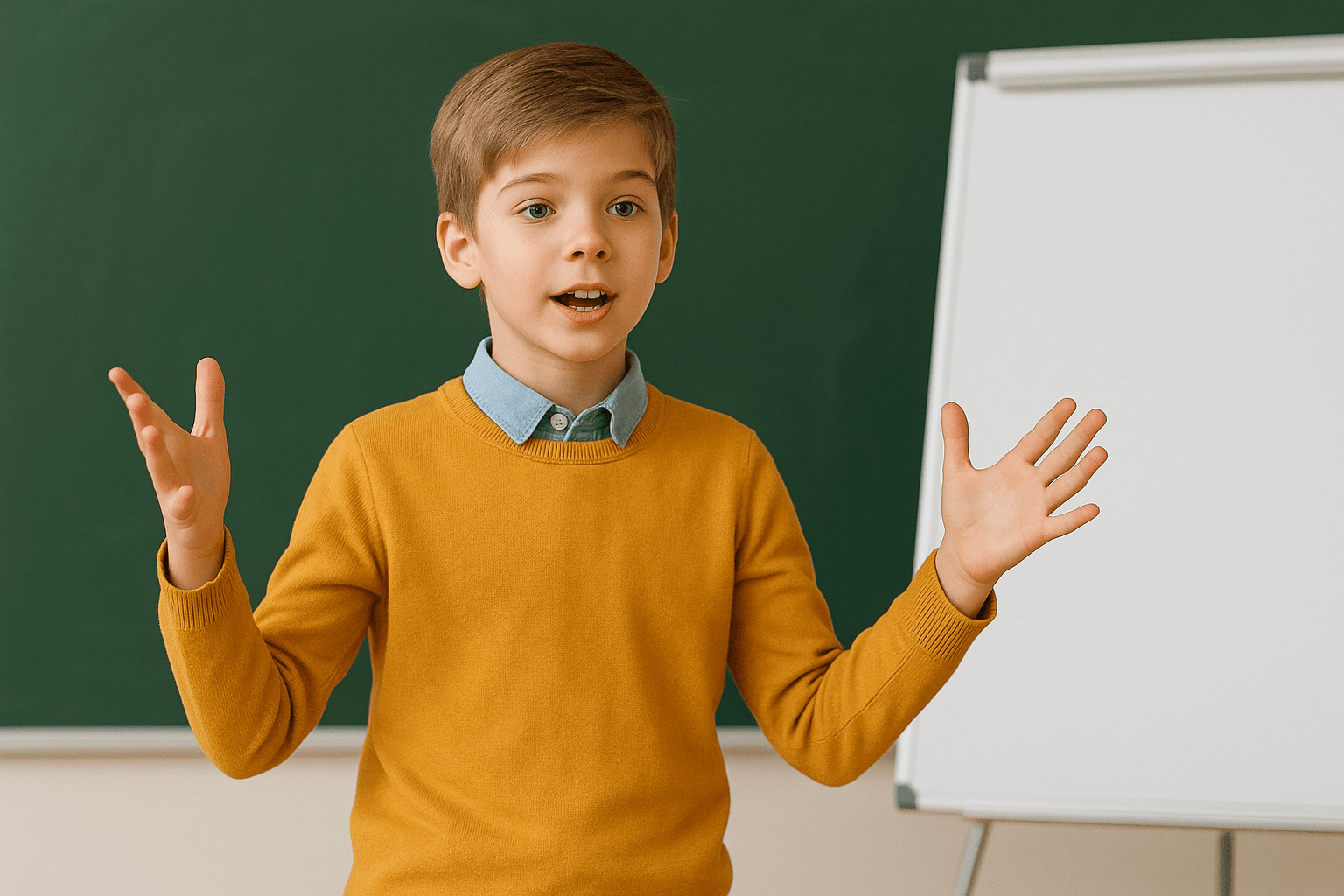
Here are some simple tips for children to beat stage fright before speaking:
Take a deep breath before you begin.
Practice your speech in front of a mirror.
Imagine the audience smiling and listening carefully.
Start with a topic you really love.
End with a smile even if you forget a line!
Parents can help by listening patiently and cheering for small efforts instead of just results. This builds trust and makes children more open to learning.
Fun Activit “Speak with a Smile”
You can try this at home or in class!
Each student or family member picks a random topic like “My Favorite Animal” or “A Day at the Beach.”
They speak for 60 seconds but they must smile throughout their talk!
Others listen carefully and share one good thing about the speaker’s talk afterward.
This simple activity teaches children two key skills speaking with confidence and using positive body language. Smiling naturally helps reduce nervousness and makes the speaker sound friendly.
How Public Speaking Encourages Empathy
Public speaking also teaches empathy the ability to understand other people’s feelings.
When students prepare speeches, they often think about their audience “What will make them happy?”, “What story can they relate to?”, “How can I make them laugh or think?”
This habit of considering others’ emotions turns children into caring, understanding communicators.
Empathy is an essential life skill that helps children in friendships, teamwork, and leadership later in life.
Quick Reflection Time
Parents and teachers can use these checkpoint questions after any speech activity:
How did you feel before and after speaking?
What was easy and what was hard?
Did your words make someone smile or think?
What will you try differently next time?
These questions build awareness and reflection turning each speaking moment into a small step of emotional and social growth.
How Creativity Grows Through Public Speaking
Creativity is about seeing the world in new and different ways. Public speaking gives children the freedom to express their imagination.
When they make up stories, use examples, or add humor to a speech, they are practicing creativity in action.
At PlanetSpark, teachers often encourage children to use creative speech formats like:
Storytelling with a message (example: “The Lion Who Learned to Share”)
Mini drama skits with expressive dialogues
Persuasive talks on topics like “Why kindness matters”
Speech building games where children create stories from random words
Each of these activities helps children think on their feet and find unique ways to share ideas.
Building Problem-Solving Skills Through Speaking
When children learn to speak publicly, they also become better problem solvers.
If something goes wrong like forgetting a line or facing a tough question they learn to stay calm and handle the situation. This teaches adaptability and presence of mind.
Problem-solving also happens when children prepare speeches. They think about what their audience might ask and how to answer it clearly.
Over time, this builds confidence to handle real-life situations from school discussions to future job interviews.
| Skill | How Public Speaking Develops It |
|---|---|
| Critical Thinking | Organizing thoughts and making logical points |
| Creativity | Using imagination to make ideas interesting |
| Problem Solving | Handling unexpected situations during speech |
| Adaptability | Adjusting tone and words for different audiences |
Fun Activity “Think and Speak Challenge”
Try this quick family or classroom activity:
Write random words like “tree,” “school,” “robot,” and “rain” on small papers.
Pick any three words.
Create a one-minute story that includes all three words.
Speak it aloud confidently to your friends or family.
This game encourages imagination, thinking speed, and creativity all important parts of strong communication.
The Long-Term Benefit of Thinking Like a Leader
When children learn to think creatively and speak confidently, they start thinking like leaders. They learn how to inspire others, explain ideas clearly, and motivate their friends.
Strong speakers often become strong thinkers and strong thinkers become problem solvers, inventors, and leaders in the future.
That’s the true power of public speaking it shapes not just how a child speaks, but also how they think, feel, and lead.
How Public Speaking Improves Listening
Good speakers are good listeners. When children listen carefully, they understand how others speak, use tone, and express ideas.
Listening also helps them respond thoughtfully instead of reacting quickly.
Table: Public Speaking vs Shyness
| Situation | Without Public Speaking Practice | With Public Speaking Practice |
|---|---|---|
| Speaking in front of class | Feels nervous | Feels prepared and calm |
| Sharing ideas in group | Hesitates | Shares openly |
| Taking part in events | Avoids participation | Excited to take part |
| Confidence level | Low | High |
How Teachers Can Help Students Learn Public Speaking
Teachers can use small activities to build speaking confidence in children:
Storytelling Fridays – Each child tells a short story.
Word of the Day – Students describe a new word every morning.
Mini Speeches – 1 minute talks on daily topics.
Debate Day – Children discuss fun and age-appropriate topics.
Compliment Circle – Students give one positive comment to another.
These activities help children speak naturally and happily.
Fun Act: “The Confidence Circle”
Gather a small group of children.
Each child shares one positive quality about themselves.
Others clap and say, “Well done!”
This game builds self-esteem and encourages public expression.
Why Public Speaking Matters for Future Careers
In the future, every job requires communication whether you’re a teacher, doctor, scientist, or business leader.
Public speaking builds skills that are needed in teamwork, leadership, and customer interaction.
It also improves writing, vocabulary, and thinking all essential for success.
Tips for Parents and Children to Practice at Home
| Practice Idea | Description |
|---|---|
| Family News Time | Each evening, let one family member share their day. |
| Reading Aloud | Improves pronunciation and confidence. |
| Story Building | Make up stories together to build creativity. |
| Recording Practice | Record short speeches and listen to them. |
These small steps make speaking practice fun and natural.
Common Mistakes in Public Speaking
Speaking too fast
Avoiding eye contact
Forgetting to smile
Not preparing the topic
Using too many filler words (“um,” “like,” etc.)
Children can overcome these mistakes with regular practice and encouragement.
Book a Free Demo Class and Experience the PlanetSpark Difference
Fun Table “Do’s and Don’ts of Public Speaking”
| Do’s | Don’ts |
|---|---|
| Stand straight | Cross arms |
| Smile naturally | Frown or look down |
| Practice regularly | Speak without preparation |
| Use examples | Speak only in theory |
Conclusion
Public speaking helps children become more confident, clear, and comfortable when expressing their thoughts. It improves communication, builds self-belief, and prepares them for school, stage, and real-life situations.
With PlanetSpark’s fun and personalised classes, kids learn to speak confidently at their own pace. When children start early, public speaking becomes easy — and it opens the door to a brighter, more confident future.
About PlanetSpark : Public Speaking
PlanetSpark helps children become confident, articulate, and expressive communicators through fun, personalised, and tech-enabled 1:1 live classes. Our Public Speaking Program builds strong speaking, listening, and presentation abilities empowering kids to express ideas clearly, think creatively, and lead with confidence in school and beyond.
1. 1:1 Expert Communication Coaching
Each child learns with a certified communication coach who personalises every session to their learning style and pace ensuring focused attention and faster growth in confidence and clarity.
2. Personalised Communication Roadmap
Based on detailed assessments, every learner follows a customised plan designed to strengthen vocabulary, articulation, storytelling, and interpersonal communication step by step.
3. AI-Powered Feedback & Progress Tracking
With tools like SparkX and AI-driven speech analysis, children receive real-time feedback on clarity, tone, and body language transforming every practice session into measurable progress.
4. Interactive & Gamified Learning
Engaging activities like Talk Tournaments, Word Challenges, and Story Quests make communication practice exciting, helping kids build confidence through fun and repetition.
5. Confidence Beyond the Classroom
From debates to interviews and everyday conversations, PlanetSpark trains children to speak with poise, empathy, and impact preparing them for success in every sphere of life.
Frequently Asked Questions
Because it builds confidence, communication, and leadership skills from a young age.
Start with small talks at home, encourage, and never criticize mistakes.
Play storytelling games, record videos, or perform short skits together.
No, it’s useful in every part of life school, home, and friendships.
Kids can practise public speaking through storytelling games, daily “show and tell,” tongue-twister challenges, recording short videos, reading aloud with expression, or performing mini skits and roleplays at home. Even simple activities like narrating their day or explaining how a toy works help build confidence naturally.