
Adapting Communication Styles for Different Work Audiences
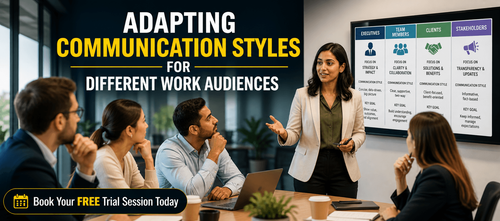

Adapt Communication Based on Audience Type: A Practical Guide for Professionals to Communicate with Clarity, Precision, and Impact
Every day, professionals send emails, present ideas, write reports, and participate in meetings. Yet, despite having the right information, many of these communications fail to achieve their purpose. Why? Because they are not adapted to the audience.
A technical deep dive sent to a business stakeholder, a casual message sent to a senior executive, or a vague update shared with a team can all lead to confusion, delays, and lost credibility. The problem is not what you say—it is how, where, and to whom you say it.
This guidebook solves that problem with a structured, scenario-based approach to communication. Instead of relying on theory, it provides ready-to-use templates designed for specific professional situations—from executive briefings to peer collaboration, client updates to feedback conversations. Each template ensures your message aligns with the expectations, priorities, and communication style of your audience, helping you drive better decisions and stronger professional relationships.
Download these resources and apply them alongside your daily work for improved clarity, productivity, and professional growth. You can also book a free trial to gain expert guidance and enhance your communication, problem-solving, and decision-making skills. The materials are designed in a clear, structured format to help professionals learn efficiently and implement insights with confidence.
Who Is This Blog For?
- Working professionals aiming to improve workplace communication
- Managers and team leaders handling cross-functional communication
- Job seekers preparing for interviews and professional follow-ups
- Freelancers managing client relationships and expectations
- Consultants and professionals presenting ideas to stakeholders
- Individuals transitioning between technical and business roles
Why This Topic Matters Today?
Modern workplaces are more complex than ever. Teams are cross-functional, geographically distributed, and culturally diverse. In this environment, communication is no longer just a soft skill—it is a strategic advantage.
One of the biggest reasons communication fails is the lack of audience adaptation. Professionals often:
- Use the same communication format for everyone
- Overload audiences with irrelevant information
- Fail to adjust tone based on seniority or context
- Bury key decisions or action items
These mistakes lead to delayed decisions, reduced trust, and missed opportunities. As highlighted in the guidebook, communication mismatches can directly impact credibility and outcomes, especially in high-stakes scenarios.
Core Concept or Framework Explained
The Audience Calibration Framework
At the heart of effective communication is understanding your audience. The guide introduces a powerful framework based on four variables:
- Audience seniority
- Technical depth
- Relationship distance
- Communication stakes
These variables determine how your message should be structured, how detailed it should be, and what tone it should carry.
For example:
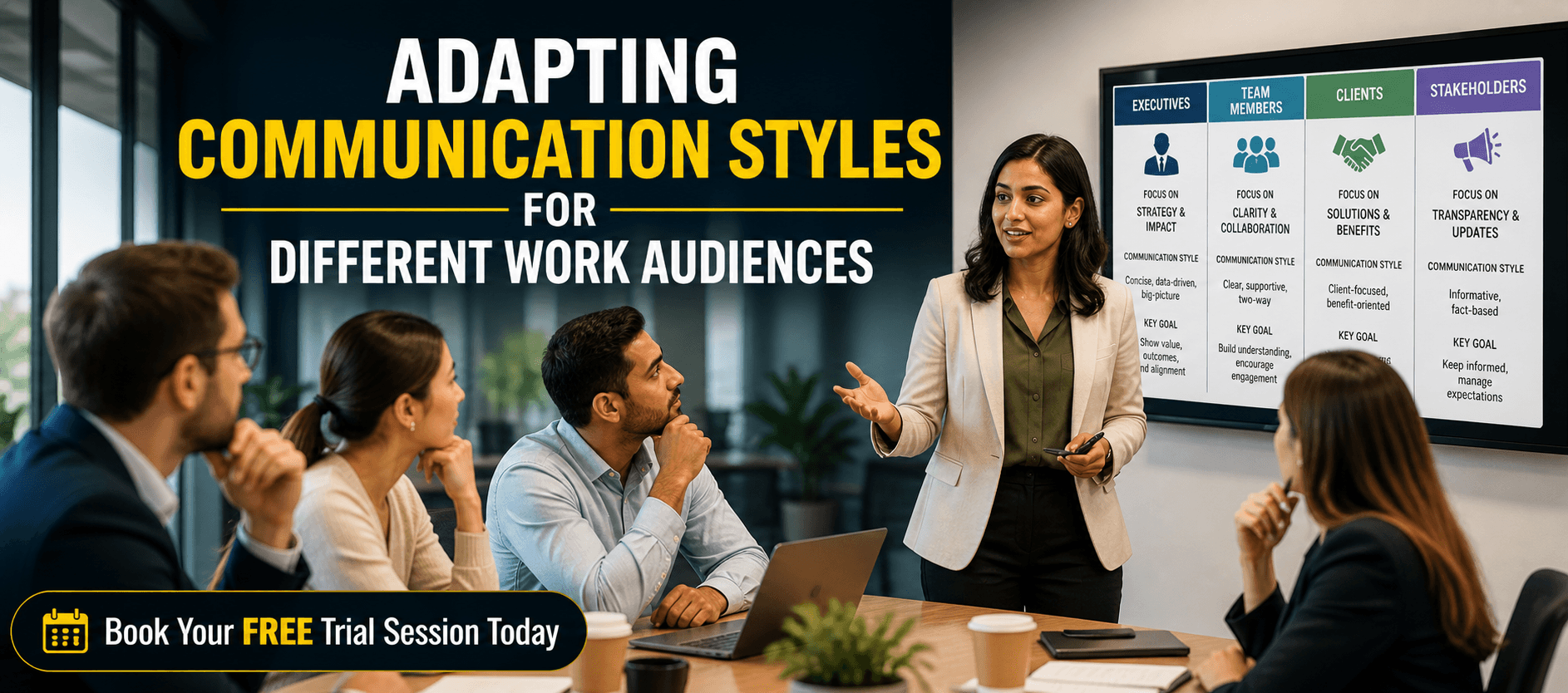
- Executives prefer concise, outcome-first communication
- Technical teams expect detailed, precise explanations
- General teams need clarity and actionable instructions
- Stakeholders require business impact and risk insights
This framework ensures that your message is not just clear—but relevant and actionable.
How This Blog and Guidebook Help You?
This blog translates the guidebook into practical insights you can apply immediately. By using these templates and frameworks, you can:
- Communicate with clarity across different audiences
- Increase decision-making speed and effectiveness
- Build credibility with senior leaders and clients
- Reduce misunderstandings and communication breakdowns
- Present ideas with confidence and structure
Ultimately, it helps you move from simply sharing information to driving outcomes.
Step-by-Step Breakdown
1. Executive Communication: Lead with the Bottom Line
When communicating with senior leadership, time is limited and decisions are critical.
Use an outcome-first structure:
- Start with the key recommendation
- Provide minimal context
- Highlight key data points
- Clearly state the required decision
Executives care about results, risks, and impact—not process details.
2. Translating Technical Information for Non-Technical Audiences
Technical knowledge is valuable only when it is understood.
To communicate effectively:
- Use plain language instead of jargon
- Focus on business impact
- Explain what changes for the audience
- Highlight risks and benefits clearly
Every technical point should answer: “What does this mean for me?”
3. Client Communication: Build Confidence and Clarity
Clients want reassurance, not complexity.
A strong client update includes:
- What has been achieved
- What comes next
- Any risks or concerns
- Required client inputs
Keep it concise, clear, and outcome-focused to maintain trust.
4. Peer Collaboration: Focus on Mutual Benefit
Peers are not obligated to help—you must persuade them.
Effective peer communication includes:
- Clear explanation of your project
- Specific request for support
- Explanation of mutual benefit
- Easy next steps
Clarity and reciprocity drive collaboration—not authority.
5. Change Communication: Address Resistance Proactively
Change often creates uncertainty.
Communicate change by:
- Clearly stating what is changing
- Explaining why it is happening
- Outlining the impact on individuals
- Providing support and next steps
Honesty and empathy are critical in maintaining trust.
6. Managing Up: Keep It Structured and Concise
Managers need clarity, not detail overload.
Your updates should include:
- Current status
- Completed work
- Ongoing tasks
- Blockers and support needed
- Next priorities
This ensures alignment and faster decision-making.
7. Freelance Client Onboarding: Set Expectations Early
Miscommunication is the biggest risk in freelance work.
Avoid this by:
- Defining scope clearly
- Setting communication expectations
- Establishing feedback timelines
- Clarifying approval processes
Strong onboarding prevents future conflicts.
8. Job Seeker Communication: Be Specific and Professional
Follow-up communication can influence hiring decisions.
Effective emails:
- Reference specific conversation points
- Reinforce your fit for the role
- Maintain a professional tone
- Avoid generic messaging
Specificity makes you memorable.
9. Cross-Cultural Communication: Make the Implicit Explicit
Global teams require clarity.
Define:
- Working hours
- Communication channels
- Response expectations
- Feedback norms
Avoid assumptions—clarity prevents misunderstandings.
10. Delivering Feedback: Use the SBI Framework
Constructive feedback requires structure.
Follow:
- Situation: When and where it happened
- Behaviour: What was observed
- Impact: Effect on team or outcomes
- Future: What should change
This ensures feedback is clear, fair, and actionable.
Common Mistakes or Pitfalls to Avoid
- Using the same communication style for all audiences
- Burying the main message or decision
- Over-explaining to experts or under-explaining to non-experts
- Using vague or overly corporate language
- Choosing the wrong communication channel
- Forgetting to include a clear call to action
- Misjudging tone based on audience seniority
These mistakes often lead to confusion, delays, and reduced effectiveness.
How Should You Use This Guidebook Effectively?
To get the most value from this guide:
- Identify your audience before drafting any communication
- Select the relevant template for your scenario
- Fill in placeholders with clear, specific content
- Adjust tone based on audience expectations
- Review and refine before sending
For best results:
- Build a personal library of templates
- Annotate what works and what doesn’t
- Share templates within your team for consistency
- Update templates periodically to match evolving communication norms
Key Takeaways
- Communication success depends on audience adaptation
- Different audiences require different structures, tones, and formats
- The Audience Calibration Framework helps you align your message effectively
- Templates simplify complex communication scenarios
- Clear, concise, and structured communication drives better outcomes
- Avoid common pitfalls like tone mismatch and unclear asks
- Consistency and practice turn communication into a professional advantage
Your Next Step: Accelerate Your Career with PlanetSpark
Creating an impact-driven resume is not just about landing your next job—it’s about owning your professional story and presenting it with clarity, confidence, and credibility. When your resume clearly communicates value, results, and impact, opportunities follow naturally.
At PlanetSpark, we are committed to empowering working professionals with practical, outcome-focused resources that drive real career growth. From resume building and workplace communication to leadership presence and professional writing, our programs are designed to help you succeed in today’s fast-evolving job market.
Visit https://www.planetspark.in/resources to explore:
- Career and resume-building guides
- Workplace communication and professional writing resources
- Skill-development tools curated for working professionals
Want a deeper, hands-on experience?
You can also book a free trial session to learn more about PlanetSpark’s Working Professional Courses, designed to accelerate your career through personalised coaching, real-world practice, and expert guidance.
Your career deserves more than generic advice.
It deserves clarity, confidence, and measurable impact.
Personalized Communication Roadmaps
Record a video to get a AI generated personalized communication reports