
Adapting to Rapid Changes in AI Tools and Platforms
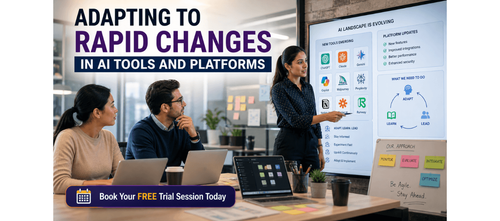

Maximize Your AI Resilience: How to Thrive in Rapidly Changing Tool Ecosystems
The pace of AI change is relentless. New tools, platforms, and capabilities emerge every few weeks, leaving professionals scrambling to stay updated and relevant. In this environment, success doesn’t come from mastering a single tool; it comes from building the resilience to quickly adapt, evaluate new tools, and integrate them into your workflow with confidence.
This toolkit will show you how to build that AI resilience, ensuring that you remain future-ready, capable, and equipped to navigate the rapidly evolving AI ecosystem.
Download these resources and apply them alongside your daily work for improved clarity, productivity, and professional growth. You can also book a free trial to gain expert guidance and enhance your communication, problem-solving, and decision-making skills. The materials are designed in a clear, structured format to help professionals learn efficiently and implement insights with confidence.
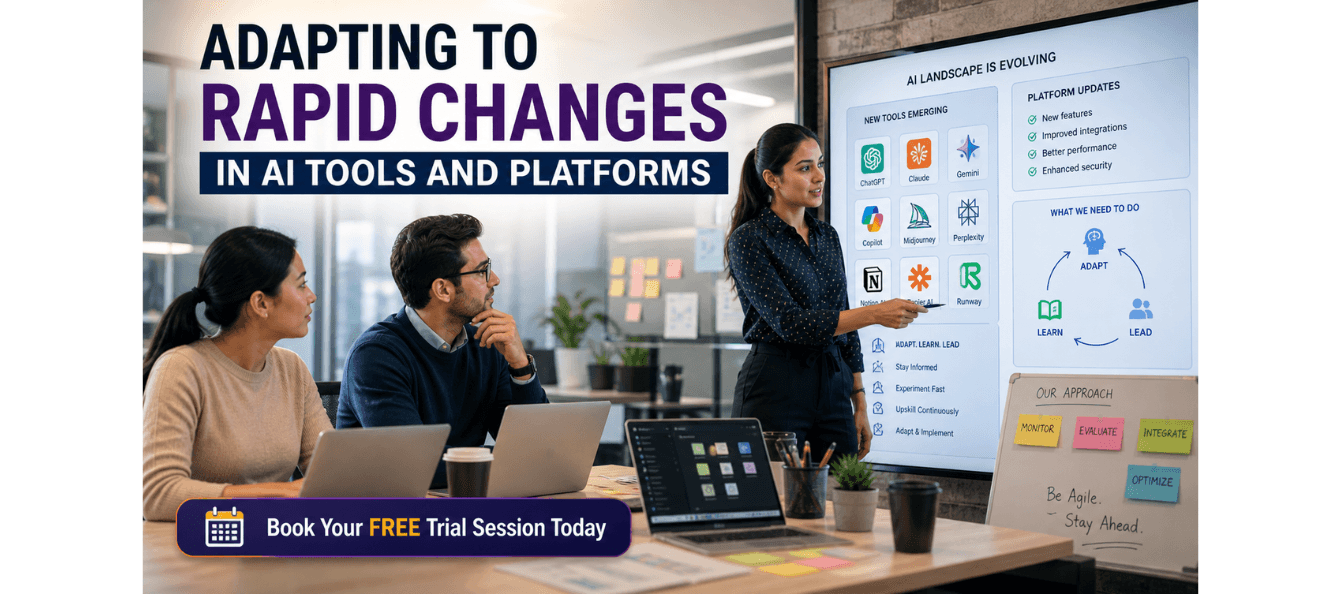
Who Is This Blog For?
- Career switchers looking to stay relevant in the AI space
- Managers leading teams through digital transformation
- Consultants advising clients on AI adoption
- Professionals overwhelmed by the fast pace of AI change
Why This Topic Matters Today?
The AI landscape is not just evolving; it is accelerating. Every few weeks, a new tool or platform appears, and while it’s tempting to try every new tool, the key to thriving in this environment is not about knowing every tool—it’s about having the mental frameworks and habits to evaluate and integrate new tools effectively.
AI resilience isn’t just a nice-to-have skill—it’s essential for professionals who want to remain competitive in today’s fast-paced, technology-driven world. Building resilience means having the ability to adapt to change without feeling overwhelmed, knowing which tools to prioritize, and understanding how to leverage them for maximum impact.
Core Concept or Framework Explained
Building AI resilience is a multi-step process, and this toolkit is structured around three levels of mastery:
1. Watch – Emerging, unproven tools that you monitor from a distance.
2. Trial – Tools gaining traction, for which you allocate time to test.
3. Adopt – Tools that show clear ROI and become integrated into your workflow.
Each level represents a stage of mastery as you learn, unlearn, and relearn with AI tools. These stages are designed to be adaptable, so you can start wherever you are and build from there.
How This Blog and Guidebook Help You?
This blog, combined with the toolkit, will provide you with the frameworks and practical strategies to:
- Overcome tool overwhelm and decision fatigue
- Build confidence in AI conversations
- Develop a system for evaluating, testing, and adopting AI tools
- Integrate new AI tools into your workflow without losing momentum
With these resources, you’ll have a repeatable system for staying ahead of the curve in the ever-changing AI ecosystem.
Step-by-Step Breakdown
**Step 1: Awareness – Reading the AI Landscape**
To build resilience, the first step is to filter out the noise and focus on what truly matters. Dedicate just 20 minutes a week to scanning trusted sources for new tools that are gaining traction in your industry. Create a list that categorizes tools into:
- Watch: Emerging, unproven tools.
- Trial: Tools gaining adoption.
- Adopt: Tools with clear ROI and widespread use.
The goal is not to know every tool but to know which ones are worth your attention and why.
Step 2: Application – Your Tool Evaluation System
Once you’ve identified tools to explore, the next step is trialing them in your real-world tasks. A structured 30-minute trial with each tool will help you evaluate whether it saves time, improves quality, and is client-ready. After every trial, use the "Tool Trial Worksheet" to record your results and make an informed decision about whether to adopt, defer, or discard the tool.
Step 3: Mastery – Leading AI Adoption in Your Organization
At the mastery level, you are not just adopting tools for yourself; you are shaping how your organization approaches AI. As a leader in AI adoption, your role is to guide your team, document your trial results, and share your knowledge with colleagues. Organize regular "AI Tool Share" sessions and create a shared Watch/Trial/Adopt list for your team. Your influence will help create a culture of psychological safety for experimentation and innovation.
Common Mistakes or Pitfalls to Avoid
1. Tool FOMO – Chasing every new tool without a system.
Fix: Use the Watch/Trial/Adopt system to triage tools before diving in.
2. Shallow Trials – Testing tools on toy tasks, not real work.
Fix: Test tools with real tasks and evaluate their actual impact.
3. Silent Learning – Keeping insights to yourself instead of sharing.
Fix: Share your findings with your team and colleagues to foster collective learning.
4. All-or-Nothing – Fully adopting or fully rejecting tools without nuance.
Fix: Apply the Watch/Trial/Adopt system to decide whether to continue testing or discard the tool.
How Should You Use This Guidebook Effectively?
This guidebook is designed to be used as a reference tool. To make the most of it:
- Start by identifying your current level of AI resilience (Awareness, Application, or Mastery).
- Use the checklist and worksheets provided to assess new tools and build your system for evaluating them.
- Practice your tool evaluation system and start trialing tools to integrate into your workflow.
- Revisit the guide every 90 days to ensure your system evolves with the AI landscape.
Key Takeaways
- AI resilience is a progression that builds over time through awareness, application, and mastery.
- Use the Watch/Trial/Adopt system to filter out noise and focus on valuable tools.
- Structure your trials and evaluate tools based on real tasks, not theoretical use.
- Share your findings with colleagues to build a culture of learning and adoption.
- Adapt your system every 90 days to stay ahead in the ever-changing AI landscape.
Your Next Step: Accelerate Your Career with PlanetSpark
Creating an impact-driven resume is not just about landing your next job—it’s about owning your professional story and presenting it with clarity, confidence, and credibility. When your resume clearly communicates value, results, and impact, opportunities follow naturally.
At PlanetSpark, we are committed to empowering working professionals with practical, outcome-focused resources that drive real career growth. From resume building and workplace communication to leadership presence and professional writing, our programs are designed to help you succeed in today’s fast-evolving job market.
Visit https://www.planetspark.in/resources to explore:
- Career and resume-building guides
- Workplace communication and professional writing resources
- Skill-development tools curated for working professionals
Want a deeper, hands-on experience?
You can also book a free trial session to learn more about PlanetSpark’s Working Professional Courses, designed to accelerate your career through personalised coaching, real-world practice, and expert guidance.
Your career deserves more than generic advice.
It deserves clarity, confidence, and measurable impact.
Personalized Communication Roadmaps
Record a video to get a AI generated personalized communication reports