
Build a Career Feedback System for Continuous Improvement
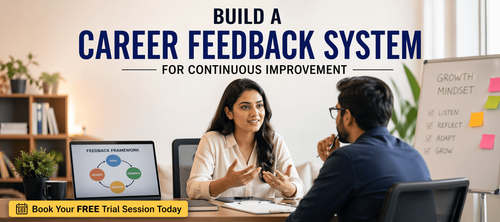

Track and Use Feedback for Career Advancement: A Practical System Working Professionals Can Apply Immediately
In today’s fast-moving professional environment, feedback is everywhere—but meaningful growth from feedback is rare. Most professionals receive comments during reviews, project discussions, or team meetings, yet struggle to convert those insights into real improvement. The result is a frustrating cycle: you hear feedback, reflect briefly, then move on without a clear plan for action.
What separates fast-growing professionals from everyone else is not the amount of feedback they receive—it is how systematically they use it. When feedback becomes a structured process rather than a random event, it transforms from occasional evaluation into a powerful career navigation tool.
This is exactly what the Professional Growth Feedback System enables. Instead of reacting to isolated comments, you learn how to actively seek insights, interpret them intelligently, convert them into behaviour change, and build long-term feedback relationships that accelerate your career over time.
A structured feedback system also helps you remove ambiguity from professional development. Rather than guessing what to improve, you gain clarity on specific skills, behaviours, and outcomes that directly influence performance. Over time, this creates a measurable improvement loop where every piece of feedback contributes to a defined growth goal.
The system also encourages continuous self-reflection. By regularly documenting feedback, identifying recurring patterns, and tracking your progress, you begin to understand not just what needs to change, but why it matters. This deeper awareness leads to more confident decision-making, stronger communication, and better alignment with organizational expectations.
Another key advantage is accountability. When feedback is captured and acted upon systematically, it becomes easier to stay consistent with improvement efforts. Instead of short bursts of motivation after reviews, you build a steady rhythm of learning, adjusting, and evolving in your role.
Ultimately, professionals who adopt a structured feedback approach don’t just improve incrementally—they compound their growth over time. Small improvements in communication, execution, and leadership stack together, leading to significantly better performance outcomes and career progression.
Download these resources and apply them alongside your daily work for improved clarity, productivity, and professional growth. You can also book a free trial to gain expert guidance and enhance your communication, problem-solving, and decision-making skills. The materials are designed in a clear, structured format to help professionals learn efficiently and implement insights with confidence.
Who Is This Blog For?
- Early-career professionals looking for direction and clarity
- Working professionals aiming to accelerate promotions and recognition
- Career switchers navigating unfamiliar industries
- Managers developing leadership presence and team effectiveness
- Consultants and client-facing professionals managing multiple stakeholders
- Professionals preparing for stretch roles or cross-functional opportunities
Why This Topic Matters Today?
Modern career growth depends less on annual performance reviews and more on continuous learning loops. Professionals who actively use feedback improve faster because they adjust their behaviour in real time rather than waiting months for formal evaluation cycles.
However, many professionals face recurring challenges:
- Receiving feedback but not knowing how to act on it
- Feeling uncertain about which feedback matters most
- Struggling with conflicting inputs from different stakeholders
- Avoiding feedback conversations due to anxiety or lack of structure
The Professional Growth Feedback System addresses these exact gaps. It shifts feedback from something you passively receive to something you strategically use for decision-making, execution improvement, and reputation building.
When feedback becomes a repeatable system, it compounds into stronger performance visibility, clearer professional identity, and faster career progression.
Core Concept or Framework Explained
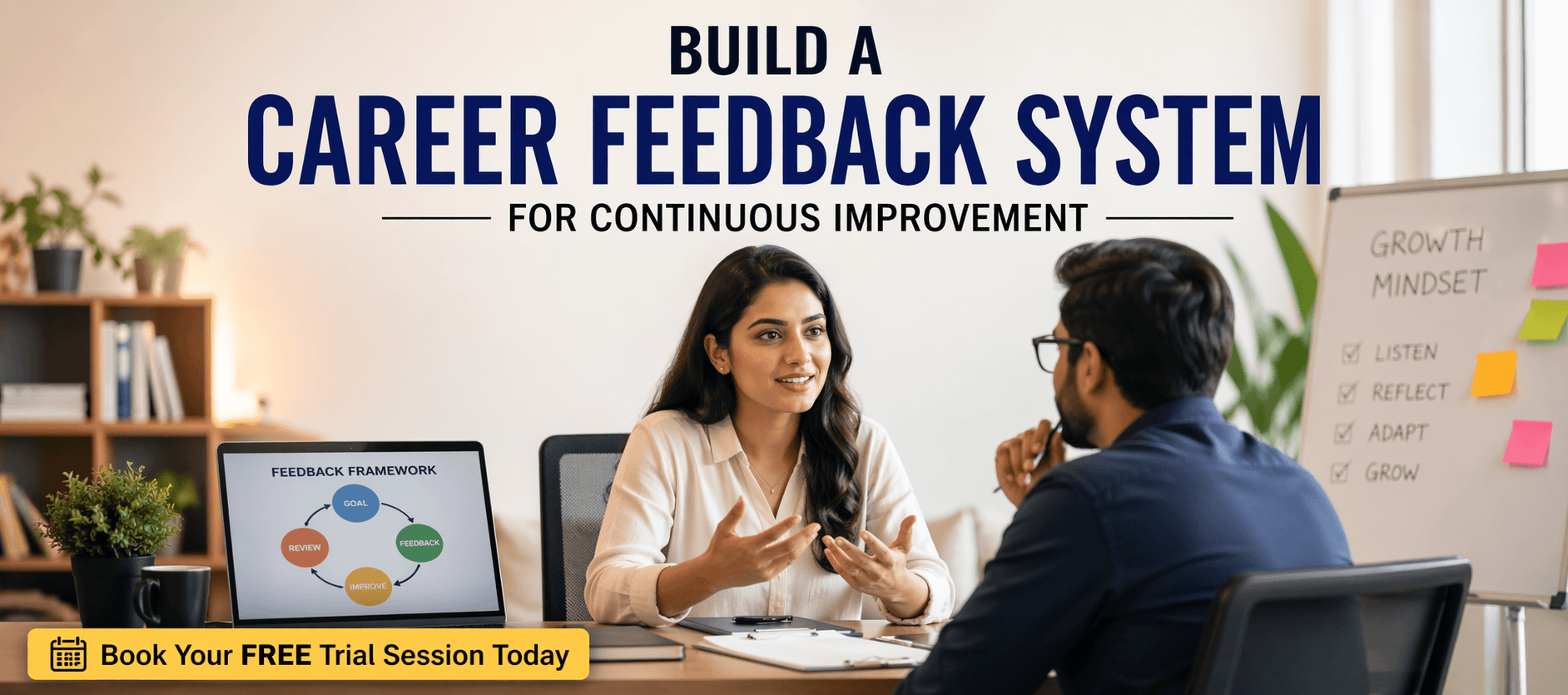
The Professional Growth Feedback System is built around a powerful five-phase loop that transforms feedback into measurable progress:
- Seek
- Receive
- Decode
- Act
- Close the Loop
Rather than treating feedback as isolated comments, the system positions it as a continuous improvement cycle.
Seek ensures you ask the right people about the right behaviours at the right time.
Receive helps you listen without defensiveness so you capture useful insights instead of reacting emotionally.
Decode allows you to separate meaningful patterns from one-off opinions.
Act converts insight into behavioural change through structured execution.
Close the Loop strengthens relationships with feedback providers and increases the quality of future feedback.
When used consistently, this cycle creates a compounding advantage. Each iteration improves not just performance but also your ability to interpret feedback intelligently.
How This Blog and Guidebook Help You?
This guidebook-based framework helps you transform feedback into a structured career acceleration system by:
- Showing how to ask better feedback questions
- Teaching how to interpret conflicting feedback intelligently
- Providing behaviour-change execution methods
- Helping you prioritise development areas strategically
- Strengthening long-term professional relationships through follow-up
Instead of waiting for evaluation cycles, you learn how to actively shape your growth trajectory.
Step-by-Step Breakdown
Step 1: Seek — Ask for the Right Feedback at the Right Time
Most professionals wait for feedback instead of requesting it strategically. The first shift in effective development is moving from passive receiver to active seeker.
Strong feedback seeking includes:
- Identifying key stakeholders such as managers, peers, mentors, and clients
- Asking about specific behaviours rather than general performance
- Requesting input within 48 hours of important events
- Using structured formats like Situation, Behaviour, Impact
For example, instead of asking “How did I do?”, ask whether your recommendation in a specific presentation landed clearly and what could improve it next time.
Specific questions generate actionable answers.
Step 2: Receive — Listen Without Defensiveness
Receiving feedback effectively requires psychological flexibility. Many professionals unintentionally respond defensively before understanding what is being shared.
The HEAR protocol improves this phase dramatically:
- Hold the rebuttal for the first 60 seconds
- Enquire for specific examples
- Acknowledge what you heard
- Reserve judgement before reacting
When people see that you genuinely listen, they provide higher-quality feedback in the future. This strengthens your growth loop over time.
Step 3: Decode — Separate Signal From Noise
Not all feedback deserves equal attention. Some inputs reflect recurring performance patterns, while others reflect personal preferences or limited context.
Use these filters to interpret feedback effectively:
- Pattern test: Has more than one stakeholder observed the same behaviour?
- Context filter: Does the person have enough visibility into your work?
- Stakes calibration: Does this affect a core competency?
- Blind spot indicator: Did the feedback surprise you?
This structured interpretation prevents unnecessary self-doubt and improves development focus.
Step 4: Act — Convert Insight Into Behaviour Change
Many professionals understand their feedback but fail to change behaviour because they lack an execution system.
Effective action requires:
- A clearly defined target behaviour
- Practice opportunities in upcoming situations
- Progress tracking through simple logs
- Environmental reminders that reinforce consistency
A strong target behaviour statement looks like this:
“I will state my recommendation first during presentations so that decision-makers immediately understand my position.”
Focusing on one behaviour per quarter produces stronger results than attempting multiple changes simultaneously.
Step 5: Close the Loop — Strengthen Feedback Relationships
Closing the loop is the most overlooked yet powerful part of feedback-driven growth.
This includes:
- Thanking the feedback provider within 1–2 days
- Sharing your development focus within a week
- Providing progress updates within a month
- Requesting follow-up observations after behaviour changes
Professionals who close the loop consistently receive more honest and valuable feedback over time because stakeholders see that their input creates real impact.
Common Mistakes or Pitfalls to Avoid
Even motivated professionals often slow their progress through avoidable feedback mistakes.
Common pitfalls include:
- Asking broad questions like “How am I doing?”
- Responding defensively during conversations
- Waiting for annual reviews instead of seeking timely feedback
- Attempting multiple behaviour changes simultaneously
- Failing to track progress consistently
- Not following up with feedback providers
- Treating all feedback as equally important
A better approach is to focus on specificity, prioritisation, and structured follow-through.
How Should You Use This Guidebook Effectively?
To get the maximum value from this system, follow a structured workflow:
- Read the guide once from start to finish to understand the full framework
- Identify one behaviour you want to improve this quarter
- Plan three feedback conversations using targeted questions
- Apply the decoding matrix after each feedback interaction
- Build a behaviour change blueprint for high-priority insights
- Follow up with feedback providers to close the loop
Recommended time investment:
- Weekly: One micro-feedback request
- Monthly: Run the feedback health checklist
- Quarterly: Execute one behaviour change blueprint
- Quarterly: Check in with members of your feedback network
- Annually: Conduct a full feedback system review
Consistency matters more than intensity.
Key Takeaways
- Feedback becomes powerful only when used as a structured system
- Asking specific questions produces actionable insights
- Listening without defensiveness improves feedback quality
- Not all feedback deserves equal attention or energy
- One behaviour change per quarter creates measurable progress
- Closing the loop strengthens long-term professional relationships
- A personal feedback network becomes a long-term career advantage
- Continuous feedback cycles create compounding professional growth
Your Next Step: Accelerate Your Career with PlanetSpark
Creating an impact-driven resume is not just about landing your next job—it’s about owning your professional story and presenting it with clarity, confidence, and credibility. When your resume clearly communicates value, results, and impact, opportunities follow naturally.
At PlanetSpark, we are committed to empowering working professionals with practical, outcome-focused resources that drive real career growth. From resume building and workplace communication to leadership presence and professional writing, our programs are designed to help you succeed in today’s fast-evolving job market.
Visit https://www.planetspark.in/resources to explore:
- Career and resume-building guides
- Workplace communication and professional writing resources
- Skill-development tools curated for working professionals
Want a deeper, hands-on experience?
You can also book a free trial session to learn more about PlanetSpark’s Working Professional Courses, designed to accelerate your career through personalised coaching, real-world practice, and expert guidance.
Your career deserves more than generic advice.
It deserves clarity, confidence, and measurable impact.
Start building that advantage today—with PlanetSpark.
Personalized Communication Roadmaps
Record a video to get a AI generated personalized communication reports