
Build Sustainable Work Rhythms for Peak Performance

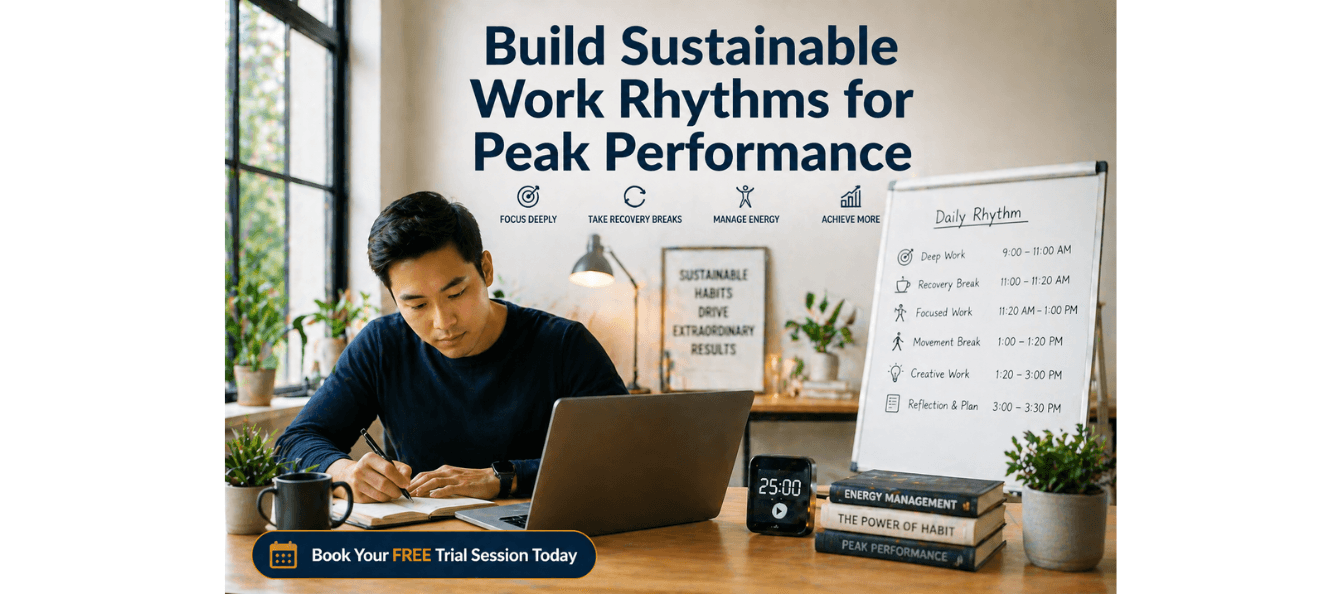
How to Build Sustainable Work Rhythms for Consistent Performance
In today’s fast-paced work environment, the pressure to perform without pause can feel relentless. From juggling multiple responsibilities to navigating constant distractions, it's easy for even the most dedicated professionals to burn out. The key to avoiding burnout while maintaining consistent performance is to focus on building sustainable work rhythms. Without a clear structure for managing energy, focus, and recovery, even high-performing professionals can find themselves running on empty. This blog explores how you can design and implement work rhythms that keep you productive without sacrificing your well-being.
Download these resources and apply them alongside your daily work for improved clarity, productivity, and professional growth. You can also book a free trial to gain expert guidance and enhance your communication, problem-solving, and decision-making skills. The materials are designed in a clear, structured format to help professionals learn efficiently and implement insights with confidence.
Who Is This Blog For?
This blog is for professionals who:
- Work in high-stress environments and need a structured way to manage their workload
- Seek to balance productivity with well-being
- Struggle with task overload, stress, or feeling reactive rather than proactive
- Want to improve their energy management to sustain high performance in the long run
Why This Topic Matters Today?
The modern workplace, with its constant notifications, back-to-back meetings, and always-on culture, is not designed for sustainable performance. Professionals are expected to perform at peak levels while managing high cognitive demands, and without structured work rhythms, this leads to mental exhaustion and burnout. As a result, many professionals find themselves being reactive, constantly putting out fires instead of focusing on what matters most. In a world where the pressure to perform is high, building sustainable work rhythms can dramatically improve both productivity and job satisfaction, helping you thrive rather than just survive.
Core Concept or Framework Explained
The key concept in this guide revolves around the Sustainable Rhythm Framework. It’s designed to help professionals organize their workday into four distinct zones:
1. Physical Energy – Stamina, sleep, nutrition, and movement.
2. Mental Energy – Focus, concentration, decision-making.
3. Emotional Energy – Stress management, emotional regulation, and resilience.
4. Purposeful Energy – Motivation, alignment with goals, and sense of progress.
The Sustainable Rhythm Framework works by recognizing that not all tasks require the same type of focus, and not all times of day offer the same level of energy. By deliberately structuring your day into these four zones, you reduce the mental cost of constant task-switching, which research shows can significantly drain productivity.
How This Blog and Guidebook Help You?
By implementing the Sustainable Rhythm Framework, you can:
- Maximize your peak focus periods for deep work
- Organize meetings and collaborative tasks into designated time blocks
- Protect your recovery periods to maintain high energy and reduce burnout
- Set clear boundaries for your workday, ensuring you have time to recharge
This framework helps you avoid reactive work habits, like scrambling to catch up, and instead focus on intentional, proactive planning for high-quality output.
Step-by-Step Breakdown
Here’s how to build a sustainable work rhythm:
Step 1 — Audit Your Current Rhythm
Before making any changes, it’s important to understand where your time is currently going. Take 15-20 minutes to reflect on your last few weeks and track how you’re spending your time. Some key questions to ask include:
- When do you feel most mentally sharp?
- Which tasks leave you energized vs. drained?
- How many uninterrupted focus blocks do you get per day?
This audit helps you understand your current rhythm, which is the first step toward improving it.
Step 2 — Design Your Ideal Work Rhythm
Once you’ve mapped out your current rhythm, the next step is designing your ideal workday. Start by blocking your Deep Work Zone first. This should be the most protected block of time, where you focus on high-priority tasks without distractions. Then, group meetings, calls, and collaborative tasks into the Collaboration Zone, ensuring they don’t scatter throughout your day. Finally, allocate time for Admin and Recovery Zones to manage your energy levels effectively.
Step 3 — Build Your Weekly Rhythm Planner
Now that you know your zones, it’s time to turn them into a practical weekly plan. Each week, identify your #1 priority and block time for deep work. Batch your meetings to designated days, and don’t forget to schedule a Weekly Review to reflect on what worked and what didn’t.
Step 4 — Protect Your Energy, Not Just Your Time
Time management is important, but energy management is what truly drives sustainable performance. Protect your physical, mental, emotional, and purposeful energy by incorporating daily energy rituals. This could include setting boundaries for work hours, taking regular breaks, and engaging in physical activity to keep your energy up throughout the day.
Step 5 — Sustain the Rhythm: Your Personal Operating System
Building sustainable rhythms requires ongoing maintenance. Monthly and weekly reflections are key to sustaining these work rhythms. Regularly assess how your rhythm is working, identify areas for improvement, and make small adjustments as needed.
Common Mistakes or Pitfalls to Avoid
Even the best-laid plans can face setbacks. Here are some common mistakes to avoid:
- Mistake 1: Checking email first thing in the morning
Fix: Do your Most Important Task (MIT) before opening email to prioritize your own work over others.
- Mistake 2: Scheduling meetings at random
Fix: Batch all meetings into specific blocks, protecting your Deep Work time.
- Mistake 3: Skipping breaks to "catch up"
Fix: Take a 5-minute break every 90 minutes to reset your focus and improve productivity.
- Mistake 4: No weekly planning ritual
Fix: Schedule a 30-minute weekly planning session every Sunday or Monday morning to stay proactive and avoid week-drift.
How Should You Use This Guidebook Effectively?
To use this guidebook effectively:
- Start by completing the Energy Audit to understand your current rhythm.
- Design your ideal work rhythm using the framework provided.
- Build your Weekly Rhythm Planner and incorporate it into your routine.
- Implement energy management strategies to ensure sustainable performance.
- Regularly reflect and adjust your rhythm to maintain balance.
Key Takeaways
- Audit your current rhythm to gain clarity on how you spend your time.
- Design your ideal rhythm by protecting time for deep work, collaboration, and recovery.
- Build a weekly plan that aligns with your natural energy cycles.
- Protect your energy and not just your time to maintain consistent performance.
- Regular reflection is key to sustaining your work rhythm and improving over time.
Your Next Step: Accelerate Your Career with PlanetSpark
Creating an impact-driven resume is not just about landing your next job—it’s about owning your professional story and presenting it with clarity, confidence, and credibility. When your resume clearly communicates value, results, and impact, opportunities follow naturally.
At PlanetSpark, we are committed to empowering working professionals with practical, outcome-focused resources that drive real career growth. From resume building and workplace communication to leadership presence and professional writing, our programs are designed to help you succeed in today’s fast-evolving job market.
Visit [https://www.planetspark.in/resources](https://www.planetspark.in/resources) to explore:
- Career and resume-building guides
- Workplace communication and professional writing resources
- Skill-development tools curated for working professionals
Want a deeper, hands-on experience?
You can also book a free trial session to learn more about PlanetSpark’s Working Professional Courses, designed to accelerate your career through personalised coaching, real-world practice, and expert guidance.
Your career deserves more than generic advice.
It deserves clarity, confidence, and measurable impact.
Start building that advantage today—with PlanetSpark.
Personalized Communication Roadmaps
Record a video to get a AI generated personalized communication reports