
Building Resumes for Transformation Program Leaders: Key Tips
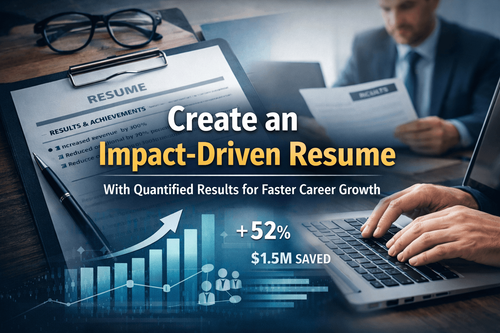

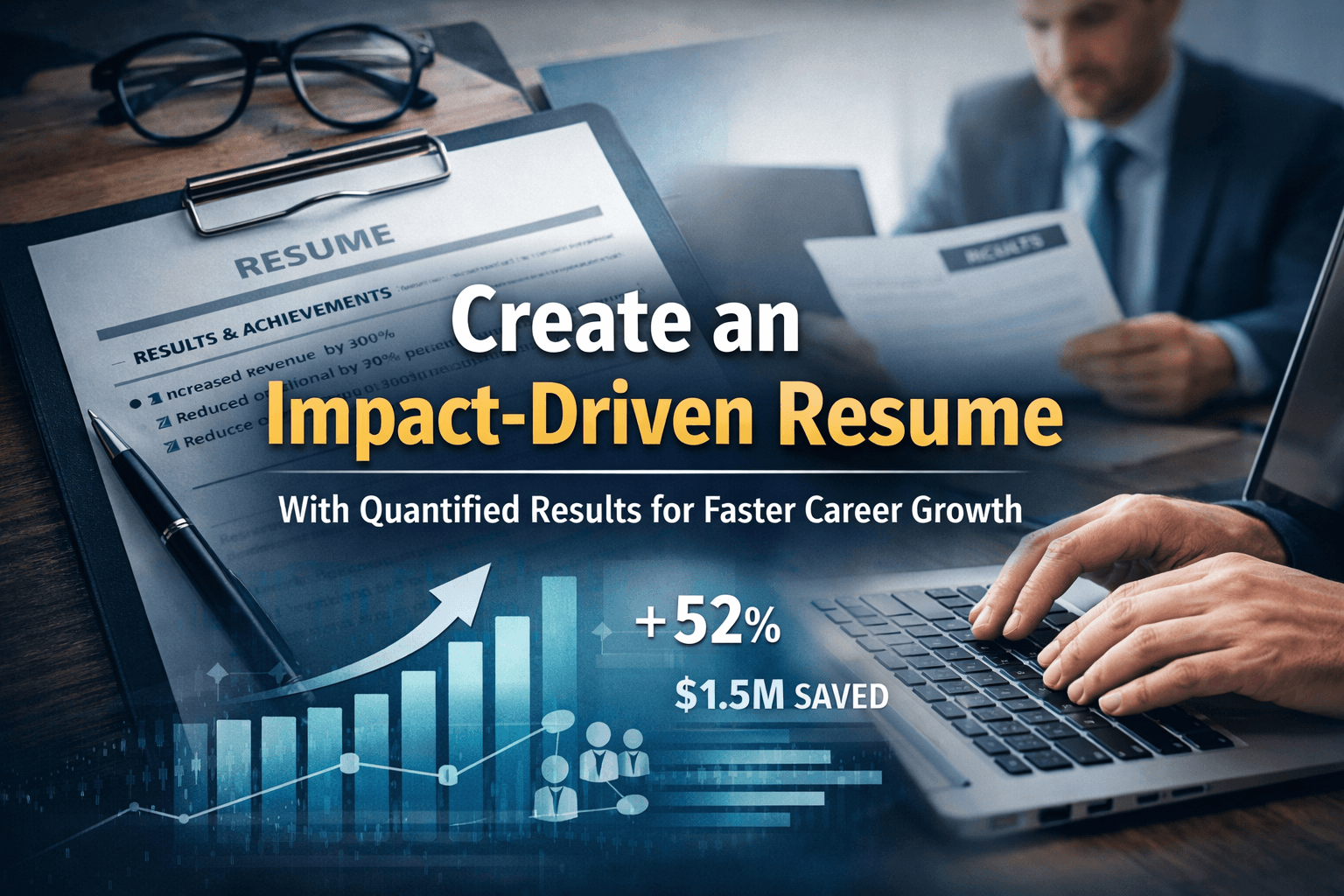
How to Create an Impact-Driven Resume with Quantified Results for Faster Career Growth
Recruiters spend only a few seconds scanning a resume before deciding whether to continue reading. In that brief window, most resumes fail not because candidates lack experience, but because they fail to communicate impact clearly. Many professionals describe responsibilities rather than outcomes, leaving hiring managers uncertain about the value they bring.
In today’s competitive hiring environment, organisations want evidence of results. They want to see how you improved efficiency, influenced stakeholders, solved complex problems, or delivered measurable outcomes. A resume that simply lists tasks rarely survives this first screening stage.
The PlanetSpark Career Series guidebook Structuring Resumes for Transformation Program Leaders explains that professionals often undersell their achievements because their resumes focus on what they did rather than what changed because of their work.
This blog translates the guidebook’s frameworks, templates, and practical examples into a clear roadmap. By applying these strategies, professionals can transform a traditional resume into a powerful document that communicates impact, credibility, and leadership. Book your free trial session today with Planetspark.
Download for more details or PDF file.
Who Is This Blog For?
This blog and the accompanying guidebook
are designed for:
- Working professionals with 0–15 years of experience who want faster career growth
- Professionals transitioning into transformation, change management, or strategic leadership roles
- Consultants and programme managers seeking to position themselves as transformation leaders
- Mid-career professionals preparing for promotion into senior management roles
- Job seekers who want their resume to clearly communicate results and strategic value.
Why This Topic Matters Today?
Hiring processes have evolved significantly over the last decade. Recruiters now rely heavily on speed, data signals, and structured evaluation when reviewing candidates.
In transformation-focused roles, hiring managers are not simply looking for someone who completed tasks. They are searching for leaders who can manage complexity, influence stakeholders, and deliver measurable change across organisations.
According to the guidebook, transformation leaders operate at the intersection of strategy, people, technology, and organisational change. Yet many resumes for these roles read like generic project management profiles that list activities but fail to demonstrate outcomes. :contentReference[oaicite:1]{index=1}
This disconnect creates a serious problem. Even professionals with strong experience may be overlooked because their resumes do not clearly signal the competencies organisations are hiring for.
An impact-driven resume solves this problem by presenting achievements in a structured way that demonstrates scale, complexity, influence, and results.
Core Concept or Framework Explained:
The guidebook introduces a powerful mindset shift for resume writing: moving from responsibility-focused descriptions to impact-focused narratives.
Instead of describing what you were responsible for, an impact-driven resume shows what happened because of your work.
This approach relies on two key frameworks.
The STAR-Q Framework
The STAR-Q structure helps professionals turn everyday work into compelling achievement statements.
- Situation: The context or challenge you faced
- Task: The responsibility or objective assigned to you
- Action: The steps you took to address the situation
- Result: The outcome of your actions
- Quantification: The measurable impact created
This framework ensures that every statement contains context, action, and measurable outcomes.
The Five Transformation Leadership Signals
The guidebook also explains that organisations evaluate transformation leaders based on five critical competency signals.
These include:
- Strategic framing that connects initiatives to business outcomes
- Stakeholder influence across executives, teams, and functions
- Programme complexity including scope, scale, and budgets
- Change enablement using recognised frameworks such as ADKAR or Kotter
- Measurable outcomes such as cost savings, adoption rates, or efficiency gains
When resumes clearly demonstrate these signals, hiring managers can quickly assess capability and potential impact.
How This Blog and Guidebook Help You?
This blog and the PlanetSpark guidebook provide a structured method for transforming an average resume into a powerful career asset.
By applying these frameworks, you will be able to:
- Identify hidden achievements across your professional experience
- Translate complex work into clear and compelling impact statements
- Present your experience using a structure that recruiters recognise instantly
- Demonstrate scale, complexity, and leadership capability
- Position yourself as a high-impact professional ready for larger responsibilities
Ultimately, this approach helps your resume communicate value within seconds.
Step-by-Step Breakdown:
Step 1: Understand What Organisations Are Actually Hiring For
Before writing or editing your resume, it is important to understand what organisations truly seek when hiring transformation leaders.
These roles require more than project management capability. They demand strategic thinking, operational discipline, stakeholder management, and change leadership.
Hiring managers are specifically looking for signals that demonstrate:
- Ability to connect transformation initiatives to business outcomes
- Capability to manage cross-functional stakeholder relationships
- Experience handling large-scale or complex programmes
- Knowledge of recognised change management methodologies
- Evidence of measurable organisational impact
Once you understand these expectations, it becomes easier to structure your resume around them.
Step 2: Conduct a Comprehensive Experience Audit
Most professionals underestimate their achievements because they only remember job titles and daily responsibilities.
An experience audit helps uncover the full range of contributions you have made across your career.
Start by listing everything you have done without filtering or editing.
Consider documenting:
- Major projects you led or supported
- Operational problems you solved
- Systems or processes you implemented
- Revenue generated or costs reduced
- Teams managed, mentored, or influenced
- Recognition, awards, or positive stakeholder feedback
Supporting materials such as performance reviews and project documentation can help you identify measurable wins that might otherwise be forgotten.
Step 3: Identify Metrics That Demonstrate Impact
Numbers transform vague claims into credible achievements.
The guidebook categorises metrics into several useful groups:
- Financial impact such as revenue growth or cost savings
- Efficiency improvements such as time saved or faster delivery cycles
- Growth metrics including engagement increases or conversion improvements
- People and scale indicators such as team size or training reach
- Quality improvements including error reduction or compliance improvements
- Scope signals such as number of users, geographies, or programme budgets
Even when precise numbers are unavailable, indicators of scale and complexity can still demonstrate impact effectively.
Step 4: Write Powerful Impact Statements
Once achievements and metrics are identified, they must be converted into concise impact statements.
The guidebook recommends using the CAR structure:
- Context explaining the challenge or scope
- Action describing the intervention or strategy used
- Result highlighting the measurable outcome
Strong statements begin with decisive action verbs and end with clear results.
For example:
Instead of writing:
Responsible for managing ERP implementation and stakeholder communication.
A stronger version would be:
Led organisational change for a multi-business-unit ERP transformation affecting 2,700 users, increasing adoption from 44 percent to 91 percent by go-live through structured readiness assessments and targeted training initiatives.
This approach demonstrates scope, leadership, and measurable outcomes.
Step 5: Structure Your Resume Strategically
An impact-driven resume follows a clear architecture designed for how recruiters actually read documents.
The recommended structure includes:
- Executive summary highlighting leadership identity and major achievements
- Core competencies listing transformation-specific skills and methodologies
- Career experience featuring impact-driven achievements for each role
- Programme highlights showcasing signature transformation projects
- Credentials including certifications and educational qualifications
This structure ensures that your most valuable signals appear early in the document.
Step 6: Write a High-Impact Executive Summary
The executive summary is the first section most recruiters read.
It should summarise your career in four to six concise lines that include:
- Your professional identity
- Your years of experience
- The scale at which you operate
- Your methodology expertise
- Key outcomes you consistently deliver
A strong summary positions you as a strategic professional rather than simply a job seeker.
Step 7: Use the Resume Audit Checklist
Before submitting your resume, it is important to evaluate its readiness.
The guidebook provides a comprehensive audit checklist that examines several key dimensions:
- Structure and visual clarity
- Transformation-focused language
- Presence of measurable outcomes
- Evidence of stakeholder influence
- Alignment with job description keywords
Resumes that meet most of these criteria are far more likely to pass recruiter screening and ATS filters.
Common Mistakes or Pitfalls to Avoid:
Even experienced professionals often make predictable mistakes when writing resumes.
The guidebook highlights several pitfalls that reduce credibility and impact.
These include:
- Starting bullet points with phrases such as “responsible for”
- Listing tasks instead of achievements
- Using generic verbs like managed or helped
- Burying major projects inside long paragraphs
- Including generic skill keywords instead of transformation-specific language
- Giving equal space to roles from ten years ago
- Submitting the same resume for every job application
Correcting these mistakes significantly improves how your resume is perceived.
How Should You Use This Guidebook Effectively?
The guidebook is designed to be practical and time-efficient for working professionals.
A recommended workflow includes:
- Reading the guide once to understand the complete framework
- Completing worksheets and exercises alongside each module
- Applying the architecture directly to your existing resume
- Allocating two to three focused hours for implementation
- Revisiting the guide whenever you update your resume or prepare new applications
This structured approach ensures that learning translates into real career outcomes.
Key Takeaways:
-Shift your resume from task descriptions to measurable achievements
- Use frameworks such as STAR-Q or CAR to structure impact statements
- Quantify outcomes whenever possible to increase credibility
- Demonstrate scale, complexity, and stakeholder influence
- Use a strategic resume architecture that mirrors how recruiters read
- Customise your resume for each role to improve response rates.
Your Next Step: Accelerate Your Career with PlanetSpark
Creating an impact-driven resume is not just about landing your next job—it’s about owning your professional story and presenting it with clarity, confidence, and credibility. When your resume clearly communicates value, results, and impact, opportunities follow naturally.
At PlanetSpark, we are committed to empowering working professionals with practical, outcome-focused resources that drive real career growth. From resume building and workplace communication to leadership presence and professional writing, our programs are designed to help you succeed in today’s fast-evolving job market.
Visit https://www.planetspark.in/resources to explore:
- Career and resume-building guides
- Workplace communication and professional writing resources
- Skill-development tools curated for working professionals.
Want a deeper, hands-on experience?
You can also book a free trial session to learn more about PlanetSpark’s Working Professional Courses, designed to accelerate your career through personalised coaching, real-world practice, and expert guidance.
Your career deserves more than generic advice.
It deserves clarity, confidence, and measurable impact.
Start building that advantage today—with PlanetSpark.
Personalized Communication Roadmaps
Record a video to get a AI generated personalized communication reports