
Building Systems for Team Accountability in Your First Manager Role
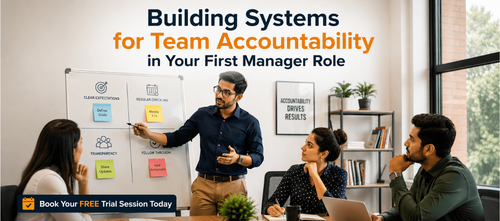

How to Build a High-Accountability Team Culture That Improves Performance and Ownership
In many organisations, managers spend more time chasing updates, resolving missed deadlines, and handling repeated execution issues than actually leading strategic growth. Teams may be talented, experienced, and technically capable, yet projects still stall because accountability is weak, unclear, or inconsistent.
The problem is not always motivation. In most cases, accountability breaks down because organisations rely too heavily on assumptions instead of systems. Employees are expected to “take ownership” without having clear expectations, visible priorities, or structured feedback mechanisms that support accountability in daily work.
As teams become more cross-functional, remote, and fast-moving, building a high-accountability culture is no longer optional. It is one of the defining leadership capabilities of modern workplaces. Teams that consistently deliver results are rarely operating on talent alone. They rely on systems that create clarity, commitment, visibility, and constructive follow-through.
This guidebook provides a practical framework for managers, consultants, and team leaders who want to create sustainable accountability cultures without micromanagement. Instead of relying on pressure or excessive oversight, the toolkit focuses on building systems that make ownership the natural default behaviour.
Download these resources and apply them alongside your daily work for improved clarity, productivity, and professional growth. You can also book a free trial to gain expert guidance and enhance your communication, problem-solving, and decision-making skills. The materials are designed in a clear, structured format to help professionals learn efficiently and implement insights with confidence.
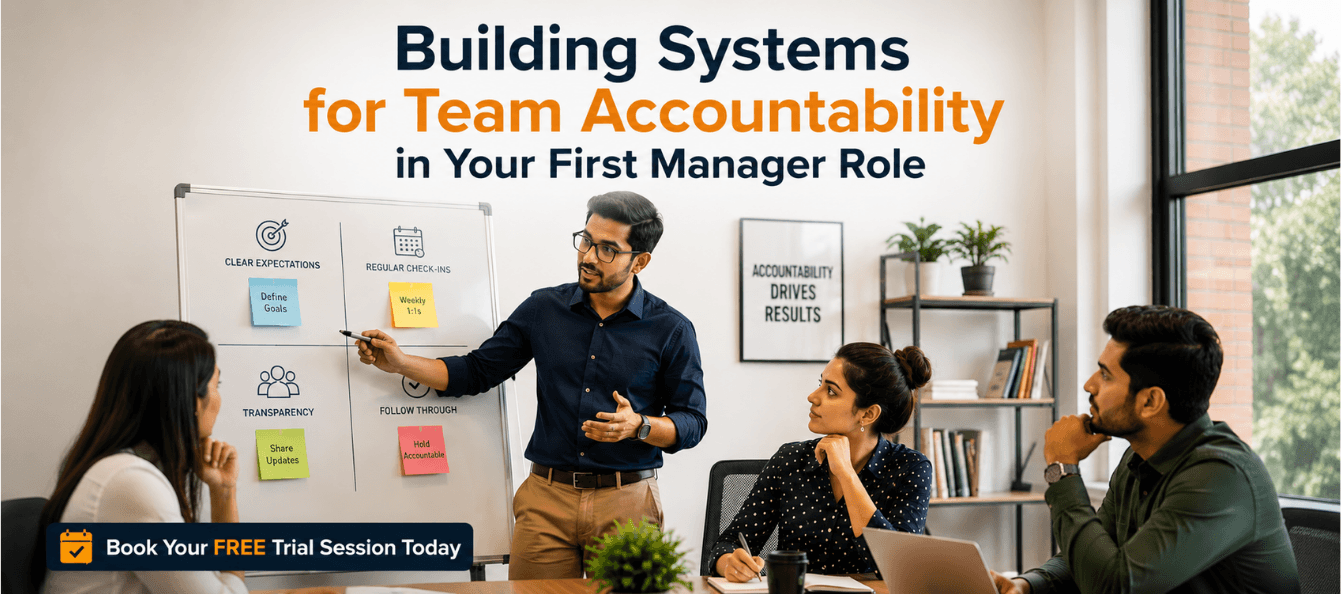
Who Is This Blog For?
- First-time managers learning how to lead teams effectively
- Team leaders struggling with follow-through and missed deadlines
- Senior leaders building scalable accountability systems
- Consultants helping organisations improve execution and ownership
- HR professionals strengthening performance cultures
- Project managers leading cross-functional teams
- Business owners aiming to improve operational consistency
- Professionals responsible for team productivity and collaboration
Why This Topic Matters Today?
Workplace accountability has become increasingly difficult to maintain in modern professional environments. Hybrid work models, distributed teams, changing priorities, and faster project cycles have exposed weaknesses in traditional management approaches.
Many organisations respond by increasing meetings, adding reporting layers, or implementing more tracking tools. However, these approaches often create complexity without solving the underlying issue.
The guidebook explains that accountability failures are rarely caused by laziness alone. More often, they result from unclear ownership, poor communication systems, delayed feedback, and invisible progress tracking.
Several workplace challenges make accountability especially important today:
- Employees unclear about responsibilities
- Teams working in silos
- Delayed escalation of blockers
- Lack of ownership over outcomes
- Managers avoiding difficult conversations
- Excessive dependency on follow-up emails and reminders
One of the most important insights from the toolkit is that accountability should not be treated as a personality trait. Instead, it must be designed as a repeatable operational system.
The guidebook explains this powerfully:
“Accountability without clarity is just anxiety with a deadline.”
This reflects a major reality in professional environments. Employees cannot consistently perform well if expectations, goals, and responsibilities are not clearly defined.
High-accountability cultures are now essential for:
- Remote and hybrid teams
- High-growth businesses
- Client-facing organisations
- Agile project environments
- Leadership development programs
- Cross-functional collaboration
Companies that build accountability systems effectively improve not only performance, but also trust, transparency, and long-term team resilience.
Core Concept or Framework Explained
The foundation of the guidebook is the Accountability Architecture — a five-layer framework designed to build sustainable ownership systems inside teams.
Rather than relying on motivation alone, the framework focuses on structures that make accountability easier and more consistent.
The Five Layers of Accountability
Layer 1: Role Clarity
Every employee must understand:
- What they fully own
- What they contribute to
- What information they must share
- Which decisions require escalation
Without role clarity, accountability conversations become confusing and defensive.
Layer 2: Goal Alignment
Employees perform better when they understand how their work contributes to team and organisational success.
The toolkit introduces the Goal Ladder framework to connect:
- Weekly priorities
- Quarterly outcomes
- Team goals
- Organisational objectives
This creates stronger purpose and ownership.
Layer 3: Commitment Rituals
There is a major difference between assigned work and committed work.
The guidebook recommends recurring commitment systems such as:
- Monday Commit sessions
- Wednesday Pulse updates
- Friday Reflect reviews
These rituals encourage active accountability instead of passive task completion.
Layer 4: Progress Visibility
Teams perform better when progress and blockers are visible.
The toolkit recommends using shared accountability boards that openly track:
- Commitments
- Progress status
- Challenges
- Support requirements
Visibility creates proactive collaboration without micromanagement.
Layer 5: Consequence Culture
Accountability requires timely and constructive conversations about missed commitments.
The guidebook introduces the SBI+O framework:
- Situation
- Behaviour
- Impact
- Outcome
This structure helps leaders address problems directly while maintaining trust and professionalism.
How This Blog and Guidebook Help You?
This accountability toolkit provides practical systems that leaders can implement immediately.
The frameworks help professionals:
- Improve team ownership
- Reduce confusion around responsibilities
- Increase deadline consistency
- Strengthen communication systems
- Surface blockers earlier
- Build healthier feedback cultures
- Reduce dependency on constant supervision
Unlike generic leadership advice, the guidebook focuses heavily on implementation.
The resource includes:
- Accountability frameworks
- Team alignment exercises
- Weekly meeting systems
- Visibility templates
- Feedback conversation models
- Team reflection prompts
- Leadership diagnostics
These tools help managers shift from reactive problem-solving to proactive system-building.
Step-by-Step Breakdown
Step 1: Define Clear Ownership Across the Team
The guidebook identifies role ambiguity as one of the biggest causes of accountability failure.
To solve this, managers should use the Role Clarity Canvas.
Each employee defines four categories:
- Own
- Support
- Inform
- Escalate
This exercise creates shared understanding around responsibilities and handoffs.
For example:
- Own: Client retention metrics
- Support: Product roadmap discussions
- Inform: Weekly risk updates
- Escalate: Budget approvals above defined limits
The process should be collaborative, not top-down.
Step 2: Connect Individual Work to Bigger Goals
Many employees complete tasks without understanding their strategic value.
The Goal Ladder framework connects:
- Weekly priorities
- Quarterly outcomes
- Team objectives
- Organisational impact
This alignment improves motivation because employees can clearly see how their work contributes to larger goals.
One valuable reflection question from the toolkit asks:
“Can every person on your team clearly explain the outcome they personally own this quarter?”
If not, accountability gaps already exist.
Step 3: Create Commitment Rituals
Commitment systems improve follow-through because employees actively state their priorities.
The toolkit recommends a weekly accountability rhythm:
Monday Commit
- Team members share top three priorities
- Commitments are written and visible
Wednesday Pulse
- Quick Green, Amber, or Red status updates
- Blockers surfaced early
Friday Reflect
- Review completed work
- Discuss lessons and carry-forward tasks
These systems improve consistency without excessive meetings.
Step 4: Increase Progress Visibility
Visibility helps teams identify problems before they become crises.
The Weekly Accountability Board tracks:
- Team member responsibilities
- Weekly priorities
- Progress status
- Current blockers
- Support needed
The guidebook emphasises that visibility is not about surveillance.
Instead, it supports:
- Faster collaboration
- Early intervention
- Shared ownership
- Better communication
An important insight from the resource warns that if blockers are never reported, psychological safety may be too low for honest communication.
Healthy accountability cultures encourage transparency.
Step 5: Build a Healthy Consequence Culture
Many managers delay difficult conversations until problems become severe.
The guidebook strongly recommends addressing accountability gaps within 48 hours.
The SBI+O framework helps managers structure these conversations professionally.
Situation
Clearly define where and when the issue occurred.
Behaviour
Focus only on observable actions.
Impact
Explain how the behaviour affected the team or project.
Outcome
Agree on a better approach moving forward.
This structure prevents conversations from becoming emotional or personal.
Step 6: Prepare for Difficult Accountability Conversations
The Accountability Conversation Pre-Flight Checklist helps managers prepare before initiating feedback discussions.
Leaders should confirm:
- The issue is behaviour-specific
- The impact is measurable
- The desired outcome is clear
- The conversation is timely
- The discussion happens privately
- Emotions are regulated beforehand
Preparation significantly improves accountability conversations.
Step 7: Learn from the 90-Day Accountability Case Study
The toolkit includes the example of Sunita, a product operations manager leading a seven-person team.
Her team struggled with:
- Missed deadlines
- Delayed escalations
- Vague updates
- Weak ownership
Instead of adding more meetings, Sunita implemented the accountability architecture step-by-step.
After 90 days:
- On-time delivery improved from 61% to 84%
- Teams surfaced blockers proactively
- Escalations reduced significantly
- Ownership improved naturally
The most important lesson is that systems outperform motivational speeches and excessive process documentation.
Step 8: Avoid Common Accountability Traps
Even experienced leaders unintentionally undermine accountability systems.
The toolkit identifies seven common traps.
Examples include:
Accountability Theatre
Too many meetings and trackers with no real follow-through.
Assuming Shared Understanding
Managers think expectations are clear when they are not.
Rescuing Instead of Developing
Managers solve problems too quickly instead of coaching ownership.
Waiting for Annual Reviews
Small issues grow into major performance problems.
One-Way Accountability
Managers expect accountability from teams without modelling it themselves.
Each trap includes a practical corrective strategy.
Step 9: Audit Your Team’s Accountability Systems
The Accountability Audit provides a measurable way to assess current team performance systems.
Teams evaluate areas such as:
- Ownership clarity
- Goal alignment
- Commitment systems
- Progress visibility
- Feedback quality
- Leadership modelling
This helps managers identify which accountability layer needs the most attention first.
Common Mistakes or Pitfalls to Avoid
Many accountability initiatives fail because leaders unintentionally create fear, confusion, or inconsistency.
Common mistakes include:
- Assuming expectations are obvious
- Treating accountability as punishment
- Avoiding difficult conversations
- Adding excessive meetings
- Ignoring blockers until deadlines fail
- Applying inconsistent standards
- Holding employees accountable without support
The guidebook recommends stronger alternatives:
- Create visible ownership systems
- Encourage early blocker reporting
- Address small issues quickly
- Use behaviour-based feedback
- Model accountability as a leader
- Focus on systems rather than blame
High-accountability cultures are built through consistency, trust, and clarity.
How Should You Use This Guidebook Effectively?
This toolkit is designed for immediate workplace implementation.
Recommended workflow:
- Complete the Accountability Audit first
- Identify the weakest accountability layer
- Run the Role Clarity Canvas with your team
- Create a Weekly Accountability Board
- Introduce commitment rituals gradually
- Practise SBI+O feedback conversations
- Reassess progress after 90 days
Suggested time investment:
- 30-minute role clarity workshop
- 15-minute Monday Commit session
- 10-minute Wednesday Pulse review
- 15-minute Friday Reflect exercise
Managers should implement systems gradually instead of overwhelming teams with multiple changes at once.
Consistency matters more than complexity.
Key Takeaways
- Accountability is a system, not a personality trait
- Role clarity is the foundation of ownership
- Goal alignment improves motivation and execution
- Commitment rituals increase follow-through
- Visibility systems reduce confusion and delays
- Early feedback prevents larger performance issues
- SBI+O conversations improve accountability discussions
- Managers must model accountability themselves
- Psychological safety encourages proactive communication
- Consistent systems create sustainable performance improvement
Your Next Step: Accelerate Your Career with PlanetSpark
Creating an impact-driven resume is not just about landing your next job—it’s about owning your professional story and presenting it with clarity, confidence, and credibility. When your resume clearly communicates value, results, and impact, opportunities follow naturally.
At PlanetSpark, we are committed to empowering working professionals with practical, outcome-focused resources that drive real career growth. From resume building and workplace communication to leadership presence and professional writing, our programs are designed to help you succeed in today’s fast-evolving job market.
Visit https://www.planetspark.in/resources to explore:
- Career and resume-building guides
- Workplace communication and professional writing resources
- Skill-development tools curated for working professionals
Want a deeper, hands-on experience?
You can also book a free trial session to learn more about PlanetSpark’s Working Professional Courses, designed to accelerate your career through personalised coaching, real-world practice, and expert guidance.
Your career deserves more than generic advice.
It deserves clarity, confidence, and measurable impact.
Start building that advantage today—with PlanetSpark.
Personalized Communication Roadmaps
Record a video to get a AI generated personalized communication reports