
Business Strategy Analysis: Essential Worksheet for Professionals
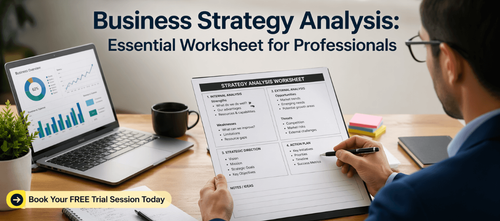

Analysis of Business Strategies: Complete Worksheets for Professionals
Every business strategy is a puzzle. As a working professional, you're often tasked with executing pieces of that strategy, but how many of us stop to analyze if the strategy is actually working? It's common to simply follow the plan—until you realize that something is off and opportunities are slipping by. You might feel that strategies are often made by higher-ups, but there’s a critical gap in strategy understanding that can stall your career growth. This blog breaks down the "Business Strategy Analysis Worksheet," a step-by-step guide designed to help you evaluate and refine any business strategy—whether you’re managing your own or advising clients.
Download these resources and apply them alongside your daily work for improved clarity, productivity, and professional growth. You can also book a free trial to gain expert guidance and enhance your communication, problem-solving, and decision-making skills. The materials are designed in a clear, structured format to help professionals learn efficiently and implement insights with confidence.
Who Is This Blog For?
This blog is designed for professionals looking to sharpen their strategic thinking skills. It’s ideal for:
- Career switchers who want to demonstrate their understanding of business strategy
- Consultants evaluating clients’ business decisions
- Managers wanting to assess and improve their team’s strategy
- Mid-career professionals aiming to advance their career with strategic insight
- Anyone wanting to move beyond mere task execution to becoming a strategic decision-maker
Why This Topic Matters Today?
In today's fast-paced, ever-changing business environment, it's essential to not just follow a strategy but to truly understand it. Professionals who only execute without evaluating or adjusting strategies often miss opportunities for growth and efficiency. Studies show that companies with strong strategic analysis capabilities perform better in the long term. A poorly aligned business strategy can cost organizations millions in wasted resources, making it critical for professionals to assess and stress-test strategies regularly. This blog provides actionable steps to do just that, enabling professionals to drive better results through informed decision-making.
Core Concept or Framework Explained
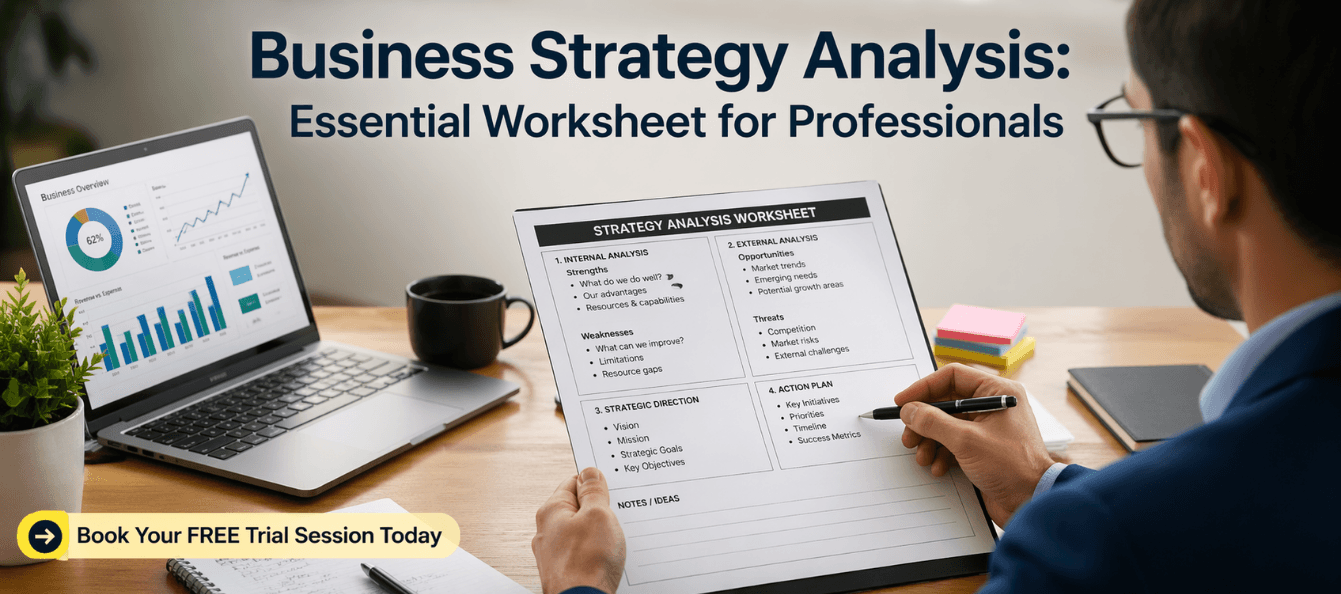
The "Business Strategy Analysis Worksheet" is not just another strategic planning tool—it's a framework designed to help you critically analyze business strategies. By using established models like PESTLE, Porter's Five Forces, and SWOT, you gain a comprehensive understanding of where a business stands in terms of its internal capabilities and external market forces. Here's a breakdown of the core elements:
- PESTLE: Analyzes political, economic, social, technological, legal, and environmental factors impacting a business. Understanding these forces helps professionals anticipate challenges and spot opportunities.
- Porter's Five Forces: This framework helps assess the competitiveness of an industry. This is crucial for determining whether the industry you're working in is conducive to sustainable profits or not.
- SWOT: A deep dive into the business's internal strengths and weaknesses, coupled with external opportunities and threats. SWOT is about identifying where your business can capitalize on its assets and where it must improve.
- Business Model Mapping: Helps clarify how value is created, delivered, and captured within a business. This step is crucial for ensuring that the strategy aligns with the operational model.
How This Blog and Guidebook Help You?
This blog and the "Business Strategy Analysis Worksheet" empower you to:
- Understand the strategic environment surrounding your business
- Break down complex business problems into actionable insights
- Evaluate internal and external forces that affect your business strategy
- Make data-driven recommendations based on the analysis
By mastering this process, you gain confidence in your decision-making abilities, positioning you as a capable strategist in your career.
Step-by-Step Breakdown
The worksheet is divided into modules, each focusing on a key aspect of strategy analysis. Here’s how you can use it:
1. Define the Strategic Context:
Start by clearly defining the business's mission, vision, and top priorities. This helps anchor all future analyses and ensures you’re not just looking at abstract data.
- Key Questions: What business are we in? What’s our core offering? Who are we serving? What are our strategic priorities?
2. PESTLE Analysis:
Identify and prioritize external factors affecting the business. The goal is to understand how these forces could either help or harm the current strategy.
- Use the table to rate each PESTLE factor based on impact and relevance.
3. Porter’s Five Forces:
Assess the competitiveness of the industry. This is crucial for understanding whether the industry is ripe for growth or if it presents more challenges than opportunities.
- Rate competitive forces such as rivalry, threat of new entrants, and the bargaining power of buyers and suppliers.
4. SWOT Analysis:
Perform an in-depth evaluation of your business’s internal strengths and weaknesses, while considering external opportunities and threats. This step requires evidence-backed insights.
- Be specific: For example, “strong brand equity” is a strength, while “limited capital reserves” is a weakness.
5. Business Model Mapping:
Examine how your business creates and delivers value. This process highlights the alignment (or misalignment) between strategic intent and operational realities.
- Focus on areas where strategy and execution aren’t in sync.
6. Strategic Recommendations:
Use the findings from the previous modules to generate actionable strategic recommendations. These should align with the business's strengths while addressing identified threats or weaknesses.
Common Mistakes or Pitfalls to Avoid
Throughout the worksheet, there are several common mistakes to avoid:
- Vague Analysis: A SWOT or PESTLE analysis is only useful if it’s specific and evidence-based. Avoid generic terms like “good team” or “good product”—be specific and quantify wherever possible.
- Disjointed Frameworks: Each module builds on the previous one. Avoid treating them as independent exercises. Ensure insights from the PESTLE and Five Forces analyses are reflected in the SWOT and business model mapping.
- Failure to Take a Position: The worksheet leads you to make strategic recommendations, but many professionals fail to do so due to lack of confidence. Don’t stop at just analyzing—use the data to make clear recommendations.
How Should You Use This Guidebook Effectively?
To get the most out of this guidebook, start by dedicating 2-3 focused hours to complete the worksheet in "Worksheet Mode." This will allow you to capture your initial thoughts and insights. Once completed, revisit the guide regularly to refine your strategy as new market conditions or company changes occur.
- Time Investment: 2–3 hours for initial completion, with periodic check-ins based on changes in the business environment.
- Suggested Workflow:
- Begin with Module 1 (Strategic Context) for quick clarity.
- Move through each module in sequence, but feel free to jump ahead if you’re facing an immediate challenge.
- Use the final strategic recommendation to direct your business or client’s next steps.
Key Takeaways
- Business strategy analysis is a critical skill for today’s professionals
- PESTLE and Porter's Five Forces help frame external and competitive contexts
- A specific SWOT analysis is key to identifying areas of improvement
- Business Model Mapping ensures strategy is aligned with operations
- Actionable strategic recommendations are the outcome of this process
Your Next Step: Accelerate Your Career with PlanetSpark
Creating an impact-driven resume is not just about landing your next job—it’s about owning your professional story and presenting it with clarity, confidence, and credibility. When your resume clearly communicates value, results, and impact, opportunities follow naturally.
At PlanetSpark, we are committed to empowering working professionals with practical, outcome-focused resources that drive real career growth. From resume building and workplace communication to leadership presence and professional writing, our programs are designed to help you succeed in today’s fast-evolving job market.
Visit https://www.planetspark.in/resources to explore:
- Career and resume-building guides
- Workplace communication and professional writing resources
- Skill-development tools curated for working professionals
Want a deeper, hands-on experience?
You can also book a free trial session to learn more about PlanetSpark’s Working Professional Courses, designed to accelerate your career through personalised coaching, real-world practice, and expert guidance.
Your career deserves more than generic advice.
It deserves clarity, confidence, and measurable impact.
Personalized Communication Roadmaps
Record a video to get a AI generated personalized communication reports