
Career-Aligned Financial Independence Planning Roadmap
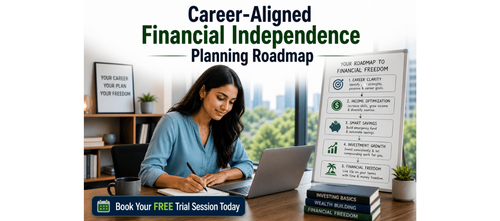

Designing Financial Independence While Accelerating Your Career Growth
Most professionals are taught to treat career growth and financial planning as two separate phases. First, focus on promotions, salary hikes, and building experience. Later, once income improves, start thinking seriously about wealth creation. This belief quietly delays some of the most important financial years of your life.
The reality is different. Career growth and financial independence are deeply connected. Every promotion, skill upgrade, negotiation, and job switch shapes your earning power, savings capacity, and investment potential. When financial planning starts early, even modest actions compound into significant long-term advantages.
Many professionals eventually earn well but still feel financially behind because wealth systems were never built during the early years. That gap creates stress, limits options, and keeps talented people dependent on income longer than necessary.
This guide helps professionals build career momentum while simultaneously creating financial freedom. It offers practical systems, realistic frameworks, and action steps designed for busy working professionals who want both growth and security.
Download these resources and apply them alongside your daily work for improved clarity, productivity, and professional growth. You can also book a free trial to gain expert guidance and enhance your communication, problem-solving, and decision-making skills. The materials are designed in a clear, structured format to help professionals learn efficiently and implement insights with confidence.
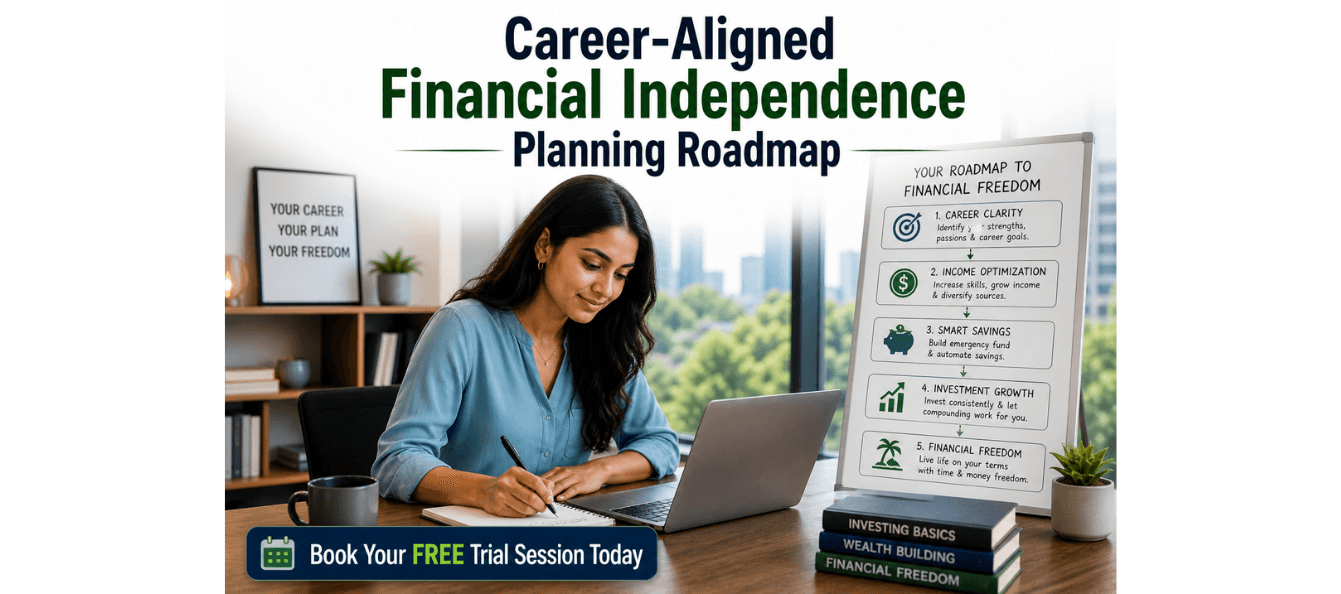
Who Is This Blog For?
- Early-career professionals building income and skills
- Mid-career employees seeking wealth acceleration
- Managers wanting stronger financial control
- Professionals planning long-term financial freedom
- Career switchers balancing risk and stability
- Individuals aiming to grow income and investments together
Why This Topic Matters Today?
The cost of delayed financial planning is not just money—it is lost time. Compounding rewards early action, consistency, and patience. Every year spent waiting can require significantly more effort later.
Today’s professionals also face:
- Rising living costs
- Career uncertainty and industry shifts
- Lifestyle inflation after salary hikes
- Greater need for emergency reserves
- Pressure to maintain visible success
- Lack of practical financial education
The guidebook explains that aligning career decisions with financial outcomes creates optionality. When finances are stronger, negotiations improve, risks become smarter, and career decisions become more strategic rather than emotional.
Core Concept or Framework Explained
The guidebook introduces a dual-growth model where career advancement fuels financial independence, and financial strength improves career freedom.
Three Core Pillars
The Income Engine
Your career is your strongest wealth-building asset in the early and middle years. Skills, promotions, and positioning increase earning power.
The Accumulation Machine
Income alone does not create wealth. Wealth grows when career earnings are directed into assets such as mutual funds, retirement accounts, real estate, or businesses.
The Freedom Flywheel
As investments grow, dependence on salary reduces. This creates freedom to negotiate, pivot careers, take breaks, or choose meaningful work.
This is the real objective—not to stop working, but to work by choice.
How This Blog and Guidebook Help You?
This resource helps professionals:
- Calculate a clear financial independence target
- Increase career income strategically
- Build automated savings systems
- Invest according to career stage
- Evaluate job opportunities financially
- Reduce stress through long-term planning
- Create freedom without sacrificing ambition
It transforms scattered financial actions into a focused long-term strategy.
Step-by-Step Breakdown
Step 1: Define Your Financial Independence Number
The guidebook recommends calculating your FI Number using a simple framework:
Annual Expenses × 25 = Financial Independence Target
Example:
If annual lifestyle expenses are ₹12,00,000, then your FI target becomes ₹3 crore.
This gives direction to savings, investing, and spending decisions.
Action Steps:
- Calculate monthly essential expenses
- Add lifestyle costs
- Multiply annual total by 25
- Review yearly as life changes
Step 2: Maximise Career Income Strategically
Many professionals underuse the highest-return asset they have—their career.
Ways to improve income:
- Benchmark salary against market rates
- Negotiate during hiring and appraisals
- Build high-value skills
- Pursue leadership capability
- Explore consulting or side income
Even a 10 percent income increase invested consistently can significantly accelerate wealth creation.
Step 3: Build an Automatic Savings Architecture
The guidebook suggests a stronger version of classic budgeting:
- 50% Needs
- 20% Wants
- 30% Savings
During high-income phases, push savings higher where possible.
System Ideas:
- Auto-debit SIPs on salary day
- Separate accounts for goals
- Increase investments after every raise
- Automate recurring obligations
Automation reduces reliance on motivation.
Step 4: Invest Based on Career Stage
Investment strategy should reflect career stability, time horizon, and responsibilities.
Early Career (0–5 years)
- Higher equity exposure
- Build emergency fund first
- Start SIPs early
Mid Career (5–10 years)
- Increase contributions
- Add diversification
- Begin structured tax planning
Senior Career (10+ years)
- Balanced asset mix
- Income-producing assets
- Retirement readiness planning
The best strategy is not generic—it should fit your career phase.
Step 5: Evaluate Career Decisions Financially
Every career move has money consequences.
Before switching jobs, assess:
- Salary difference
- Bonuses or stock loss
- Learning potential
- Relocation cost
- Long-term growth path
- Stability vs upside
Before higher education, assess ROI.
Before a sabbatical, build a dedicated fund.
Before joining a startup, model upside and downside scenarios.
Step 6: Use Tax Planning as a Growth Tool
Every rupee saved legally in tax can be invested for compounding.
Focus Areas:
- EPF / VPF
- PPF
- ELSS
- NPS
- Health insurance deductions
- Smart annual tax review
Tax efficiency quietly accelerates wealth.
Step 7: Build the Right Mindset
The guidebook emphasises that long-term wealth is behavioural.
Mindset shifts:
- Replace scarcity with abundance thinking
- Avoid comparing progress to peers
- Practise delayed gratification
- Stay consistent during volatility
- Focus on direction over perfection
Strong psychology supports strong finances.
Common Mistakes or Pitfalls to Avoid
Professionals often delay progress through avoidable errors.
- Waiting to earn more before starting
- Increasing lifestyle after every raise
- No emergency fund
- Ignoring insurance
- No annual review process
- Over-concentration in one asset or employer stock
- Chasing trends instead of systems
- Making career moves without financial planning
Better alternatives:
- Start small now
- Save part of every raise
- Review finances annually
- Protect downside risks first
- Build simple repeatable systems
How Should You Use This Guidebook Effectively?
Use this framework in phases.
First 30 Days
- Calculate FI Number
- Track income and expenses
- Build emergency reserve
- Start first SIP
- Benchmark salary
Days 31–60
- Review career growth path
- Increase skill investment
- Optimise tax planning
- Remove financial leaks
Days 61–90
- Rebalance portfolio
- Increase automation
- Explore extra income stream
- Schedule annual financial review
Suggested time commitment:
- 2 hours initial setup
- 30 minutes monthly review
- Half-day annual planning session
Consistency creates momentum.
Key Takeaways
- Career growth and financial freedom should be built together
- Your career is your first wealth-building engine
- Income must be converted into assets
- Calculate a clear FI target number
- Automate savings and investing early
- Evaluate career moves financially, not emotionally
- Tax planning improves long-term compounding
- Wealth is built through systems, not sudden breakthroughs
- Financial strength creates career optionality
Your Next Step: Accelerate Your Career with PlanetSpark
Creating an impact-driven resume is not just about landing your next job—it’s about owning your professional story and presenting it with clarity, confidence, and credibility. When your resume clearly communicates value, results, and impact, opportunities follow naturally.
At PlanetSpark, we are committed to empowering working professionals with practical, outcome-focused resources that drive real career growth. From resume building and workplace communication to leadership presence and professional writing, our programs are designed to help you succeed in today’s fast-evolving job market.
Visit https://www.planetspark.in/resources to explore:
- Career and resume-building guides
- Workplace communication and professional writing resources
- Skill-development tools curated for working professionals
Want a deeper, hands-on experience?
You can also book a free trial session to learn more about PlanetSpark’s Working Professional Courses, designed to accelerate your career through personalised coaching, real-world practice, and expert guidance.
Your career deserves more than generic advice.
It deserves clarity, confidence, and measurable impact.
Start building that advantage today—with PlanetSpark.
Personalized Communication Roadmaps
Record a video to get a AI generated personalized communication reports