
Career Change Uncertainty Explained: A Practical Guide for 2026
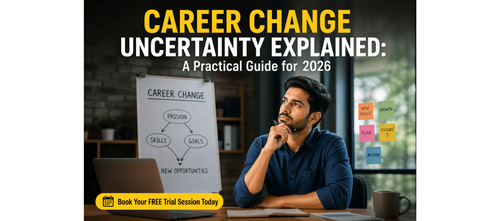

Staying Confident Through Doubt and Uncertainty in Career Moves for Better Career Decisions and Faster Growth
Career transitions often look exciting from the outside, but inside they can feel deeply uncomfortable. One day you are motivated to pursue a new role, industry, or direction. The next day you are questioning everything. Am I making a mistake? Am I too late? What if I fail and need to start over?
This inner tension stops many capable professionals from moving forward. They stay in roles that no longer fit, delay meaningful opportunities, or keep preparing without ever acting.
That is why this guidebook on handling doubt and uncertainty during career changes is so valuable. It gives professionals practical systems to identify the source of doubt, evaluate decisions clearly, manage external pressure, and build momentum without waiting for perfect certainty.
Download these resources and apply them alongside your daily work for improved clarity, productivity, and professional growth. You can also book a free trial to gain expert guidance and enhance your communication, problem-solving, and decision-making skills. The materials are designed in a clear, structured format to help professionals learn efficiently and implement insights with confidence.

Who Is This Blog For?
- Early-career professionals unsure about their long-term direction
- Mid-career employees considering a role, industry, or function change
- Managers exploring consulting, entrepreneurship, or leadership pivots
- Job seekers dealing with fear after rejection or career stagnation
- Professionals facing imposter syndrome in a new field
- Anyone overthinking a career move and struggling to act
Why This Topic Matters Today?
Career paths are no longer linear. Many professionals now change industries, functions, work models, or skill focus multiple times across their careers. At the same time, visibility through professional platforms has increased comparison pressure.
This creates three modern challenges:
- More opportunities, but more confusion
- More information, but more overthinking
- More ambition, but more self-doubt
The guidebook highlights common pain points professionals face during transitions:
- Paralysis from overthinking career moves
- Imposter syndrome in unfamiliar environments
- Unsolicited opinions from family or peers
- Difficulty separating fear from real risk
- Lack of daily momentum when certainty is missing
These are not minor issues. They directly affect earning potential, confidence, and long-term growth.
Core Concept
The guidebook introduces a practical idea: doubt is not always a warning sign. Often, doubt simply means the decision matters.
The real problem is not feeling doubt. The real problem is treating all doubt as identical.
The resource breaks uncertainty into four categories:
Situational Doubt
Triggered by specific events such as rejection, difficult conversations, or salary comparisons. It is temporary and often emotional.
Comparative Doubt
Created by comparing yourself with peers, colleagues, or online success stories. This doubt is usually based on incomplete information.
Structural Doubt
Connected to real gaps such as skills, finances, network, or timing. This kind of doubt contains useful data and deserves action.
Identity Doubt
The deepest layer of uncertainty. It asks who you are if you leave your current identity, title, or career path.
This framework matters because each type of doubt requires a different response. If you misread fear as data, you may stop unnecessarily. If you ignore real gaps, you may move unprepared.
How This Blog and Guidebook Help You?
This blog and the original guidebook help professionals turn emotional uncertainty into structured action.
You learn how to:
- Understand the real source of hesitation
- Make better decisions with evidence instead of panic
- Respond confidently to external pressure
- Reduce emotional decision-making after setbacks
- Build progress even with limited time
- Handle beginner discomfort during transitions
- Gain clarity faster and move sooner
Instead of waiting until you feel ready, you create systems that help you act intelligently now.
Step-by-Step Breakdown
Step 1: Name the Doubt Clearly
Many professionals say, I feel unsure, but never define what unsure means.
Use a simple diagnostic process:
- What exactly am I worried about?
- Is this situational, comparative, structural, or identity doubt?
- If I removed the trigger, would this concern still exist?
Example:
You feel anxious after seeing a peer promotion online. That may be comparative doubt, not evidence that your own plan is wrong.
When doubt is named accurately, it becomes manageable.
Step 2: Stress-Test the Career Decision
The guidebook explains that uncertainty often continues because decisions are unstructured.
Use a written decision audit:
- What specific outcome do I want?
- What is the worst realistic outcome?
- If that happened, what would I do next?
- What evidence suggests this move is viable?
- Who has done something similar successfully?
- What assumptions have I not verified?
This process shifts your thinking from vague fear to practical analysis.
Step 3: Use the Pre-Mortem Method
Imagine it is one year later and the move did not work.
Ask:
- What specifically went wrong?
- Skills gap?
- Weak networking?
- Financial pressure?
- Wrong industry assumptions?
Then ask:
- Which risks can I reduce now?
This transforms anxiety into preparation.
Step 4: Manage External Pressure Professionally
Career doubt often increases because of other people.
Examples include:
- Family asking if the move is too risky
- Colleagues questioning your decision
- Friends pushing their preferred path
- People projecting their own fear
The guidebook recommends clear communication.
Example response:
I understand your concern. I have researched this carefully, created a timeline, and built a plan. I appreciate your support.
You do not need to justify every move. Sometimes protecting your mental energy is the smartest strategy.
Step 5: Build Forward Momentum
Doubt grows in stillness.
The guidebook introduces an anti-paralysis system:
Weekly Anchor
Choose one non-negotiable action each week that advances your transition.
Examples:
- Apply to two roles
- Update one portfolio case study
- Contact one industry professional
- Finish one certification module
Evidence Log
Track visible progress such as:
- Interviews booked
- New skills completed
- Networking conversations held
- Resume improvements made
When evidence rises, doubt weakens.
Decision Freeze Rule
Do not make major career decisions within 24 hours of:
- Rejection
- Comparison spirals
- Emotional setbacks
This protects judgment.
Accountability Partner
Choose one thoughtful person who checks progress weekly.
Step 6: Use the 15-Minute Daily Reset
On high-doubt days, avoid endless scrolling or rumination.
Use this structure:
Minutes 1 to 5
Write your real career goal in one sentence.
Minutes 6 to 10
List three things you have already done toward it.
Minutes 11 to 15
Choose one action under 30 minutes and complete it immediately.
This restores control quickly.
Step 7: Handle Imposter Syndrome During Transition
Changing careers often means becoming a visible beginner again.
The guidebook recommends three tools:
Reframe Beginner Status
You are not starting from zero. You are bringing maturity and experience into a new field.
Build a Transferable Skills Inventory
List ten relevant skills from previous roles.
Examples:
- Stakeholder management
- Client communication
- Data analysis
- Project ownership
- Team coordination
Script Your Introduction
Example:
I spent seven years in finance leading analytical projects. I am now moving into UX research because I enjoy solving user problems and am actively strengthening research skills.
Confidence plus honesty is stronger than pretending.
Step 8: Learn from a Real Career Pivot
The guidebook shares Priya's transition from finance to UX design.
She faced:
- Structural doubt about portfolio quality
- Comparative doubt seeing peers progress
- Identity doubt around leaving finance
What changed?
- She named each doubt correctly
- Completed a decision audit
- Used scripts with family
- Built weekly momentum
- Applied consistently
She later secured a junior UX researcher role, where her finance background became an advantage.
The lesson: doubt was not the problem. Misclassification was.
Common Mistakes
Waiting for Perfect Readiness
Many professionals say they will apply once everything is perfect.
Better approach:
- Set deadlines
- Ship strong enough versions
- Improve while moving
Making Decisions in Emotional Valleys
Withdrawing after one rejection is common.
Better approach:
- Use the 24-hour pause rule
Seeking Validation from the Wrong Sources
People who have never made transitions may give fearful advice.
Better approach:
- Seek input from those who have made similar moves
Comparison Overload
Constant social comparison destroys momentum.
Better approach:
- Limit triggers
- Reduce passive scrolling
- Focus on your timeline
Treating Doubt as a Stop Sign
Feeling scared does not automatically mean stop.
Better approach:
- Ask whether this is fear or useful data
How Should You Use This Guidebook Effectively?
Use the guidebook as a working tool, not passive reading material.
Recommended workflow:
Week 1
- Read the full guide once
- Identify your biggest current doubt
Week 2
- Complete the decision audit
- Run the pre-mortem exercise
Week 3
- Build your weekly anchor system
- Start an evidence log
Week 4
- Prepare scripts for key conversations
- Create transferable skills inventory
Ongoing Weekly Time Investment
- 30 minutes planning
- 15 minutes on difficult days
- 1 focused action weekly minimum
Return to the relevant section whenever doubt rises again.
Key Takeaways
- Doubt during career change is normal, not failure
- Different doubts require different responses
- Structured decisions reduce emotional stress
- External pressure must be filtered carefully
- Momentum matters more than waiting for certainty
- Progress evidence builds confidence faster than motivation
- Imposter syndrome often reflects transition discomfort, not inability
- Small weekly actions compound into major career moves
Your Next Step: Accelerate Your Career with PlanetSpark
Creating an impact-driven resume is not just about landing your next job—it’s about owning your professional story and presenting it with clarity, confidence, and credibility. When your resume clearly communicates value, results, and impact, opportunities follow naturally.
At PlanetSpark, we are committed to empowering working professionals with practical, outcome-focused resources that drive real career growth. From resume building and workplace communication to leadership presence and professional writing, our programs are designed to help you succeed in today’s fast-evolving job market.
Visit https://www.planetspark.in/resources to explore:
- Career and resume-building guides
- Workplace communication and professional writing resources
- Skill-development tools curated for working professionals
Want a deeper, hands-on experience?
You can also book a free trial session to learn more about PlanetSpark’s Working Professional Courses, designed to accelerate your career through personalised coaching, real-world practice, and expert guidance.
Your career deserves more than generic advice.
It deserves clarity, confidence, and measurable impact.
Personalized Communication Roadmaps
Record a video to get a AI generated personalized communication reports