
Career Comeback After Health Recovery: Resume & Story Guide
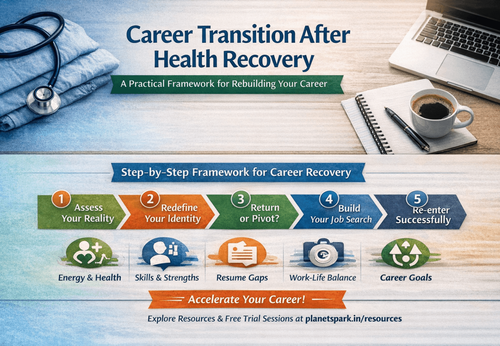

Career Transition After Health Recovery to Rebuild Your Career with Confidence
Returning to work after a serious health event is not just a professional decision. It is a deeply personal transition that requires rebuilding confidence, redefining priorities, and navigating uncertainty.
Most career advice assumes that professionals are operating at full capacity. It assumes uninterrupted career progression, steady productivity, and predictable job searches. But for many professionals recovering from illness, surgery, burnout, or long-term health conditions, that assumption simply does not reflect reality.
After a health recovery, professionals face layered questions: Is my energy level sustainable for a full-time role? How do I explain the gap in my resume? Should I return to my previous career path or explore something new?
Without a clear framework, many professionals jump straight into job applications, hoping momentum will solve the uncertainty. In reality, sustainable career transitions require structure, reflection, and intentional planning.
This guide-based blog provides exactly that. It translates a practical career transition framework into clear steps so you can rebuild your professional path with clarity, confidence, and a realistic plan that aligns with your current reality.
Who Is This Blog For?
- Professionals returning to work after illness, surgery, or long-term recovery
- Individuals who took a career break due to burnout or health challenges
- Early and mid-career professionals with 0–15 years of experience
- Managers, consultants, and specialists planning a structured career comeback
- Professionals considering a career pivot after a life-changing health experience
- Job seekers who want a structured, energy-conscious job search strategy
Why This Topic Matters Today?
Health-related career breaks are far more common than most professionals acknowledge. Yet traditional career guidance rarely addresses them directly.
Professionals returning after recovery face multiple real-world challenges:
- Resume gaps that feel difficult to explain
- Reduced energy or changing work capacity
- Uncertainty about returning to the same role or industry
- Pressure to resume work quickly due to financial concerns
- Emotional stress from job search rejection
Ignoring these realities often leads to rushed decisions, poorly targeted job searches, and burnout during the transition itself.
A thoughtful career transition framework allows professionals to rebuild their career path strategically. Instead of rushing into applications, they can align their health, values, and professional goals before stepping back into the workforce.
This approach not only improves job search outcomes but also ensures long-term sustainability in the next role.
Core Concept or Framework Explained
Career transitions after health recovery work best when approached through a structured, phased framework. The guide introduces a practical roadmap that helps professionals move from reflection to reintegration with clarity.
The framework includes five core stages:
- Understanding your current reality
- Redefining your professional identity
- Choosing the right career path
- Conducting a structured job search
- Successfully re-entering the workplace
Each stage builds on the previous one. Skipping the early stages often leads to unstable career decisions later.
The framework emphasizes a key principle: professionals should plan based on their current reality, not their past capacity.
Health recovery can affect several dimensions of professional life:
- Physical energy and stamina
- Cognitive focus and mental clarity
- Emotional resilience
- Financial stability
- Strength of professional networks
A successful transition considers all of these factors before any job applications begin.
How This Blog and Guidebook Help You?
This framework-driven approach helps professionals regain control of their career journey after recovery.
By following the structure outlined in the guide, professionals can:
- Understand their current work capacity realistically
- Reframe their professional identity with confidence
- Decide whether to return to their previous field or pivot
- Conduct a focused and sustainable job search
- Communicate career gaps with clarity during interviews
- Negotiate flexible working conditions confidently
- Build a healthy transition into a new role
Instead of reacting to opportunities randomly, professionals create a deliberate career strategy aligned with both their capabilities and aspirations.
Step-by-Step Breakdown
Step 1: Assess Your Current Reality
The first step in any career transition after health recovery is honest self-assessment.
Many professionals skip this stage and immediately begin applying for jobs. This often results in unsustainable work situations later.
A realistic assessment should evaluate several areas:
Physical capacity
- Energy levels throughout the day
- Ability to maintain consistent work hours
- Ongoing medical appointments
Cognitive readiness
- Mental clarity and focus
- Ability to handle complex tasks
- Capacity for sustained concentration
Emotional resilience
- Ability to handle rejection during job searching
- Confidence in returning to professional environments
- Availability of emotional support systems
Financial runway
- How many months of savings are available
- Whether immediate income is required
- Flexibility to explore new opportunities
Understanding these factors helps professionals build a job search strategy that matches their real-world capacity.
Step 2: Redefine Your Professional Identity
Health recovery often changes how professionals view work, priorities, and long-term career goals.
Instead of ignoring these changes, successful transitions integrate them into a new professional identity.
This process begins with identifying transferable skills that remain valuable regardless of the career break.
Examples include:
- Project management
- Strategic thinking
- Communication and stakeholder management
- Leadership and team coordination
- Analytical problem solving
Professionals should also acknowledge skills strengthened during recovery.
These may include:
- Resilience and adaptability
- Prioritization under constraints
- Navigating complex systems
- Self-management and discipline
- Empathy and communication
The final part of identity rebuilding involves crafting a confident gap narrative.
A strong gap explanation includes three elements:
- A brief acknowledgement of the career break
- Evidence of productive activity during the period
- A clear statement of readiness to return
This narrative becomes essential during networking and interviews.
Step 3: Decide Whether to Return or Pivot
After identity clarification, professionals must decide whether to return to their previous field or pursue a different path.
The guide outlines three common transition routes:
Return to the same field
This option is often the fastest path back to income because existing skills and networks remain relevant.
Full career pivot
This involves moving into an entirely new field, often requiring new skills, certifications, or networks.
Hybrid transition
This approach keeps the same industry but shifts roles or functions to better match current energy levels or interests.
To evaluate these options, professionals should consider several factors:
- Speed to financial stability
- Energy required for reskilling
- Alignment with current values
- Market demand for skills
- Availability of flexible work
- Strength of professional network
The goal is not to find a perfect decision but a realistic and sustainable one.
Step 4: Build a Strong Job Search Foundation
Before applying to roles, professionals should invest time building a strong foundation.
This preparation stage typically takes two to four weeks and significantly improves job search efficiency.
Key preparation steps include:
Rebuild your digital presence
- Update LinkedIn headline and profile summary
- Highlight future career direction
- Address career gap confidently
Refresh your resume
- Add a clear professional summary
- Position your experience toward your target role
- Include the career break transparently
Conduct targeted market research
- Identify 15 to 20 companies aligned with your goals
- Evaluate work culture and flexibility
- Track job posting trends
Reactivate your network
- Reach out to former colleagues or mentors
- Schedule informal conversations
- Share your career direction
Create an energy management plan
- Limit daily job search hours
- Build a sustainable weekly routine
This phase ensures that every application and conversation is strategic rather than reactive.
Step 5: Execute a Structured Job Search
Once preparation is complete, professionals can begin active job searching with a structured weekly rhythm.
A balanced job search cycle includes four stages:
Target roles
Identify relevant opportunities aligned with your goals.
Networking outreach
Send personalized messages to contacts or industry professionals.
Applications
Submit a small number of highly tailored applications.
Weekly review
Evaluate progress, adjust strategy, and track results.
A sample weekly structure may look like this:
Monday
Research new job opportunities and company updates.
Tuesday
Send networking messages to two or three contacts.
Wednesday
Submit tailored job applications.
Thursday
Prepare for interviews and strengthen skills.
Friday
Review progress and plan the next week.
This approach prioritizes quality over volume and helps maintain energy during the search.
Step 6: Master the Interview Stage
Interviews after a health-related career break often create anxiety about how to discuss the gap.
The most effective approach follows a simple three-part structure.
Acknowledge the gap
Briefly mention taking time away for a personal health matter.
Show productive activity
Highlight courses, projects, or professional engagement during the break.
Redirect forward
Emphasize readiness and enthusiasm to return to work.
The key is confidence. Employers are often more influenced by how candidates talk about the gap than by the gap itself.
Step 7: Negotiate the Right Offer
Many professionals accept the first job offer they receive after recovery without negotiation.
However, negotiating working conditions is critical for long-term success.
Important elements to consider include:
- Remote or hybrid work arrangements
- Flexible working hours
- Gradual onboarding or ramp-up period
- Early access to health benefits
- Mental health resources
- Clear expectations about working hours
Framing flexibility as a working style preference rather than a medical necessity often leads to better outcomes.
Step 8: Plan Your First 90 Days
Returning to work requires a thoughtful ramp-up strategy.
A structured 30-60-90 day framework helps professionals balance performance with wellbeing.
Days 1 to 30
Focus on learning the culture, processes, and team dynamics.
Days 31 to 60
Begin contributing actively and building relationships.
Days 61 to 90
Take ownership of projects and demonstrate leadership.
Regular self-check-ins during this period help professionals maintain both performance and health stability.
Common Mistakes or Pitfalls to Avoid
Even with a clear plan, certain mistakes can derail a career transition after recovery.
Over-applying instead of targeting
Submitting dozens of generic applications often leads to poor results.
Apologizing for the career gap
Treating the break as a weakness undermines confidence.
Ignoring personal energy limits
Working beyond capacity during the job search can lead to burnout.
Skipping negotiation
Failing to negotiate flexible working conditions can create long-term challenges.
Comparing your timeline with others
Recovery-based transitions often take longer than traditional job searches.
Recognizing these pitfalls early allows professionals to adjust their strategy before problems escalate.
How Should You Use This Guidebook Effectively?
To get maximum value from the guidebook framework, professionals should approach it as a working resource rather than passive reading.
Recommended usage approach:
- Read the entire framework once to understand the overall roadmap
- Complete the self-assessment worksheets honestly
- Allocate 20 to 30 minutes for each reflection exercise
- Revisit the reality snapshot monthly during recovery
- Track job search progress using a structured tracker
- Conduct weekly reviews to adjust your strategy
Most professionals benefit from spending two to four weeks in the preparation phase before beginning active applications.
This investment dramatically improves job search efficiency and reduces emotional strain.
Key Takeaways
- Career transitions after health recovery require structure, patience, and self-awareness
- Honest self-assessment is the foundation of a sustainable job search
- Your professional identity should integrate both existing skills and new perspectives gained during recovery
- Choosing between returning, pivoting, or hybrid transitions requires evaluating energy, values, and financial needs
- A strong preparation phase improves job search efficiency
- Targeted networking often generates better opportunities than mass applications
- Confidence in explaining career gaps is essential during interviews
- Negotiating flexibility can significantly improve long-term career sustainability
- The first 90 days in a new role should prioritize gradual integration and wellbeing
Your Next Step: Accelerate Your Career with PlanetSpark
Creating an impact-driven resume is not just about landing your next job—it’s about owning your professional story and presenting it with clarity, confidence, and credibility. When your resume clearly communicates value, results, and impact, opportunities follow naturally.
At PlanetSpark, we are committed to empowering working professionals with practical, outcome-focused resources that drive real career growth. From resume building and workplace communication to leadership presence and professional writing, our programs are designed to help you succeed in today’s fast-evolving job market.
Visit https://www.planetspark.in/resources to explore:
- Career and resume-building guides
- Workplace communication and professional writing resources
- Skill-development tools curated for working professionals
Want a deeper, hands-on experience?
You can also book a free trial session to learn more about PlanetSpark’s Working Professional Courses, designed to accelerate your career through personalised coaching, real-world practice, and expert guidance.
Your career deserves more than generic advice.
It deserves clarity, confidence, and measurable impact.