
Career Improvement Roadmap for Long-Term Growth Success
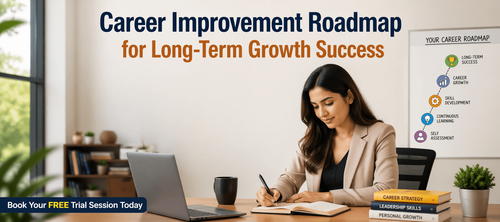

How to Build a Strategic Career Growth Plan for Long-Term: A Practical 5-Phase System to Accelerate Your Career with Clarity, Skills, and Visibility
Many working professionals feel stuck in their careers—not because they lack talent, ambition, or effort, but because they lack a structured system to move forward. They work hard, meet deadlines, complete projects, and stay committed, yet promotions feel slow, visibility remains limited, and career direction becomes unclear.
Over time, this creates frustration. You may start questioning whether you are building the right skills, moving toward the right opportunities, or positioning yourself effectively for long-term growth. The real challenge is not effort—it is the absence of a clear roadmap that connects where you are today to where you want to be tomorrow.
This is exactly where a structured Career Development Improvement Roadmap becomes powerful. Instead of reacting to opportunities randomly, you begin managing your career strategically through clarity, goal architecture, skill acceleration, personal branding, and momentum-building systems.
A well-designed roadmap helps you break down long-term ambitions into actionable steps. It allows you to identify skill gaps early, prioritize high-impact learning, and align your daily work with meaningful career outcomes. Rather than depending on external validation alone, you start tracking your own growth using measurable progress indicators such as skill mastery, project impact, leadership readiness, and communication effectiveness.
Over time, this approach shifts your mindset from “working hard” to “growing intentionally.” You begin to see patterns in your performance, understand where you add the most value, and make informed decisions about the roles, projects, and responsibilities you should pursue next. This clarity not only improves confidence but also increases visibility within your organization and industry.
The roadmap also emphasizes consistency over intensity. Small, structured improvements—applied daily or weekly—compound into significant career transformation. Whether it is improving domain expertise, strengthening problem-solving ability, or building a professional network, each action becomes part of a larger system rather than isolated effort.
Ultimately, career growth is not a matter of chance—it is a result of design. When you replace randomness with structure, and effort with direction, you move from feeling stuck to becoming strategically positioned for continuous advancement and long-term success.
Download these resources and apply them alongside your daily work for improved clarity, productivity, and professional growth. You can also book a free trial to gain expert guidance and enhance your communication, problem-solving, and decision-making skills. The materials are designed in a clear, structured format to help professionals learn efficiently and implement insights with confidence.
Who Is This Blog For?
- Early and mid-career professionals seeking structured growth direction
- Career switchers planning a transition into new industries
- Managers preparing for leadership roles and promotions
- Consultants and freelancers strengthening their professional positioning
- Working professionals feeling stuck despite consistent effort
Why This Topic Matters Today?
Today’s career environment is faster, more competitive, and more skill-driven than ever before. Many professionals assume career growth happens automatically with experience. In reality, growth happens through intentional planning and visibility.
Common career challenges highlighted in the roadmap include:
- Unclear or undefined career goals
- Hidden skill gaps affecting promotion readiness
- Weak personal brand and low professional visibility
- Lack of accountability systems to track progress
- Stalled momentum despite strong effort
Professionals who treat their careers strategically advance faster because they align skills, relationships, and positioning with long-term goals instead of relying on chance opportunities.
Career development is no longer a one-time activity like updating a resume. It is an ongoing professional practice that requires clarity, structured action, and regular review.
Core Concept or Framework Explained
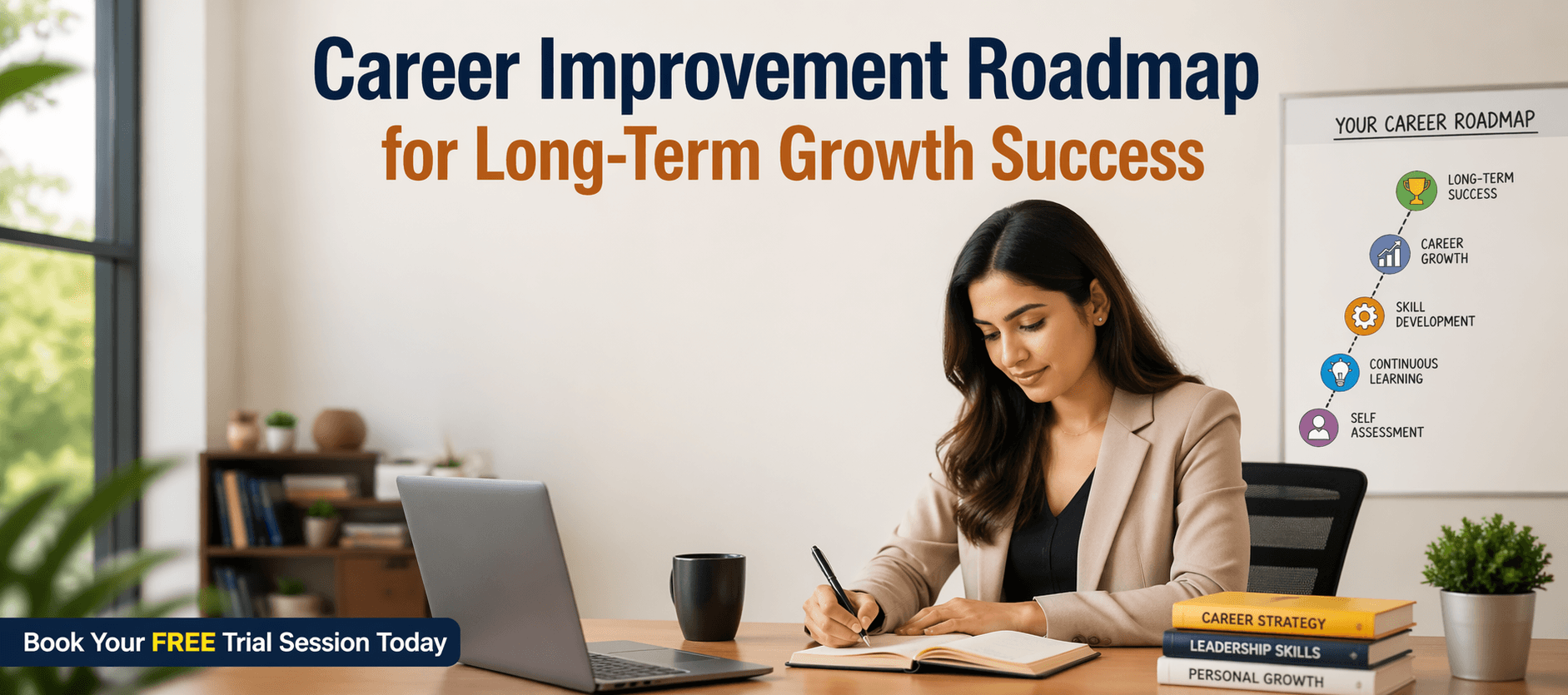
The Career Development Improvement Roadmap introduces a practical five-phase system designed to help professionals move from uncertainty to intentional growth.
The five phases include:
- Self-Audit and Clarity
- Goal Architecture
- Skill Acceleration
- Visibility and Brand
- Momentum and Review
Together, these phases function like a career operating system rather than a checklist. They help professionals identify strengths, set structured goals, build relevant skills, improve visibility, and sustain long-term progress.
Instead of repeating the same year of effort multiple times, professionals using this roadmap move through clearly defined growth stages with measurable outcomes.
How This Blog and Guidebook Help You?
This roadmap supports professionals in building career clarity and momentum through structured action.
It helps you:
- Identify strengths and hidden skill gaps quickly
- Build clear 90-day, 12-month, and 3-year career goals
- Prioritise high-impact learning instead of random courses
- Improve visibility with decision-makers and recruiters
- Build systems that sustain long-term career momentum
Rather than guessing your next move, the roadmap helps you plan it confidently.
Step-by-Step Breakdown
Phase 1: Self-Audit and Clarity
Every strong career strategy begins with understanding your starting point. Without clarity about your strengths, values, and satisfaction level, career decisions become reactive rather than intentional.
The self-audit process includes three structured components:
Skills inventory
- List your top five technical skills and rate them honestly
- List your top five soft skills and rate them
- Identify two skills required in your role that need improvement
- Identify two strong skills you are currently underusing
Values and motivators review
- Identify the three most important factors you value at work
- Evaluate how well your current role aligns with these values
- Recognise what drains your energy during the workday
Career satisfaction reflection
- Rate your current career satisfaction level
- Define what success would look like in three years
- Identify the single biggest blocker affecting your progress
This 30-minute clarity exercise creates the foundation for every decision that follows.
Phase 2: Goal Architecture
Most professionals set goals like “get promoted” or “switch roles,” but these goals fail because they lack structure.
The roadmap introduces a three-horizon goal architecture framework:
90-Day Sprint Goals
These are immediate actions you can start this week. Limit them to two or three focused priorities.
Examples include:
- Completing a certification
- Improving presentation skills
- Starting a portfolio project
12-Month Milestone Goals
These represent career-defining achievements such as:
- Promotion into leadership roles
- Transition into a new domain
- Managing a strategic project
3-Year Vision Goals
These define your long-term professional direction, including:
- Desired job title
- Leadership responsibilities
- Income growth expectations
- Lifestyle alignment
When short-term actions support long-term direction, momentum compounds naturally.
Phase 3: Skill Acceleration
Skills lose relevance faster than ever in today’s workplace. Professionals who upgrade strategically stay competitive and visible.
The roadmap recommends using a Skill Priority Matrix to identify which skills deserve immediate focus based on market demand and career leverage.
A structured 60-day skill sprint plan includes:
Week 1–2
- Identify your top two priority skills
Week 3–4
- Select high-quality learning resources
Week 5–6
- Begin structured learning sessions four days per week
Week 7–8
- Apply new skills to real workplace projects
This ensures learning produces visible results rather than unused certificates.
Phase 4: Visibility and Brand
Talent alone rarely drives career advancement. Visibility multiplies opportunity.
Your personal brand consists of three important components:
Expertise signal
Create a one-sentence positioning statement describing:
- Who you help
- What outcome you create
- How you create value
Relationship network
Build intentional connections with professionals already working in your target roles.
Recommended approach
- Identify ten professionals to connect with
- Reach out to two each month
- Focus on value-first conversations
Presence footprint
Improve how and where your professional voice appears.
Examples include:
- Sharing one insight weekly on LinkedIn
- Speaking up in two meetings per week
- Attending one industry event each quarter
Consistent visibility increases recognition from decision-makers.
Phase 5: Momentum and Review
Most career plans fail not because they are weak, but because they are forgotten.
Momentum requires a simple but consistent review system.
Weekly review routine
- Review your 90-day goals
- Log one achievement
- Identify one blocker
- Plan one action for the next week
Monthly review routine
- Assess milestone progress
- Evaluate learning progress
- Reconnect with one professional contact
Quarterly review routine
- Update goals
- Refresh skill priorities
- Add three new connections
- Document achievements
Annual review routine
- Repeat the full self-audit
- Redefine your three-year vision
- Update your personal brand positioning
Consistency transforms effort into measurable progress.
Common Mistakes or Pitfalls to Avoid
Many professionals slow their own growth through avoidable mistakes.
Common pitfalls include:
- Setting vague goals without timelines
- Learning new skills without applying them
- Networking only when job searching
- Skipping honest self-assessment
- Failing to schedule regular career reviews
A stronger approach includes:
- Defining measurable goals with deadlines
- Applying new skills within 30 days
- Building relationships consistently
- Completing structured self-audits annually
- Protecting weekly review time
Small behavioural shifts create significant long-term advantages.
How Should You Use This Guidebook Effectively?
To get maximum value from this roadmap, follow a structured workflow.
Recommended usage approach:
- First read the entire roadmap to understand the full system
- Complete the self-audit worksheet honestly
- Build your three-horizon goal architecture
- Identify two priority skills for acceleration
- Update your LinkedIn positioning statement
- Schedule weekly career review sessions
Estimated time investment:
- Self-audit completion: 30 minutes
- Goal architecture setup: 45 minutes
- Weekly review habit: 15 minutes
Treat career planning as a recurring professional practice rather than a one-time activity.
Key Takeaways
- Career growth requires structure, not just effort
- Self-audit clarity creates better decision-making
- Three-horizon goal architecture builds momentum
- Strategic skill-building increases promotion readiness
- Personal branding improves visibility with decision-makers
- Weekly reviews sustain long-term career progress
- Small consistent actions compound into major career outcomes
Your Next Step: Accelerate Your Career with PlanetSpark
Creating an impact-driven resume is not just about landing your next job—it’s about owning your professional story and presenting it with clarity, confidence, and credibility. When your resume clearly communicates value, results, and impact, opportunities follow naturally.
At PlanetSpark, we are committed to empowering working professionals with practical, outcome-focused resources that drive real career growth. From resume building and workplace communication to leadership presence and professional writing, our programs are designed to help you succeed in today’s fast-evolving job market.
Visit https://www.planetspark.in/resources to explore:
- Career and resume-building guides
- Workplace communication and professional writing resources
- Skill-development tools curated for working professionals
Want a deeper, hands-on experience?
You can also book a free trial session to learn more about PlanetSpark’s Working Professional Courses, designed to accelerate your career through personalised coaching, real-world practice, and expert guidance.
Your career deserves more than generic advice.
It deserves clarity, confidence, and measurable impact.
Start building that advantage today—with PlanetSpark.
Personalized Communication Roadmaps
Record a video to get a AI generated personalized communication reports