
Career Pivot Strategy Framework: The Roadmap to a Successful Switch
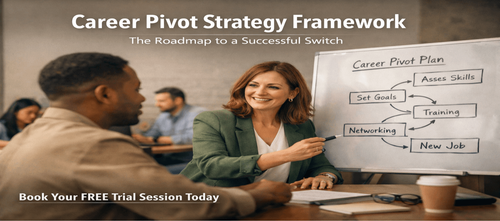

Career Pivot Strategy Framework: Your Step-by-Step Guide to Making a Confident Career Change
A career pivot can feel like a daunting challenge, but with the right strategy, it becomes an empowering opportunity. Whether you're a consultant craving a new challenge, a manager eyeing a different industry, or an early-career professional who took a wrong turn — the Career Pivot Strategy Framework provides a structured, actionable path to pivot with clarity, confidence, and purpose.
Download these resources and apply them alongside your daily work for improved clarity, productivity, and professional growth. You can also book a free trial to gain expert guidance and enhance your communication, problem-solving, and decision-making skills. The materials are designed in a clear, structured format to help professionals learn efficiently and implement insights with confidence.
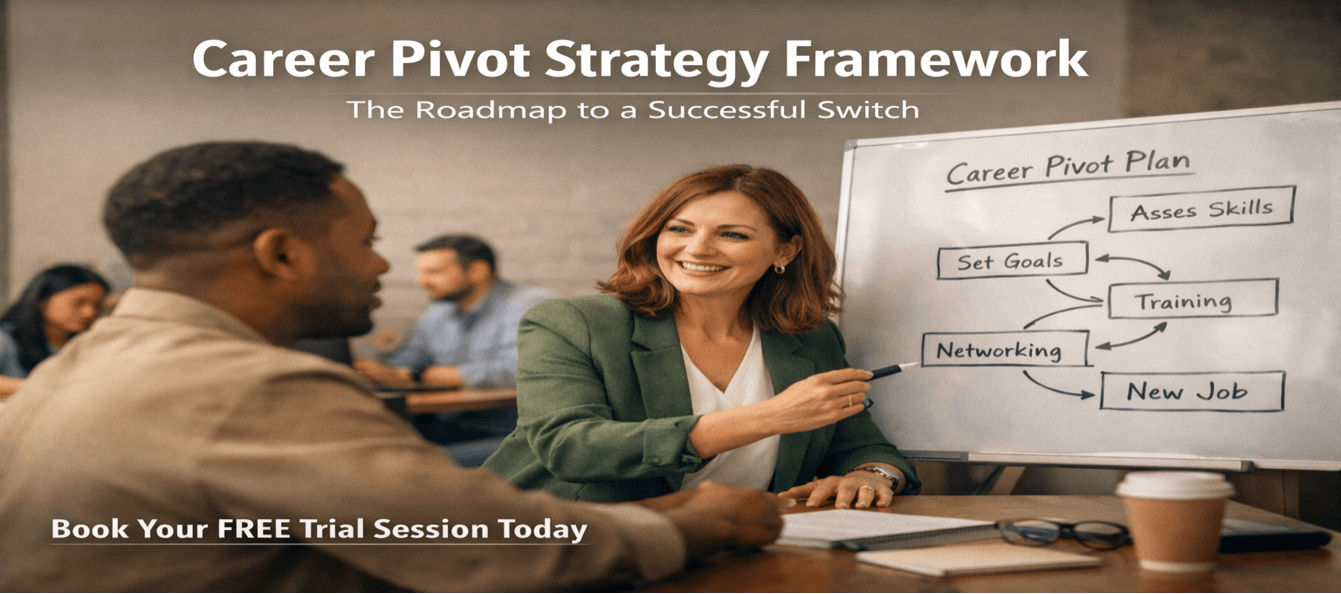
Who Is This Blog For?
This blog is for professionals at
various stages of their career who are considering a pivot, including:
Consultants looking to diversify or refocus their offerings
Managers transitioning into a new industry or role
Early-career professionals exploring a new path after realizing they’re not aligned with their initial choice
Professionals wanting to change industries but unsure how to leverage their existing skills and experience in a new field
If you’re ready to pivot your career but are unsure where to start, this framework will give you the clarity and structure you need to make your transition with confidence.
Why This Topic Matters Today?
Career pivots are becoming increasingly common. According to recent data, 40% of professionals change industries at least once in their career. Yet many individuals don’t know how to strategically approach such a shift. Without a solid framework, it’s easy to feel lost or discouraged when faced with the uncertainty of starting anew in a different field.
The Career Pivot Strategy Framework helps you break down the pivot process into manageable, actionable steps. It ensures that your career change is grounded in self-awareness, clear goals, and actionable steps — rather than being driven by frustration or uncertainty.
By following a structured, repeatable process, you dramatically increase your chances of a successful and fulfilling career pivot.
Core Concept or Framework Explained
The Career Pivot Strategy Framework offers a clear, five-phase process designed to help professionals navigate their career transition with purpose and confidence. Each phase builds on the last, ensuring that you’re making deliberate and informed decisions. Here’s an overview of the key phases:
Audit: Understand your starting point by assessing your skills, experiences, and motivations.
Target: Define where you want to go by clarifying your goals, target roles, and industries.
Bridge: Close any skill gaps with strategic learning and development, ensuring you’re competitive in your new role.
Position: Build your personal brand and narrative to make sure your past experience aligns with your future target.
Execute: Put your plan into action by networking, applying strategically, and preparing for interviews.
How This Blog and Framework Help You?
The Career Pivot Strategy Framework provides you with:
Clarity: Understand your current skills, goals, and motivations, and map them to your target role or industry.
Structure: Follow a well-defined process that moves you from self-assessment to job application, reducing the overwhelm of a career change.
Confidence: By breaking down the pivot process into clear phases, you’ll feel more confident in making decisions that align with your professional goals.
Actionable Steps: The framework provides you with worksheets, reflection prompts, and real-world examples that help you stay on track and achieve measurable success during your career pivot.
Step-by-Step Breakdown
Audit: Know Your Starting Point
The first step is to take stock of your current career. Conduct a thorough self-assessment to understand your strengths, transferable skills, and experiences. This phase helps you identify what you’re bringing to the table and where you’re starting from.
You’ll want to reflect on:
Your past roles and responsibilities
Your skills inventory (hard skills, soft skills, and meta-skills)
Your values and career motivations
Target: Define Your Destination
Once you understand where you are, the next step is defining where you want to go. What roles or industries align with your skills and goals?
In this phase, you’ll:
Research potential target industries and roles
Define your target role’s requirements and expectations
Create a transition thesis that clearly articulates why you’re making the change and what you bring to the new role
Bridge: Close the Skill Gap
After defining your target, you’ll almost certainly find that there’s a gap between where you are and where you need to be. The Bridge phase is all about closing that gap, not by becoming an expert overnight but by acquiring the skills that matter most.
Focus on:
Completing relevant courses or certifications
Building projects or portfolios that demonstrate your skills in action
Gaining hands-on experience in the field (e.g., through side projects or volunteering)
Position: Build Your Pivot Narrative
Your career narrative is crucial in positioning yourself for a successful pivot. Instead of apologizing for your career change, you’ll want to craft a compelling “pivot narrative” that positions your background as an asset to your new industry.
In this phase, you’ll:
Reframe your past experiences in a way that highlights transferable skills
Update your resume and LinkedIn profile to reflect your pivot
Develop a personal brand that resonates with your target industry and role
Execute: Apply and Network
The final phase is where the rubber meets the road. It’s time to put your plan into action by applying for jobs and networking strategically. This phase is crucial for building visibility in your new industry and making meaningful connections.
Key tasks include:
Tailoring your resume and cover letters for each job application
Networking with industry professionals and engaging on LinkedIn
Preparing for interviews by articulating your pivot story and demonstrating your transferable skills
Common Mistakes or Pitfalls to Avoid
Pivoting without enough self-reflection: Moving too quickly through the self-assessment phase often leads to a misaligned career pivot. Take the time to deeply reflect on your motivations and transferable skills before proceeding.
Over-investing in credentials: While learning new skills is essential, avoid over-investing in certifications or courses without applying them in real-world contexts.
Apologizing for the pivot: Don’t view your career change as a liability. Own your pivot story and emphasize how your unique background will bring value to your new role.
Networking too late: Networking should be an ongoing part of your transition. Start building relationships early, even before applying for jobs.
How Should You Use This Framework Effectively?
Follow the framework step-by-step: Don’t rush through any phase. Each one is designed to lay the foundation for the next. The more thought you put into each phase, the smoother your transition will be.
Review and revise your plan regularly: A career pivot is a dynamic process, and you may find that your goals or industry landscape evolve as you move forward. Make sure to revisit and update your plan regularly.
Stay accountable: Use the framework as a tool for accountability. Share your progress with a mentor or accountability partner who can help guide your journey.
Key Takeaways
A pivot is a structured process, not a leap of faith: Follow each phase to ensure that your career change is strategic, not reactive.
Transferable skills are your greatest asset: Focus on your skills and how they translate to your new role, rather than focusing solely on industry-specific experience.
Own your narrative: Don’t apologize for your career pivot; position your past experiences as assets that uniquely qualify you for your new role.
Networking is crucial: Make networking a priority throughout your career pivot. Relationships in your new industry will open doors and help you secure opportunities.
Your Next Step: Accelerate Your Career with PlanetSpark
Creating an impact-driven resume is not just about landing your next job—it’s about owning your professional story and presenting it with clarity, confidence, and credibility. When your resume clearly communicates value, results, and impact, opportunities follow naturally.
At PlanetSpark, we are committed to empowering working professionals with practical, outcome-focused resources that drive real career growth. From resume building and workplace communication to leadership presence and professional writing, our programs are designed to help you succeed in today’s fast-evolving job market.
Visit https://www.planetspark.in/resources
to explore:
Career and resume-building guides
Workplace communication and professional writing resources
Skill-development tools curated for working professionals
Want a deeper, hands-on experience?
You can also book a free trial session to learn more about PlanetSpark’s Working Professional Courses, designed to accelerate your career through personalised coaching, real-world practice, and expert guidance.
Your career deserves more than generic advice.
It deserves clarity, confidence, and measurable impact.
Start building that advantage today—with PlanetSpark.
Personalized Communication Roadmaps
Record a video to get a AI generated personalized communication reports