
Career Risk Audit Guide to Strengthen Job Stability
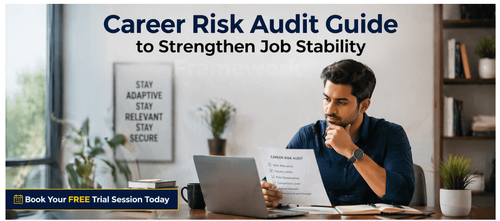

Strategic Career Risk Audit Management: A Practical Guide to Future-Proof Your Professional Growth
In today’s rapidly evolving job market, staying employed is no longer the same as staying secure. Many working professionals assume that consistent performance, long working hours, or loyalty to a company automatically translates into career stability. But the reality is far more complex. The biggest career risks are rarely sudden—they build quietly over time.
You might be delivering strong results in your current role, hitting deadlines, and receiving positive feedback—yet still be at risk without realizing it. Why? Because the external market is constantly changing. New technologies are replacing old processes, industries are shifting directions, and employers are prioritising different skill sets than they did even a few years ago. What feels stable internally may already be outdated externally.
Consider this: a role that once required deep manual expertise may now be automated. A high-performing professional in a declining industry may still face limited future opportunities. Even strong performers can find themselves vulnerable if their work lacks visibility beyond their immediate team or organisation. These are not dramatic career failures—they are silent risks that compound over time.
Another overlooked challenge is the illusion of progress. Being busy often feels like growth, but not all work contributes to long-term career value. If your daily responsibilities are not helping you build transferable skills, expand your network, or increase your market relevance, you may be investing effort without improving your future prospects.
At the same time, most professionals do not have a structured way to evaluate their career health. Decisions are often based on instinct, short-term comfort, or external pressure rather than clear data. This leads to reactive career moves—waiting too long to switch roles, accepting opportunities without proper evaluation, or missing high-potential paths altogether.
This is where a structured Career Risk Audit becomes a powerful tool. Instead of relying on guesswork, it provides a clear, data-driven framework to assess your current position, identify hidden risks, and take targeted action. It helps you move from uncertainty to clarity, from reaction to strategy, and from stagnation to growth.
By understanding where you stand across critical dimensions like skills, industry trends, network strength, role uniqueness, and financial readiness, you gain control over your career trajectory. You stop drifting and start making deliberate, informed decisions that align with long-term success.
Download these resources and apply them alongside your daily work for improved clarity, productivity, and professional growth. You can also book a free trial to gain expert guidance and enhance your communication, problem-solving, and decision-making skills. The materials are designed in a clear, structured format to help professionals learn efficiently and implement insights with confidence.
Who Is This Blog For?
- Working professionals feeling stuck or unsure about their next career move
- Individuals concerned about job security or long-term employability
- Career switchers evaluating risks before transitioning industries
- Managers and leaders guiding team members in career development
- Professionals aiming to proactively manage career growth instead of reacting to change
Why This Topic Matters Today?
The modern workplace is evolving faster than ever before. Industries are being reshaped by automation, artificial intelligence, and global competition. Skills that were valuable five years ago may already be losing relevance today.
One of the biggest challenges professionals face is invisible career risk. Unlike financial risk, which is often tracked and measured, career risk is ignored until it becomes urgent. This leads to:
- Delayed career decisions
- Reduced negotiating power during transitions
- Increased dependency on current roles or employers
- Missed opportunities for growth and advancement
The guide highlights a critical insight: drifting in your career is itself a risk. Professionals who proactively assess and manage their career risks consistently outperform those who wait for external triggers.
Core Concept or Framework Explained
At the heart of this guide is the Career Risk Framework, which evaluates your professional exposure across five key dimensions. These dimensions provide a 360-degree view of your career health and highlight where you are secure versus vulnerable.
Skill Currency
This dimension evaluates whether your current skills are still relevant in the market. It focuses on your ability to stay aligned with future demand rather than relying on outdated expertise.
Industry Stability
Even high-performing professionals can struggle if their industry is declining. This dimension assesses macro-level trends such as growth, disruption, and long-term sustainability.
Network Strength
Your network determines access to opportunities. This dimension focuses on the depth, diversity, and activation of your professional relationships.
Role Replaceability
This examines how easily your role could be replaced within your organisation. It highlights the importance of visibility, differentiation, and unique value.
Financial Resilience
Your financial position directly impacts your career flexibility. This dimension evaluates your ability to take calculated risks and navigate transitions confidently.
Together, these five dimensions create a comprehensive framework for strategic career decision-making.
How This Blog and Guidebook Help You?
This blog and the underlying worksheet provide you with:
- A structured framework to evaluate your career risks objectively
- Practical tools to identify hidden vulnerabilities
- Clear action steps to strengthen weak areas
- A repeatable system for ongoing career assessment
By applying these insights, you can move from reactive decision-making to proactive career ownership, ensuring long-term growth and stability.
Step-by-Step Breakdown
Step 1: Skill Currency Assessment
Your skills are your most valuable career asset—but only if they remain relevant.
Key actions include:
- Listing your current skills and expertise
- Comparing them against market demand
- Identifying gaps and future skill requirements
For example, a professional skilled in traditional tools may find that newer technologies are replacing them. Recognising this early allows for timely upskilling.
Step 2: Industry Stability and Disruption Scan
Your industry plays a critical role in your long-term career trajectory.
This step involves:
- Evaluating industry growth trends
- Assessing the impact of automation and AI
- Monitoring investment patterns and hiring trends
A declining industry can limit opportunities, regardless of individual performance.
Step 3: Network Strength Audit
Many professionals overestimate their network effectiveness.
This step focuses on:
- Building relationships across industries and roles
- Maintaining active and meaningful connections
- Ensuring reciprocity by offering value to others
A strong network is not about numbers—it’s about access and trust.
Step 4: Role Replaceability Index
Understanding how replaceable your role is can be uncomfortable but necessary.
Key reflection areas include:
- Your visibility within the organisation
- The uniqueness of your contributions
- The time required to replace your role
- External demand for your skills
Professionals who differentiate themselves reduce their risk significantly.
Step 5: Financial Resilience Runway
Financial stability is often overlooked in career planning.
This step involves:
- Calculating your monthly expenses
- Assessing your current savings
- Determining how many months you can sustain without income
A strong financial runway gives you the confidence to make strategic career moves rather than reactive ones.
Step 6: Career Risk Score Dashboard
Once all dimensions are evaluated, you combine them into a single score.
This helps you:
- Identify high-risk areas
- Prioritise actions
- Create a focused improvement plan
Step 7: 90-Day Career Risk Reduction Plan
The guide emphasises execution over analysis.
A structured 90-day plan includes:
- Setting clear goals based on weak areas
- Building consistent weekly habits
- Tracking progress and adjusting strategies
This ensures that insights translate into measurable outcomes.
Common Mistakes or Pitfalls to Avoid
Even experienced professionals fall into predictable traps.
Some of the most common mistakes include:
- Confusing busyness with career security
- Conducting career audits only during crises
- Relying solely on internal feedback
- Ignoring financial preparedness
- Believing credentials alone increase value
- Failing to maintain accountability
A better approach is to:
- Regularly evaluate your market position
- Seek external validation and feedback
- Combine learning with practical application
- Build financial resilience alongside career growth
How Should You Use This Guidebook Effectively?
To maximise the value of this worksheet, follow a structured approach:
- Start with a quick overview of all sections
- Complete each dimension honestly and sequentially
- Use the framework quarterly for continuous tracking
- Share insights with a mentor or accountability partner
Suggested time investment:
- Initial audit: 60–90 minutes
- Quarterly reviews: 30–45 minutes
Treat this process like a financial audit—data-driven, honest, and focused on clarity rather than comfort.
Key Takeaways
- Career risk is always present and must be actively managed
- Skills must evolve continuously to remain relevant
- Industry trends significantly impact career stability
- Strong networks create opportunities and career resilience
- Differentiation reduces replaceability risk
- Financial readiness enables strategic career decisions
- Consistent action over time leads to long-term growth
Your Next Step: Accelerate Your Career with PlanetSpark
Creating an impact-driven resume is not just about landing your next job—it’s about owning your professional story and presenting it with clarity, confidence, and credibility. When your resume clearly communicates value, results, and impact, opportunities follow naturally.
At PlanetSpark, we are committed to empowering working professionals with practical, outcome-focused resources that drive real career growth. From resume building and workplace communication to leadership presence and professional writing, our programs are designed to help you succeed in today’s fast-evolving job market.
Visit https://www.planetspark.in/resources to explore:
- Career and resume-building guides
- Workplace communication and professional writing resources
- Skill-development tools curated for working professionals
Want a deeper, hands-on experience?
You can also book a free trial session to learn more about PlanetSpark’s Working Professional Courses, designed to accelerate your career through personalised coaching, real-world practice, and expert guidance.
Your career deserves more than generic advice.
It deserves clarity, confidence, and measurable impact.
Start building that advantage today—with PlanetSpark.
Personalized Communication Roadmaps
Record a video to get a AI generated personalized communication reports