
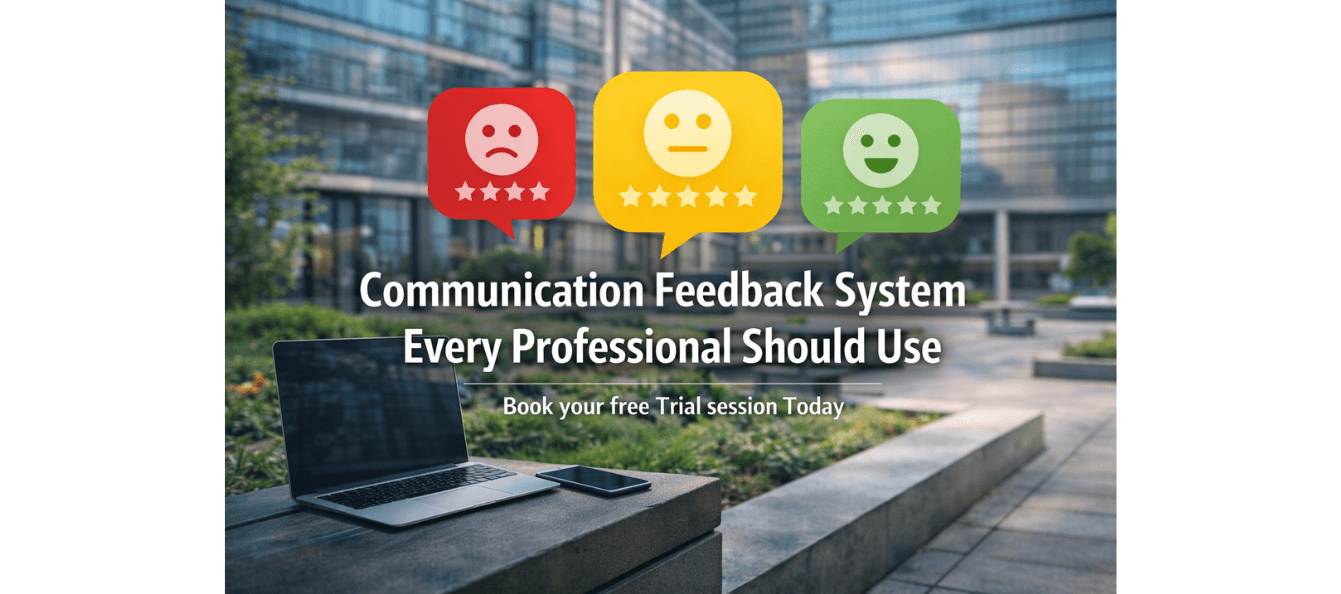
Communication Feedback System Every Professional Should Use


Turn Feedback into Growth and Here Is A Smart Communication Tracker to Boost Your Career Progress
You may be doing everything right—delivering solid work, meeting deadlines, and contributing to your team—yet something still holds you back. Despite your consistent performance, you might notice that your progress doesn’t fully reflect your effort. Feedback like “be more confident,” “be clearer,” or “improve your communication” keeps coming up, but it rarely translates into actionable change. It often feels too general to act on, leaving you unsure about what exactly to improve or how to approach it.
This is a common challenge for working professionals. Communication feedback is often vague, inconsistent, and easily forgotten. You might receive input in passing during meetings or reviews, but without a structured way to capture it, those insights don’t turn into meaningful progress. Over time, the same patterns repeat, and improvement feels slow or uncertain. Without a system to capture and act on it, growth becomes not only slow but also unpredictable and difficult to measure.
What makes this more challenging is that communication improvement requires consistency and reflection. It’s not something that changes overnight, and without tracking patterns or recurring feedback, it’s easy to miss the bigger picture. Many professionals rely on memory or occasional feedback sessions, which makes it harder to identify trends and take focused action.
The Communication Feedback Tracker solves this problem by turning everyday conversations into structured learning opportunities. Instead of letting feedback slip by, it helps you capture key insights in real time and organize them in a way that’s easy to review and act on. It creates clarity around what needs to improve and how you can approach it step by step.
It gives you a clear, repeatable system to capture feedback, reflect on it, and turn it into measurable improvement. By consistently using this approach, you can track your progress, identify patterns, and build stronger communication habits over time—making your growth more intentional, visible, and sustainable.
Book your free trial session today with Planetspark.
Download for more details or PDF file.
Who Is This Blog For?
This blog and the Communication Feedback Tracker are designed for:
- Working professionals with 0–15 years of experience aiming for career growth
- Managers and team leads handling meetings, feedback, and stakeholder communication
- Consultants and client-facing professionals who rely on influence and clarity
- Career switchers looking to strengthen communication in new roles
- Job seekers preparing for interviews, presentations, and professional interactions
Why This Topic Matters Today
In today’s workplace, communication is not a soft skill—it is a career-defining skill. Promotions, leadership opportunities, and client trust are heavily influenced by how clearly and effectively you communicate.
The guidebook highlights a critical reality: professionals often hit a ceiling not because of technical limitations, but because of communication gaps. Feedback exists, but it is rarely structured or consistently applied.
Without a system:
- Feedback is forgotten within hours or days
- Patterns go unnoticed
- Improvement becomes reactive rather than intentional
With a structured approach, communication becomes measurable, improvable, and strategically aligned with career growth.
Core Concept or Framework Explained
At the heart of the Communication Feedback Tracker are two powerful frameworks: the Three Pillars of Communication and the Capture–Reflect–Act system.
The Three Pillars of Communication
Every communication interaction can be evaluated across three dimensions:
- Clarity and Structure: How clearly and logically you express your ideas
- Emotional Intelligence: How well you read the room, listen, and respond
- Impact and Influence: How effectively your communication drives action and outcomes
These pillars replace vague feedback with a structured evaluation system. Instead of asking “Did this go well?”, you assess what specifically worked and what needs improvement.
The Capture–Reflect–Act System
This is the engine of continuous improvement:
- Capture: Log feedback immediately after key interactions
- Reflect: Review patterns and insights weekly
- Act: Translate insights into specific behavioural changes
This system ensures that feedback is not wasted—it becomes a consistent driver of growth.
How This Blog and Help You?
This blog and guidebook work together to transform how you approach communication: - They help you identify patterns you would otherwise miss
- They convert vague feedback into actionable insights
- They create a repeatable improvement system you can use weekly
- They build self-awareness and confidence over time
- They enable measurable progress that reflects in real-world outcomes
The result is not just better communication, but stronger professional presence and credibility.
Step-by-Step Breakdown
Step 1: Capture Feedback in Real Time
The first step is building the habit of capturing feedback immediately after important interactions. Most professionals lose valuable insights simply because they do not record them.
Focus on high-impact moments such as:
- Client meetings
- Presentations
- Performance discussions
- Cross-functional collaborations
Capture includes:
- Identifying the interaction
- Tagging it to a communication pillar
- Recording exact feedback received
The guidebook distinguishes between two types of feedback:
- Solicited feedback, which is specific and requested intentionally
- Unsolicited feedback, which appears naturally in conversations and reactions
Capturing both types ensures a complete view of your communication performance.
Step 2: Reflect and Identify Patterns
Capturing feedback alone is not enough. The real value comes from structured reflection.
A weekly reflection session helps you:
- Identify repeated feedback patterns
- Recognise communication triggers in high-pressure situations
- Spot strengths that can be used more intentionally
- Evaluate performance across the three pillars
Pattern recognition is critical. A single comment may not mean much, but repeated feedback across different contexts reveals real gaps or strengths.
Step 3: Act Through Micro-Commitments
The most important step is turning insights into action. Many professionals reflect but fail to change behaviour because they do not define clear actions.
The guidebook introduces micro-commitments—small, specific, testable actions such as:
- Starting meetings with a clear key message
- Pausing to invite questions after explaining a point
- Adjusting tone in high-pressure conversations
Each micro-commitment includes:
- The feedback that triggered it
- The pillar it relates to
- The behaviour to change
- The scenario to practise it
- A clear definition of success
These small actions compound over time into significant communication improvement.
Step 4: Use the Weekly Feedback Log
The Weekly Feedback Log is the core tracking tool of the system. It helps you document:
- Date and type of interaction
- Communication pillar
- Exact feedback received
- Personal observations
- Actions taken or planned
Completing at least three meaningful entries per week creates a consistent feedback loop and builds a record of your progress.
Step 5: Conduct a Monthly Communication Audit
The monthly audit checklist helps you step back and evaluate your overall communication performance.
It covers key areas such as:
- Verbal communication clarity and confidence
- Non-verbal presence and engagement
- Written communication effectiveness
- Feedback and listening habits
This process helps you identify priority areas instead of trying to improve everything at once.
Step 6: Complete a Monthly Reflection Deep Dive
The reflection worksheet encourages deeper thinking through structured prompts:
- Your biggest communication win
- A challenging moment and what you learned
- Feedback that surprised you
- Your focus area for the next month
This step strengthens self-awareness and aligns your improvement efforts with long-term growth.
Step 7: Track Progress with the Monthly Scorecard
The scorecard allows you to rate yourself across the three pillars over time.
Tracking these scores helps you:
- Measure improvement objectively
- Identify consistent strengths
- Focus on areas that need attention
Even small improvements in scores represent meaningful professional growth.
Common Mistakes or Pitfalls to Avoid
The guidebook highlights several common mistakes that can limit progress:
- Tracking too many interactions without depth instead of focusing on meaningful insights - Logging only negative feedback, which leads to demotivation
- Treating every comment as truth instead of identifying patterns
- Setting vague action items like “be clearer” without defining behaviour
The better approach is to:
- Focus on quality over quantity
- Balance strengths and gaps
- Look for repeated signals
- Define specific, actionable improvements
How Should You Use This Guidebook Effectively?
To get the best results, follow a structured workflow:
- Read the guidebook once to understand the system
- Start logging feedback immediately after key interactions
- Schedule a weekly 15–20 minute reflection session
- Set one micro-commitment per week
- Conduct a monthly audit and deep reflection
- Track progress consistently over time
This process requires minimal time but delivers compounding results when followed consistently.
Key Takeaways
- Communication improvement requires a system, not just intention
- The three pillars provide a clear framework for evaluation
- Capturing feedback immediately increases accuracy and retention
- Weekly reflection helps identify patterns and triggers
- Micro-commitments turn insights into real behaviour change
- Consistency leads to measurable, long-term growth
- Strong communication directly impacts career progression
Your Next Step: Accelerate Your Career with PlanetSpark
Creating an impact-driven resume is not just about landing your next job—it’s about owning your professional story and presenting it with clarity, confidence, and credibility. When your resume clearly communicates value, results, and impact, opportunities follow naturally.
At PlanetSpark, we are committed to empowering working professionals with practical, outcome-focused resources that drive real career growth. From resume building and workplace communication to leadership presence and professional writing, our programs are designed to help you succeed in today’s fast-evolving job market.
Visit https://www.planetspark.in/resources to explore:
- Career and resume-building guides
- Workplace communication and professional writing resources
- Skill-development tools curated for working professionals
Want a deeper, hands-on experience?
You can also book a free trial session to learn more about PlanetSpark’s Working Professional Courses, designed to accelerate your career through personalised coaching, real-world practice, and expert guidance.
Your career deserves more than generic advice.
It deserves clarity, confidence, and measurable impact.
Personalized Communication Roadmaps
Record a video to get a AI generated personalized communication reports