
Conflict Communication Checklist Every Professional Needs
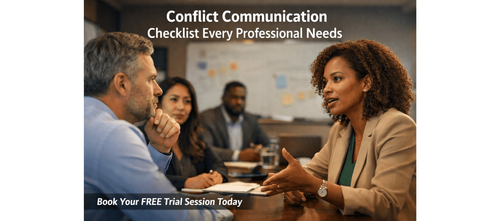

Conflict Communication Checklist: The Ultimate Step-by-Step Guide to Handle Workplace Conversations with Confidence
In today’s professional world, your ability to communicate during conflict can define your career trajectory more than your technical expertise. You might be highly skilled, reliable, and hardworking—but if you struggle to handle difficult conversations, those strengths often go unnoticed.
Conflict shows up everywhere: missed deadlines, unclear expectations, team disagreements, client pushback, or feedback conversations that don’t go as planned. Yet, most professionals are never trained to handle these situations effectively. They either avoid the conversation, react emotionally, or communicate in ways that escalate the problem instead of resolving it.
The result is costly—strained relationships, reduced trust, lost opportunities, and long-term damage to professional credibility.
What high-performing professionals do differently is not avoiding conflict—it is navigating it with clarity, structure, and composure. They rely on proven frameworks, intentional language, and disciplined follow-through.
This is exactly where a structured conflict communication checklist becomes powerful. It gives you a repeatable system to prepare, communicate, and follow through—so every difficult conversation becomes an opportunity for alignment and growth.
Download these resources and apply them alongside your daily work for improved clarity, productivity, and professional growth. You can also book a free trial to gain expert guidance and enhance your communication, problem-solving, and decision-making skills. The materials are designed in a clear, structured format to help professionals learn efficiently and implement insights with confidence.
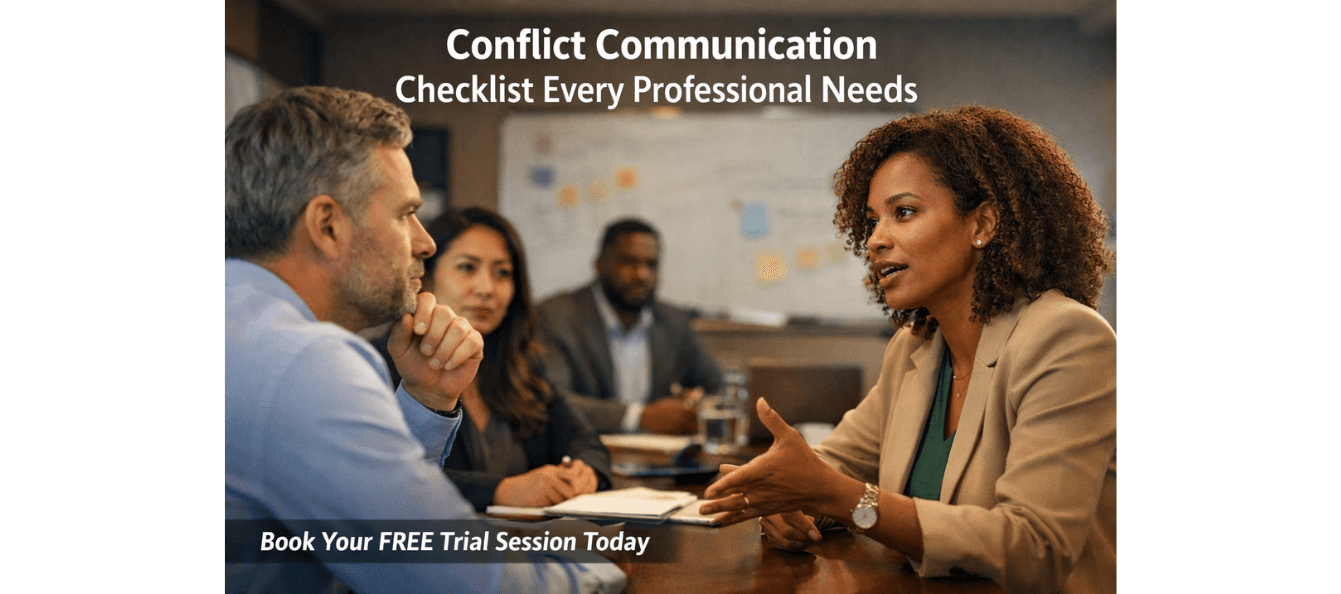
Who Is This Blog For?
- Working professionals facing frequent workplace conflicts
- Managers handling team performance and feedback conversations
- Career switchers adapting to new work environments
- Consultants and freelancers managing client expectations
- Leaders aiming to strengthen communication and influence
Why This Topic Matters Today?
Modern workplaces are fast-paced, collaborative, and often high-pressure. This increases the frequency and complexity of conflict.
Many professionals struggle because they:
- Enter conversations unprepared and emotionally reactive
- Avoid conflict until it escalates
- Use unclear or accusatory language
- Fail to follow up after discussions
The impact is significant:
- Reduced productivity and collaboration
- Damaged professional relationships
- Loss of credibility with stakeholders
- Increased stress and mental fatigue
In contrast, professionals who master conflict communication:
- Build stronger relationships
- Earn trust and respect
- Resolve issues faster and more effectively
- Accelerate their career growth
Conflict communication is not optional—it is a core professional skill.
Core Concept or Framework Explained
This guide is built on the Three-Phase Conflict Communication Model, which mirrors how real conversations unfold.
Before the Conversation
This phase focuses on preparation. You clarify your emotions, gather facts, define your intention, and choose the right timing and setting.
During the Conversation
This is where execution happens. You use structured language, active listening, and de-escalation techniques to keep the conversation productive.
After the Conversation
This phase ensures that the conversation leads to real outcomes. You summarise agreements, follow through on commitments, and reflect on what worked.
This structured approach helps you move from reactive communication to intentional, outcome-driven conversations.
How This Blog and Guidebook Help You?
This blog and checklist provide practical tools that you can apply immediately in real workplace situations.
You gain:
- A clear, step-by-step conflict communication process
- Proven frameworks like the Situation–Behaviour–Impact model
- Real-time language tools for difficult conversations
- A structured follow-through system to ensure results
The outcome is improved clarity, stronger relationships, and greater professional confidence.
Step-by-Step Breakdown
Step 1: Prepare Before the Conversation
Preparation is the most overlooked yet critical step.
Focus on four key areas:
- Emotional readiness: Identify what you feel and why
- Factual clarity: Separate facts from assumptions
- Intention setting: Define your desired outcome
- Logistics: Choose the right time and setting
Even 10 minutes of preparation can significantly improve outcomes.
Step 2: Start with a Clear and Neutral Opening
Your opening sets the tone.
Effective openings:
- Focus on the situation, not the person
- Avoid blame or accusation
- Signal collaboration
For example: Start by referencing a specific situation and expressing your intention to find a solution together.
Step 3: Use Structured Language During the Conversation
The words you choose matter.
Use phrases like:
- “When [situation] happened, I felt [emotion] because [impact]”
- “Help me understand your perspective”
- “What would a good outcome look like for you?”
Avoid phrases that trigger defensiveness, such as absolute statements or dismissive language.
Step 4: Apply the SBI Framework
The Situation–Behaviour–Impact model is a powerful communication tool.
It helps you:
- Stay specific and factual
- Avoid personal attacks
- Communicate clearly and effectively
By focusing on observable behaviour and its impact, you reduce defensiveness and enable productive dialogue.
Step 5: Listen to Understand, Not to Respond
Listening is a strategic skill.
Key techniques:
- Let the other person finish speaking
- Paraphrase their points
- Ask clarifying questions
Acknowledging their perspective builds trust and reduces resistance.
Step 6: Manage Emotions and Redirect When Needed
Conversations can escalate quickly.
Use techniques like:
- Pausing before responding
- Acknowledging emotions
- Redirecting focus to the issue
These actions demonstrate emotional intelligence and maintain control.
Step 7: Close the Conversation with Clarity
A conversation without a clear close leads to confusion.
Ensure you:
- Summarise what was agreed
- Define responsibilities
- Set timelines
Clarity prevents future misunderstandings.
Step 8: Follow Through and Reflect
The real impact of conflict communication lies in what happens after.
Best practices:
- Send a written summary within 24 hours
- Check in after the conversation
- Reflect on what worked and what didn’t
Consistent follow-through builds trust and strengthens relationships.
Common Mistakes or Pitfalls to Avoid
Professionals often fall into predictable traps.
Common mistakes include:
- Avoiding difficult conversations
- Leading with emotion instead of facts
- Attacking personality instead of behaviour
- Trying to resolve conflict over text or email
- Failing to follow up after discussions
To improve:
- Address issues early
- Stay structured and intentional
- Use clear, factual communication
How Should You Use This Guidebook Effectively?
To maximise value, treat this checklist as a practical tool.
Recommended workflow:
- Use it before important conversations for preparation
- Refer to it during conversations for guidance
- Review it after conversations for reflection
Time investment:
- 5–10 minutes for preparation
- Ongoing practice for mastery
Consistency is what builds confidence and skill.
Key Takeaways
- Conflict communication is a critical career skill
- Preparation significantly improves conversation outcomes
- Structured frameworks reduce emotional escalation
- Listening is essential for resolution
- Clear agreements prevent future conflict
- Follow-through builds trust and credibility
- Reflection accelerates professional growth
Your Next Step: Accelerate Your Career with PlanetSpark
Creating an impact-driven resume is not just about landing your next job—it’s about owning your professional story and presenting it with clarity, confidence, and credibility. When your resume clearly communicates value, results, and impact, opportunities follow naturally.
At PlanetSpark, we are committed to empowering working professionals with practical, outcome-focused resources that drive real career growth. From resume building and workplace communication to leadership presence and professional writing, our programs are designed to help you succeed in today’s fast-evolving job market.
Visit https://www.planetspark.in/resources to explore:
- Career and resume-building guides
- Workplace communication and professional writing resources
- Skill-development tools curated for working professionals
Want a deeper, hands-on experience?
You can also book a free trial session to learn more about PlanetSpark’s Working Professional Courses, designed to accelerate your career through personalised coaching, real-world practice, and expert guidance.
Your career deserves more than generic advice.
It deserves clarity, confidence, and measurable impact.
Start building that advantage today—with PlanetSpark.
Personalized Communication Roadmaps
Record a video to get a AI generated personalized communication reports