
Conflict Readiness Checklist for Working Professionals
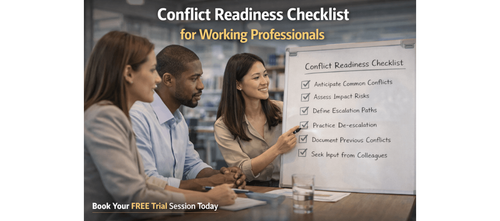

Conflict Readiness at Work: A Practical Checklist to Handle Difficult Conversations with Confidence and Control
In today’s workplace, conflict is not an occasional disruption—it’s a constant reality. Whether it’s a disagreement with a colleague, misalignment with a manager, or tension with a client, these moments test more than your technical skills. They test your ability to stay composed, communicate clearly, and protect professional relationships.
Yet most professionals are unprepared. They react emotionally, avoid difficult conversations, or rely on instinct in high-stakes situations. The result is predictable—miscommunication, damaged trust, and stalled career growth.
The truth is simple: professionals don’t fail because they lack capability—they struggle because they lack conflict readiness.
Conflict readiness is not a personality trait. It is a skill built through structured preparation, in-the-moment awareness, and intentional follow-through. When you develop this capability, you don’t just survive difficult conversations—you lead them.
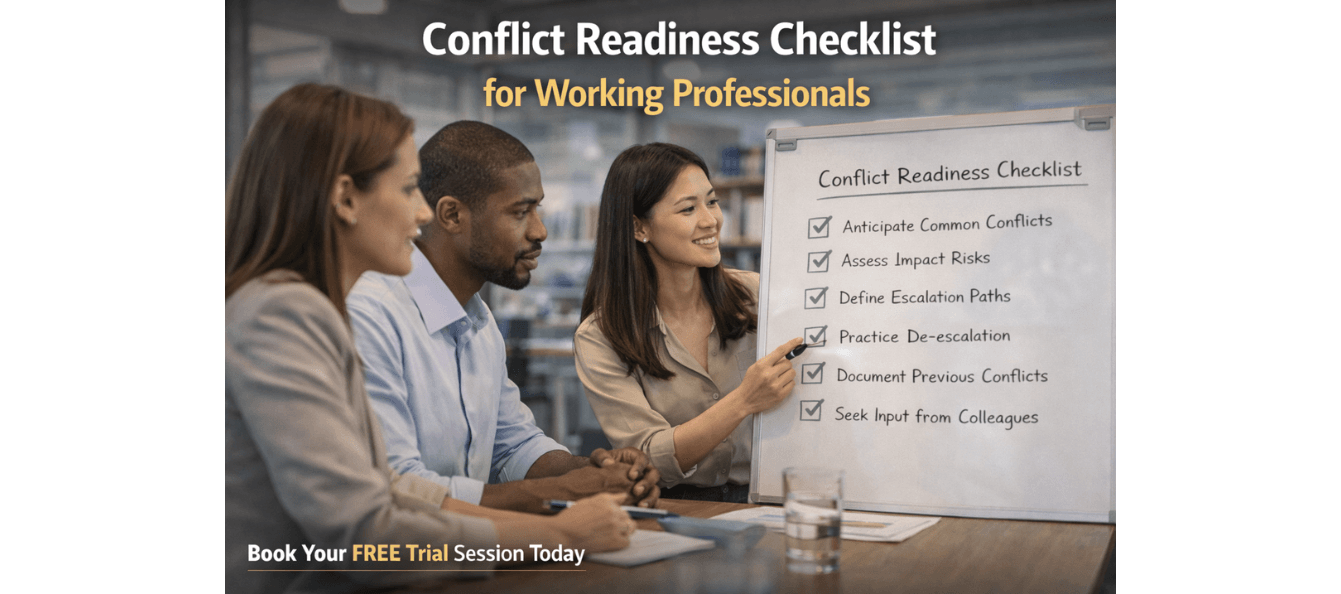
This guide introduces a complete Conflict Readiness Checklist—a practical, actionable system to help you stay calm, think clearly, and navigate workplace conflict with confidence before, during, and after it happens.
Download these resources and apply them alongside your daily work for improved clarity, productivity, and professional growth. You can also book a free trial to gain expert guidance and enhance your communication, problem-solving, and decision-making skills. The materials are designed in a clear, structured format to help professionals learn efficiently and implement insights with confidence.
Who Is This Blog For?
- Early and mid-career professionals handling
workplace pressure and conflict
- Managers and team leads responsible for navigating team tensions
- Career switchers adapting to new environments and expectations
- Consultants and freelancers managing clients and stakeholders
- Professionals looking to improve communication, emotional intelligence, and decision-making
Why This Topic Matters Today?
Workplace conflict is not rare—it is routine.
Studies show that managers spend 20 to 40 percent of their time managing people-related tensions. For professionals, unresolved conflict often leads to:
- Missed deadlines and reduced productivity
- Poor communication and misunderstandings
- Employee disengagement and attrition
- Long-term damage to professional relationships
What makes this more critical is that conflict often escalates silently. By the time it becomes visible, it is already costly.
Professionals who are conflict-ready:
- Handle difficult conversations with clarity and confidence
- Build stronger, trust-based relationships
- Make better decisions under pressure
- Position themselves as reliable and leadership-ready
In contrast, those who lack this skill remain reactive and vulnerable in high-stakes situations.
Core Concept or Framework Explained
The Conflict Readiness Checklist is built around a simple but powerful three-phase system:
Before → During → After
Each phase represents a critical moment where your actions determine the outcome of a conflict.
Before Phase:
Focuses on self-awareness, preparation, and emotional regulation
During Phase:
Guides your behaviour and communication in real-time
After Phase:
Ensures resolution, relationship repair, and learning
Supporting this system are key frameworks:
CLEAR Framework:
- Calm your system
- Listen to understand
- Express clearly
- Acknowledge the other side
- Redirect to resolution
Conflict Styles Model:
- Competing
- Collaborating
- Compromising
- Avoiding
- Accommodating
These frameworks ensure that your approach is structured, flexible, and effective across different situations.
How This Blog and Guidebook Help You?
This blog and checklist provide:
- A practical, step-by-step system to manage conflict effectively
- Clear guidance for what to do before, during, and after difficult conversations
- Tools to improve emotional control and communication clarity
- Real-world strategies for handling common workplace scenarios
The outcome is not just conflict resolution—it is improved confidence, stronger relationships, and better career outcomes.
Step-by-Step Breakdown
Step 1 — Build Pre-Conflict Readiness
Preparation is your biggest advantage in any conflict.
Key actions:
- Identify your triggers such as interruptions or criticism
- Understand your default conflict style
- Define your non-negotiables versus flexible points
- Choose the right timing and environment
Before any conversation, ensure:
- You can clearly name what you are feeling
- You know your desired outcome
- You have separated facts from assumptions
- You are focused on resolution, not winning
This phase ensures you enter conversations with clarity and control.
Step 2 — Stay Composed During Conflict
Real-time behaviour determines success.
Use the CLEAR framework:
Calm:
- Take a breath before speaking
- Regulate your tone and pace
Listen:
- Let the other person speak fully
- Paraphrase their points
Express:
- Use “I” statements
- Focus on observations, not accusations
Acknowledge:
- Validate their perspective without agreeing
Redirect:
- Focus on solutions and next steps
Watch for red flags:
- Rising voice or defensive tone
- Absolute statements like “always” or “never”
- Bringing up unrelated past issues
Staying aware helps you stay in control.
Step 3 — Use Effective Communication Techniques
Your language shapes the outcome.
Best practices:
- Replace blame with curiosity
- Ask open-ended questions
- Focus on shared goals
Examples:
- “What would a good outcome look like for you?”
- “I want to understand your perspective”
- “How can we move forward from here?”
Avoid:
- Accusatory language
- Emotional reactions
- Trying to prove yourself right
Structured communication builds trust and reduces defensiveness.
Step 4 — Follow Through After Conflict
What happens after the conversation is critical.
Within 24 hours:
- Confirm agreements in writing
Within 48 hours:
- Make a positive relational gesture
Within 72 hours:
- Reflect on your performance
Key reflection questions:
- What did I do well?
- What would I change next time?
- Is this a recurring pattern?
Follow-through reinforces trust and ensures resolution.
Step 5 — Apply Conflict Styles Strategically
Different situations require different approaches.
Use:
- Competing for urgent or critical issues
- Collaborating for long-term solutions
- Compromising for quick resolution
- Avoiding when emotions are too high
- Accommodating when relationships matter more
Flexibility is the key to effectiveness.
Step 6 — Handle Real-World Scenarios
Common situations include:
Credit-stealing colleague:
- Address privately within 24 hours
- Use calm, factual communication
Misaligned manager:
- Document patterns
- Present solutions, not complaints
Hostile client:
- Pause before responding
- Acknowledge emotions and correct facts
Applying structured responses ensures professionalism.
Step 7 — Build a Repeatable Conflict System
Consistency turns skills into strengths.
Daily habits:
- Reflect after difficult conversations
- Track recurring patterns
- Practise structured communication
Over time, this builds confidence and mastery.
Common Mistakes or Pitfalls to Avoid
Professionals often make avoidable errors:
- Addressing conflict publicly
- Waiting too long to respond
- Using email for emotional discussions
- Assuming intent without verification
- Apologising unnecessarily
Better alternatives include:
- Address issues privately and promptly
- Use structured frameworks
- Focus on facts and impact
- Communicate directly and respectfully
How Should You Use This Guidebook Effectively?
To maximise results, use this checklist as a working tool:
- Read once for full understanding
- Use checklists during real situations
- Reflect after each conflict
Suggested workflow:
- Prepare using the Before checklist
- Navigate using the During framework
- Recover using the After checklist
Time investment:
- 5–10 minutes for preparation
- Real-time application during conversations
- 10–15 minutes for reflection
Consistency builds long-term capability.
Key Takeaways
- Conflict readiness is a learnable professional skill
- Preparation determines success in difficult conversations
- Staying calm and listening improves outcomes
- Structured communication reduces escalation
- Follow-through builds trust and credibility
- Flexibility in conflict style is a competitive advantage
- Consistent practice leads to long-term professional growth
Your Next Step: Accelerate Your Career with PlanetSpark
Creating an impact-driven resume is not just about landing your next job—it’s about owning your professional story and presenting it with clarity, confidence, and credibility. When your resume clearly communicates value, results, and impact, opportunities follow naturally.
At PlanetSpark, we are committed to empowering working professionals with practical, outcome-focused resources that drive real career growth. From resume building and workplace communication to leadership presence and professional writing, our programs are designed to help you succeed in today’s fast-evolving job market.
Visit https://www.planetspark.in/resources to explore:
- Career and resume-building guides
- Workplace communication and professional writing resources
- Skill-development tools curated for working professionals
Want a deeper, hands-on experience?
You can also book a free trial session to learn more about PlanetSpark’s Working Professional Courses, designed to accelerate your career through personalised coaching, real-world practice, and expert guidance.
Your career deserves more than generic advice.
It deserves clarity, confidence, and measurable impact.
Start building that advantage today—with PlanetSpark.
Personalized Communication Roadmaps
Record a video to get a AI generated personalized communication reports