
Conflict Situation Log Template for Better Decision-Making
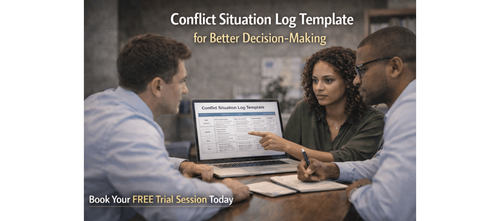

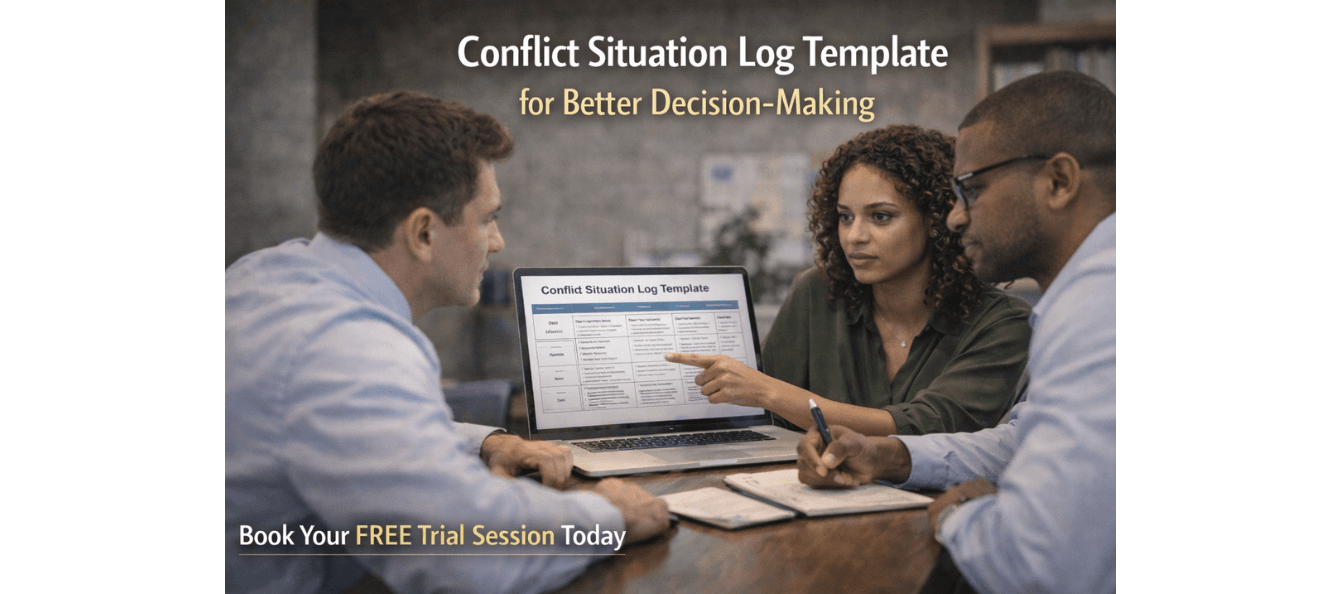
Conflict Situation Log Template: A Practical System to Document, Analyse, and Resolve Workplace Conflicts Effectively
Workplace conflicts are unavoidable—but what truly impacts your career is how you handle them. You may have experienced tense conversations, misunderstandings with colleagues, or recurring friction with managers. In the moment, these situations feel overwhelming. But what makes them worse is what happens after—details fade, emotions linger, and the same issues repeat.
Most professionals rely on memory and instinct to deal with conflict. Unfortunately, this leads to distorted recollection, unresolved patterns, and missed opportunities to grow. Without a structured system, conflict becomes reactive rather than strategic.
This is where a Conflict Situation Log Template becomes a powerful tool. Instead of relying on vague memory, you can document events clearly, analyse patterns over time, and respond with confidence and professionalism. It transforms conflict from a stressful experience into a structured opportunity for growth, clarity, and better decision-making.
Download these resources and apply them alongside your daily work for improved clarity, productivity, and professional growth. You can also book a free trial to gain expert guidance and enhance your communication, problem-solving, and decision-making skills. The materials are designed in a clear, structured format to help professionals learn efficiently and implement insights with confidence.
Who Is This Blog For?
- Working professionals dealing with recurring workplace conflicts
- Managers and team leaders handling interpersonal challenges
- Consultants and freelancers managing client disagreements
- Job seekers navigating interview or workplace dynamics
- Mid-career professionals aiming to improve communication and decision-making
Why This Topic Matters Today?
In today’s fast-paced and high-pressure work environment, conflict is not just common—it is inevitable. What differentiates high-performing professionals is not the absence of conflict, but their ability to handle it strategically.
Many professionals face challenges such as:
- Forgetting key details after a conflict due to stress
- Repeating the same conflict patterns without realizing it
- Struggling to present facts clearly in performance reviews or HR discussions
- Carrying emotional stress from unresolved situations
Research and practical observations from the guide highlight that when conflicts are undocumented, professionals experience memory distortion, reduced credibility, and emotional overload. Without a structured approach, even minor issues can escalate into long-term career barriers.
A structured conflict log solves this by bringing clarity, consistency, and control into how you handle difficult situations.
Core Concept or Framework Explained
The Conflict Situation Log Template is built on a powerful three-phase framework that ensures you approach conflict with awareness, clarity, and action.
The Three-Phase Model
Before: Awareness
This phase focuses on identifying whether a situation qualifies as a meaningful conflict. It encourages professionals to distinguish between temporary friction and situations that require deeper attention.
You learn to identify triggers such as:
- Feeling micromanaged or lacking autonomy
- Not receiving recognition for your work
- Experiencing unfair or inconsistent treatment
This awareness ensures you document the right situations rather than reacting to every minor issue.
During: Documentation
This is the core of the framework. Instead of relying on memory, you log the conflict in a structured format. The guide emphasises capturing:
- What happened
- Who was involved
- The sequence of events
- Your response and the other person’s behaviour
This structured logging converts emotional experiences into objective, usable data.
After: Reflection and Action
Once the situation is documented, the next step is analysis. This phase helps you:
- Identify patterns across multiple conflicts
- Understand your behavioural tendencies
- Decide on the next course of action
This transforms conflict into a learning and growth tool rather than a recurring problem.
How This Blog and Guidebook Help You?
This blog and the underlying template resource provide a complete system for managing workplace conflict effectively.
You gain:
- A structured method to document conflict situations clearly
- Improved clarity and accuracy in recalling events
- Better preparation for difficult conversations
- Stronger credibility in professional discussions
- Reduced emotional stress through externalised reflection
Over time, this leads to better communication, stronger relationships, and more confident decision-making in high-pressure situations.
Step-by-Step Breakdown
Step 1: Identify a Loggable Conflict
Not every disagreement needs documentation. The first step is to determine whether the situation meets key criteria:
- It involves work, behaviour, or process disagreements
- It impacts performance, relationships, or wellbeing
- It is likely to recur or remain unresolved
This ensures your focus remains on meaningful conflicts.
Step 2: Capture the Situation Immediately
Timing is critical. The guide recommends documenting the conflict within 24 hours.
Key elements to capture:
- Exact sequence of events
- Key statements or actions
- Context surrounding the interaction
This prevents memory distortion and ensures factual accuracy.
Step 3: Record Objective Facts
Separate facts from emotions. Focus on:
- What was said or done
- Observable behaviour
- Measurable outcomes
Avoid assumptions or interpretations at this stage.
Step 4: Note Emotional and Behavioural Responses
Once facts are recorded, reflect on:
- Your emotional reaction
- The other person’s tone or behaviour
- Any triggers that influenced your response
This builds self-awareness and emotional intelligence.
Step 5: Analyse Patterns Over Time
One log entry provides clarity. Multiple entries provide insight.
Look for patterns such as:
- Repeated triggers
- Similar types of conflicts
- Consistent behavioural responses
This helps you identify areas for improvement.
Step 6: Decide on Action
Based on your analysis, determine the next step:
- Address the issue directly
- Escalate if necessary
- Adjust your communication approach
- Let go if the issue is minor
Every log should lead to a clear decision.
Step 7: Review Regularly
The guide recommends monthly reviews to:
- Identify recurring themes
- Track improvement
- Resolve pending conflicts
This turns your log into a long-term professional development tool.
Common Mistakes or Pitfalls to Avoid
Even with a structured system, professionals often make avoidable mistakes.
Common pitfalls include:
- Relying on memory instead of documenting immediately
- Recording only emotions without factual details
- Logging inconsistently, leading to incomplete data
- Ignoring patterns that emerge over time
- Using the log only during crises instead of regularly
A better approach is to:
- Maintain consistency in documentation
- Focus on clarity and objectivity
- Use the log as a proactive tool, not just reactive support
How Should You Use This Guidebook Effectively?
To maximise the value of the Conflict Situation Log Template, follow a simple workflow:
- Read the full framework once to understand the system
- Keep the template easily accessible (desktop or printed)
- Fill in the log within 24 hours of each conflict
- Review entries monthly for patterns and insights
Time investment:
- 10–15 minutes per conflict entry
- Monthly review of 20–30 minutes
This small investment delivers significant long-term benefits in clarity, confidence, and career growth.
Key Takeaways
- Conflict is inevitable, but mismanagement is avoidable
- Documentation transforms emotional experiences into objective insights
- The three-phase model ensures clarity before, during, and after conflict
- Immediate logging prevents memory distortion and improves accuracy
- Pattern recognition is key to long-term improvement
- Structured reflection reduces stress and improves decision-making
- Consistency turns this tool into a powerful career asset
Your Next Step: Accelerate Your Career with PlanetSpark
Creating an impact-driven resume is not just about landing your next job—it’s about owning your professional story and presenting it with clarity, confidence, and credibility. When your resume clearly communicates value, results, and impact, opportunities follow naturally.
At PlanetSpark, we are committed to empowering working professionals with practical, outcome-focused resources that drive real career growth. From resume building and workplace communication to leadership presence and professional writing, our programs are designed to help you succeed in today’s fast-evolving job market.
Visit https://www.planetspark.in/resources to explore:
- Career and resume-building guides
- Workplace communication and professional writing resources
- Skill-development tools curated for working professionals
Want a deeper, hands-on experience?
You can also book a free trial session to learn more about PlanetSpark’s Working Professional Courses, designed to accelerate your career through personalised coaching, real-world practice, and expert guidance.
Your career deserves more than generic advice.
It deserves clarity, confidence, and measurable impact.
Start building that advantage today—with PlanetSpark.
Personalized Communication Roadmaps
Record a video to get a AI generated personalized communication reports