
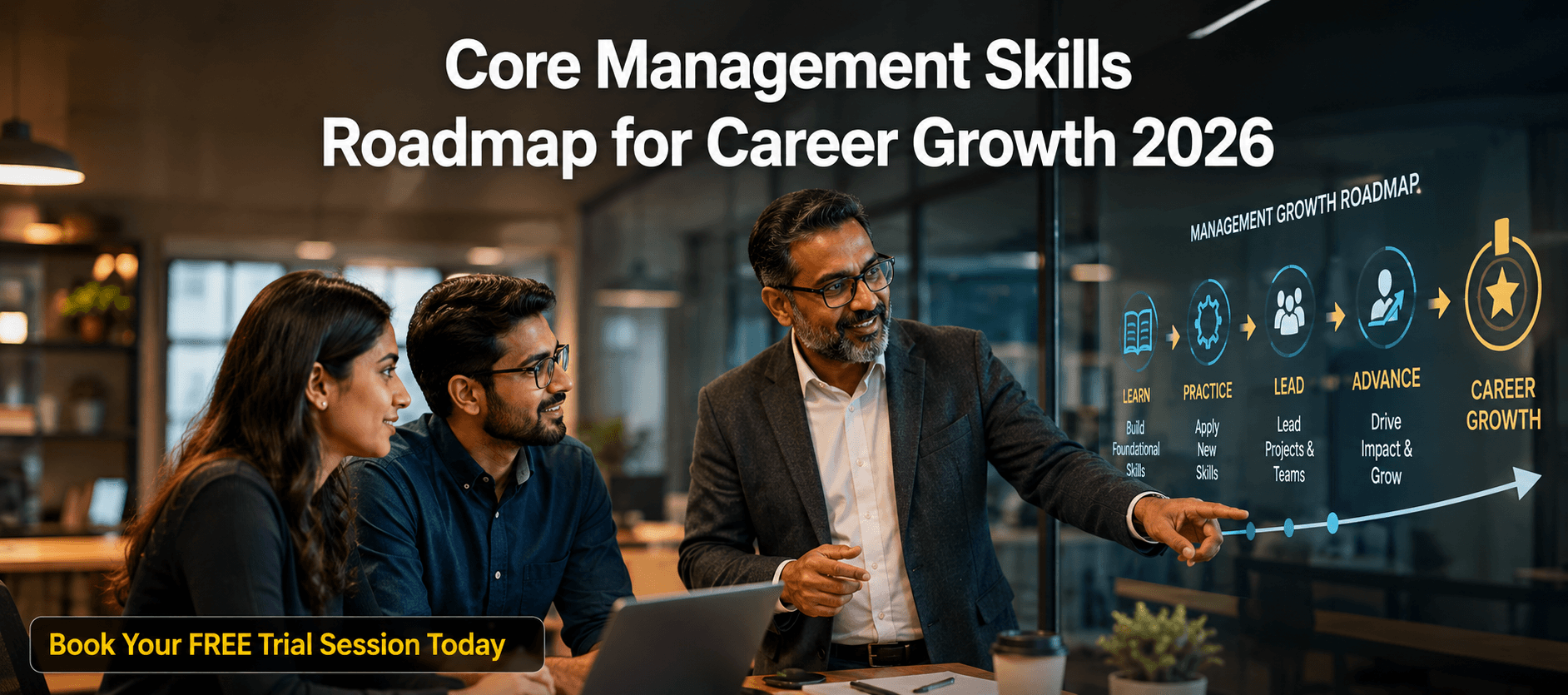
Core Management Skills Roadmap for Career Growth 2026


Mastering Core Management Skills: A Practical, Template-Driven Guide for Modern Leaders
Stepping into a management role often feels like being handed responsibility without a roadmap. One day you're an individual contributor, and the next, you're expected to run effective 1-on-1s, give structured feedback, resolve conflicts, and drive team performance—all without formal training. Many professionals end up improvising in critical moments, leading to inconsistent decisions, unclear communication, and missed opportunities to build trust and credibility.
The reality is simple: management is not a title—it is a practice. And like any practice, it requires structured repetition, feedback, and refinement. This is where the “Strengthening Core Management Skills Through Practice” toolkit becomes invaluable. It provides scenario-driven templates that turn everyday management situations into structured, repeatable actions that deliver measurable results.
Download these resources and apply them alongside your daily work for improved clarity, productivity, and professional growth. You can also book a free trial to gain expert guidance and enhance your communication, problem-solving, and decision-making skills. The materials are designed in a clear, structured format to help professionals learn efficiently and implement insights with confidence.
Who Is This Blog For?
- New managers transitioning from individual contributor roles
- Team leads managing direct reports for the first time
- Experienced managers looking to improve consistency and effectiveness
- HR professionals and coaches supporting leadership development
- Professionals preparing for leadership roles
Why This Topic Matters Today?
Management today is more complex than ever. Teams are hybrid, expectations are higher, and performance is closely tied to leadership effectiveness. Yet most managers lack structured systems to guide daily decisions.
According to the resource, professionals often:
- Run 1-on-1 meetings without a clear agenda
- Write performance reviews based on recent events rather than full context
- Set goals without measurable success criteria
- Give feedback reactively instead of systematically
- Delegate tasks without clear accountability frameworks
These gaps lead to inefficiency, confusion, and reduced team performance. In a competitive workplace, structured management practices are no longer optional—they are essential.
Core Concept or Framework Explained
The central idea of this toolkit is simple but powerful: management skills are built through structured practice, not theory.
Instead of abstract leadership advice, the toolkit offers:
- Scenario-based templates for real workplace situations
- Fillable frameworks that guide decision-making
- Repeatable systems for consistency
- Measurable outputs for tracking progress
Each template corresponds to a real management scenario—such as onboarding a new team member, conducting performance reviews, or resolving conflicts—ensuring immediate practical application.
How This Blog and Guidebook Help You?
This blog translates the toolkit into actionable strategies you can implement right away.
Here’s how it helps:
- Removes guesswork from daily management tasks
- Provides ready-to-use frameworks for key leadership situations
- Improves communication clarity and consistency
- Builds credibility through structured decision-making
- Enables measurable improvement in team performance
Instead of reacting to situations, you’ll operate with a clear system.
Step-by-Step Breakdown
First 30-Day Manager Roadmap
Your first month as a manager sets the tone for your leadership. This template breaks it into three phases:
- Weeks 1–2: Listen and understand team dynamics
- Weeks 2–3: Observe workflows and identify patterns
- Weeks 3–4: Act on quick wins and establish systems
For example, scheduling 1-on-1 introductions and identifying team pain points helps build trust early.
Weekly 1-on-1 Meeting Framework
Unstructured meetings waste time. This framework introduces consistency through:
- Emotional check-ins
- Progress updates
- Development discussions
- Clear action items
It transforms casual conversations into meaningful performance and growth discussions.
SMART Goal-Setting Worksheet
Goal setting often fails due to lack of clarity. This template uses the SMART framework:
- Specific: Define exact outcomes
- Measurable: Track progress with metrics
- Achievable: Ensure feasibility
- Relevant: Align with business priorities
- Time-bound: Set clear deadlines
For example, instead of “improve performance,” a SMART goal would define measurable improvements with timelines.
Structured Feedback Delivery Guide
Giving feedback is one of the hardest management skills. This template uses the SBI model:
- Situation: Describe the context
- Behaviour: Focus on observable actions
- Impact: Explain outcomes
For instance, instead of saying “You were unprepared,” the template guides you to describe specific behaviours and their impact on stakeholders.
Team Delegation Tracker
Delegation without structure leads to confusion. This tracker ensures:
- Clear ownership
- Defined success criteria
- Regular check-ins
It also introduces delegation levels—from instruction to empowerment—helping managers adapt based on team capability.
Mid-Year Performance Review Template
Performance reviews often lack objectivity. This template ensures:
- Evidence-based evaluation
- Balanced feedback
- Clear development plans
It includes sections for goal achievement, strengths, development areas, and future focus.
Team Conflict Resolution Worksheet
Conflict is inevitable—but unmanaged conflict harms teams. This template provides a structured process:
- Allow each party to share their perspective
- Identify root causes collaboratively
- Define clear behavioural commitments
This shifts conversations from blame to resolution.
New Direct Report Onboarding Plan
Onboarding is critical for long-term success. This template structures the first 60 days into:
- Orientation
- Context building
- Contribution
- Integration
It ensures new hires become productive quickly while building strong relationships.
Team Retrospective Facilitator Guide
Learning from past work is essential. This template captures:
- What went well
- What needs improvement
- What to try next
It ensures continuous improvement across projects.
Manager Self-Assessment Scorecard
Great managers reflect regularly. This scorecard evaluates:
- Goal setting
- Feedback quality
- Delegation effectiveness
- Coaching ability
- Team culture
It helps identify strengths and areas for improvement.
Common Mistakes or Pitfalls to Avoid
- Running meetings without structure or purpose
- Giving vague or delayed feedback
- Setting goals without measurable outcomes
- Over-controlling or under-delegating tasks
- Avoiding difficult conversations
These mistakes reduce team trust and performance over time.
How Should You Use This Guidebook Effectively?
To maximize impact:
- Identify your current management challenge
- Use the corresponding template immediately
- Customize it to your team context
- Apply consistently across similar situations
- Review and refine your approach regularly
Suggested workflow:
- Daily: Apply templates in real interactions
- Weekly: Track progress and reflect
- Monthly: Review team performance and adjust
- Quarterly: Conduct self-assessment and set improvement goals
Consistency transforms these tools into habits.
Key Takeaways
- Management skills are built through practice, not theory
- Structured templates improve consistency and decision-making
- Clear communication frameworks enhance team trust
- SMART goals drive measurable performance improvement
- Feedback systems enable continuous growth
- Delegation and accountability are critical for efficiency
- Reflection and self-assessment accelerate leadership development
Your Next Step: Accelerate Your Career with PlanetSpark
Creating an impact-driven resume is not just about landing your next job—it’s about owning your professional story and presenting it with clarity, confidence, and credibility. When your resume clearly communicates value, results, and impact, opportunities follow naturally.
At PlanetSpark, we are committed to empowering working professionals with practical, outcome-focused resources that drive real career growth. From resume building and workplace communication to leadership presence and professional writing, our programs are designed to help you succeed in today’s fast-evolving job market.
Visit https://www.planetspark.in/resources to explore:
- Career and resume-building guides
- Workplace communication and professional writing resources
- Skill-development tools curated for working professionals
Want a deeper, hands-on experience?
You can also book a free trial session to learn more about PlanetSpark’s Working Professional Courses, designed to accelerate your career through personalised coaching, real-world practice, and expert guidance.
Your career deserves more than generic advice.
It deserves clarity, confidence, and measurable impact.
Personalized Communication Roadmaps
Record a video to get a AI generated personalized communication reports